
100 Years of the Self-Respect Movement
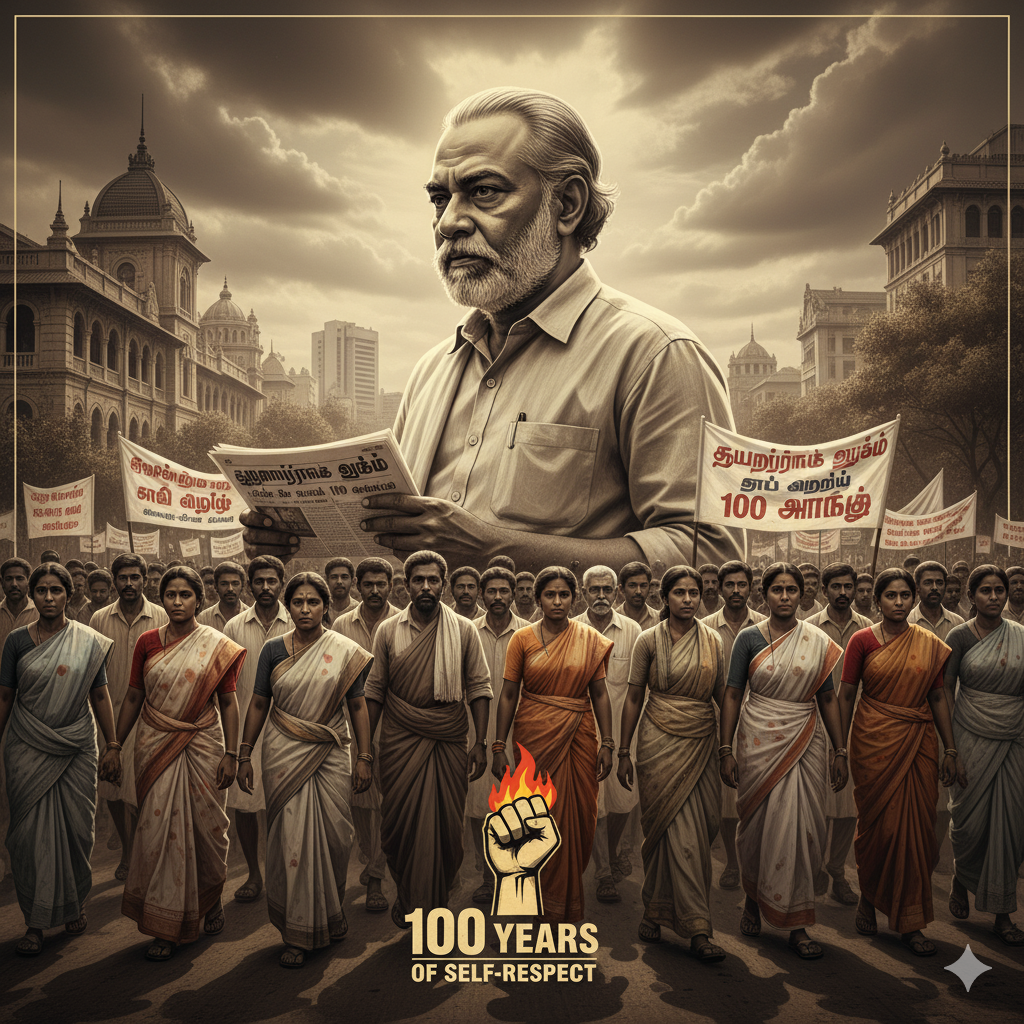
The year marks 100 years of the Self-Respect Movement launched by Periyar in 1925, a landmark anti-caste social justice movement that reshaped Tamil society and laid the foundation of the Dravidian movement.
Introduction
The Self-Respect Movement, founded in 1925 by E.V. Ramasamy Periyar, sought to dismantle caste hierarchies, challenge Brahminical dominance, and promote rationalism, women’s rights, and dignity for non-Brahmin and oppressed communities in Tamil Nadu.
Context & Background
In colonial India, the caste system was reinforced through British census policies and separate political negotiations with caste groups. The movement emerged from rising social consciousness, Western education, nationalist struggles, and modern democratic thought.
Key Points
- •Origins and Ideology: Rooted in anti-caste rationalist thought, rejecting Brahminical dominance, religious dogma, and hereditary privilege; promoted human dignity based on reason, not birth.
- •Philosophical Foundation: Inspired by Enlightenment values, Western liberal thought, Phule–Ambedkar ideology, and Tamil classical heritage emphasizing equality and self-respect.
- •Leadership: Periyar E.V. Ramasamy as principal architect; supported by Justice Party leaders and early Tamil social reformers.
- •Rationalism and Anti-Superstition: Encouraged scientific temper, questioned rituals, idol worship, astrology, and priest-dominated practices.
- •Anti-Caste Agenda: Targeted social hierarchy, Brahminical orthodoxy, discrimination in education, jobs, temples, and public spaces.
- •Self-Respect Marriages: Marriage without priests/religious rituals; based on mutual consent and gender equality; later given legal validity under Hindu Marriage Act, 1955.
- •Language and Cultural Assertion: Defended Tamil identity, promoted Tamil language over Sanskrit, resisted cultural homogenization; launched Dravidian linguistic pride.
- •Women's Emancipation: Advocated widow remarriage, women's property rights, leadership roles, education, reproductive autonomy, and end of devadasi system.
- •Social Justice and Reservations: Laid ideological groundwork for caste-based reservations and affirmative action in Tamil Nadu and later across India.
- •Political Mobilisation: Politicised backward classes, leading to emergence of Justice Party and later DMK; moved reform ideas from streets to legislature.
- •Breaking Caste Surnames: Encouraged people to drop caste names and symbols; promoted use of Tamil names and titles.
- •Temple Entry and Religious Reform: Led protests for temple entry for oppressed castes; supported Tamil worship practices; questioned priestly monopolies.
- •Media & Propaganda: Disseminated ideas through 'Kudi Arasu', 'Viduthalai', and public campaigns; used stage dramas and street speeches for mass awareness.
- •Educational Reform: Called for state-funded education to uplift backward classes; advocated vocational training and compulsory education for girls.
- •Economic Empowerment: Encouraged cooperative movements, social mobility, occupational equality; questioned caste-based job restrictions.
- •Critique of Brahminism, Not Brahmins: Clarified distinction between ideology and individuals; movement targeted systemic discrimination, not communities.
- •Resistance to Hindi Imposition: Sparked powerful anti-Hindi protests (1937-40, 1965); protected regional linguistic autonomy.
- •Link to National Movement: Supported independence but opposed Congress for failing to challenge caste; stressed social freedom along with political freedom.
- •Legal and Policy Impact: Influenced reforms in marriage law, inheritance, social welfare, and Tamil Nadu’s reservation model (69% quota).
- •Modern Legacy: Foundation of Dravidian model—social justice, welfare state, free mid-day meals, public health, and pro-education policies; continues in contemporary politics.
Related Entities
Impact & Significance
- •Social justice foundation: Empowered backward and oppressed castes; challenged caste privilege in jobs & education.
- •Democratisation of marriage & inheritance: Gave women equal dignity, supported civil marriage reform.
- •Political transformation: Led to rise of Dravidian politics and welfare-state orientation in Tamil Nadu.
- •Cultural Renaissance: Revival of Tamil language and identity; anti-Sanskritisation cultural assertion.
Challenges & Criticism
- •Critique of religion seen as extreme: Aggressive atheism alienated some reform-minded believers.
- •Fragmentation: Internal ideological differences within Dravidian movement.
- •Caste politics: Critics argue the movement sometimes reinforced caste identities while fighting caste hierarchy.
- •Gender gap remains: Despite progressive rhetoric, later Dravidian politics did not fully eliminate patriarchy.
Future Outlook
- •Continued relevance in debates on reservation, caste census, representation, and gender reforms.
- •Reinforces need for rationalism, dignity, and inclusion in a modern democracy.
- •Model for anti-discrimination discourse across India.
UPSC Relevance
- • GS-1: Freedom struggle, social reform movements
- • Modern Indian social reformers & Dravidian movement
- • Essay: Social justice, equality, caste reform
- • Ethics: Human dignity, rationalism
Sample Questions
Prelims
The Self-Respect Movement, recently in news for completing 100 years, was founded by:
- (a)Jyotiba Phule
- (b)Periyar E.V. Ramasamy
- (c)B.R. Ambedkar
- (d)Narayana Guru
Mains
Critically analyse the significance of the Self-Respect Movement in shaping India’s social justice discourse.
Introduction:
The Self-Respect Movement launched by Periyar in 1925 marked a turning point in the social history of India by challenging caste hierarchy and advocating rationalism, gender equality, and dignity for oppressed groups.
Body:
• Social Transformation: Attacked caste-based inequalities, promoted self-respect marriages, widow remarriage, and women’s empowerment.
• Political Impact: Paved the way for Justice Party, DMK, and reservation policies; shifted power from elite castes to backward classes.
• Cultural Assertion: Revival of Tamil identity, rejection of Brahminical dominance and Sanskritisation.
• Criticisms: Extreme anti-religious stance, accusations of politicised caste identity, uneven gender outcomes.
Conclusion:
The movement remains a cornerstone of social justice politics in India, inspiring debates on dignity, equality, and rationalism — values foundational to a modern democratic society.