
Bulleh Shah Shrine Vandalism: Protecting Sufi Heritage and Syncretic Culture
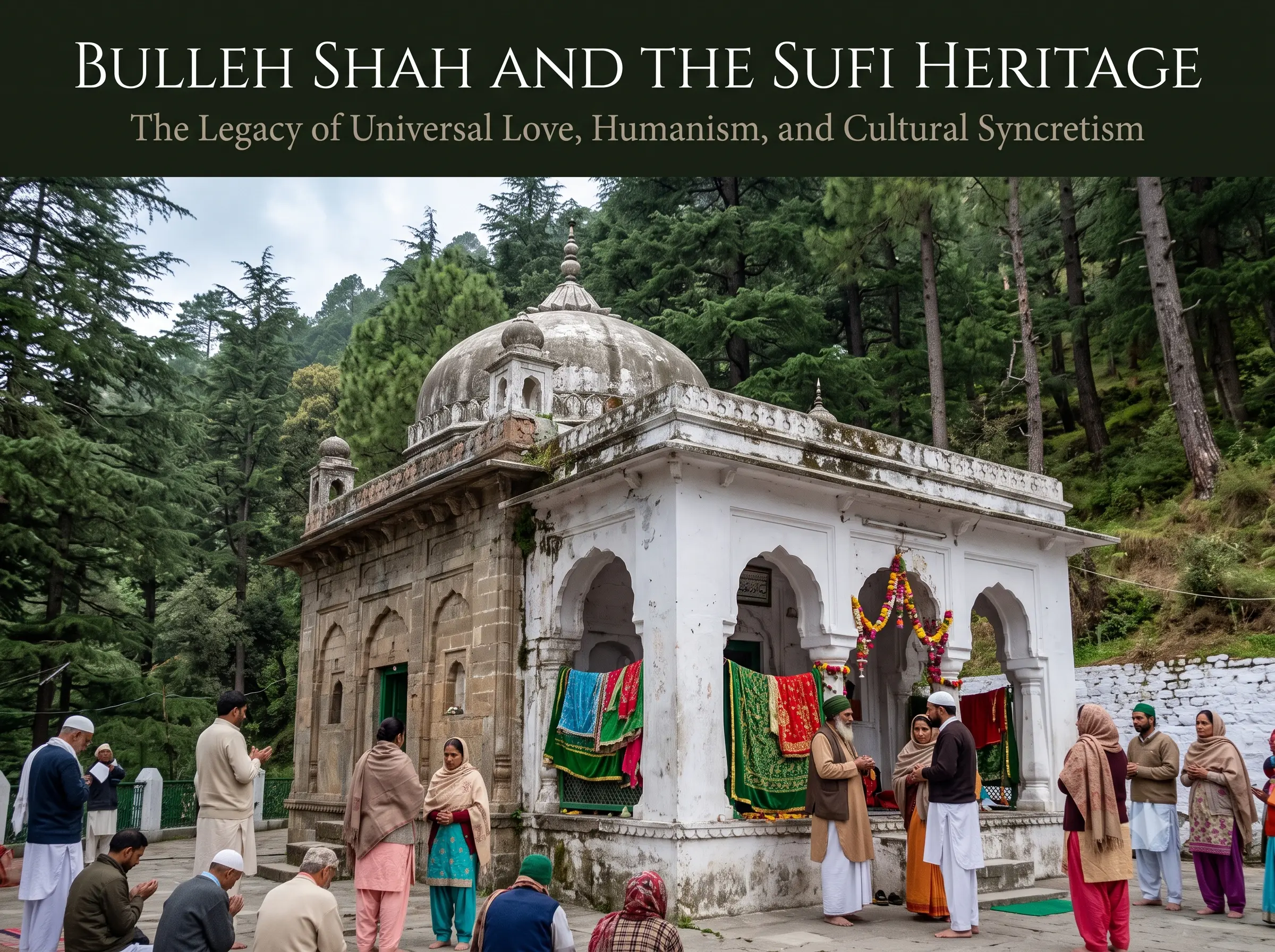
In January 2026, an over 100-year-old shrine in Mussoorie associated with the 17th-century Sufi poet Bulleh Shah was vandalised, sparking widespread outrage. This article explores the incident, the philosophical legacy of Bulleh Shah, and the broader tenets of Sufism that advocate for unity, humanism, and universal love.
Introduction
Context & Background
Key Points
- •Early Life and Education: Born as Syed Abdullah Shah Qadri in 1680, Bulleh Shah received his early education in languages and spiritual texts from his father. He later trained under the Qadiri Sufi tradition in Lahore, guided by Shah Inayat Qadri.
- •Core Tenets of Sufism: Originating in Iran with distinct Indian influences, Sufism emphasizes Wahdat-ul-Wajud (Unity of God). It advocates for inner purity over strict adherence to orthodox rituals (like Namaz, Hajj, or celibacy) and utilizes music, dance, and poetry to attain spiritual ecstasy.
- •Literary Innovations: Bulleh Shah is celebrated as one of the greatest Punjabi poets. By writing his kafis in colloquial language, he made profound spiritual concepts accessible to ordinary people, profoundly influencing musical and devotional traditions across South Asia.
- •Social Equality and Humanism: His poetry centered on universal love (ishq) and humanism. He was highly critical of shallow religiosity, caste discrimination, and social hierarchies, and sought to bridge the sectarian divide between Shias and Sunnis.
- •The Mussoorie Incident: On January 24, 2026, miscreants vandalised the 100-year-old Bulleh Shah shrine at the Wynberg Allen Estate in Mussoorie. The perpetrators destroyed structural elements, desecrated texts, and stole offerings.
Profile of Bulleh Shah
| Attribute | Details | Significance | Bookmark |
|---|---|---|---|
| Original Name | Syed Abdullah Shah Qadri | Born in 1680 in an upper-caste Syed family. | |
| Place of Origin | Punjab Region | Born in present-day Pakistan; pursued higher learning in Kasur, Batala, and Lahore. | |
| Spiritual Guide | Shah Inayat Qadri | A liberal Sufi philosopher of the Qadiri Sufi tradition. | |
| Poetic Form | Kafis | Classical form of Sufi poetry written extensively in colloquial Punjabi. |
Key Tenets of Sufism
| Concept | Meaning | Philosophical Context | Bookmark |
|---|---|---|---|
| Wahdat-ul-Wajud | Unity of God | The core philosophy that divine presence exists in everything. | |
| Piri-Muridi | Teacher-Disciple Tradition | Saints (Piri) guide disciples (Muridi) and appoint successors known as 'Wali'. | |
| Ishq | Universal Love | Considered the only true path to spiritual realization and connection with God. | |
| Suf | Wool | The root term for 'Sufi', referencing the woolen garments worn by early ascetics. |
Related Entities
Impact & Significance
- •Threat to Syncretic Culture: Attacks on Sufi shrines—places traditionally revered by multiple faiths—undermine India's long-standing tradition of shared cultural and religious spaces.
- •Law and Order Deficit: Unchecked vandalism and delayed arrests create an atmosphere of impunity, emboldening anti-social elements.
- •Cultural Erasure: The physical destruction of such historical sites risks erasing the tangible history of inclusive philosophies from public memory.
Challenges & Criticism
- •Rise of Vigilantism: The growing trend of organized groups targeting historical or minority religious structures poses a severe challenge to maintaining communal harmony in states like Uttarakhand.
- •Administrative Apathy: Local administrations and police frequently face criticism for delayed responses and for invoking only bailable charges in cases of targeted vandalism.
- •Historical Disconnect: A lack of documented local history often makes these shrines vulnerable to encroachment claims, complicating their legal protection.
Future Outlook
- •Strict Law Enforcement: Swift legal action and arrests under laws related to defiling places of worship are necessary to deter future acts of targeted vandalism.
- •Heritage Protection Initiatives: State governments and local committees must map, document, and provide structural security to vulnerable historical and syncretic shrines.
- •Promoting Syncretic Culture: Educational institutions and civil society should emphasize the inclusive teachings of historical figures like Bulleh Shah to counter growing social polarization.
UPSC Relevance
- • GS-1 (Indian Heritage and Culture): Salient aspects of Literature (Kafis, Punjabi poetry), Architecture (Shrines/Mazaars), and the Sufi Movement.
- • GS-1 (Indian Society): Communalism, secularism, and preserving syncretic traditions (Ganga-Jamuni Tehzeeb).
- • GS-2 (Governance): State mechanisms for maintaining law and order, and protecting minority institutions/heritage.
- • Essay Topics: 'Literature as a mirror of social reform', 'The relevance of Sufi philosophy in a polarized world'.
Sample Questions
Prelims
With reference to the cultural history of India, consider the following statements about Bulleh Shah:
1. He was a prominent follower of the Suhrawardi Sufi order.
2. He is renowned for his compositions in the 'Kafi' poetic form.
3. His philosophy strongly advocated for strict adherence to orthodox religious rituals like Namaz.
Answer: Option 2
Explanation: Statement 1 is incorrect; he followed the Qadiri Sufi tradition. Statement 2 is correct; his corpus includes kafis. Statement 3 is incorrect; he advocated for inner purity rather than strict adherence to orthodox rituals.
Mains
Discuss the contributions of Bulleh Shah to the Sufi movement and regional literature in India. How do the core tenets of Sufism remain relevant in addressing contemporary social and communal challenges?
Introduction: Introduce Bulleh Shah as a 17th-century Sufi mystic and poet. Briefly define Sufism's role in the cultural synthesis of medieval India.
Body:
• Contributions: Highlight Bulleh Shah's use of colloquial Punjabi to popularize Kafis. Discuss his alignment with the Qadiri order and promotion of Wahdat-ul-Wajud (Unity of God).
• Social Reform: Explain his sharp critique of caste discrimination, shallow religious rituals, and his efforts to bridge the Shia-Sunni divide through the message of Ishq (universal love).
• Contemporary Relevance: Link Sufi teachings to modern challenges of communal polarization, emphasizing how syncretic shrines act as shared cultural spaces fostering tolerance.
Conclusion: Conclude by stating that protecting the physical and philosophical heritage of figures like Bulleh Shah is vital for sustaining India's pluralistic ethos.