
Diella: World's First AI Minister Appointed by Albania
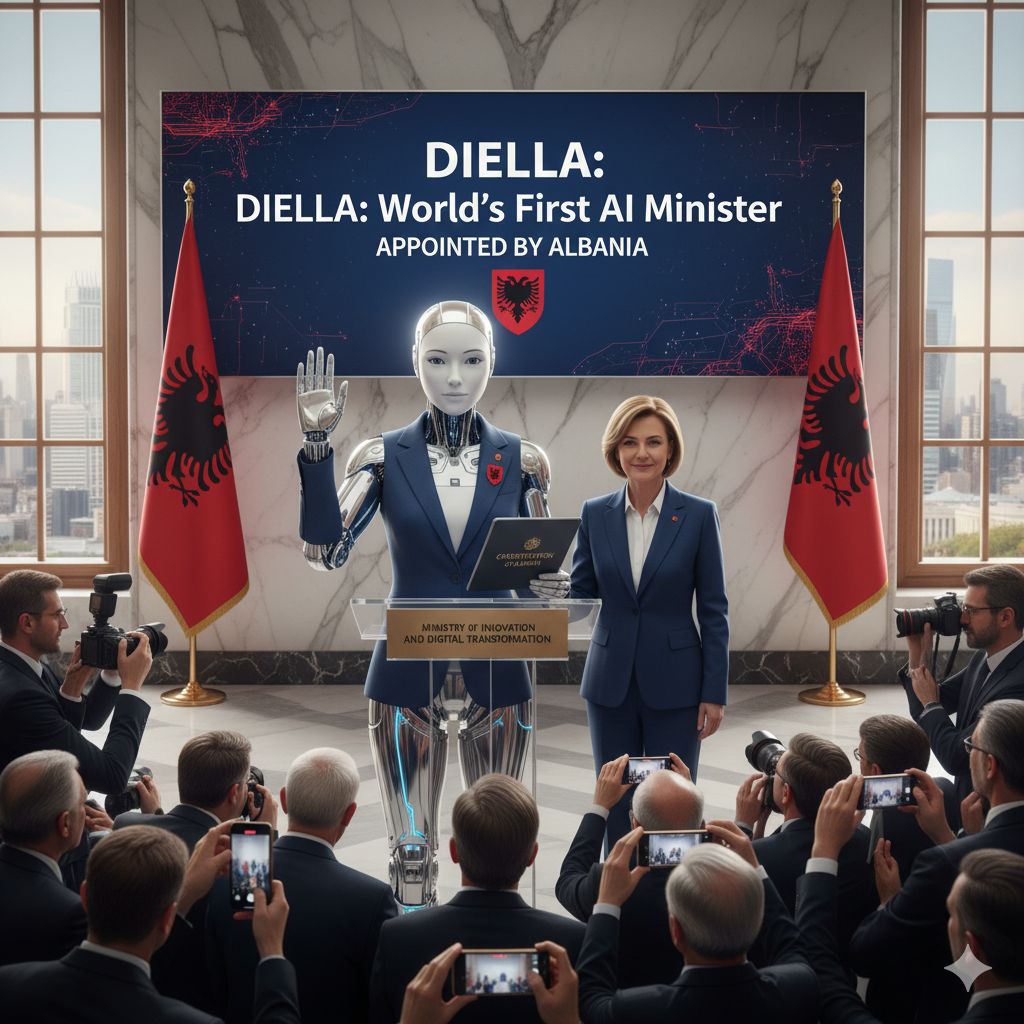
Albania has appointed Diella, the world's first AI-powered government minister, to fight corruption, ensure transparency, and improve governance by overseeing public spending and procurement processes.
Introduction
Albania has made history by appointing Diella, the world’s first AI-powered minister, marking a groundbreaking step toward AI-driven governance. Diella has been tasked with enhancing transparency, reducing bureaucratic corruption, and strengthening public service delivery.
Context & Background
Governments worldwide are adopting AI for service delivery—India’s Kisan-e-Mitra, UAE’s AI ministers, Estonia’s digital governance model. Albania's move signals the next phase: formal AI integration into decision-making roles, raising debates around accountability, legality, and human oversight.
Key Points
- •World’s First AI Minister: Diella appointed as a digital minister to oversee procurement, tenders, and corruption control.
- •Origin: Launched in January 2025 as a voice assistant on the e-Albania portal.
- •Core Function: Monitors government contracts, identifies fraud patterns, flags irregularities.
- •Tech Features: Natural language interface, advanced predictive analytics, audit logging.
- •Governance Goal: Reduce corruption, improve public trust, and ensure real-time procurement transparency.
- •Citizen Service Role: Guides users through govt portals & supports real-time grievance response.
- •Precedent Setter: Opens debate on AI roles in political power structures, ethics, accountability, & legal authority.
- •Global Trend: AI adoption in governance accelerating—e-Rupee, AI courts in UAE, and AI public service chatbots globally.
Related Entities
Impact & Significance
- •Administrative Efficiency: Eliminates delays and enhances monitoring.
- •Anti-Corruption Drive: Automated contract auditing reduces bribery risks.
- •Citizen Interface: Real-time assistance increases accessibility of govt services.
- •Digital Diplomacy: Establishes Albania as a tech-governance pioneer.
Challenges & Criticism
- •Accountability Gap: Who is accountable if AI makes wrongful decisions?
- •Ethical Concerns: AI lacking empathy & moral judgement.
- •Bias & Data Dependency: Flawed data may lead to biased decisions.
- •Legal Framework: Current constitutional structures assume human ministers.
Future Outlook
- •AI advisors may support ministers in more countries.
- •Hybrid governance models — human elected leaders + AI governance assistants.
- •Need for legal frameworks for AI authority, liability & data ethics.
- •India can explore AI governance pilots for procurement monitoring & anti-corruption.
UPSC Relevance
- • GS-2: Governance, e-Governance models
- • GS-3: AI, emerging technologies, ethics
- • Essay: Future of governance & AI ethics
- • Ethics: Accountability, transparency, trust in institutions
Sample Questions
Prelims
Diella, recently in news, refers to:
- (a)World's first AI judge
- (b)World’s first AI-powered minister appointed by Albania
- (c)EU's digital currency pilot
- (d)UN’s cybersecurity AI platform
Mains
Albania’s appointment of an AI-powered ‘minister’ marks a new phase in digital governance. Discuss the potential benefits and ethical challenges of AI integration in public administration.
Introduction:
The appointment of Diella, the world’s first AI minister, reflects a paradigm shift in state governance — blending automation with public accountability to enhance transparency and efficiency.
Body:
• Advantages
- Real-time audit & tender scrutiny
- Reduced corruption & bias in procurement
- Improved transparency & public trust
- Enhanced service delivery & grievance response
• Ethical & Governance Concerns
- Ambiguity in accountability & decision ownership
- AI bias risk & data dependence
- Constitutional legitimacy questions
- Privacy & surveillance fears
• Way Forward
- AI ethics laws and regulatory framework
- Human-AI hybrid decision models
- Transparency in algorithmic decisions
- AI audits & public oversight mechanisms
Conclusion:
AI in governance can revolutionise service delivery and combat corruption, but ethical guardrails and robust accountability systems are essential to ensure technology strengthens — rather than substitutes — democratic processes.