
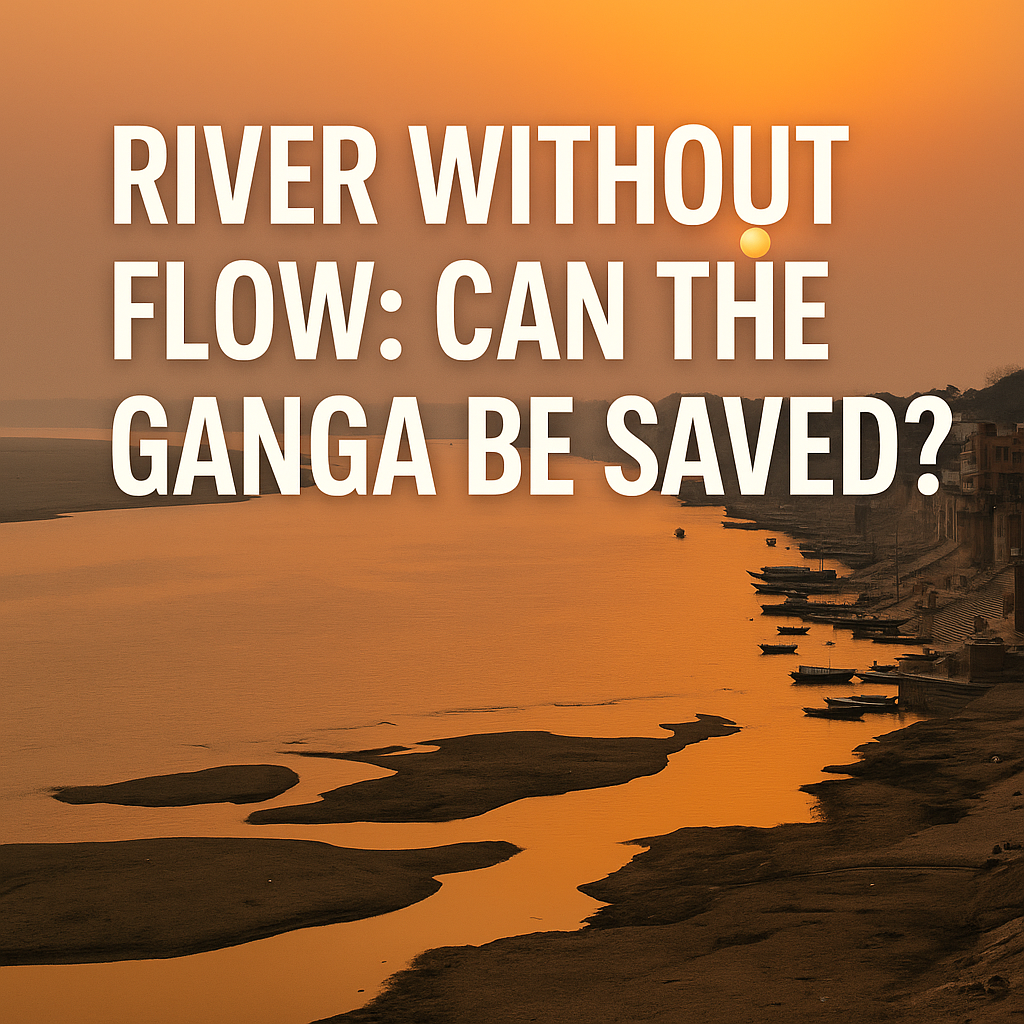
River Without Flow: Can the Ganga Be Saved?
New research reveals that the Ganga Basin experienced its worst drying period in 1,300 years between 1991 and 2020, raising urgent concerns over monsoon weakening, groundwater depletion, glacier retreat, pollution, and rising human pressure.
Introduction
Context & Background
Key Points
- •Basin Geography & Hydrology: The Ganga Basin covers 26% of India's land area across 11 states and supports ~43% of the population. Its flow depends on a complex monsoon-glacier-groundwater system. The IIT-Roorkee isotope study highlights groundwater as the primary source during summer, not glacier melt.
- •Monsoon & Climate Link: Weakening South Asian monsoon due to Indian Ocean warming and aerosol loading reduces river replenishment. ENSO, IOD, and Western Disturbances increasingly influence hydrology, making rainfall erratic and concentrated.
- •Himalayan Dynamics: Retreat of Gangotri glacier (~1 km in two decades) and reduction in snow storage impact seasonal flow. Melting increases flash flood risk in short term but causes long-term flow decline.
- •Groundwater Dependence: Indo-Gangetic aquifer is one of the world’s most depleted systems. Over-pumping for rice-wheat cycles reduces base flow, reversing natural groundwater-river interaction.
- •Pollution & River Ecology: 3 billion liters/day of untreated sewage & industrial waste stress the river. This reduces dissolved oxygen, harms species like Gangetic dolphin, and creates hypoxic zones affecting fisheries and wetland biodiversity.
- •Socio-Economic Dependence: Basin contributes ~40% to India’s food grain production, hosts major industrial belts (Kanpur tanneries, Varanasi textiles), and supports National Waterway-1. Economic distress is likely if river decline continues.
- •Cultural-Civilisational Dimension: Ganga is central to Hindu rituals, pilgrimage circuits, and cultural memory. Tourism economy and heritage sites (Varanasi, Prayagraj) depend on river health.
- •Policy & Governance Challenges: Fragmented river governance, weak enforcement of E-flows, unregulated urban expansion on floodplains, and lack of basin-wide coordination hinder rejuvenation.
- •International Dimension: Transboundary river shared with Nepal and Bangladesh; dry-season shortages strain water diplomacy. Basin management parallels Mekong and Indus basin challenges.
Related Entities
Impact & Significance
- •Water Security: Declining flows threaten drinking water for millions.
- •Food Security: May undermine output from the Indo-Gangetic plains, India’s food basket.
- •Biodiversity Loss: Threatens dolphins, fish, and wetland ecosystems including the Sundarbans.
- •Migration & Conflict: Could lead to climate-induced migration and interstate/transboundary water disputes.
Challenges & Criticism
- •Weak Monsoon Due to Ocean Warming: Indian Ocean warming weakens monsoon circulation.
- •Aerosol Pollution: Industrial emissions reduce land heating and cloud formation.
- •Groundwater Over-Extraction: Heavy irrigation withdrawals reduce natural river recharge.
- •Infrastructure Impact: Barrages, canals, and dams interrupt natural flow.
- •Pollution: Nearly 3 billion liters of untreated sewage enters the river daily.
Future Outlook
- •Shifts to climate-resilient crops and efficient irrigation are crucial.
- •Community-centric approaches will determine long-term success.
- •International cooperation with Nepal and Bangladesh will be key.
- •Legal enforcement of environmental flows may become mandatory.
UPSC Relevance
- • GS1: Geography — Rivers, Water Resources
- • GS3: Environment, Climate Change, Conservation
- • Essay: Water crisis, sustainable development, climate adaptation
Sample Questions
Prelims
With reference to the Ganga Basin drying trend, consider the following statements:
- (a)Indian Ocean warming weakens monsoon circulation over the Ganga Basin.
- (b)Groundwater contributes significantly to Ganga flow during summer months.
- (c)Glacier melt remains the primary source of Ganga water throughout its course.
Mains
‘The Ganga is drying faster than ever before.’ Analyze the causes and consequences of this trend. Suggest sustainable solutions for its rejuvenation.
Introduction: Scientific evidence suggests the Ganga has experienced unprecedented drying in recent decades, driven by climate change, groundwater overuse, and anthropogenic stress.
Body:
• Causes: Indian Ocean warming, glacier retreat, aerosol pollution, unsustainable groundwater extraction, river regulation, floodplain encroachment.
• Consequences: Food insecurity, water scarcity, biodiversity loss, climate-induced migration, social conflicts, ecosystem collapse.
• Measures: Crop diversification, micro-irrigation, strict pollution control, floodplain protection, blue-green urban infrastructure, transboundary river cooperation, community-based conservation.
Conclusion: Saving the Ganga requires integrated basin-level management, ecological restoration, and behavioral change—combining scientific strategies with cultural stewardship.