
India’s Semiconductor Ambition
India’s ₹76,000 crore Semiconductor Mission aims to build a self-reliant chip ecosystem. While fabrication faces infrastructure and capital hurdles, India’s strength in chip design and talent can make it a global semiconductor innovation hub.
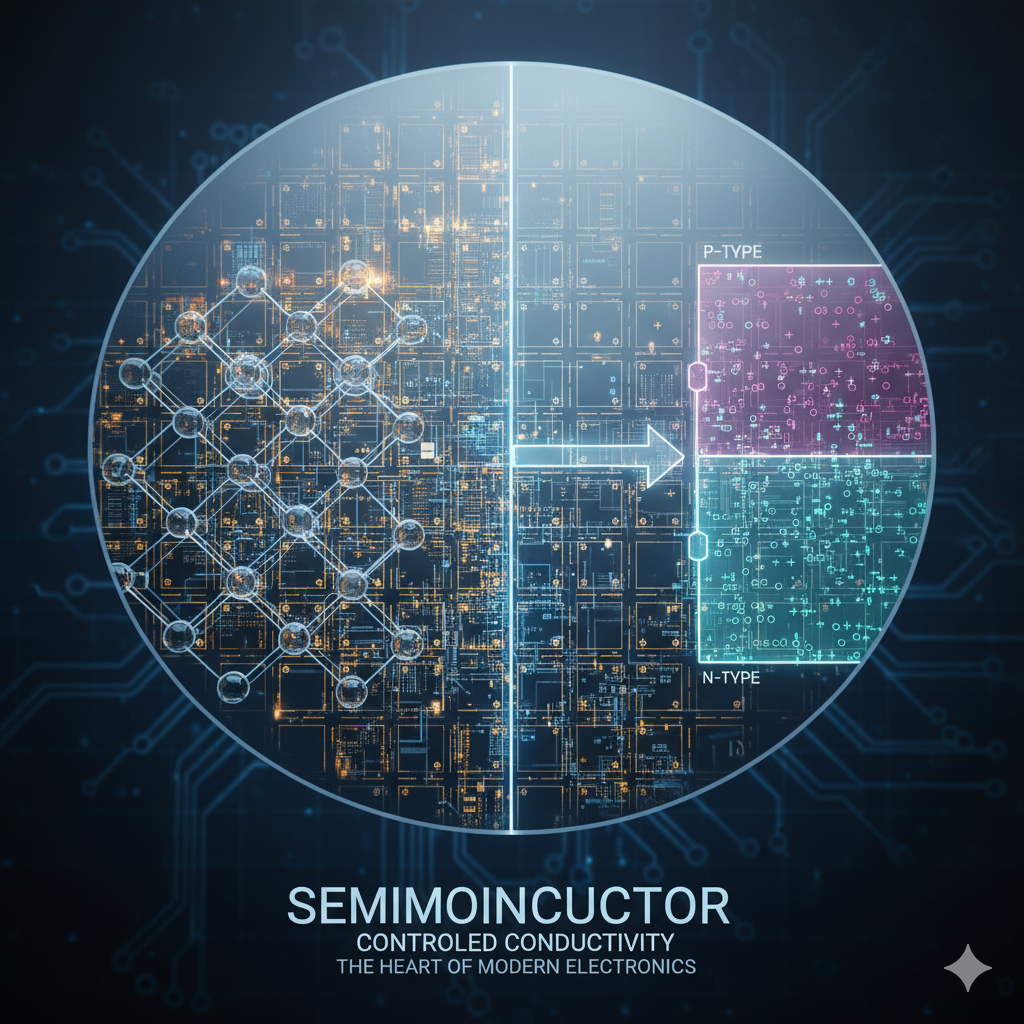
Introduction
Semiconductors are the backbone of modern digital systems—from smartphones and EVs to defence and supercomputing. India’s Semiconductor Mission (ISM) aims to build domestic capability across manufacturing, assembly, and chip design, strengthening technological sovereignty and reducing import dependence.
Context & Background
India launched the ₹76,000 crore ISM in 2021 to build fabs, ATMP units, and design ecosystems. With rising geopolitical risks and supply chain vulnerabilities exposed by the global chip shortage, India is positioning itself as a strategic semiconductor hub.
Key Points
- •Strategic Tech Sovereignty: Chips power defence, telecom, satellites, AI, EVs—dependency risks national security.
- •Current Strength in Design: 20% of global chip designers are Indian; 2,000+ semiconductor design startups emerging.
- •Fab Capacity Growing: Micron's ATMP facility in Gujarat and approved fab projects across states mark initial gains.
- •Talent Pipeline: 5.7 lakh ECE students; C2S programme gives access to advanced EDA tools.
- •Global Context: US CHIPS Act, EU Chips Act—India competing for supply-chain shifts from China.
- •Economic Multiplier: Electronics manufacturing + data economy + AI growth depend on chip autonomy.
- •Legacy Node Strategy: India focusing on mature nodes (28–180 nm), not cutting-edge 3–7 nm initially.
- •Design-led Model: Emphasis on IP creation, chip R&D, and fabless model like US and Taiwan pioneers.
Related Entities
Impact & Significance
- •Reduced import dependency and foreign vulnerability in critical electronics.
- •Boost to Make in India and Atmanirbhar Bharat in high-tech sector.
- •High-skill job creation in chip design, testing, packaging, and EDA industries.
- •Strategic leverage in global supply-chain realignment amid US-China rivalry.
Challenges & Criticism
- •High Capex & Long Gestation: $5–10 bn per fab; uncertain RoI without long-term demand contracts.
- •Infrastructure Gaps: Ultra-pure water, stable power, clean rooms still limited.
- •R&D Weakness: Indian industry invests only ~0.4% in R&D vs 5–6% global benchmarks.
- •Skilling & Research: Limited semiconductor fabrication expertise, weak academia-industry link.
- •Global Competition: Taiwan, Korea, USA decades ahead in process and ecosystem depth.
Future Outlook
- •Shift from subsidy-driven fabs to design-led semiconductor strategy.
- •Build domestic supply chain for chemicals, gases, photolithography components.
- •Deep R&D partnerships with Taiwan, Japan, US fabs and universities.
- •Fabless semiconductor model + speciality fab (power, automotive, sensors).
UPSC Relevance
- • GS-3: Indigenization, S&T, Economic growth
- • GS-2: Strategic tech diplomacy
- • Essay: Tech-sovereignty, India as a Product Nation
Sample Questions
Prelims
India Semiconductor Mission (ISM) primarily aims at which of the following? 1) Semiconductor fabrication 2) ATMP units 3) Chip design support
- (a)1 only
- (b)1 and 2 only
- (c)1, 2 and 3
- (d)2 and 3 only
Mains
Discuss how India's semiconductor mission can transform it from a service economy into a ‘product nation’. Highlight challenges and policy priorities.
Introduction:
Semiconductors underpin digital infrastructure, AI, defence, and Industry 4.0. India’s semiconductor mission aims to build domestic manufacturing and chip-design capabilities, positioning India as a global tech-power.
Body:
• Transformative Potential
- Chip design → high value IP creation
- Fab ecosystem → supply chain security
- Boost to EVs, solar, telecom, AI sectors
- Strategic autonomy in defence and 5G stack
• Challenges
- High capex and long gestation
- Weak domestic semiconductor supply chain
- R&D funding & skilled manpower gap
- Global dominance of Taiwan, Korea, US
• Way Forward
- Design-first approach and fabless model
- Performance-linked semiconductor subsidies
- University-industry research alliances
- Technology partnerships with Taiwan/Japan/US
Conclusion:
India’s semiconductor dream rests not just on fabs but on nurturing design talent, IP ownership, deep tech startups, and resilient supply chains. A design-led model can make India a true product nation.