
Space Junk and the Future of the Space Economy
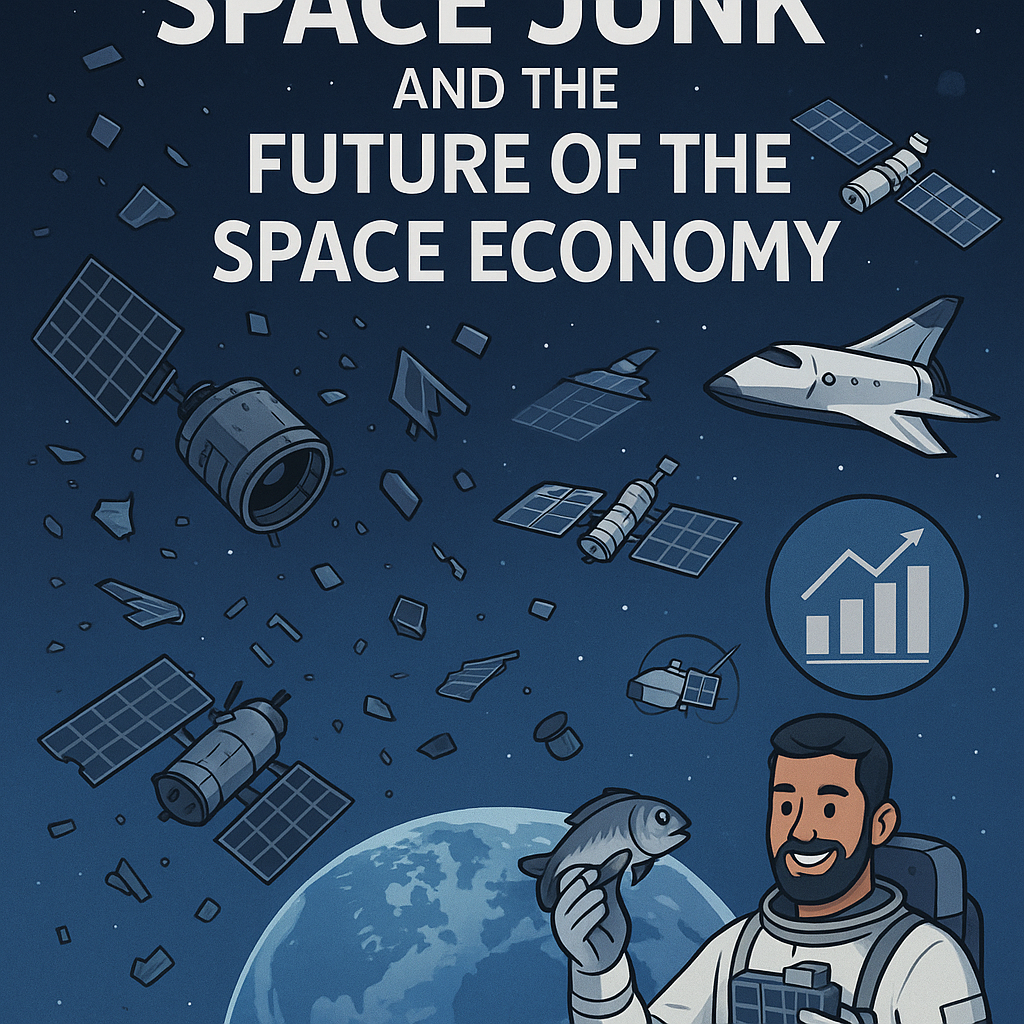
Space debris in Low Earth Orbit is rapidly increasing due to satellite mega-constellations, cheaper launches, and ASAT tests, posing risks to space missions, astronauts, communication networks, and global security.
Introduction
Low Earth Orbit (LEO) has become the most crowded region in space. With thousands of satellites launched in recent years—driven by the rise of satellite internet and private space players—the risks of space debris, collisions, and operational hazards are growing significantly.
Context & Background
More than 56% of active satellites have been launched since 2020. Private entities like SpaceX, OneWeb, Blue Origin, and national space agencies are pushing a new phase of the space economy—satellite broadband networks, private space stations, reusable rockets, and micro-gravity manufacturing.
However, this rapid expansion also brings debris, governance, and safety challenges.
Key Points
- •Rapid Satellite Growth: ~15,000 active satellites today; LEO capacity ~60,000–100,000 satellites.
- •Commercial Dominance: Starlink alone has 7,600+ satellites; target ~40,000 by 2030.
- •Cost Revolution: Reusable rockets (e.g., Falcon 9) have reduced launch costs by 80–90%.
- •Emerging Space Activities: Private space stations, micro-gravity manufacturing, deep-space tourism.
- •Source of Debris: defunct satellites, rocket fragments, past collisions (e.g., Iridium-Cosmos), ASAT tests by China/USA/India.
- •Biggest Threat — Kessler Syndrome: Collision chain reaction could make orbits unusable.
- •Environmental Impact: Satellite burn-up may release alumina particles, affecting ozone and upper atmosphere.
- •Legal Vacuum: No binding global debris treaty; UN guidelines are voluntary.
Related Entities
Impact & Significance
- •Operational Risks: Threat to ISS, satellites, upcoming private stations.
- •Economic Loss: Disruption to GPS, banking, telecom, weather monitoring, defence systems.
- •Astronomy Impact: Starlink brightness affecting astronomical observations.
- •Security Angle: Debris confusion could trigger military alerts.
Challenges & Criticism
- •Lack of Global Regulation: Voluntary UN rules, no enforcement.
- •Liability Gap: No defined ‘polluter pays’ system for debris.
- •ASAT Weaponization: Growing militarization of space.
- •Technology Gap: Debris removal still costly and experimental.
Future Outlook
- •More private space stations post-2030.
- •Explosion in satellite internet capacity globally.
- •Space-based manufacturing and asteroid mining pilots.
- •Greater need for space traffic management and orbital sustainability laws.
UPSC Relevance
- • GS-3: Space Tech, Security, Emerging Tech Governance
- • GS-2: International treaties & institutions
- • Essay: Technology vs sustainability, global commons
Sample Questions
Prelims
Consider the following statements about space debris: 1) Kessler Syndrome refers to cascading collisions in orbit. 2) Starlink is the world's largest satellite internet constellation. 3) Project NETRA is India's space debris tracking system. Which of the above are correct?
- (a)1 and 2 only
- (b)2 and 3 only
- (c)1 and 3 only
- (d)1, 2 and 3
Mains
The global space economy is expanding rapidly, but the rise of space debris poses a critical threat. Discuss challenges and suggest a governance framework for sustainable space activity.
Introduction:
Space activity has shifted from a state-led scientific frontier to a commercial and strategic ecosystem. This growth has intensified space debris accumulation, threatening safe access to space — a global commons.
Body:
• Challenges:
- Satellite megaconstellations and falling launch costs
- Kessler Syndrome threat
- ASAT tests and weaponization
- Lack of binding global regulations
- Weak monitoring in developing countries
• Impacts:
- Risks to ISS, satellites, and astronauts
- Disruption to telecom, GPS, banking, defence
- Hindrance to astronomical research
- Ozone & upper atmosphere concerns
• Solutions:
- Binding global debris treaty under UN
- Mandatory de-orbit norms and graveyard orbits
- Ban destructive ASAT tests
- Polluter-pays + insurance penalty model
- SSA collaboration and orbital traffic management
- Public-private R&D for debris removal
• India's Role:
- Project NETRA, MOTR radar
- Responsible de-orbiting (RISAT-2, Megha-Tropiques)
- Low-debris ASAT test strategy
- Growing private space tech ecosystem
Conclusion:
Sustainable space governance requires a shift from competition to cooperative orbital management. The future of global digital infrastructure and space economy depends on responsible launch practices, regulatory frameworks, and international coordination.