
Ultra-Processed Foods (UPF): A Growing Health Crisis in India
A recent Lancet report has sounded the alarm on the rapid rise of Ultra-Processed Foods (UPFs) in diets worldwide, with India seeing a 40-fold increase. These industrial food products are linked to a surge in chronic diseases like diabetes and heart disease, prompting calls for stricter regulations.
Introduction
Context & Background
Key Points
- •Characteristics of UPFs:
1. Nutrient Poor, Calorie Dense: High in empty calories but low in fiber, vitamins, and minerals.
2. Addictive Nature: Engineered with specific ratios of salt, sugar, and fat to trigger cravings, leading to overconsumption.
3. Artificial Ingredients: Contain chemicals like emulsifiers (to improve texture) and sweeteners (like high-fructose corn syrup) rarely found in home kitchens. - •Common Examples in India:
- Snacks: Chips, biscuits, instant noodles (Maggi), kurkure.
- Beverages: Carbonated soft drinks, energy drinks, packaged fruit juices (which are mostly sugar water).
- 'Healthy' Foods: Protein bars, breakfast cereals (cornflakes), flavored yogurts, and plant-based meat alternatives often fall under UPFs due to heavy processing. - •Why is Consumption Rising?
- Marketing Blitz: Companies target children with colorful packaging and toys, creating brand loyalty early on.
- Convenience: For busy urban families, 'Ready-to-Eat' (RTE) meals are a quick solution.
- Affordability: UPFs are often cheaper than fresh fruits and vegetables due to subsidies on ingredients like corn and soy. - •Health Risks:
- Obesity & Diabetes: High sugar leads to insulin resistance.
- Heart Disease: Trans fats and high sodium damage blood vessels.
- Gut Health: Lack of fiber and presence of emulsifiers can disrupt the gut microbiome, leading to inflammation. - •
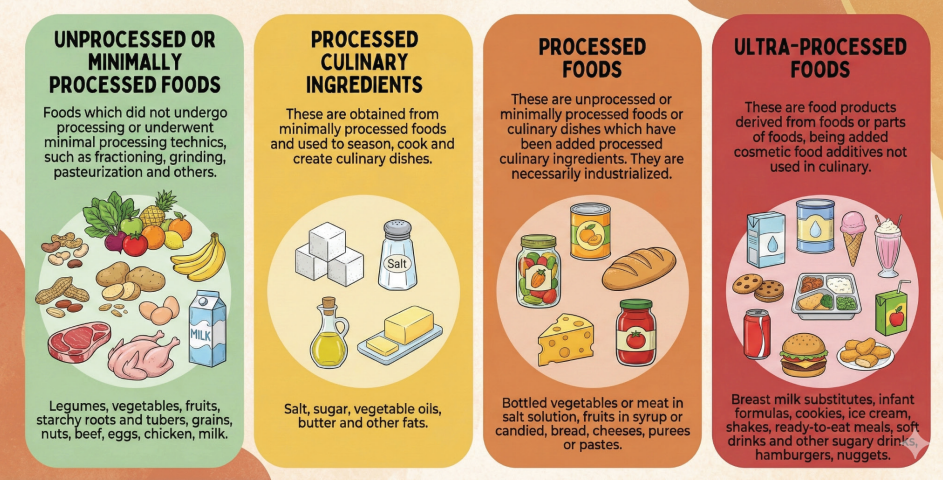
NOVA Food Classification System
| Group | Description | Examples | Bookmark |
|---|---|---|---|
| Group 1: Unprocessed/Minimally Processed | Natural foods or those altered slightly (drying, boiling) without adding substances. | Fresh fruit, milk, plain yogurt, rice, dal. | |
| Group 2: Processed Culinary Ingredients | Substances derived from Group 1 foods used in cooking. | Butter, sugar, salt, vegetable oils. | |
| Group 3: Processed Foods | Made by adding Group 2 ingredients to Group 1 foods for preservation. | Cheese, canned vegetables, salted nuts, freshly made bread. | |
| Group 4: Ultra-Processed Foods (UPF) | Industrial formulations with 5+ ingredients, many synthetic. | Soft drinks, packaged cakes, instant noodles, nuggets. |
Related Entities
Impact & Significance
- •Public Health Burden: The rise in UPFs directly correlates with the increasing burden of lifestyle diseases, straining India's healthcare infrastructure and reducing workforce productivity.
- •Economic Cost: Treating chronic diseases is expensive for families and the state. A healthier population is an economic asset.
- •Loss of Culinary Heritage: The dominance of standardized industrial food threatens India's diverse and nutritionally balanced traditional food culture.
Challenges & Criticism
- •Weak Regulations: Current labeling laws in India are insufficient. Consumers often cannot easily identify high salt/sugar content from the back-of-pack nutrition table.
- •Industry Pushback: The food industry often lobbies against strict measures like warning labels or higher taxes, arguing it will hurt jobs and the economy.
- •Definition Ambiguity: Sometimes the line between 'processed' and 'ultra-processed' can be blurry, making regulation tricky (e.g., is traditional pickle a UPF?).
Future Outlook
- •Front-of-Pack Labeling (FOPL): India is considering adopting 'Warning Labels' (like in Chile) that clearly state 'High in Sugar/Salt' on the front, rather than complex 'Star Ratings' which can be misleading.
- •Sin Tax: Higher GST (Sin Tax) on UPFs, similar to tobacco, to discourage consumption.
- •School Bans: Strictly enforcing the ban on sale of HFSS (High Fat, Sugar, Salt) foods in and around schools.
- •Awareness: Promoting nutrition literacy to help people read labels and choose whole foods.
UPSC Relevance
- • GS-2: Issues relating to Health, Government policies.
- • GS-3: Food processing and related industries in India, Inclusive growth.
- • Essay: Health vs. Wealth, Changing Lifestyles.
Sample Questions
Prelims
With reference to Ultra-Processed Foods (UPFs), consider the following statements:
1. They are characterized by high content of fiber and micronutrients.
2. The Eat Right India campaign is an initiative of the World Health Organization (WHO).
3. FSSAI has capped the amount of trans fatty acids in food products to 2%.
Answer: Option 3
Explanation: Statement 1 is incorrect; UPFs are low in fiber/nutrients. Statement 2 is incorrect; Eat Right India is an FSSAI initiative. Statement 3 is correct.
Mains
The rising consumption of Ultra-Processed Foods (UPFs) is a ticking time bomb for public health in India. Analyze the reasons behind this trend and suggest policy measures to curb it, citing relevant examples.
Introduction: Define UPFs and cite the alarming rise mentioned in the Lancet report.
Body:
• Reasons for Rise: Aggressive marketing targeting kids, convenience for urban working class, affordability compared to fresh produce.
• Health Impacts: Link to NCDs (diabetes, obesity), gut health issues.
• Policy Measures: FOPL (Warning labels), Sin Tax (High GST), regulating school canteens, promoting traditional diets (millets).
• Indian Initiatives: Mention Eat Right India, FSSAI Trans-fat limits.
Conclusion: Conclude by emphasizing that a multi-pronged approach involving regulation, taxation, and education is needed to reverse this trend.