
André Beteille and the Making of Modern Indian Sociology
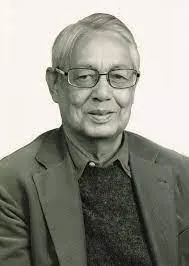
Eminent sociologist André Béteille passed away at 91, leaving behind a profound legacy in the study of caste, class, and social inequality in India. His empirical and multidimensional approach reshaped Indian sociology, challenging classical normative theories and expanding the discipline's horizons.
Introduction
Context & Background
Key Points
- •Expanding Sociological Horizons: Béteille enabled scholars to move beyond narrow micro-studies, engaging with India in its full social, political, and theoretical complexity.
- •The Weberian Influence: He introduced Max Weber into Indian sociology with methodological rigour, demonstrating that sociological concepts must travel across societies to attain universality.
- •Empirical Foundations: His intensive fieldwork in Sripuram village (Tanjore, Tamil Nadu) formed the bedrock of his theories, highlighting the complex dynamics between Brahmins, Non-Brahmins, and Adi-Dravidians.
- •Segmentation within Caste: Influenced by Evans-Pritchard, he demonstrated that castes are internally segmented (e.g., Srivaishnavas and Smarthas among Brahmins), weakening the assumption of a unified identity.
- •The 'Caste New' Phenomenon: Béteille noted the erosion of ritual restrictions due to education and urbanisation, observing that caste has not disappeared but transformed into 'caste new' within a selectively modern India.
- •Critique of Caste Politics: He warned that treating caste groups as homogeneous classes for reservation policies is conceptually flawed, advocating instead for equality of opportunity.
Departure from Classical Caste Theories
| Sociologist | Classical Approach | Béteille's Perspective | Bookmark |
|---|---|---|---|
| Louis Dumont | Ritual hierarchy centred on Brahminical purity and pollution. | Rejected caste as a fixed, sacred, and homogenous system. | |
| M.N. Srinivas | Sanskritisation and the concept of the dominant caste. | Found that Brahminical superiority is not uniform; secular power rests with peasant castes. | |
| G.S. Ghurye | Normative and ideological approaches to caste. | Emphasised an empirical, dynamic, and reflexive analysis based on fieldwork. |
Multi-dimensional Structure of Stratification
| Dimension | Basis of Inequality | Béteille's Observation | Bookmark |
|---|---|---|---|
| Class | Economic dimension based on unequal distribution of land. | Poverty and class differentiation cut across caste lines. | |
| Status | Social dimension based on caste hierarchy. | Caste is internally segmented and constantly transforming. | |
| Power | Political dimension based on unequal access to power. | Secular power often rests with non-Brahmin dominant castes. |
Related Entities
Impact & Significance
- •Shifting the Discourse: Transitioned Indian sociology from theoretical, text-heavy interpretations to grounded empirical realities.
- •Global Recognition: Elevated the standard of Indian sociology globally, earning accolades like the Padma Bhushan and a fellowship at the British Academy.
- •Policy Relevance: His critical insights into the intersection of caste and politics remain highly relevant for debates on social justice and affirmative action.
Challenges & Criticism
- •Critique of OBC Reservations: Béteille was highly critical of the politicisation of caste, specifically reservation policies that treat caste groups as homogeneous entities.
- •Identity Politics: He warned that reducing complex socio-economic realities to monolithic identity politics undermines true equality of opportunity.
- •Misinterpreting Class: He continually challenged the political narrative that conflates 'caste' with 'class', arguing that poverty and economic differentiation heavily cut across caste lines.
Future Outlook
- •Enduring Methodological Legacy: His model of intellectual integrity and standard of scholarship will continue to guide future sociological research in India.
- •Relevance of Multi-dimensional Analysis: As inequality in India becomes more complex, his tripartite framework of Class, Status, and Power remains vital for analyzing modern stratification.
- •Navigating Identity Politics: His warnings against the deepening of social polarization through identity-based politics offer crucial insights for contemporary policy-making and governance.
UPSC Relevance
- • GS-1 (Indian Society): Understanding features of Indian society, caste system, and social stratification.
- • Sociology Optional (Paper 1 & 2): Thinkers (Weber), Stratification and Mobility, Caste System, and Agrarian Social Structure.
- • Essay Topics: The intersection of caste, class, and politics; The transformation of social hierarchies in modern India.
Sample Questions
Prelims
Which of the following best describes André Béteille's sociological perspective on Indian society?
- (a)He viewed the caste system purely as a ritual hierarchy based on purity and pollution.
- (b)He conceptualised Indian stratification as a multi-dimensional structure shaped by class, status, and power.
- (c)He strongly supported the political treatment of caste groups as homogeneous classes for reservation policies.
Mains
How did André Béteille's empirical study of the caste system depart from the classical normative theories? Discuss with reference to his multi-dimensional approach to social stratification.
Introduction: Introduce André Béteille as a pioneering sociologist who shifted the study of Indian society from textual, macro-level assumptions to empirical, micro-level realities.
Body:
• Critique of Classical Theories: Contrast Béteille's dynamic, field-based approach with Dumont's ritual hierarchy and Ghurye's ideological perspective. Highlight the rejection of a unified Brahminical superiority.
• Empirical Evidence: Use the Sripuram village study to explain internal segmentation and the shift of secular power to non-Brahmin castes.
• Multi-dimensional Stratification: Explain his framework of Class (land), Status (caste), and Power (politics) and how they coexist and interact.
Conclusion: Conclude by emphasizing his concept of 'caste new' and how his methodological rigour continues to provide a realistic lens to view contemporary Indian inequality.