
Infertility in India: Mental health at the forefront of reproductive care
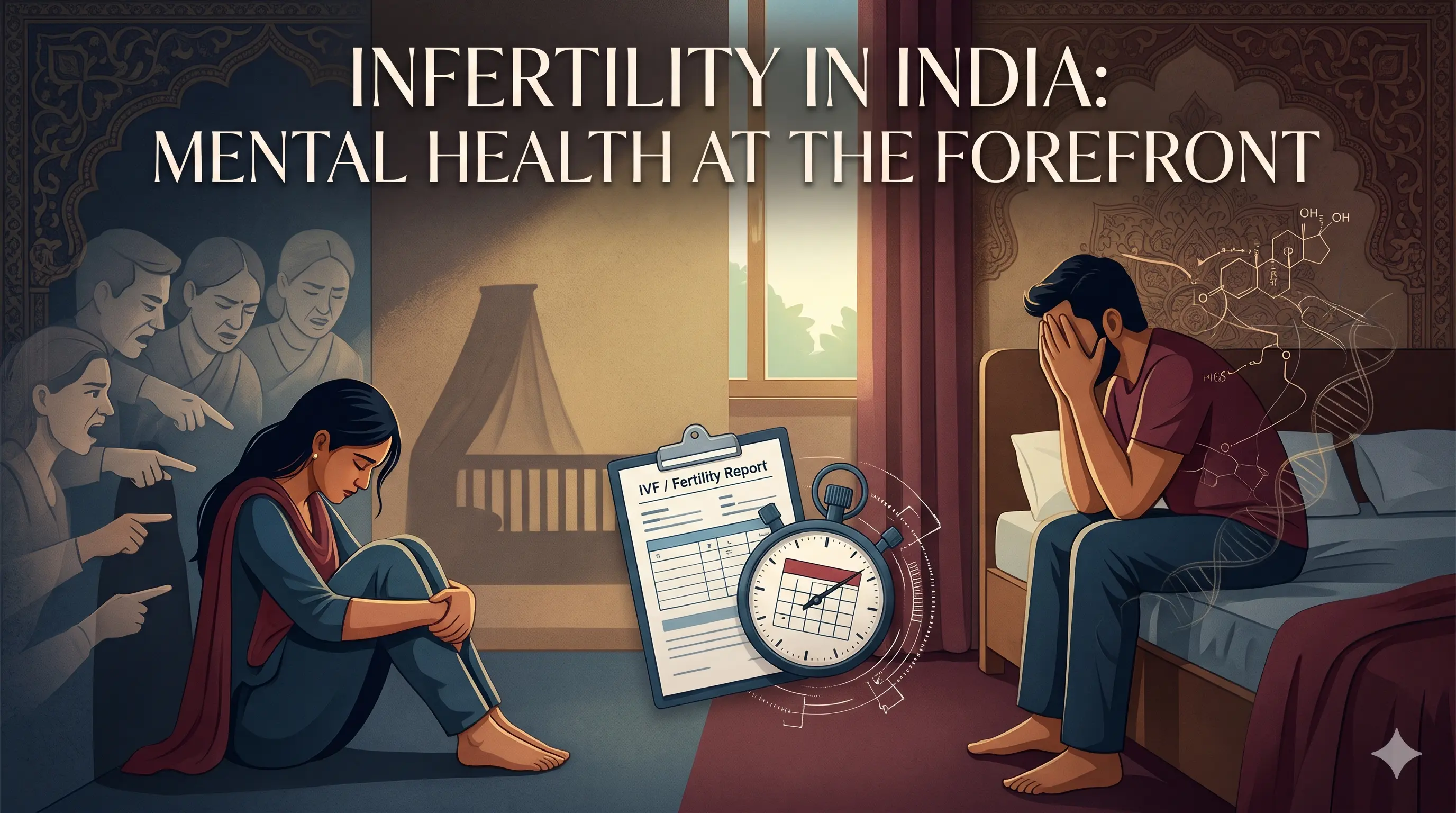
Infertility in India is a deeply social and psychological phenomenon, not just a biomedical condition. The societal equating of womanhood with motherhood places a disproportionate burden and stigma on women, while the unaddressed mental health issues of men can also biologically impair reproductive outcomes. Addressing infertility requires integrating mental health into routine care, challenging cultural norms, and treating the condition with compassion and scientific evidence.
Introduction
Context & Background
Key Points
- •Socio-cultural Context (Gendered Burden): Indian society often equates a woman’s identity and moral worth with motherhood. Infertility is predominantly moralized as a woman's failure, leading to social exclusion, stigmatization, and blame, even when medical evaluations identify male-factor infertility.
- •Mental Health & Male Infertility: Despite scientific evidence, men's mental health is largely absent from the discourse. Depression and chronic stress (which activates the HPA axis and elevates cortisol) are linked to reduced semen quality and impaired sperm metabolism.
- •The Patriarchal Paradox: Patriarchal norms shield men from social blame but enforce emotional silence, which intensifies stress and can biologically exacerbate male infertility.
- •Impact on Women's Reproductive Outcomes: Psychological distress in women actively impairs reproductive capacity. High stress is associated with lower conception rates during assisted reproductive cycles, influencing endocrine regulation and ovulatory function.
- •Pressures of Fertility Treatment: Treatments like IVF impose sustained emotional strain. The medicalization of reproduction can transform intimacy into a scheduled, mechanical process, reducing emotional closeness and leading to detachment between partners.
Impact & Significance
- •Social Stigmatization: Childless women face exclusion from social rituals and suffer from shame, isolation, and identity erosion.
- •Biological Consequences of Stress: In men, unaddressed stress elevates cortisol (disrupting spermatogenesis), while in women, it impairs endocrine regulation and ovulatory function.
- •Relational Strain: The medicalization of reproduction transforms intimacy into a mechanical process, reducing emotional closeness and sexual satisfaction.
- •Reduced Treatment Efficacy: Heightened anxiety and depressive symptoms associated with fertility treatments (like IVF) create a physiological environment less conducive to conception, lowering success rates.
Challenges & Criticism
- •Gendered Blame: Even when male-factor infertility is identified, cultural narratives often continue to blame women, reinforcing systemic gender bias.
- •Emotional Silence in Men: Patriarchal norms shield men from social blame but enforce an emotional silence that worsens their psychological distress and, consequently, their reproductive health.
- •Over-medicalization without Psychosocial Support: Current fertility treatments focus heavily on clinical protocols while largely ignoring the mental health screening and counseling needed to support the couple.
Future Outlook
- •Cultural Reorientation: Decouple womanhood from compulsory motherhood and reject fertility as a measure of moral worth or virtue.
- •Inclusive Gender Discourse: Recognize male infertility and male mental health as central to reproductive outcomes, challenging norms that silence men's psychological distress.
- •Health System Reforms: Embed mental health screening for anxiety, depression, and relational stress into routine fertility care, treating it as essential as physical evaluations.
- •Couple-centric Support: Provide counseling that protects relationships from the emotional toll of prolonged treatment, acknowledging infertility as both a medical and psychosocial condition.
UPSC Relevance
- • Society (GS-I): Role of women and women's organization, social empowerment, and patriarchal norms.
- • Health (GS-II): Issues relating to development and management of Social Sector/Services relating to Health.
- • Essay Topics: 'The invisible burden of patriarchy on reproductive health', 'Integrating mental health into public health discourse'.
Sample Questions
Prelims
Which of the following statements regarding the impact of mental health on infertility is correct based on recent scientific discourse?
- (a)Only women's fertility is impacted by psychological stress and anxiety.
- (b)Chronic stress improves sperm metabolism by activating the hypothalamic-pituitary-adrenal (HPA) axis.
- (c)High psychological stress in women can lower conception rates even during assisted reproductive cycles (like IVF).
Mains
“Infertility in India is as much a social and psychological crisis as it is a medical condition.” Discuss how patriarchal norms exacerbate the mental health burden of infertility on both men and women, and suggest reforms to integrate mental health into reproductive care.
Introduction: Define infertility not just as a biomedical issue but a socio-psychological phenomenon in India. Mention how cultural beliefs often override scientific evidence.
Body:
• Impact on Women: Societal equation of womanhood with motherhood; disproportionate blame leading to social exclusion and stigma; stress actively impairing reproductive capacity (endocrine/ovulatory disruption).
• Impact on Men (The Patriarchal Paradox): Emotional silence enforced by patriarchal norms; unaddressed stress/depression leading to reduced semen quality and impaired sperm metabolism (HPA axis activation).
• Reforms/Way Forward: Cultural reorientation to decouple identity from motherhood; embedding mental health screening into routine fertility care (like IVF); providing couple-centric counseling; fostering inclusive gender discourse.
Conclusion: Conclude by stating that integrating mental health into infertility care is essential for ethical, effective, and humane reproductive healthcare, shifting the paradigm from silent suffering to science-driven compassion.