
A Tribal Hamlet’s Tryst with AI: Limbuguda’s Digital Turn
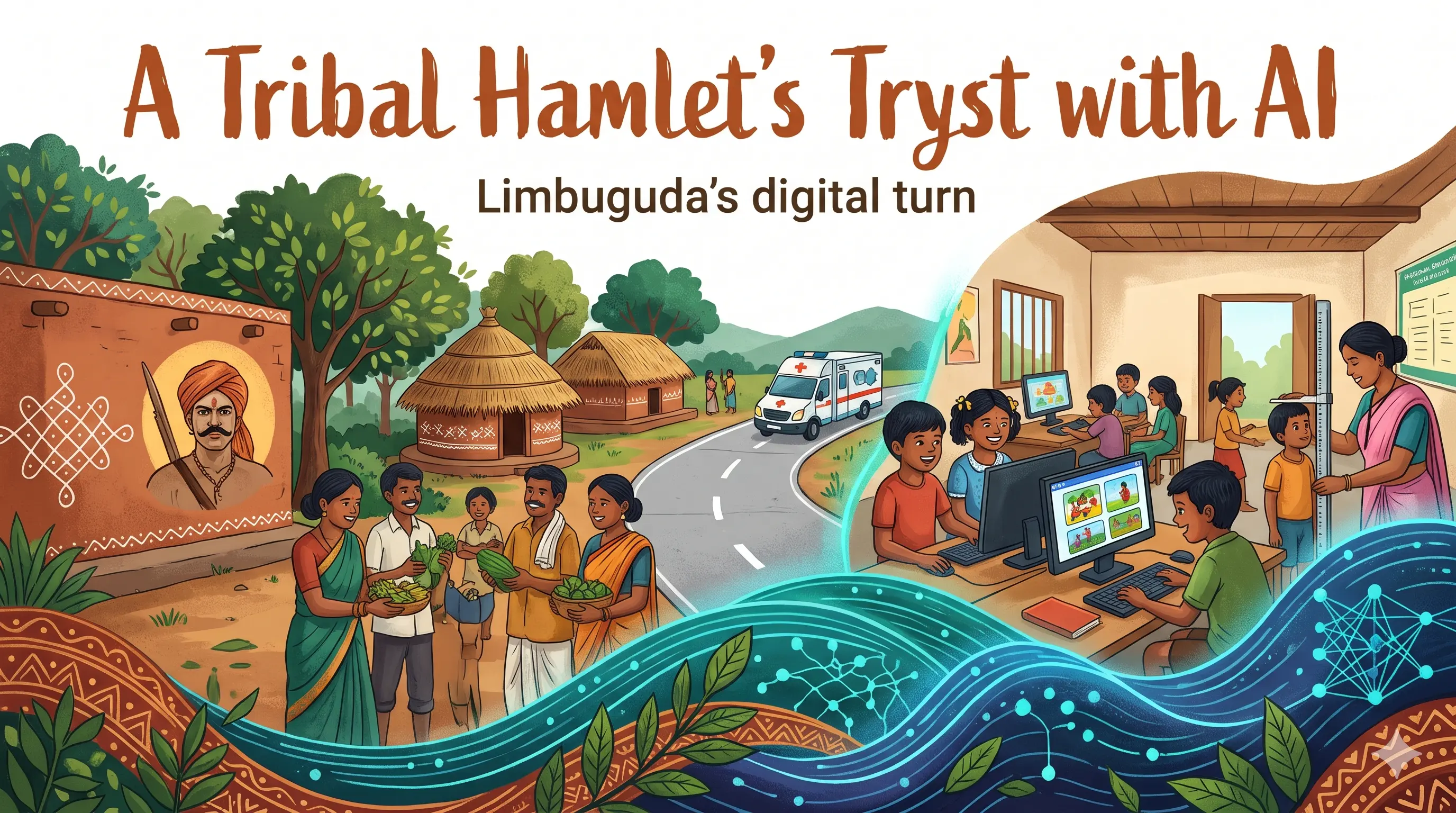
In the remote hills of Kumram Bheem Asifabad district, Limbuguda, a hamlet of Kolam tribal families, is witnessing a digital transformation. A Multipurpose Centre (MPC) set up under PM-JANMAN is utilizing AI-assisted tools to enhance education, healthcare, and nutrition for this marginalized PVTG habitation, serving as a model for holistic tribal development.
Introduction
Context & Background
Key Points
- •PVTG Classification: The Fourth Five Year Plan created a sub-category within STs to identify the most vulnerable groups based on the Dhebar Commission report (pre-agriculture technology, stagnant population, low literacy, subsistence economy). There are 75 PVTGs across 18 states and 1 UT.
- •The Limbuguda Context: Located 320 km from Hyderabad, this forested hamlet is home to the Kolam tribe (a PVTG). The community faces high school dropout rates due to poverty, poor connectivity, and limited access to quality education.
- •Multipurpose Centre (MPC) as a Hub: Established at a cost of ₹60 lakh under PM-JANMAN, the MPC integrates an Anganwadi, an ANM health unit, a computer lab, and a digital learning hall under one roof.
- •AI-Assisted Learning: Primary students use Assisted Language Learning (ALL) and Assisted Mathematics Learning (AML). Higher classes utilize tech-enabled resources like Khan Academy.
- •Bridging the Digital Divide: Tribal children are using computers for the first time, reducing the rural-urban learning gap and fostering aspirations for higher education and government jobs.
- •Government Interventions: Initiatives like PM-JANMAN (housing and holistic development), Van Dhan Vikas Karyakram, MSP for Minor Forest Produce, and TRIFED Digital connect are concurrently aiming to uplift these communities.
Perspectives on Tribal Communities
| Thinker/Personality | Quote/Perspective | Bookmark |
|---|---|---|
| DR. B.R. Ambedkar | The tribal people of India are the most vulnerable and marginalised, yet they carry with them a rich heritage of culture, art, and wisdom. | |
| Mahatma Gandhi | The Adivasis of India have lived in harmony with nature for centuries. They are the real custodians of India’s forests, rivers, and mountains. | |
| Amartya Sen | The development of tribal communities should not only be measured by economic standards but also by the extent to which they are able to preserve their culture and dignity. | |
| Ramchandra Guha | The Adivasis are the original environmentalists of India. Long before the concept of ‘sustainable development’ entered our vocabulary, tribal communities practised it in their daily lives. |
Significance of Selected PVTGs in India
| Tribe | Region | Cultural & Environmental Significance | Bookmark |
|---|---|---|---|
| Toda | Nilgiri Hills | Preservation of traditional embroidery and unique temple architecture. | |
| Baiga | Madhya Pradesh | Practices shifting cultivation that minimises environmental impact and allows forest regeneration. | |
| Kattunayakan | Kerala | Lives in close harmony with nature, relying on sustainable harvest of honey and non-timber forest products. | |
| Dongria Kondh | Odisha | Holds extensive knowledge of medicinal plants in Niyamgiri hills, aiding modern medical research. |
Related Entities
Impact & Significance
- •Educational Advancement: Access to computers and tech-enabled platforms like Khan Academy is raising aspirations and fundamentally changing how primary and secondary concepts are grasped.
- •Integrated Healthcare: By housing an Anganwadi and ANM health unit, the centre allows for continuous monitoring of malnutrition and anemia, severe issues among PVTG women and children.
- •Infrastructural Catalyst: The establishment of the digital centre necessitated the building of a cement road, showcasing how digital inclusion drives physical infrastructure development.
- •Cultural Revitalization: Murals of tribal heroes (like Kumram Bheem) at the centre ensure that modern education is intertwined with cultural pride rather than alienation.
Challenges & Criticism
- •Digital Infrastructure Gaps: The success of AI-assisted tools heavily relies on high-speed internet, which remains unreliable in deeply forested and hilly terrains.
- •Transport and Mobility: Lack of regular bus services limits the community's ability to access higher educational institutions or markets at the mandal headquarters.
- •Economic Realities: With families still dependent on rain-fed cotton farming and daily wage labor, digital literacy must be quickly paired with tangible livelihood and skill development.
- •Deep-Rooted Social Barriers: Superstitions, inadequate housing, and historical marginalization continue to pose psychological and social hurdles to full community participation.
Future Outlook
- •Model for Tribal Empowerment: Limbuguda’s MPC is emerging as a potential role model that can be replicated in other remote tribal regions across India.
- •Infrastructure Expansion: The district administration plans to extend similar MPCs to other PVTG habitations, augmented with mobile medical units, housing, and electricity support.
- •Capacity-Building over Welfare: The long-term focus is shifting from mere infrastructural welfare to improving skills, building confidence, and ensuring self-reliance.
- •Protecting Indigenous Knowledge: Even as digital literacy expands, community leaders emphasize the vital need to safeguard traditional medicinal, ecological, and cultural knowledge.
UPSC Relevance
- • GS-1 (Indian Society & Diversity): Features of tribal communities, preservation of tribal culture and indigenous knowledge.
- • GS-2 (Social Justice & Governance): Welfare schemes for vulnerable sections (PM-JANMAN, PVTGs), role of technology in bridging the rural-urban divide, health and education interventions.
- • GS-3 (Science & Tech / Environment): Application of AI in everyday life (education in remote areas), sustainable living practices of tribes.
Sample Questions
Prelims
With reference to Particularly Vulnerable Tribal Groups (PVTGs) in India, consider the following statements and select the correct option:
- (a)PVTGs were conceptualized during the First Five Year Plan based on the Xaxa Committee report.
- (b)There are exactly 75 PVTGs in India, spread across all 28 states.
- (c)A stagnant or declining population and a pre-agriculture level of technology are among the criteria for PVTG identification.
- (d)The PM-JANMAN scheme exclusively focuses on providing digital devices to tribal artisans.
Mains
“Technology, when combined with localized community participation, can act as a powerful equalizer in India’s remote tribal areas.” Discuss this statement in the context of recent initiatives targeting Particularly Vulnerable Tribal Groups (PVTGs).
Introduction: Define PVTGs briefly. Introduce the recent digital interventions in tribal hamlets (like Limbuguda) under schemes like PM-JANMAN.
Body:
• Vulnerabilities of PVTGs: Highlight the criteria (Dhebar Commission) such as low literacy, subsistence economy, and geographical isolation that keep PVTGs marginalized.
• Role of Technology as an Equalizer: Discuss AI-assisted learning (ALL, AML), digital exposure reducing the rural-urban gap, and unified MPCs delivering health and education (e.g., the Limbuguda model).
• Holistic Development & Challenges: Emphasize how tech interventions are supported by PM-JANMAN, but acknowledge infrastructural gaps like internet connectivity, transport, and the need to preserve indigenous knowledge.
Conclusion: Conclude that a paradigm shift from mere welfare to capacity-building through digital empowerment is essential for the sustainable socio-economic integration of PVTGs without compromising their cultural identity.