
National Deworming Day 2026: A Mass Preventive Health Initiative
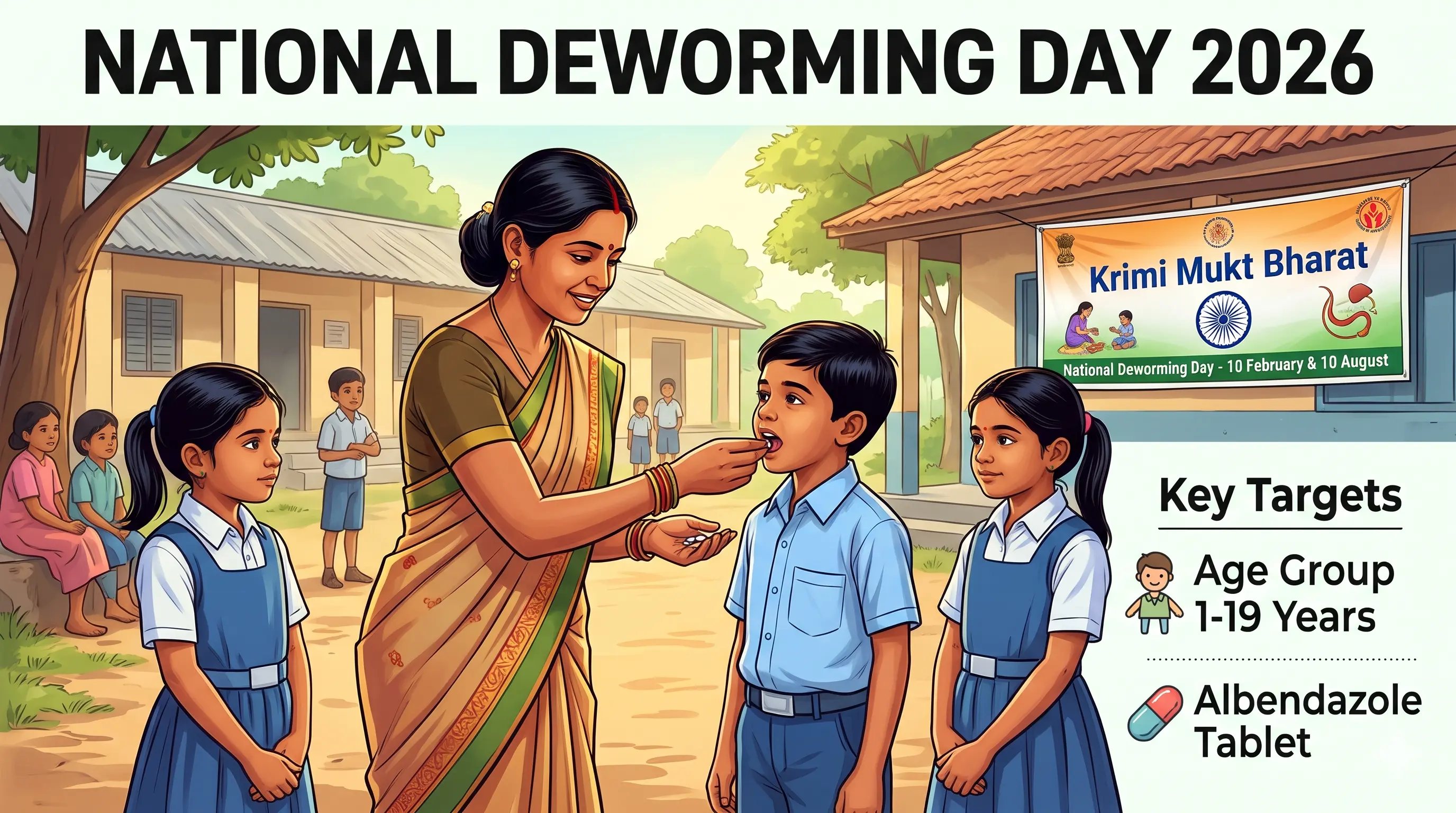
Implemented bi-annually on February 10 and August 10, National Deworming Day is a massive public health campaign by India's Ministry of Health and Family Welfare. Launched in 2015, it targets children and adolescents aged 1-19 with Albendazole tablets to eliminate intestinal worm infections, improve nutrition, and safeguard cognitive development.
Introduction
Context & Background
Key Points
- •Mass Preventive Health Initiative: Launched in 2015 by the Ministry of Health and Family Welfare, NDD aims to reach both enrolled and out-of-school populations aged 1-19 years, becoming one of the largest global health initiatives.
- •Drug Administration: Safe and free Albendazole 400 mg tablets are provided through schools and Anganwadi centres, leveraging existing institutional infrastructure for vast reach.
- •Inter-Ministerial Coordination: The initiative represents a joint implementation model combining the efforts of the Ministries of Health, Education, and Women and Child Development.
- •Mop-up Strategy: Features structured 'mop-up' rounds after the main administration days to ensure universal coverage and address cases that were initially missed.
- •Scientific Monitoring: The National Centre for Disease Control (NCDC) ensures data-backed implementation by conducting baseline and follow-up prevalence surveys.
Key Features of National Deworming Day
| Feature | Description | Bookmark |
|---|---|---|
| Frequency | Biannual (10 February and 10 August) | |
| Target Group | Children and adolescents (1-19 years) | |
| Drug Administered | WHO-approved Albendazole 400 mg | |
| Delivery Platforms | Schools, Anganwadi centres, and community outreach | |
| Mop-up Rounds | Additional days to cover children missed on the main date |
Theme and Focus Areas (2026)
| Focus Area | Objective | Bookmark |
|---|---|---|
| Krimi Mukt Bharat | Eliminating intestinal worm infections to safeguard nutrition, immunity, and cognitive development. | |
| WHO-aligned Strategy | Adherence to global guidelines on periodic mass deworming in high-risk regions. | |
| Preventive Health Approach | Emphasis on preventive treatment through mass drug administration even without prior diagnosis. | |
| Community Involvement | Encouraging the active participation of parents, educators, ASHA workers, and frontline health workers. |
Related Entities
Impact & Significance
- •Nutritional & Cognitive Gains: Eliminating worms allows children to absorb nutrients properly, directly combatting malnutrition and improving attention and learning capacities in school.
- •Reduction in Anaemia: Deworming mitigates chronic blood loss caused by parasites, addressing a major cause of anaemia among socio-economically vulnerable populations.
- •Scale of Reach: Achieving coverage of over 22 crore children in a single round (2019 data) demonstrates a successful model of mass health intervention using existing grassroots platforms.
- •Inter-generational Benefits: Lowering the worm burden in children decreases environmental contamination, thereby reducing transmission rates across households and communities.
Challenges & Criticism
- •Reinfection Risks: Without sustained behavioral changes in sanitation (like handwashing, using footwear, and using clean toilets), children remain highly susceptible to reinfection shortly after treatment.
- •Reaching the Unenrolled: While schools and Anganwadis cover many, tracking and dosing out-of-school children, especially in migrant or marginalized communities, remains an ongoing hurdle.
- •Logistical Constraints: Ensuring an uninterrupted supply chain of Albendazole, maintaining quality, and managing distribution in remote or hilly terrains poses operational challenges.
- •Awareness Gaps: Overcoming parental skepticism or misconceptions regarding the side effects of deworming pills requires continuous and culturally sensitive community education.
Future Outlook
- •Targeting Out-of-School Children: Increasing focus on mapping and reaching transient populations, marginalized groups, and out-of-school children who miss institutional delivery.
- •WASH Integration: Strengthening the crucial link between deworming medication and the Water, Sanitation and Hygiene (WASH) framework (like handwashing and clean toilets) to prevent reinfection.
- •Digital Tracking & Analytics: Utilizing robust data systems to track coverage accurately across dense and transient populations, and evaluating long-term educational and health impacts.
UPSC Relevance
- • GS-2 (Social Justice): Issues relating to development and management of Social Sector/Services relating to Health, Education, Human Resources.
- • GS-2 (Governance): Inter-ministerial coordination, policy implementation leveraging grassroots primary health care setups.
- • Prelims Focus: Target age group (1-19 years), drug used (Albendazole), nodal ministries involved, and the concept of mass drug administration.
Sample Questions
Prelims
Consider the following statements regarding India's National Deworming Day (NDD):
- (a)It targets children and adolescents aged 1-19 years, including out-of-school populations.
- (b)Albendazole tablets are administered solely on a prescription basis after a positive diagnosis.
- (c)The programme features joint implementation by the Ministries of Health, Education, and Women and Child Development.
Mains
Analyze the significance of National Deworming Day as a mass preventive public health strategy in India. Discuss the challenges in its implementation and suggest measures for sustainable outcomes.
Introduction: Launched in 2015, the National Deworming Day is one of the world's largest public health campaigns targeting children and adolescents (1-19 years). It operates on a fixed-day preventive strategy to eradicate intestinal worms and enhance child development.
Body:
• Significance: Eliminates Soil-Transmitted Helminths (STH); improves nutritional uptake and cognitive development; mitigates chronic anaemia; lowers long-term healthcare costs; achieves high coverage by leveraging existing infrastructure (schools, Anganwadis).
• Challenges: Behavioral and cultural resistance to taking medication; tracking and covering out-of-school/transient populations; logistical hurdles in remote areas; sustaining hygiene practices to prevent the cycle of reinfection.
• Measures: Stronger integration with WASH (Water, Sanitation, and Hygiene) behavioral initiatives; enhanced capacity building for frontline workers; real-time digital monitoring for precise coverage tracking; sustained community and parental engagement.
Conclusion: A successful deworming strategy must transition from merely administering tablets to fostering a comprehensive behavioral change towards hygiene and sanitation, solidifying India's progress toward Sustainable Development Goal 3 (Good Health and Well-being).