
India’s Dilemma in the West Asia War
As the deepening U.S.-Israel-Iran conflict alters the Persian Gulf's security landscape, India is shifting toward a pragmatic, interest-driven West Asia policy. By co-sponsoring UNSC Resolution 2817 to condemn attacks in the Gulf while balancing ties with Iran, the GCC, and Israel, New Delhi faces the challenge of protecting its diaspora, energy supplies, and maritime routes without compromising its strategic autonomy.
Introduction
Context & Background
Key Points
- •Strategic Neutrality vs. Moral Stance: India has traditionally maintained a policy of balanced neutrality across Iran, Israel, and the GCC to safeguard strategic autonomy. However, critics view the muted official tone as moral ambiguity compared to historical precedents, such as the clear condemnation of the 2003 Iraq invasion.
- •Pragmatic 'Hard Diplomacy': India's contemporary West Asia posture has shifted from ideological rhetoric to interest-based realism, focusing on trade, investment, energy security, and counter-terrorism.
- •Co-Sponsorship of UNSC Resolution 2817: India co-sponsored the GCC-backed UNSC Resolution 2817 (passed with 13 votes in favour; Russia and China abstaining), which condemned Iranian attacks on GCC members and disruptions to shipping in the critical Strait of Hormuz.
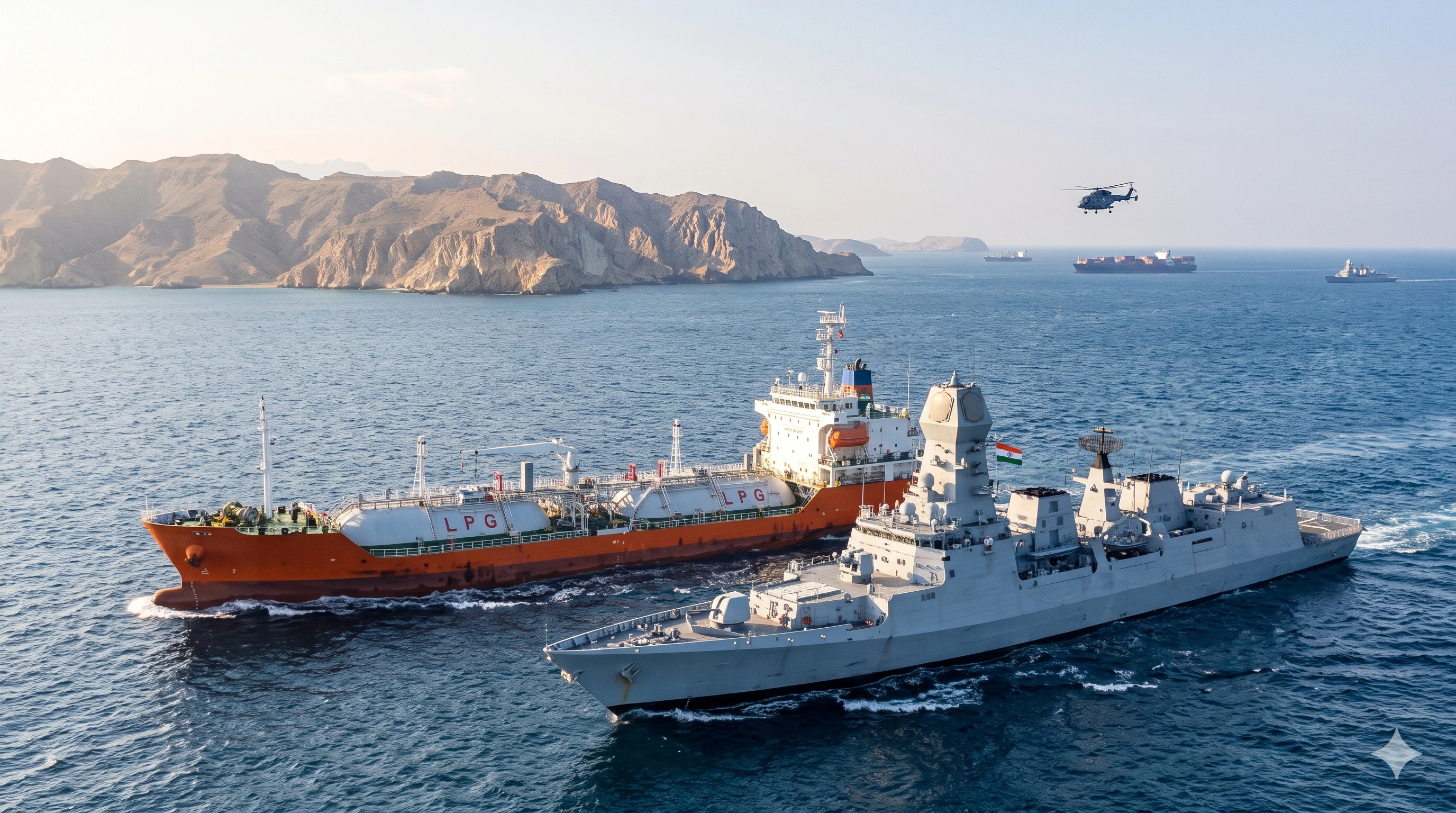
- •Vital Energy & Diaspora Stakes: India hosts approximately 10 million citizens across GCC nations and relies on the Persian Gulf for around 50% of its crude oil and nearly 90% of its LPG imports.
- •Preserving Strategic Balance: Despite backing the UNSC resolution for maritime security and civilian protection, India continues engaging Tehran due to critical dependencies, including regional connectivity through Chabahar Port and broader continental access.
India's Strategic and Economic Stakes in the Persian Gulf
| Strategic Factor / Chokepoint | Scale / Volume | Significance for India | Bookmark |
|---|---|---|---|
| Indian Diaspora in GCC | ~10 Million | Paramount priority for civilian safety, remittances, and welfare. | |
| Crude Oil Imports from Gulf | ~50% | Critical vulnerability requiring uninterrupted energy supplies. | |
| LPG Imports from Gulf | ~90% | Direct impact on domestic household and commercial fuel security. | |
| Strait of Hormuz Seaborne Oil | ~25% of Global Trade | Crucial transit chokepoint vulnerable to regional maritime disruptions. |
Core Tenets of India’s Evolving West Asia Doctrine
| Doctrine Feature | Description | Strategic Implication | Bookmark |
|---|---|---|---|
| Shift to Hard Diplomacy | Pragmatic, national interest-based realism prioritising security, investments, and clear alignment. | Moves away from moralistic Non-Aligned posturing to outcome-focused engagement. | |
| Reduced Balancing Rhetoric | Less emphasis on trying to please every faction simultaneously. | Provides clarity to strategic partners while risking perception of bias. | |
| Direct Strategic Outreach | High-level leadership visits and direct lines with regional leaders. | Signals India's proactive diplomatic role and capacity to protect its core interests. |
Related Entities
Impact & Significance
- •Energy Security: Direct exposure to price shocks and supply blockages across the Strait of Hormuz, through which ~25% of global seaborne oil moves.
- •Remittances and Expatriate Safety: Potential large-scale evacuation challenges and income disruptions for the ~10 million Indian diaspora in the Gulf.
- •Maritime Trade Continuity: Escalated shipping insurance premiums, freight spikes, and re-routing costs around the Cape of Good Hope impacting trade competitiveness.
- •Geopolitical Positioning: Demonstrates India's readiness to take decisive international stances against non-state and state-sponsored disruptions to global commerce.
Challenges & Criticism
- •Perception of Strategic Tilt: Backing resolutions against Iranian actions risks alienating Tehran, potentially complicating the operationalisation of the Chabahar Port corridor.
- •Deviation from Historic Neutrality: Domestic and international critics argue that the reduced rhetorical focus on Palestinian issues departs from India's traditional role in the Global South.
- •Risk of Entanglement: Deepening strategic alignment with Gulf partners and Western security frameworks carries the hazard of drawing New Delhi into regional escalations.
- •Diplomatic Agility Demands: Slower reactions to leadership transitions or rapid political developments in Tehran can diminish diplomatic sensitivity and mutual trust.
Future Outlook
- •Agile Multi-Alignment: Continuing high-level bilateral engagements across Riyadh, Abu Dhabi, Tel Aviv, and Tehran to prevent entrapment in regional polarization.
- •GCC+1 Economic Strategy: Capitalising on global investment diversification by positioning India as a stable, high-growth alternative hub for Gulf sovereign wealth funds.
- •Maritime Security Cooperation: Increasing joint naval surveillance, anti-piracy operations, and coordinated patrols around critical chokepoints like the Strait of Hormuz and Bab-el-Mandeb.
- •Humanitarian and Soft Power Outreach: Expanding consular crisis-management capabilities, evacuation readiness, and humanitarian assistance to build durable goodwill.
UPSC Relevance
- • GS-2 (India and its Neighborhood / Bilateral Relations): India's evolving West Asia doctrine, strategic autonomy, and management of complex multi-lateral ties.
- • GS-2 (Effect of Policies and Politics of Developed & Developing Countries): Geopolitical ripple effects of the Persian Gulf conflict on India’s economy and security.
- • GS-3 (Energy Security & Infrastructure): Vulnerability of energy supply chains (crude oil, LPG) and maritime trade chokepoints (Strait of Hormuz).
- • Mains Focus: Critical analysis of India's pivot from traditional Non-Alignment to interest-driven realism in West Asia.
Sample Questions
Prelims
With reference to the strategic dynamics of West Asia and maritime security, which of the following statements is correct?
- (a)India is a formal permanent member of the Gulf Cooperation Council (GCC).
- (b)The Strait of Hormuz connects the Persian Gulf with the Gulf of Oman and the Arabian Sea.
- (c)India's crude oil imports from the Persian Gulf account for less than 15% of its total domestic demand.
Mains
“India’s contemporary foreign policy in West Asia reflects a calibrated shift from moralistic non-alignment to pragmatic interest-driven diplomacy.” Critically examine this statement in the context of the escalating West Asia conflict and India's co-sponsorship of UNSC Resolution 2817.
Introduction: Highlight the widening conflict in West Asia and cite India's co-sponsorship of UNSC Resolution 2817 as evidence of an assertive, interest-led diplomatic framework.
Body:
• Shift to Pragmatic Diplomacy: Prioritisation of security partnerships, diaspora welfare (~10 million in GCC), and direct energy interests (~50% crude, ~90% LPG) over traditional ideological balancing.
• Drivers of UNSC Resolution 2817 Co-sponsorship: Firm stance against disruption of freedom of navigation in the Strait of Hormuz and direct threats to GCC allies hosting vital Indian assets.
• Dilemmas and Challenges: Accusations of tilt towards the US-Israel axis; potential friction with Tehran threatening connectivity ambitions like the Chabahar Port project; risks of regional overreach.
Conclusion: Emphasise that India must retain strategic autonomy through agile multi-alignment, balancing security concerns in the Gulf with sustained engagement across Tehran, Tel Aviv, and Arab capitals.