
Winter Peak Power Surge: Drivers, Impacts, and the Way Forward
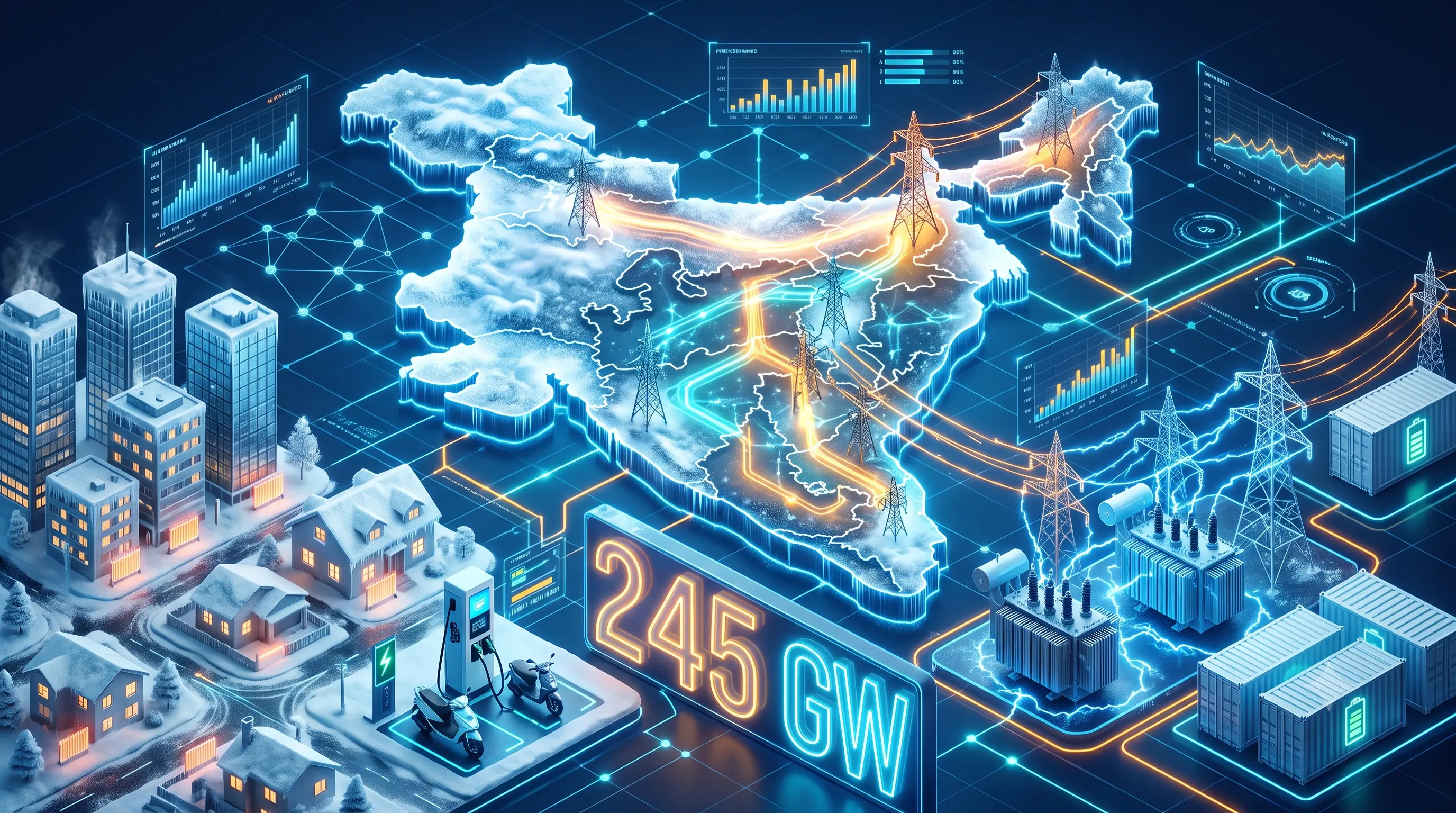
India's peak power demand reached a record 245 GW on January 9, 2026, driven by intense cold conditions and evolving consumption patterns. This article explores the drivers behind this unprecedented winter surge, its impact on grid management, and strategies to ensure future stability.
Introduction
Context & Background
Key Points
- •Harsher Winter Loads: Unusually cold conditions across large parts of India increased domestic electricity use for heating and climate conditioning.
- •Muted Summer Cooling: Summer 2025 saw intermittent rainfall and relatively mild temperatures, keeping the summer peak (242 GW) well below the projected 277 GW.
- •Climate Volatility: Seasonal demand is becoming less predictable due to changing weather patterns, disturbing the traditional 'summer peak' assumption.
- •EV Charging Push: Rapid growth of electric two-wheelers, especially in towns and gig-economy segments, is adding a new baseload and charging load.
- •Building Architecture: Rising glass-heavy commercial and residential buildings require higher climate conditioning even in winter months, expanding base electricity demand.
Changing Power Demand Dynamics
| Factor | Traditional Scenario | Current Reality | Bookmark |
|---|---|---|---|
| Seasonal Peak | Summer driven (due to cooling loads) | Winter peaks emerging (245 GW in Jan 2026) | |
| Weather Predictability | Predictable summer peaks | Climate volatility disrupting traditional assumptions | |
| Base Demand Growth | Driven by standard urbanization | Driven by glass-heavy buildings and EV charging loads |
Related Entities
Impact & Significance
- •Peak Frequency Shock: Short-duration stress events are becoming much sharper. For instance, peak demand crossed the 240 GW mark only 7 times during April–December 2025, but hit this critical threshold on three separate days (January 9, 12, and 13) in just the first half of January 2026.
- •Rising Winter Sensitivity: Peak demand in early January rose over 3% year-on-year. This forces power utilities to maintain higher operational reserves and heavily restricts their ability to schedule vital plant maintenance during what was previously considered the 'off-peak' season.
- •Planning and Investment Mismatch: While the baseline annual demand is growing slowly, the disproportionate surge in extreme peak loads requires massive capital investments specifically targeted at 'peaking capacity' rather than continuous baseload power.
Challenges & Criticism
- •Inflexible Generation Assets: India still relies heavily on traditional thermal plants which cannot be rapidly ramped up or down to manage sudden, short-duration load spikes caused by immediate temperature drops.
- •Lagging Storage Infrastructure: The deployment of grid-scale energy storage solutions like BESS and Pumped Hydro Projects remains insufficient, making it difficult to absorb surplus off-peak energy for use during unexpected winter peaks.
- •Outdated Forecasting Methods: Existing load forecasting models rely heavily on historical seasonal averages, leaving grid operators vulnerable to unexpected demand spikes caused by sudden, granular micro-weather events.
Future Outlook
- •Storage Scaling: Expanding grid-scale storage is critical to shift surplus energy from non-peak to peak hours. Deploying Battery Energy Storage Systems (BESS) at scale will provide crucial buffering capacity.
- •Firm Capacity Addition: Increasing reliable, round-the-clock (RTC) power sources like nuclear and advanced thermal plants is necessary for overall grid stability.
- •Demand Forecasting Upgrade: Transitioning to climate-linked load forecasting that uses granular weather models to predict demand spikes more accurately.
- •EV Load Management: Promoting smart charging infrastructure and time-of-day (ToD) tariffs to incentivize EV users to avoid charging during peak stress hours.
UPSC Relevance
- • GS-3 (Infrastructure - Energy): Structural changes in India's power demand, renewable energy integration, and grid stability challenges.
- • GS-3 (Environment & Disaster Management): Impact of climate change and extreme weather events on core infrastructure planning.
- • Mains Focus: Analyzing the shift from summer to winter peak power demand and proposing policy measures for national energy security.
Sample Questions
Prelims
With reference to the changing dynamics of India's power demand, consider the following statements: 1. The implementation of Time-of-Day (ToD) tariffs is primarily aimed at shifting electricity consumption from peak to off-peak hours. 2. In recent times, India's power grid has experienced peak demand surpassing summer levels during severe winter cold waves. 3. Battery Energy Storage Systems (BESS) are utilized to generate primary baseload electricity independently. Which of the statements given above is/are correct?
1 and 2 only
2 and 3 only
1 and 3 only
1, 2, and 3
Answer: Option 1
Explanation: Statement 1 is correct: ToD tariffs incentivize users to shift consumption to off-peak hours to manage grid load. Statement 2 is correct: January 2026 saw peak demand (245 GW) surpass the summer 2025 peak (242 GW). Statement 3 is incorrect: BESS stores electricity generated from other primary sources (like solar or wind) and does not generate electricity on its own.
Mains
“The recent surge in India's winter power demand highlights the vulnerability of our traditional grid planning to climate volatility and new technological adoptions.” Analyze the factors driving this shift and suggest measures to ensure grid resilience.
Introduction: Begin by citing the January 2026 data where peak power demand crossed 245 GW, surpassing the summer 2025 peak, signaling a fundamental departure from traditional seasonal consumption patterns.
Body:
• Drivers of the Shift: Extreme winter cold increasing heating loads; muted summer demand due to intermittent rains; rapid EV adoption adding continuous charging loads; and energy-intensive modern building designs.
• Impacts: Increased frequency of peak shocks (crossing 240 GW multiple times); higher grid sensitivity requiring utilities to maintain year-round reserves; mismatch between slow overall growth (1.5-2%) and steep peak spikes.
• Measures for Resilience: Scaling grid-level storage (BESS); expanding firm baseload capacity (nuclear/thermal); upgrading forecasting models using granular weather data; and implementing EV load management (ToD tariffs).
Conclusion: Conclude by emphasizing that as climate anomalies become the norm, India's power sector must pivot from seasonal planning to agile, year-round resilience through technology and proactive policy interventions.