
General Awareness · SSC CGL Notes
Everyday science — SSC CGL General Awareness Notes
Free SSC CGL notes with rules, shortcuts, worked examples and practice questions for every topic. 56 topics.
Open in the interactive reader: bookmarks, progress tracking and read-aloud.
Everyday physics and chemistry
Use the governing principle and units to distinguish similar everyday phenomena.
Concepts and method
Force changes motion; pressure depends on force and area; heat transfer occurs by conduction, convection or radiation. In chemistry, acids and bases, oxidation and separation methods are common application clues.
Example 1
A sharp knife exerts greater pressure than a blunt one for the same force because its contact area is smaller.
Example 2
Metals conduct heat efficiently; a vacuum flask reduces conduction, convection and radiation through its construction.
Example 3
Filtration separates an insoluble solid from a liquid, while distillation uses different boiling points.
Common errors
Do not confuse heat with temperature, mass with weight, or filtration with evaporation.
Revision
For each phenomenon record cause, measurable quantity, unit and one practical example.
Life science, health and scientific developments
Connect body systems, pathogens, nutrition and research terms to the evidence stated in the question.
Concepts and method
Cells are the basic units of life; organs work in systems. Vaccines train immune memory, antibiotics target susceptible bacteria, and balanced nutrition supplies energy and building materials. A scientific claim should be separated from a hypothesis, observation and controlled test.
Example 1
A vaccine prepares immune responses without being the same as an antibiotic treatment for bacterial infection.
Example 2
Iron deficiency can affect haemoglobin formation; identifying the nutrient and the body function prevents a vague answer.
Example 3
A controlled experiment changes one factor while measuring an outcome and keeping relevant conditions comparable.
Common errors
Do not call viruses bacteria, or treat correlation in a small observation as proof of causation.
Revision
Map each health clue to agent, body process, prevention and evidence level.
Comprehensive Guide to Physics: Newton’s Laws, Forces, and Gravitation
Physics is the study of the fundamental laws of nature that govern matter and energy. For UPSC, understanding these concepts is crucial as they form the basis of everyday technology, space exploration, and engineering. This guide breaks down complex mechanics into simple, understandable segments for beginners.
1. Classical Mechanics: The Foundation
Classical mechanics deals with the motion of macroscopic objects (objects we can see with the naked eye). It is divided into Statics (objects at rest), Kinematics (motion without considering causes), and Dynamics (motion considering the forces that cause it).
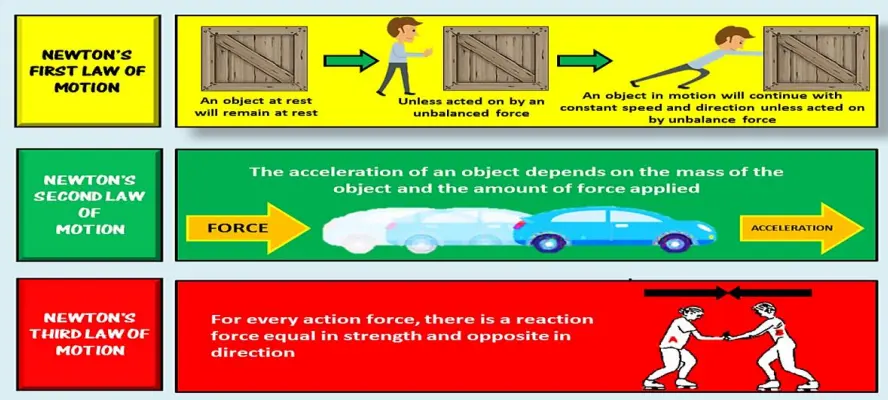
2. Newton’s First Law: The Law of Inertia
Every object continues in its state of rest or uniform motion in a straight line unless compelled by an external unbalanced force.
Key Concept - Inertia: It is the inherent property of an object to resist any change in its state. Mass is a measure of inertia; a heavier object has more inertia and is harder to move or stop.
Practical Examples for UPSC:
1. The Hammer Head: When you hit the handle of a hammer against a surface, the handle stops, but the head continues moving due to inertia, tightening itself onto the wood.
2. Dusting a Carpet: When you beat a carpet with a stick, the carpet moves, but the dust particles tend to stay at rest due to inertia and fall off.
3. Newton’s Second Law: Force and Acceleration
The rate of change of momentum of an object is proportional to the applied force. In simpler terms, Force equals Mass times Acceleration (F = ma).
Key Concepts:
1. Acceleration (a): The rate at which velocity changes. If you change speed or direction, you are accelerating. It is measured in meters per second squared (m/s2).
2. Momentum: The 'quantity of motion' an object has (p = mv, where m is mass and v is velocity).
Why it matters: It explains why a professional cricketer pulls his hands back while catching a fast ball. By increasing the time, he reduces the rate of change of momentum, thus reducing the force and impact on his hands.
4. Newton’s Third Law: Action and Reaction
For every action, there is an equal and opposite reaction. Forces always exist in pairs (interaction pairs).
Crucial Note: Action and reaction forces act on different bodies. This is why they don't cancel each other out.
Practical Examples:
1. Rocket Propulsion: The rocket pushes exhaust gases downward (Action), and the gases push the rocket upward (Reaction).
2. Recoil of a Gun: When a bullet is fired, the gun pushes the bullet forward, and the bullet pushes the gun backward.
5. Fundamental Forces: Gravity and Friction
A. Universal Law of Gravitation
Every object in the universe attracts every other object. The force is directly proportional to the product of their masses and inversely proportional to the square of the distance between them. The formula is: F = G (m1 m2 / r2).
B. Friction: The Necessary Evil
Friction is a contact force that opposes the relative motion between two surfaces. It depends on the nature of the materials (measured by the Coefficient of Friction).
1. Static Friction: Operates when the object is stationary.
2. Kinetic Friction: Operates when the object is sliding.
6. Circular Motion: Centripetal and Centrifugal
1. Centripetal Force: A real force directed towards the center, necessary for circular motion (e.g., Earth orbiting the Sun). The formula is F = mv2 / r.
2. Centrifugal Force: An 'apparent' or pseudo-force felt by an observer in a rotating frame, acting outwards (e.g., the force felt in a spinning merry-go-round).
UPSC Edge: Common Traps and Applications
Do not confuse mass with weight; mass is constant but weight changes with g.
Action-reaction forces never cancel because they act on different bodies.
Centripetal force is real; centrifugal is pseudo (apparent in rotating frames).
Applications: banked roads, satellite orbits, and safe turning in vehicles rely on circular motion concepts.
| Quantity | Definition | SI Unit |
|---|---|---|
| Force (F) | A push or pull that causes acceleration | Newton (N) |
| Acceleration (a) | Rate of change of velocity | meters per second squared (m/s2) |
| Momentum (p) | Mass in motion (p = mv) | kilogram meters per second (kg m/s) |
| Gravity (g) | Acceleration due to Earth's pull | 9.8 m/s2 |
Prelims tips
- Inertia depends only on Mass. Speed or volume does not affect it.
- Weight is a force (W = mg), but Mass is constant everywhere.
- The Universal Gravitational Constant (G) is constant everywhere, but g (gravity) changes with altitude and location.
- Centripetal force is real, while centrifugal force is pseudo.
- On a level road, maximum safe speed depends on friction (no friction, no turning).
- At Earth’s center, weight is zero but mass remains unchanged.
Mains points
- Newton’s laws are the bedrock of structural engineering, ensuring bridges and buildings withstand forces.
- The concept of friction is vital for transport safety (ABS braking systems in cars).
- Gravitational principles are essential for satellite technology and Global Positioning Systems (GPS).
- Understanding Force and Motion helps in disaster management, specifically in analyzing the impact of tsunamis or structural collapses.
- Physics of motion informs road safety (speed limits on curves) and engineering design codes.
Did you know?
- The Newton is the force required to accelerate 1 kg of mass at 1 meter per second squared.
- In space, without friction or air resistance, an object thrown will keep moving forever in a straight line (1st Law).
- Friction generates heat—this is why we rub our hands together in winter to stay warm.
Physics Essentials: Work, Power, Energy, and Conservation Laws
In the study of Physics, Work, Power, and Energy are interconnected concepts that describe how forces interact with matter to cause change. Understanding the Laws of Conservation—which state that energy, mass, and momentum cannot be created or destroyed—is fundamental for UPSC as these principles explain everything from industrial machinery to planetary motion.
1. Work: Force in Action
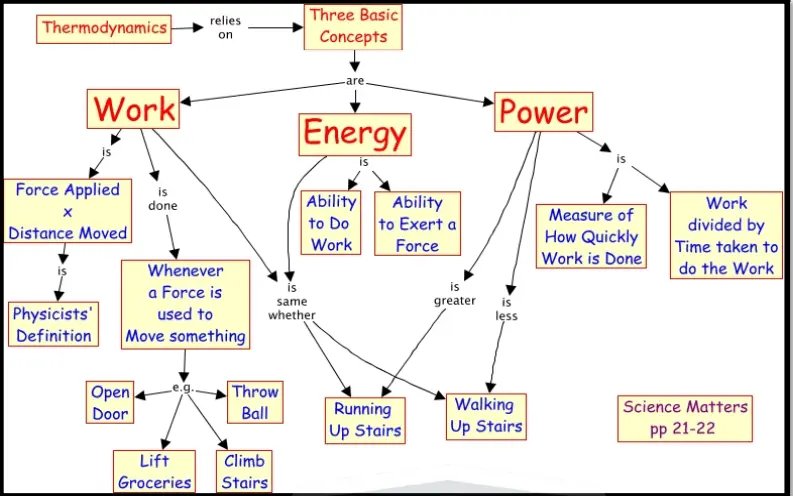
Work is done when a force acting on a body causes a displacement (change in position) of that body. If there is no movement, even if a force is applied, the work done is mathematically zero.
Formula: Work = Force x Displacement (W = F x d).
SI Unit: Joule (J). 1 Joule is the work done when a force of 1 Newton moves an object by 1 meter.
Key Note for UPSC: If you push against a wall for hours, you might get tired, but in physics, the work done is zero because the wall did not move.
2. Power: The Rate of Work
Power measures how fast work is being done. It is the time rate at which energy is transferred or converted.
Formula: Power = Work / Time.
SI Unit: Watt (W). 1 Watt = 1 Joule per second.
Other Units: Horsepower (hp). 1 hp is approximately 746 Watts. It is often used to measure the power of car engines or industrial motors.
3. Energy: The Capacity to Work
Energy is the ability or capacity of an object to do work. Like work, its SI unit is the Joule. Energy exists in many forms:
1. Kinetic Energy (KE): The energy an object possesses due to its motion. Formula: KE = (1/2) mv2.
2. Potential Energy (PE): The energy stored in an object due to its position or shape. For example, a ball held high above the ground has Gravitational Potential Energy. Formula: PE = mgh (mass x gravity x height).
3. Mechanical Energy: The sum of an object's Kinetic and Potential energy.
4. Law of Conservation of Energy
This fundamental law states that energy can neither be created nor destroyed; it can only be transformed from one form to another. The total energy in a closed system remains constant.
Energy Transformations in Daily Life:
Electric Bulb: Electrical energy to Light energy.
Battery/Cell: Chemical energy to Electrical energy.
Electric Motor: Electrical energy to Mechanical energy.
Dynamo: Mechanical energy to Electrical energy.
Microphone: Sound energy to Electrical energy.
5. Other Crucial Conservation Laws
1. Conservation of Mass: Matter cannot be created or destroyed in a chemical reaction; it only changes form.
2. Conservation of Linear Momentum: A system's total momentum (mass x velocity) stays constant unless an external force acts on it. This explains why a gun recoils when fired.
3. Conservation of Angular Momentum: A rotating body will keep rotating at the same rate unless a twisting force (Torque) is applied. This is why ice skaters spin faster when they pull their arms in.
| Device | From (Input) | To (Output) |
|---|---|---|
| Electric Motor | Electrical Energy | Mechanical Energy |
| Dynamo | Mechanical Energy | Electrical Energy |
| Heater | Electrical Energy | Heat Energy |
| Loudspeaker | Electrical Energy | Sound Energy |
Prelims tips
- Work is zero if force and displacement are perpendicular (like a coolie carrying a bag on his head walking horizontally).
- 1 Horsepower = 746 Watts (important for numerical facts).
- Mechanical Energy = Kinetic Energy + Potential Energy.
- In an isolated system, the total momentum is always conserved.
- No external force on a system means linear momentum stays constant.
- Energy is conserved, but usable energy can decrease due to dissipation.
Mains points
- The Law of Conservation of Energy is the basis for sustainable technology and analyzing energy efficiency in industries.
- Understanding Power and Work is essential for developing efficient transport systems and electrical grids.
- Dissipation of energy refers to energy converting into 'useless' forms (like heat due to friction), which engineers try to minimize.
- Conservation laws are universal; they apply to the smallest atoms and the largest galaxies.
- Energy efficiency links directly to policy goals like climate mitigation and industrial competitiveness.
Did you know?
- The concept of 'Horsepower' was created by James Watt to compare the output of steam engines with the power of draft horses.
- A person sleeping still does 'internal work' (heart beating, breathing), but 'mechanical work' in physics is zero.
- The Earth spinning for billions of years is a classic example of Conservation of Angular Momentum.
The Physics of Sound: Waves, Properties, and Phenomena
Sound is a mechanical longitudinal wave produced by vibrations that requires a medium (solid, liquid, or gas) to travel. From the pitch of a bird's chirp to the sudden change in a siren's tone (Doppler Effect), sound physics explains how we perceive the world through hearing. Crucially, sound cannot travel through a vacuum, which is why space is silent.
1. Nature of Sound Waves
Sound is a form of energy that moves as a Mechanical Wave. It requires a medium to transmit its energy because it relies on particle interaction.
A. Longitudinal vs. Transverse Waves
1. Longitudinal Waves (Sound): The particles of the medium move parallel to the direction of the wave. They move back and forth, creating regions of Compression (high pressure) and Rarefaction (low pressure).
2. Transverse Waves (Light): The particles move perpendicular (up and down) to the wave direction. Light does not require a medium and is not a mechanical wave.
2. Key Properties of Sound
Understanding these properties helps distinguish between a whisper and a shout, or a bass drum and a flute.
Amplitude: This is the maximum displacement of the particles. It determines the Loudness. Larger amplitude = Louder sound.
Frequency: The number of oscillations per second, measured in Hertz (Hz). It determines the Pitch. High frequency = Shrill/High pitch; Low frequency = Deep/Low pitch.
Wavelength: The distance between two consecutive compressions or rarefactions.
Time Period (T): The time taken for one complete oscillation.
3. The Speed of Sound
Sound speed is not constant; it changes based on the environment:
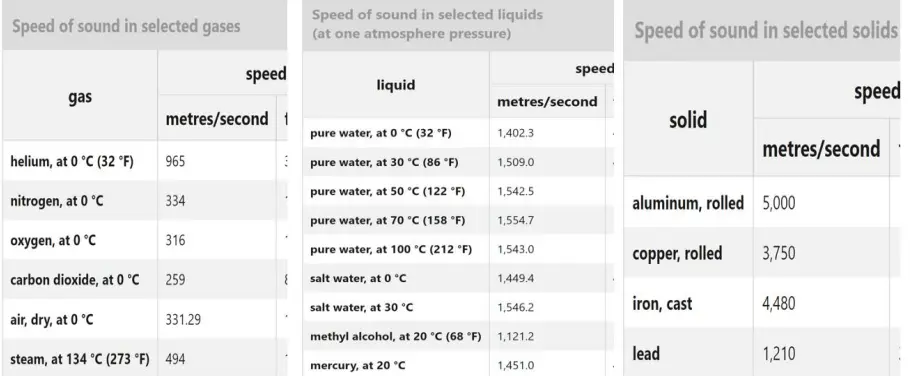
1. Medium: Sound travels fastest in Solids, slower in Liquids, and slowest in Gases because particles are closer together in solids.
2. Temperature: As temperature increases, the speed of sound increases. In air at 0 degrees Celsius, speed is roughly 332 m/s.
3. Density: In gases, speed is inversely proportional to the square root of the density.
4. Reflection and Echoes
Sound bounces off hard surfaces just like light. This is called Reflection.
Echo: A distinct reflected sound heard after the original sound. To hear a clear echo, the reflecting surface must be at least 17.2 meters away. This is because our brain retains sound for about 0.1 seconds (Persistence of Hearing).
5. The Doppler Effect
Have you noticed how an ambulance siren sounds higher as it approaches and lower as it moves away? This is the Doppler Effect.
Approaching Source: Wavefronts 'bunch together,' increasing the frequency (higher pitch).
Receding Source: Wavefronts 'spread out,' decreasing the frequency (lower pitch).
| Medium State | Relative Speed | Example |
|---|---|---|
| Solid | Highest | Steel (approx. 5960 m/s) |
| Liquid | Intermediate | Water (approx. 1480 m/s) |
| Gas | Lowest | Air (approx. 344 m/s at 22°C) |
Prelims tips
- Sound is a Mechanical Longitudinal Wave. Light is an Electromagnetic Transverse Wave.
- Speed of sound: Solids > Liquids > Gases.
- Frequency defines Pitch; Amplitude defines Loudness.
- Minimum distance for Echo: 17.2 meters.
- Speed of sound increases with Temperature and Humidity.
- Ultrasound is > 20 kHz; infrasound is < 20 Hz.
- Sound cannot travel in vacuum; it needs a material medium.
Mains points
- The Doppler Effect is widely used in RADAR, SONAR, and even in medical imaging like Doppler Ultrasound.
- Understanding sound propagation is essential for Acoustics in architecture (designing concert halls or soundproof rooms).
- The Persistence of Hearing (0.1s) is a biological constraint that defines our auditory perception limits.
- Environmental noise pollution is measured in Decibels (dB), a logarithmic unit related to sound intensity and amplitude.
- Noise standards and urban planning rely on acoustics for public health outcomes.
Did you know?
- Sound travels about 4 times faster in water than in air.
- Because there is no air in space to carry sound vibrations, astronauts use radio waves to communicate.
- The Persistence of Hearing is the reason why we hear multiple reflections as 'Reverberation' if the distance is too short for a distinct echo.
Light and Geometrical Optics: Reflection, Refraction, and Dispersion
Light is a fascinating form of energy that behaves both as a wave and a stream of particles (Photons). It is the fastest thing in the universe, capable of traveling through the vacuum of space. Understanding how light bends, bounces, and splits into colors is essential for UPSC Science and Technology, as these principles power everything from the internet (Optical Fibers) to our own vision.
1. The Nature and Speed of Light
Light is electromagnetic radiation that causes the sensation of vision. Unlike sound, which needs a medium like air to travel, light can travel through a vacuum (empty space).
Speed: It travels at a staggering speed of 300,000 kilometers per second (3 x 10^8 m/s). This is why we see lightning before we hear thunder.
Dual Nature: Light is unique because it acts like a wave (it can bend around corners) and like a particle (it can push electrons).
Rectilinear Propagation: In a uniform medium, light always travels in a straight line. This property is why shadows are formed when an opaque object blocks its path.
2. Media of Propagation
How light interacts with an object depends on the material's properties:
1. Transparent: Allows almost all light to pass through. Objects can be seen clearly (e.g., clear water, glass).
2. Translucent: Allows light to pass partially but scatters it. Objects appear blurred (e.g., butter paper, frosted glass).
3. Opaque: Does not allow any light to pass through. It reflects or absorbs the light (e.g., wood, iron).
3. Reflection: The Bouncing of Light
Reflection occurs when light hits a surface and bounces back into the same medium. Surfaces that are highly polished, like mirrors, produce Regular Reflection.
The Two Laws of Reflection:
Law 1: The Incident ray (incoming), the Reflected ray (outgoing), and the Normal (an imaginary line at 90 degrees to the surface) all lie on the same flat plane.
Law 2: The angle at which light hits the surface (Angle of Incidence) is always equal to the angle at which it bounces off (Angle of Reflection).
4. Refraction: The Bending of Light
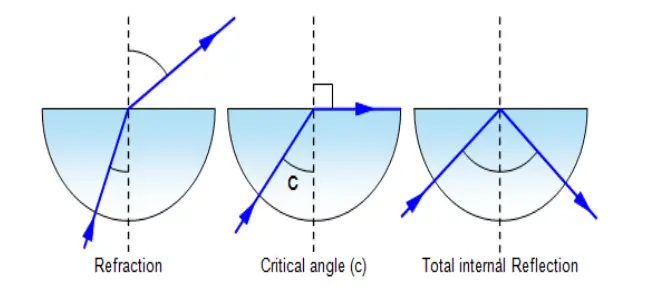
Refraction is the bending of light as it passes from one transparent medium to another (e.g., from Air to Water). This happens because the speed of light changes in different materials.
Important Rules:
Entering a Denser Medium: When light goes from air (rare) to glass (dense), it slows down and bends towards the normal.
Entering a Rarer Medium: When light goes from water (dense) to air (rare), it speeds up and bends away from the normal.
Snell's Law: This law provides a formula to calculate exactly how much the light will bend, based on a value called the Refractive Index.
5. Total Internal Reflection (TIR)
This is a special case of refraction. When light tries to go from a dense medium (like glass) to a rare one (like air) at a very large angle, it doesn't come out at all! Instead, it reflects back inside completely.
The Two Conditions for TIR:
1. Light must travel from a Denser medium to a Rarer medium.
2. The angle of incidence must be greater than the Critical Angle.
Real-world uses: This is how Optical Fibers carry high-speed internet data across oceans—by bouncing light inside the cable repeatedly.
6. Dispersion and VIBGYOR
White light (like sunlight) is actually a mixture of seven colors. When it passes through a prism, each color bends at a different angle because of its wavelength.
VIBGYOR: Violet, Indigo, Blue, Green, Yellow, Orange, Red.
Red Light: Has the longest wavelength. It bends the least. Because it travels the farthest without scattering, it is used for danger signals.
Violet Light: Has the shortest wavelength. It bends the most.
7. Diffraction: Bending around Edges
When light hits a very sharp edge or a tiny hole, it doesn't just go straight; it spreads out slightly. This bending of light around obstacles is called Diffraction. It’s the reason why the edges of shadows are sometimes a bit blurry.
| Phenomenon | Physics Principle Involved |
|---|---|
| Twinkling of Stars | Atmospheric Refraction |
| Rainbow Formation | Dispersion, Refraction, and TIR |
| Mirage in Deserts | Total Internal Reflection (TIR) |
| Blue Sky | Scattering of Light |
| Sparkling Diamond | Total Internal Reflection (TIR) |
Prelims tips
- TIR Condition: 1. Denser to Rarer medium. 2. Angle of Incidence > Critical Angle.
- Scattering: Blue light scatters more than Red (why sky is blue).
- Reflection: Laws apply to both smooth (regular) and rough (diffused) surfaces.
- Refractive Index: It is the ratio of speed of light in vacuum to speed in the medium.
- Mirage is due to total internal reflection in hot air layers.
- Red light is least scattered; hence used in danger signals and fog lights.
Mains points
- Optical Fiber Technology: Critical for India's Digital India mission, enabling high-speed data transmission through Total Internal Reflection.
- Human Eye: Functions as a biological lens system using refraction to focus images on the retina.
- Space Exploration: We see distant stars not as they are now, but as they were years ago, because light takes time to travel across space.
- Atmospheric Optics: Helps in understanding weather patterns and the composition of the atmosphere through light interaction.
- Optics underpins telecom infrastructure and remote sensing for governance.
Did you know?
- Light from the Sun takes roughly 500 seconds to reach your eyes.
- Goldfish can see both infrared and ultraviolet light, which are invisible to humans.
- The reason stop signs and tail-lights are Red is that red light has the longest wavelength and is scattered the least by fog or dust.
Advanced Optics and Liquid Properties: Interference, Scattering, and Surface Tension
Physics explores how light behaves as both waves and particles through phenomena like Interference and Scattering, while also explaining the unique behaviors of liquids through Surface Tension. For UPSC, these concepts explain natural wonders like the blue sky, the shape of raindrops, and how modern technology utilizes light at a subatomic level.
1. Interference of Light: The Mixing of Waves
Interference occurs when two light waves of the same frequency travel in the same direction and overlap (superpose). This overlap redistributes the light energy, creating patterns of brightness and darkness.
Constructive Interference: When the crest of one wave meets the crest of another, they add up to create a brighter light (higher amplitude).
Destructive Interference: When the crest of one wave meets the trough of another, they cancel each other out, resulting in darkness or lower intensity.
Everyday Examples:
1. Soap Bubbles: The shifting rainbow colors on a bubble are due to light waves reflecting off the inner and outer surfaces of the soap film and interfering.
2. Oil on Water: The colorful patterns seen on a wet road with oil are also caused by interference.
2. Scattering of Light: Why the Sky is Blue
Scattering happens when light rays strike molecules of air or water vapor and are redirected in all directions.
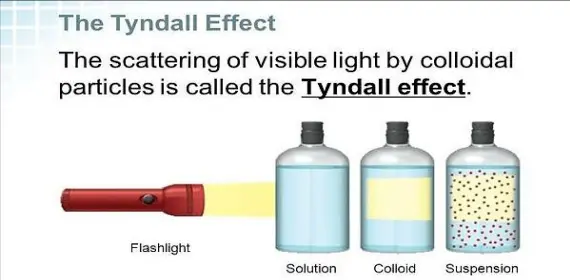
A. Tyndall Effect
When a beam of light passes through a colloid (like dust in a room or milk in water), the path of the light becomes visible because the large particles scatter the light.
Example: Sunlight entering a dusty room through a small window.
B. Rayleigh Scattering
This explains why the sky is blue. Shorter wavelengths (blue/violet) scatter much more easily than longer wavelengths (red). During sunrise or sunset, light travels through more atmosphere, scattering away the blue and leaving the red/orange light to reach our eyes.
3. Compton Scattering: Light as a Particle
While interference proves light is a wave, Compton Scattering proves light acts like a particle (called a Photon).
The Process: A high-energy photon hits a charged particle (like an electron). The photon 'scatters' and loses some energy, increasing its wavelength.
Significance: This discovered by Arthur Compton, confirmed that light carries momentum like a physical object.
4. Surface Tension: The 'Skin' of Liquids
Surface tension is the property of a liquid that makes its surface act like a stretched elastic membrane. It is caused by intermolecular forces (like Van der Waals forces) pulling the surface molecules inward.
Key Effects of Surface Tension:
1. Spherical Raindrops: Liquids naturally want to take the shape with the minimum surface area. For a given volume, a sphere has the smallest surface area.
2. Insects walking on water: Some insects can walk on water because their weight is not enough to break the 'elastic' surface tension of the water.
3. Shaving Brushes: The hairs of a brush spread out in water but cling together when pulled out because the water film on the hairs tries to shrink its surface area.
4. Temperature Effect: Surface tension generally decreases as temperature increases. This is why oil spreads on cold water but forms drops on hot water.
| Phenomenon | Proves Light is a... |
|---|---|
| Interference | Wave |
| Diffraction | Wave |
| Compton Effect | Particle (Photon) |
| Photoelectric Effect | Particle (Photon) |
Prelims tips
- Blue Sky: Short wavelengths (Blue) scatter more. Red Sunset: Long wavelengths (Red) scatter less and reach farther.
- Surface Tension decreases with increasing Temperature.
- Spherical shape of drops is always due to Surface Tension.
- Interference requires Coherent sources (waves of same frequency and constant phase).
- Tyndall effect is seen in colloids, not true solutions.
- Photoelectric effect supports particle nature of light.
Mains points
- Optical Coatings: The principle of interference is used to make 'anti-reflective' coatings on eyeglasses and camera lenses.
- Nanotechnology: Understanding Surface Tension is vital for drug delivery systems and creating water-repellent (hydrophobic) surfaces.
- Quantum Mechanics: The Compton Effect was a turning point in physics that led to the acceptance of the Dual Nature of Light.
- Atmospheric Science: Scattering principles help scientists monitor air pollution and the density of the ozone layer.
- Surface tension concepts aid agriculture and soil-water management practices.
Did you know?
- Water strider insects use surface tension to 'run' on water at speeds up to 1 meter per second!
- The colors on a CD or DVD are another classic example of light interference and diffraction.
- If you add soap/detergent to water, it breaks the surface tension, which is why soapy water can penetrate clothes to clean them better.
Thermodynamics, Magnetism, and Electricity: The Energy and Forces of Matter
Physics explains how energy moves and how forces shape our world through three critical pillars: Thermodynamics (heat and energy), Magnetism (magnetic fields and poles), and Electricity (the flow of charge). For UPSC, these concepts are vital for understanding power generation, climate science, and modern electronics.
1. Thermodynamics: The Science of Heat
Thermodynamics is the study of heat, temperature, and their relation to energy and work. A Thermodynamic Process occurs when the state variables (Pressure, Volume, Temperature) of a system change.
Types of Thermodynamic Processes:
1. Isothermal: Occurs at a constant temperature.
2. Isobaric: Occurs at a constant pressure.
3. Isochoric: Occurs at a constant volume.
4. Adiabatic: No heat enters or leaves the system (e.g., rapid compression of air).
5. Cyclic: The system goes through changes but eventually returns to its original state.
2. The Four Laws of Thermodynamics
Zeroth Law: If two systems are in thermal equilibrium with a third system, they are in equilibrium with each other. (This is the basis for Thermometers).
First Law: Energy cannot be created or destroyed; it only changes form (Law of Conservation of Energy).
Second Law: The Entropy (disorder) of the universe always increases. Heat cannot spontaneously flow from a cold body to a hot body.
Third Law: The entropy of a perfect crystal at Absolute Zero (0 Kelvin) is zero.
3. Magnetism and Magnetic Induction
A magnet always has two poles: North (N) and South (S). Magnetic poles always exist in pairs; you cannot have a lone North pole.
Key Properties:
Like poles repel (N-N or S-S), and unlike poles attract (N-S).
Magnetic Induction: The process where a magnetic material (like iron) becomes temporary magnet when placed near a permanent magnet.
Magnetic Field: The invisible area around a magnet where its force can be felt.
4. Electricity: Static and Current
Electricity is the phenomenon caused by the presence and flow of electric charge.
A. Static Electricity
Charge that stays on an object and does not flow. It is created by friction (rubbing objects together).
Example: Rubbing a plastic comb on hair makes the comb negatively charged, allowing it to pick up small pieces of paper.
B. Electric Current
The flow of electrons or charges through a conductor. For current to flow, there must be a Potential Difference (Voltage).
Current: The rate of flow of charge (measured in Amperes).
Voltage: The 'push' or pressure that moves the charge (measured in Volts).
Flow Direction: Current always flows from High Potential to Low Potential.
| Process | What stays Constant? |
|---|---|
| Isothermal | Temperature (T) |
| Isobaric | Pressure (P) |
| Isochoric | Volume (V) |
| Adiabatic | Heat Content (Q) |
Prelims tips
- Entropy always increases over time (2nd Law).
- Absolute Zero (0 Kelvin or -273.15°C) is the lowest possible temperature where all molecular motion stops.
- Magnetic poles cannot be separated; if you cut a magnet in half, you get two smaller magnets, each with N and S poles.
- Electric current flows from high potential to low potential, but electrons flow from low to high potential.
- Induced current direction follows Lenz's law (opposes change).
- A closed circuit is necessary for steady current.
Mains points
- Entropy and the Environment: The Second Law explains why 100% efficiency in engines is impossible, as some energy is always lost as heat.
- Electromagnetic Induction: The principle behind Electric Generators, where moving magnets create electricity—the backbone of our power grid.
- Superconductivity: Materials that have zero electrical resistance at very low temperatures, potentially revolutionizing power transmission and maglev trains.
- Information Technology: Magnetic storage (like hard drives) uses magnetic induction to store vast amounts of digital data.
- Energy policy and grid stability rely on efficient conversion and loss minimization.
Did you know?
- The Zeroth Law was named after the 1st and 2nd laws were already established, but because it was so fundamental, scientists gave it the number 'Zero'.
- Earth is a giant magnet! Its magnetic core protects us from harmful solar radiation.
- Static shock occurs because your body collects extra electrons (charge) and releases them suddenly when you touch a conductor like a metal doorknob.
Clouds, Lightning, and the Fundamentals of Electromagnetism
Lightning is a spectacular natural display of static electricity on a massive scale. Understanding how clouds become charged, how 'Earthing' protects our infrastructure, and the deep link between electricity and magnetism (Electromagnetism) is essential for UPSC. These principles explain both natural disasters and the technology behind every electric motor and generator.
1. The Science of Clouds and Lightning
Clouds are composed of tiny water droplets or ice crystals. Through friction caused by air currents and collisions between these particles, clouds develop immense static charges.
Charge Separation: Typically, the upper layers of a cloud become positively charged, while the lower layers (closer to the ground) become negatively charged.
The Spark (Lightning): Air is normally an insulator (bad conductor), but when the charge difference becomes too high, the air 'breaks down.' Electrons jump between clouds or from the cloud to the ground, creating a massive spark we see as Lightning.
Thunder: The lightning bolt is incredibly hot. This heat causes the surrounding air to expand explosively, creating sound waves that we hear as thunder. We see lightning before we hear thunder because light travels much faster than sound.
2. Earthing and Lightning Protection
To protect structures from the destructive power of lightning, we use Earthing and Lightning Conductors.
A. Lightning Conductor
A tall metal rod is fixed to the top of buildings. It provides a low-resistance path for the lightning to travel safely into the ground, preventing it from passing through the building's structure.
B. Electrical Earthing
This is the process of connecting electrical equipment or lightning rods directly to the Earth (which has zero electrical potential).
Mechanism: Low-resistance wires (usually iron or copper) are used. In the 'earth pit,' alternate layers of Salt and Charcoal are added to keep the soil moist and increase its conductivity.
Safety: It ensures that 'leakage current' or 'short-circuit current' goes safely into the ground rather than giving a shock to a person.
3. Electromagnetism: The Link between Forces
Electromagnetism is the study of how Electricity and Magnetism interact. This discovery revolutionized the modern world.
Oersted's Discovery: When current flows through a wire, it creates a magnetic field around it. The stronger the current, the stronger the magnet.
Faraday’s Law of Induction
Michael Faraday discovered the reverse: a changing magnetic field can 'induce' or create an electric current in a wire.
Faraday's First Law: Whenever a conductor is placed in a varying magnetic field, an electromotive force (EMF) or voltage is induced. This is how power plant generators turn mechanical motion into electricity.
| Component | Purpose |
|---|---|
| Metal Rod/Wire | Provides a low-resistance path for current. |
| Charcoal | Retains moisture in the soil to maintain conductivity. |
| Salt | Increases the ion concentration to lower soil resistance. |
| Earth (Soil) | Acts as a giant reservoir of zero potential. |
Prelims tips
- Lightning: Flows from negative areas to positive areas.
- Speed Difference: Light (300,000 km/s) vs Sound (0.34 km/s) explains the delay in thunder.
- Earthing: Essential for safety; Earth acts as an infinite 'sink' for electrons.
- Magnetic Field: Created by moving charges (current).
- Lightning conductors work by providing a low-resistance path to earth.
- Earthing uses salt and charcoal to improve soil conductivity.
Mains points
- Disaster Management: Installing lightning conductors on high-rise buildings and telecommunication towers is a mandatory safety protocol.
- Electrical Safety: Proper earthing in residential and industrial zones prevents fire hazards caused by short circuits.
- Technological Impact: Faraday's laws are the foundation of Electric Vehicles (EVs), wireless charging, and the global power generation industry.
- Atmospheric Chemistry: Lightning helps in 'Nitrogen Fixation' by breaking nitrogen molecules in the air, which then dissolve in rain and act as natural fertilizer.
- Disaster protocols include lightning safety for schools, farms, and telecom towers.
Did you know?
- A single bolt of lightning contains enough energy to toast 100,000 slices of bread!
- The air around a lightning bolt is heated to about 30,000 degrees Celsius—that is 5 times hotter than the surface of the Sun.
- Without Electromagnetic Induction, we would not have electric fans, washing machines, or power grids.
Introduction to Chemistry: Matter, Atoms, and Subatomic Structures
Chemistry is the fundamental science that explores what the universe is made of. At the microscopic level, everything—from the air we breathe to the stars in the sky—is composed of Atoms. For UPSC, grasping the structure of the atom is the first step toward understanding chemical reactions, nuclear energy, and the periodic table.
1. What is Matter?
Matter is anything that has mass and occupies volume. In simple terms, if it is 'stuff' you can touch or weigh, it is matter. Matter is made of tiny particles called atoms.
Molecules: Atoms rarely stay alone. They join together in groups called molecules. For example, two Hydrogen atoms and one Oxygen atom join to form a Water molecule.
2. The Evolution of Atomic Theory
Scientists didn't always know what an atom looked like. Our current understanding is the result of centuries of discovery:
1. Dalton’s Atomic Theory: He proposed that atoms are like solid, indivisible billiard balls. He was the first to say each element has its own type of atom.
2. J.J. Thomson (Plum Pudding Model): He discovered the Electron. He thought an atom was a positive sphere with negative electrons stuck in it like raisins in a pudding.
3. Ernest Rutherford (Gold Foil Experiment): He discovered the Nucleus. He realized the atom is mostly empty space with a tiny, dense, positive center.
4. Niels Bohr: He suggested that electrons move in fixed circular paths called shells or orbits, similar to planets orbiting the Sun.
5. Schrödinger (Quantum Model): The modern view. Electrons don't follow neat paths; they exist in orbitals (clouds) where they are most likely to be found.
3. Subatomic Particles: The Building Blocks
An atom is composed of three main particles. Their balance determines how an element behaves.
A. Protons (p+)
Identity: The number of protons is the Atomic Number. It acts like a fingerprint—if you change the number of protons, you change the element itself.
Location: Inside the dense central Nucleus.
B. Neutrons (n0)
The Nuclear Glue: Since protons are all positive, they want to repel each other. Neutrons provide the Strong Nuclear Force that holds the nucleus together.
Isotopes: Atoms of the same element can have different numbers of neutrons. These are called Isotopes (e.g., Carbon-12 and Carbon-14).
C. Electrons (e-)
Chemical Reactivity: Electrons are found in the Electron Cloud outside the nucleus. They are responsible for chemical bonding and electricity.
Mass: They are so light (1/1840th of a proton) that their mass is usually ignored when calculating atomic weight.
4. Electron Configuration: Organizing the Shells
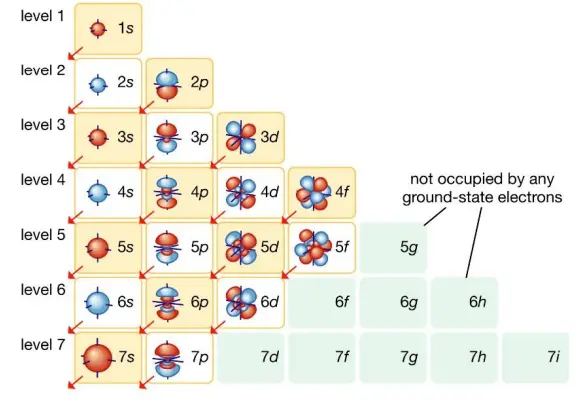
Electrons are not just floating randomly; they occupy specific energy levels or Shells.
Shell Capacity (2n²): The 1st shell (K) holds 2, the 2nd (L) holds 8, the 3rd (M) holds 18.
The Octet Rule: Atoms are most stable when their outermost shell is full (usually with 8 electrons). This is why atoms react—to find or share electrons to reach that 'magic 8'.
Aufbau Principle: This rule states that electrons fill the lowest energy levels first (like filling the ground floor of a building before moving up).
Example: Sodium (Atomic No. 11) has 11 electrons. They fill up as 2 in the first shell, 8 in the second, and 1 in the last (2-8-1).
| Particle | Discovery | Mass (kg) | Significance |
|---|---|---|---|
| Proton | E. Goldstein / Rutherford | 1.672 x 10^-27 | Determines Element Identity |
| Neutron | James Chadwick (1932) | 1.674 x 10^-27 | Nuclear Stability / Isotopes |
| Electron | J.J. Thomson | 9.1 x 10^-31 | Chemical Bonding & Electricity |
Prelims tips
- Atomic Number (Z): Number of Protons.
- Mass Number (A): Protons + Neutrons.
- Valence Electrons: Electrons in the outermost shell; they decide how an atom reacts.
- Anion: Negatively charged atom (gained electrons). Cation: Positively charged atom (lost electrons).
Mains points
- Nuclear Binding Energy: The 'mass deficit' in the nucleus is converted into energy ($E=mc^2$), explaining the immense power of nuclear fission and fusion.
- Chemical Periodicity: The arrangement of elements in the Periodic Table is based directly on the electron configuration of atoms.
- Stable Isotopes vs Radioisotopes: Understanding neutrons is key to applications in medicine (Cancer treatment) and archeology (Carbon dating).
- Quantum Leap: The transition from classical physics to quantum mechanics began with the study of the atom's internal structure.
Did you know?
- If you removed all the 'empty space' from the atoms that make up all the humans on Earth, the entire human race would fit inside a sugar cube (though it would be incredibly heavy!).
- Hydrogen is the only element in the universe that commonly exists without any neutrons.
- Your body is made of 'stardust'—most of the atoms in your body were created inside stars billions of years ago.
Atomic Number, Atomic Mass, and Isotopes
The identity of an element is governed by its Atomic Number (the number of protons), while its weight is defined by its Atomic Mass (protons plus neutrons). For UPSC, understanding these concepts is vital to grasp why some atoms of the same element behave identically chemically but differ physically, such as Isotopes used in medicine and carbon dating.
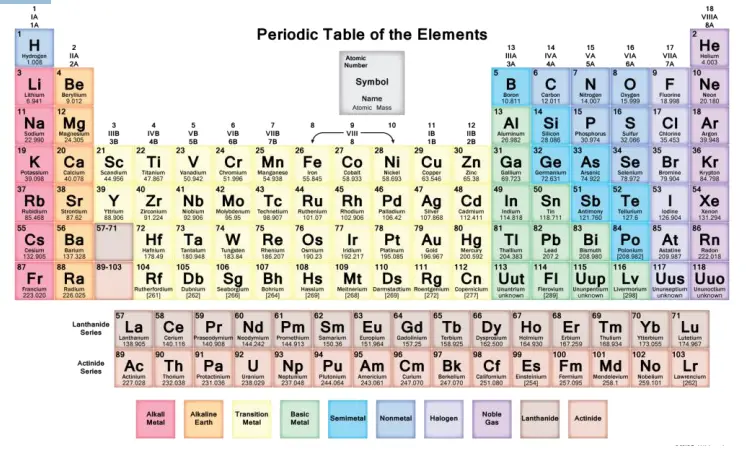
1. Atomic Number (Z): The Chemical Fingerprint
The Atomic Number is the most fundamental property of an atom. It is the number of protons found in the nucleus.
Why is it important?
Identity: It determines which element the atom is. If an atom has 6 protons, it is Carbon; if it has 92, it is Uranium. No two different elements have the same atomic number.
Neutrality: In a neutral atom, the number of protons equals the number of electrons. Since electrons govern chemical reactions, the atomic number indirectly dictates an element's chemical behavior.
Symbol: Represented by the letter Z.
2. Atomic Mass and AMU
The mass of an atom is concentrated in its nucleus (protons + neutrons). Electrons are so light that their mass is negligible.
Atomic Mass Unit (amu): Because atoms are so small, we use a relative scale. 1 amu is defined as exactly 1/12th the mass of a Carbon-12 atom.
Dalton (Da): Another name for the atomic mass unit.
Standard Reference: Carbon-12 (6 protons and 6 neutrons) is the international standard for measuring the masses of all other elements.
3. Elements and Symbols
An Element is a pure substance consisting of atoms that all have the same atomic number.
Rules for Symbols:
Symbols are shorthand for the element's name (English or Latin).
The first letter is always Uppercase, and the second letter (if present) is always lowercase.
Examples:
Hydrogen: H
Aluminum: Al (not AL)
Cobalt: Co (not CO, which is Carbon Monoxide)
Gold (from Latin Aurum): Au
4. Isotopes: Same Identity, Different Weight
Isotopes are atoms of the same element (same Atomic Number) that have different numbers of neutrons (different Mass Numbers).
Example: Hydrogen's Three Species
1. Protium (1H1): 1 proton, 0 neutrons (Most common).
2. Deuterium (1H2): 1 proton, 1 neutron (Used in heavy water).
3. Tritium (1H3): 1 proton, 2 neutrons (Radioactive).
Properties of Isotopes:
Chemical Properties: They are identical because they have the same number of valence electrons.
Physical Properties: They are different. Their densities, boiling points, and melting points vary slightly due to the difference in mass.
5. Representation of an Atom
In chemical notation, we write the symbol with the Mass Number (A) as a superscript on the top left and the Atomic Number (Z) as a subscript on the bottom left.
Formula: Mass Number (A) = Protons (Z) + Neutrons (n)
| Isotope | Protons | Neutrons | Mass Number |
|---|---|---|---|
| Protium | 1 | 0 | 1 |
| Deuterium | 1 | 1 | 2 |
| Tritium | 1 | 2 | 3 |
Prelims tips
- Atomic Number (Z) = Number of Protons = Number of Electrons (in neutral atoms).
- Mass Number (A) = Protons + Neutrons.
- Isotopes have identical chemical properties but different physical properties.
- Standard reference for atomic mass is Carbon-12.
Mains points
- Applications of Isotopes: Used in medicine (e.g., Iodine-131 for goiter treatment, Cobalt-60 for cancer) and power generation (Uranium-235).
- Scientific Standardization: Why Carbon-12 was chosen over Oxygen or Hydrogen as the atomic mass standard due to its abundance and stability.
- Chemical vs. Physical Identity: How the number of neutrons can change an atom's stability (making it radioactive) without changing what element it is.
Did you know?
- Nearly 99.98% of all Hydrogen on Earth is Protium.
- The name 'Isotope' comes from Greek words meaning 'at the same place,' because they occupy the same spot on the Periodic Table.
- Heavier isotopes (like Deuterium) make 'Heavy Water' (D2O), which is actually used as a moderator in nuclear reactors.
Synthetic Elements, Molecules, and Chemical Bonding
The world around us is built from atoms joining together to form Molecules and Compounds through Chemical Bonds. While most elements are found in nature, humans have expanded the periodic table by creating Synthetic Elements in laboratories. Understanding how electrons are shared or transferred is the key to mastering chemistry for UPSC.
1. Synthetic Elements: Human-Made Wonders
There are 24 known chemical elements that do not occur naturally on Earth. These are called Synthetic Elements.
How they are made: They are created by scientists in labs by manipulating fundamental particles or smashing atoms together in particle accelerators.
Stability: Most synthetic elements are unstable and decay into other elements very quickly (radioactive).
2. Molecules and Atomicity
A Molecule is a group of two or more atoms chemically bonded together. It is the smallest particle of a substance that can exist independently.
A. Molecules of Elements
These contain only one type of atom. The number of atoms in a molecule is its Atomicity.
Monoatomic: Made of 1 atom (e.g., Helium - He, Argon - Ar).
Diatomic: Made of 2 atoms (e.g., Oxygen - O2, Hydrogen - H2).
Triatomic: Made of 3 atoms (e.g., Ozone - O3).
B. Molecules of Compounds
Atoms of different elements join in fixed proportions. For example, Water (H2O) always has 2 Hydrogen atoms for every 1 Oxygen atom.
3. Ions: The Charged Particles
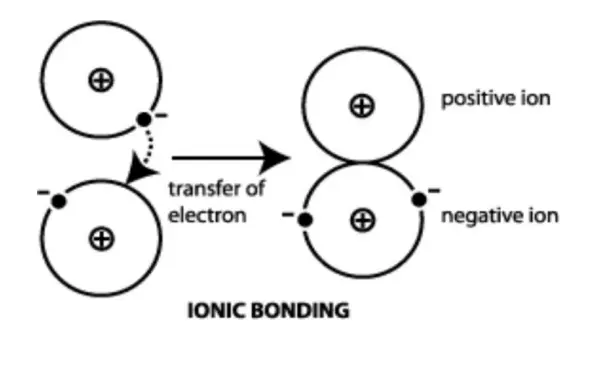
When atoms lose or gain electrons, they become Ions. These carry an electric charge.
Cation: A positively charged ion (formed when an atom loses electrons). Example: Sodium ion (Na+).
Anion: A negatively charged ion (formed when an atom gains electrons). Example: Chloride ion (Cl-).
Polyatomic Ions: A group of atoms that carry a net charge (e.g., Ammonium - NH4+).
4. Chemical Bonding: The Atomic Glue
Chemical bonds are the forces that hold atoms together. Bonding happens because atoms want to achieve a stable electron arrangement (usually 8 electrons in the outer shell).
A. Ionic Bond (Electrovalent Bond)
This bond is formed by the complete transfer of electrons from one atom to another.
Formation: Usually occurs between a Metal (which loses electrons) and a Non-metal (which gains them).
Properties of Ionic Compounds:
1. State: Mostly crystalline solids.
2. Melting/Boiling Points: Very high because of strong electrostatic attraction between ions.
3. Conductivity: They conduct electricity when dissolved in water or melted.
B. Covalent Bond
This bond is formed by the equal sharing of electrons between atoms. This usually happens between two non-metals (e.g., H2O, CH4).
C. Metallic Bond
Found in metals, where electrons are not bound to one nucleus but float in a 'sea' of electrons, allowing metals to conduct electricity and heat easily.
| Type | Atomicity | Example |
|---|---|---|
| Monoatomic | 1 | Helium (He), Neon (Ne) |
| Diatomic | 2 | Oxygen (O2), Nitrogen (N2) |
| Triatomic | 3 | Ozone (O3) |
| Polyatomic | 4+ | Phosphorus (P4), Sulphur (S8) |
Prelims tips
- Ionic Bonds: Transfer of electrons; Metal + Non-metal.
- Covalent Bonds: Sharing of electrons; Non-metal + Non-metal.
- Atomicity of Ozone: 3 (Triatomic).
- Anion is negative; Cation is positive (Think: 't' in Cation looks like a '+' plus sign).
Mains points
- Material Science: Understanding chemical bonding is essential for creating new materials like polymers, alloys, and nanomaterials.
- Synthetic Elements: These elements (like Plutonium) are crucial for nuclear energy and specialized medical equipment.
- Chemical Stability: The Octet rule explains the inert nature of Noble Gases and the high reactivity of elements like Fluorine and Sodium.
- Industrial Chemistry: Ionic compounds are the basis for many industrial electrolytes and salts used in manufacturing.
Did you know?
- The first synthetic element ever created was Technetium in 1937.
- Ionic compounds like Table Salt (NaCl) form beautiful crystal lattices because of the perfectly repeating pattern of ions.
- Oxygen is vital for life as O2, but as O3 (Ozone), it is a toxic gas at ground level, though it protects us in the upper atmosphere.
Covalent, Metallic, and Molecular Bonding
Chemical bonds are the invisible forces that determine the state (solid, liquid, or gas) and properties (like conductivity) of everything around us. While Covalent Bonds involve the sharing of electron pairs between non-metals, Metallic Bonds involve a 'sea of electrons' that gives metals their unique shine and conductivity. Understanding these, along with Intermolecular Forces, is vital for UPSC Science and Technology.
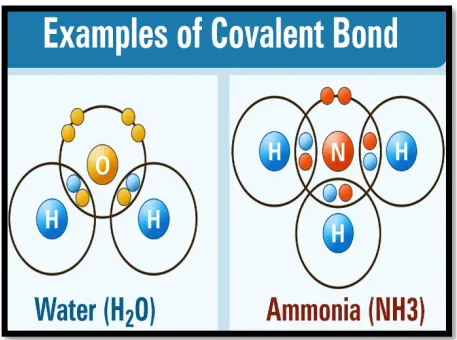
1. Covalent Bond: The Power of Sharing
A Covalent Bond is formed when two atoms share electrons equally to achieve stability. This typically happens between two non-metals.
Key Characteristics:
1. Physical State: Unlike ionic compounds, these can be found as solids, liquids, or gases (e.g., Water is liquid, Oxygen is gas, Diamond is solid).
2. Boiling and Melting Points: Generally low compared to ionic bonds because the forces holding individual molecules together are weaker.
3. Thermal Stability: Lower than ionic bonds, meaning they break down more easily under heat.
2. Metallic Bond: The 'Electron Sea'
Metallic bonding occurs in metals like Iron (Fe), Gold, and Copper. In these structures, the outer-shell electrons are not tied to any single atom.
How it works:
Free Electrons: The valence electrons detach from their atoms and form a 'cloud' or 'sea' of electrons.
Attraction: The bond is the strong attraction between these floating negative electrons and the positive metal ions.
Properties of Metals:
High Conductivity: Because the electrons are free to move, they can carry electricity and heat very efficiently.
Strength: They form 'giant structures' that are held together tightly by these forces.
3. Molecular Bonds and Intermolecular Forces
While chemical bonds hold atoms together inside a molecule, Intermolecular Forces are the attractions that exist between different molecules. These forces decide if a substance is a liquid or a gas.
Types of Intermolecular Forces:
1. Hydrogen Bonding: A very strong attraction found in molecules like water. It's why water has such a high boiling point compared to other liquids.
2. Dipole-Dipole: Occurs between molecules that have 'poles' (one side slightly positive, one side slightly negative).
3. London Dispersion Forces: Weak, temporary attractions that happen in all molecules (also called Ion-Dipole forces).
4. Ion-Ion Interaction: The strongest attraction, typically seen in ionic crystals.
| Bond Type | Mechanism | Conductivity | Strength |
|---|---|---|---|
| Covalent | Sharing of electrons | Poor | Moderate |
| Metallic | Sea of free electrons | Very High | Strong |
| Ionic | Transfer of electrons | High (in solution) | Very Strong |
Prelims tips
- Covalent bonds are usually between Non-metal + Non-metal.
- Metallic bonds explain why metals are malleable (can be beaten into sheets) and ductile (can be drawn into wires).
- Hydrogen bonding is specifically found in molecules where Hydrogen is bonded to Oxygen, Nitrogen, or Fluorine (F-O-N).
- Intermolecular forces are weaker than intramolecular (chemical) bonds.
Mains points
- Industrial Importance: The high thermal conductivity of metallic bonds is why metals are used for cooking utensils and heat exchangers.
- Molecular Design: Understanding covalent bonding allows scientists to create complex organic molecules like Polymers and Medicines.
- Modern Electronics: The 'Free Electron Theory' of metallic bonds is the foundation of electrical engineering and semiconductor physics.
- Biological Systems: Intermolecular forces like Hydrogen bonds are responsible for holding the DNA double-helix structure together.
Did you know?
- Diamond is held together by very strong covalent bonds, making it the hardest natural substance on Earth!
- The shimmer/shine of metals is caused by the free electron sea reflecting light.
- Without Hydrogen Bonding, water would be a gas at room temperature, and life as we know it couldn't exist.
Molecular Polarity, Compounds, and Organic Chemistry
The chemical world is organized into Compounds, where atoms join in fixed ratios to create substances with entirely new properties. A critical factor in how these substances behave is Polarity—the balance of electrical charge within a molecule. This distinction, along with the study of Organic Compounds, forms the backbone of life sciences and industrial chemistry.
1. Polarity: The Tug-of-War for Electrons
Polarity describes how electrons are shared between atoms in a covalent bond. It depends on Electronegativity (the 'hunger' an atom has for electrons).
A. Non-Polar Covalent Bonds
Definition: Formed between atoms with the same electronegativity. Electrons are shared equally.
Dipole Moment: It is zero because there is no partial charge.
Example: H2, O2, Cl2 (identical atoms pull equally).
B. Polar Covalent Bonds
Definition: Formed between atoms with different electronegativities. Electrons are shared unequally, spending more time near the stronger atom.
Dipole Moment: Created because one end of the molecule becomes slightly negative (delta -) and the other slightly positive (delta +).
Example: Water (H2O) and Hydrogen Chloride (HCl).
2. Chemical Compounds
A Compound is a pure substance formed when atoms of two or more different elements combine chemically in a fixed ratio.
Properties: The properties of a compound are entirely different from the elements that make it. For example, Sodium (a reactive metal) and Chlorine (a toxic gas) combine to form Table Salt (NaCl), which is essential for life.
Diversity: Everything from our DNA to the water we drink is a compound. Even changing one single atom in a large compound can turn a medicine into a poison.
3. Organic Compounds: The Chemistry of Life
Organic compounds are substances that primarily contain Carbon (C). Carbon is unique because it can form stable bonds with itself and other elements, creating complex structures.
Biological Importance: Fats, proteins, carbohydrates, enzymes, and hormones are all organic compounds.
Structural Framework: Carbon atoms link together to form chains or rings, providing the 'skeleton' of the molecule.
4. Carbon-Carbon Bonds
Carbon can bond with other carbon atoms in three different ways, leading to various types of hydrocarbons:
1. Single Bonds (Alkanes): Known as 'Sigma' bonds. These are saturated hydrocarbons (e.g., Methane, Ethane).
2. Double Bonds (Alkenes): Involves four shared electrons. These are unsaturated (e.g., Ethene).
3. Triple Bonds (Alkynes): Involves six shared electrons. These are highly reactive and unsaturated (e.g., Ethyne/Acetylene).
| Type | Bond Type | Suffix | General Formula |
|---|---|---|---|
| Alkanes | Single (C-C) | -ane | CnH2n+2 |
| Alkenes | Double (C=C) | -ene | CnH2n |
| Alkynes | Triple (C≡C) | -yne | CnH2n-2 |
Prelims tips
- Polarity: Unequal sharing of electrons; results in a dipole moment.
- Organic Compounds: Must contain Carbon (except for simple ones like CO2 or Carbonates which are often treated as inorganic).
- Sigma Bond: The strongest type of covalent chemical bond, found in single bonds.
- Compounds: Have fixed composition and distinct properties from their constituent elements.
Mains points
- Molecular Polarity in Medicine: The solubility of drugs in the human body (water-based) depends on whether the drug molecules are polar or non-polar.
- Versatility of Carbon: Carbon's ability to form single, double, and triple bonds allows for millions of different organic structures, enabling the complexity of life.
- Industrial Importance: Alkanes (Methane/Ethane) are primary fuels, while Alkenes and Alkynes are the starting materials for plastics and synthetic fibers.
- Environmental Chemistry: Polar compounds often interact more strongly with the atmosphere and water systems, influencing how pollutants spread.
Did you know?
- Water is a Polar molecule, which is why it can dissolve so many substances. It's often called the 'Universal Solvent'.
- Oil is Non-Polar. This is the simple chemical reason why oil and water never mix!
- Diamond and Graphite are both made of pure Carbon, but they have different properties because of how the carbon atoms are bonded.
Polymers and Chemistry in Everyday Life
Chemistry is not just found in laboratories; it is happening all around us. Polymers form the basis of essential materials like plastic and rubber, while chemical reactions explain why onions make us cry or how soaps clean our skin. For UPSC, connecting these scientific principles to everyday phenomena is key to mastering the General Science section.
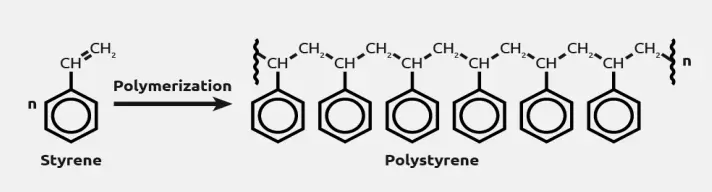
1. What are Polymers?
A Polymer is a giant molecule made by linking hundreds or thousands of smaller units called Monomers.
Polymerization: The chemical process of joining these monomers into a long, chain-like network.
The Hydrocarbon Backbone: Most synthetic polymers (like plastics) have a central chain of Carbon and Hydrogen atoms. This is possible because Carbon is tetravalent (it can form four bonds), allowing it to create incredibly long, stable chains.
Diversity of Polymers:
Flexible: Rubber, polyester, and polythene.
Rigid: Epoxy resins, Bakelite (used in electrical switches), and toughened glass.
2. The Chemistry of Cleaning: Soaps vs. Detergents
How does soap actually remove grease? It uses a special molecular structure that bridges the gap between water and oil.
Micelles: Soap molecules have a 'head' that loves water and a 'tail' that loves oil. They surround oil droplets, lifting them off the skin and suspending them in water so they can be rinsed away.
Soaps: They are sodium or potassium salts of long-chain fatty acids. They are mild but don't work well in 'hard water' (water with high mineral content).
Detergents: These are synthetic derivatives with a much stronger cleaning action. They work effectively even in hard water.
3. Natural Chemistry: Onions and Fruit Ripening
Why do Onions make us cry?
When you cut an onion, you break its cells, releasing enzymes and sulfenic acid. These react to form a gas called Syn-propanethial-S-oxide. When this gas touches the moisture in your eyes, it turns into a mild sulfuric acid, causing your tear glands to react to flush it out.
How do fruits ripen?
The secret is a gaseous plant hormone called Ethylene.
The Signal: As a fruit matures, it begins producing more ethylene. This gas acts as a signal to the fruit to change its color, soften its texture, and convert starches into sugars.
Commercial Use: Farmers often use ethylene gas to ripen green-harvested fruits (like bananas) before they reach the market.
4. Everyday Chemistry Questions for UPSC
Why does Ice float? Because of Hydrogen Bonding, ice forms a crystal lattice that is less dense than liquid water.
What is an Antacid? It is a Base (like Magnesium Hydroxide) used to neutralize excess Hydrochloric acid in the stomach.
Do bottled water expire? The water doesn't, but the Plastic (Polymer) bottle can eventually leak chemicals into the water over time.
How do Sunscreens work? They contain chemicals like Zinc Oxide that either reflect or absorb harmful UV radiation.
| Polymer | Monomer | Typical Use |
|---|---|---|
| Polythene | Ethylene | Plastic bags, packaging |
| PVC | Vinyl Chloride | Pipes, raincoats |
| Teflon | Tetrafluoroethylene | Non-stick cookware |
| Nylon | Amides | Ropes, stockings, bristles |
Prelims tips
- Polymerization: Monomers joining to form Polymers.
- Natural Polymers: DNA, proteins, cellulose, and natural rubber.
- Antacids: Usually contain Milk of Magnesia (Magnesium Hydroxide).
- Ripening Hormone: Ethylene (only gaseous plant hormone).
Mains points
- Plastic Pollution: The durability of synthetic polymers makes them useful but also creates environmental challenges as they don't decompose easily.
- Food Preservation: Understanding chemical signals like Ethylene helps in cold storage management and reducing food wastage.
- Healthcare: Antacids and antiseptics (soaps) are basic applications of acid-base chemistry in maintaining public health.
- Material Engineering: Designing polymers with specific properties (like heat resistance) is vital for aerospace and defense industries.
Did you know?
- Ethylene is so effective that placing a ripe banana next to unripe tomatoes will cause the tomatoes to ripen faster!
- Morning breath happens because your Saliva (the mouth's natural cleaner) decreases while you sleep, allowing bacteria to grow.
- The first fully synthetic polymer was Bakelite, created in 1907.
Types of Plastics and Food Chemistry
Plastics are specialized polymers categorized by how they respond to heat. Understanding the difference between Thermoplastics and Thermosetting plastics is vital for recycling and manufacturing. Similarly, Food Preservatives use chemical principles to inhibit microbial growth, ensuring food safety and longevity. Both topics are frequent areas of inquiry in the UPSC General Science syllabus.
1. Thermoplastics vs. Thermosetting Plastics
Not all plastics are created equal. Their molecular structure determines whether they can be melted and reshaped or if they stay rigid forever.
A. Thermoplastics
Behavior: These soften on heating and can be reshaped multiple times. They have linear or slightly branched chains.
Recyclability: Highly recyclable because they can be melted down and molded into new products.
Examples: Polythene (bags), PVC (pipes), and Polystyrene (containers).
B. Thermosetting Plastics
Behavior: Once molded and set, they cannot be softened or reshaped by heating. This is due to 'cross-links' between polymer chains that create a permanent 3D network.
Properties: They are heat-resistant and durable.
Examples: Bakelite (used in electrical switches and saucepan handles) and Melamine (used in fire-resistant fabrics and floor tiles).
2. Chemistry of Food Preservatives
Preservatives are substances added to food to prevent spoilage by bacteria, molds, and oxidation.
A. Natural Preservatives
Salt and Sugar: These work through Osmosis. They draw moisture out of food and bacterial cells, preventing microbes from growing.
Oil and Vinegar: Create an environment where most bacteria cannot survive due to high acidity or lack of air.
B. Chemical Preservatives
Sodium Benzoate: Commonly used in fruit juices and squashes to inhibit yeast and mold.
Sodium Metabisulphite: Used in jams and pickles to preserve color and prevent bacterial growth.
Nitrates/Nitrites: Used in processed meats to prevent the growth of deadly botulism bacteria and maintain red color.
3. Other Food Chemicals
Antioxidants: These prevent the Rancidity of fats and oils (the bad smell and taste in stale food) by stopping oxygen from reacting with the food. Example: BHT (Butylated Hydroxytoluene).
Artificial Sweeteners: Compounds like Aspartame or Saccharin provide sweetness without the calories, as they are not metabolized by the body like sugar.
Emulsifiers: Help mix substances that usually don't mix, like oil and water (found in mayonnaise and ice cream).
| Feature | Thermoplastic | Thermosetting |
|---|---|---|
| Response to Heat | Softens and melts | Does not soften/Hardens |
| Structure | Linear chains | Cross-linked network |
| Recyclability | Can be recycled | Cannot be recycled |
| Common Uses | Bottles, toys, combs | Switches, handles, tiles |
Prelims tips
- Melamine: A thermosetting plastic used for making break-resistant crockery and fire-resistant uniforms.
- Teflon: A thermoplastic used for non-stick coating on cookware.
- BHT/BHA: Common antioxidants added to packaged snacks to prevent rancidity.
- Osmosis: The physical principle behind why high salt/sugar content preserves food.
Mains points
- Solid Waste Management: The inability to recycle thermosetting plastics poses a major challenge for landfill management and environmental sustainability.
- Food Safety Standards: The regulation of synthetic preservatives (like Nitrates) is a critical public health issue monitored by bodies like FSSAI in India.
- Innovation in Polymers: Development of Biodegradable Plastics is the current focus of material science to replace traditional thermoplastics.
- Nutrition & Chemistry: Understanding the chemical difference between antioxidants and preservatives is essential for analyzing modern food processing and its impact on human health.
Did you know?
- Bakelite was the first synthetic plastic ever made (1907) and it's still used today because it doesn't conduct electricity or melt easily.
- Honey is a natural preservative—archaeologists have found pots of honey in ancient Egyptian tombs that are 3,000 years old and still perfectly edible!
- The 'Best Before' date on food is often about the quality (taste/texture), whereas the 'Use By' date is about safety and the chemical stability of preservatives.
Introduction to Biology: The Science of Life and Cells
Biology is the vast scientific field dedicated to the study of living organisms—from the tiniest bacteria to the largest whales. It explores how life originates, grows, and interacts with the environment. At its core is Cell Biology, the study of the 'building blocks of life' which perform all the vital functions necessary for an organism to survive.
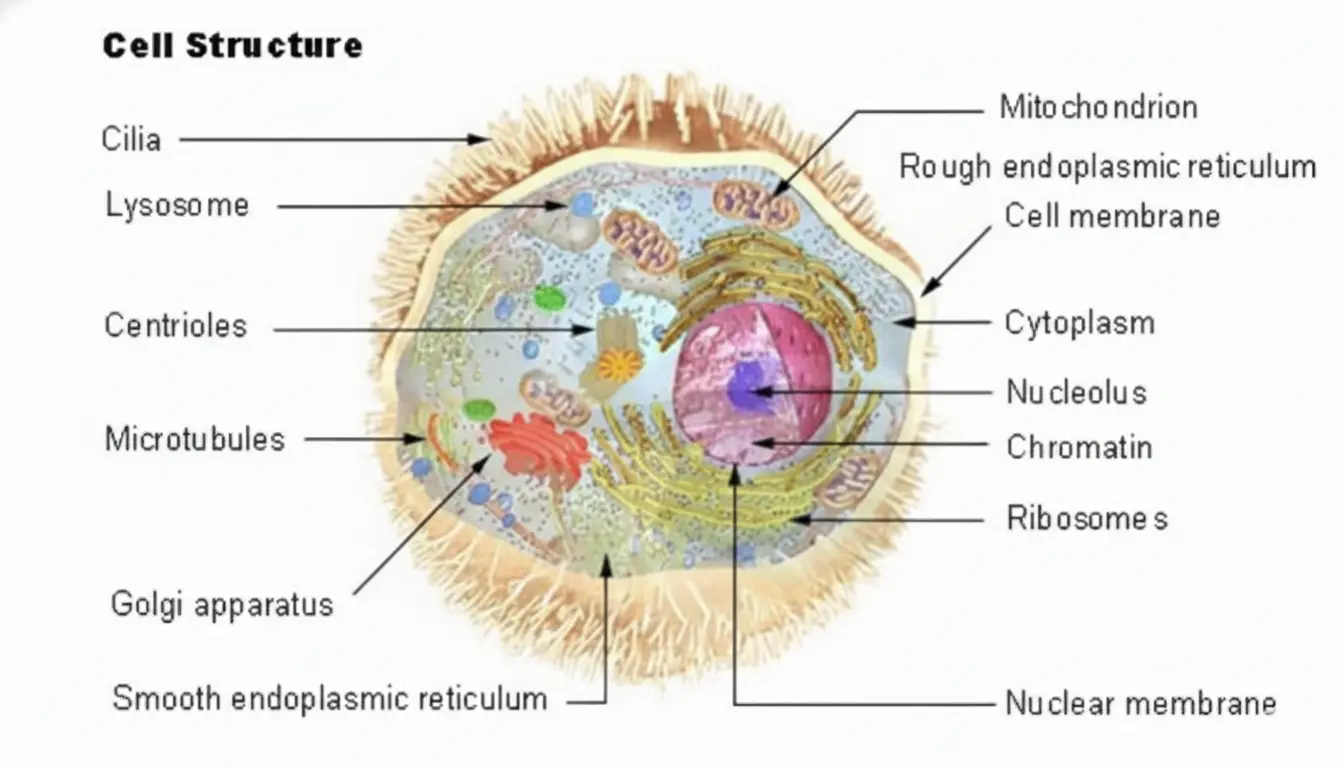
1. What is Biology?
The term 'Biology' comes from the Greek words 'Bios' (meaning life) and 'Logos' (meaning study). It is the branch of science that examines every aspect of living beings.
Why study Biology for UPSC?
Understanding biology is essential for issues regarding Public Health (medicine and diseases), Environment (conservation and climate change), and Food Security (agriculture and population growth).
2. Important Branches of Biology
Biology is a vast field divided into several specialized sub-branches:
Botany: The scientific study of plants.
Zoology: The scientific study of animals.
Morphology: Study of the form and structure of organisms and their specific structural features.
Anatomy: Study of the internal structure of organisms (revealed by dissection).
Taxonomy: The science of naming, describing, and classifying organisms.
Ecology: Study of how organisms interact with one another and their physical environment.
Genetics: The study of genes, genetic variation, and heredity in organisms.
3. Cell Biology: The Foundation of Life
A Cell is the smallest unit of life that can replicate independently. It is often called the 'building block of life.'
Timeline of Major Discoveries:
1. 1665 - Robert Hooke: First discovered and coined the term 'Cell' while looking at a slice of cork under a microscope.
2. 1831 - Robert Brown: Discovered the Nucleus, the control center of the cell.
3. 1839 - Schleiden & Schwann: Proposed the Cell Theory, stating that all plants and animals are made of cells and that the cell is the basic unit of life.
4. 1860s - Gregor Mendel: Known as the 'Father of Genetics' for his work on pea plants, explaining how traits are inherited.
5. 1940s - Electron Microscope: Its discovery allowed scientists to see complex Organelles (structures inside the cell) for the first time.
4. Modern Biology
Today, biology uses advanced technology to study life at the molecular level. This includes Biotechnology, where we manipulate cells to create better medicines, and Genomics, which helps us understand the entire DNA code of an organism.
| Scientist | Contribution | Year |
|---|---|---|
| Robert Hooke | Discovered the Cell | 1665 |
| Robert Brown | Discovered the Nucleus | 1831 |
| Schleiden & Schwann | Proposed Cell Theory | 1839 |
| Gregor Mendel | Father of Genetics | 1860s |
Prelims tips
- Cell Theory: All living things are made of cells; the cell is the basic unit of life; all cells come from pre-existing cells.
- Robert Hooke observed dead cork cells, while Antonie van Leeuwenhoek was the first to observe living cells.
- Taxonomy: Carolus Linnaeus is considered the 'Father of Taxonomy.'
- Morphology deals with external structure, whereas Anatomy deals with internal structure.
Mains points
- Biological Ethics: Advances in cell biology and genetics raise critical questions about gene editing (CRISPR) and cloning.
- Healthcare Revolution: Understanding cell function is the basis for modern vaccines (like mRNA vaccines) and cancer treatments (immunotherapy).
- Biodiversity Conservation: Taxonomy and Ecology are vital for the Red Data Book and managing endangered species list.
- Sustainable Agriculture: Botany and Genetics help in developing high-yield, pest-resistant crop varieties to ensure food security.
Did you know?
- The word 'Cell' comes from the Latin word 'Cella', which means 'small room'—Robert Hooke thought the cork cells looked like the tiny rooms monks lived in.
- Your body is made of approximately 37 trillion cells!
- The largest single cell in the world is an ostrich egg.
Plant Cells vs. Animal Cells: The Building Blocks of Life
While all living things are made of cells, there are fundamental differences between Plant Cells and Animal Cells. These differences reflect how these organisms live: plants make their own food through photosynthesis and need a rigid structure to grow tall, while animals must move to find food and require flexible bodies. For UPSC, understanding these Organelles (the 'organs' of the cell) is key to biology.
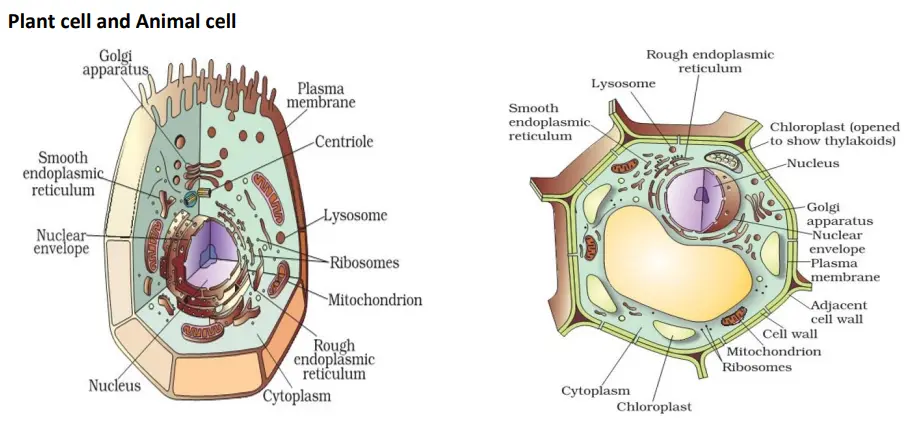
1. The Core Components of All Cells
Before looking at the differences, remember that both types share major features:
Nucleus: The 'brain' or control center containing DNA.
Cytoplasm: The jelly-like substance where all chemical reactions happen.
Cell Membrane: The 'security guard' that controls what enters and exits the cell.
Mitochondria: The 'powerhouse' that produces energy (ATP).
2. Plant Cells: The Solar-Powered Factories
Plant cells have three unique features that animal cells lack:
1. Cell Wall: A tough, outer layer made of Cellulose. It provides protection and structural support, allowing plants to grow high without a skeleton.
2. Chloroplasts: Green organelles containing Chlorophyll. They capture sunlight to make food through Photosynthesis.
3. Large Central Vacuole: A huge 'storage tank' filled with water. When full, it pushes against the cell wall to keep the plant upright (turgidity).
3. Animal Cells: Flexible and Mobile
Animal cells are generally smaller and irregular in shape compared to the fixed, rectangular shape of plant cells.
No Cell Wall: This allows animal cells to take various shapes and allows for movement and muscle contraction.
Small Vacuoles: Animals have many tiny, temporary vacuoles used for storing waste or food, rather than one giant central one.
Centrioles: These are special structures involved in cell division, which are usually absent in higher plants.
4. Key Organelles to Remember
Mitochondria: Known as the Powerhouse of the cell. It performs cellular respiration to generate energy.
Ribosomes: Tiny factories where Proteins are made.
Endoplasmic Reticulum (ER): A network of 'highways' for transporting materials. Rough ER has ribosomes attached; Smooth ER does not.
Golgi Apparatus: The 'post office' that packages and labels proteins for delivery.
Lysosomes: The 'suicide bags' or waste disposal system (more common in animal cells).
| Feature | Plant Cell | Animal Cell |
|---|---|---|
| Cell Wall | Present (made of Cellulose) | Absent |
| Chloroplast | Present | Absent |
| Vacuole | One large central vacuole | Many small vacuoles |
| Shape | Fixed, Rectangular | Irregular, Circular |
| Energy Storage | Starch | Glycogen |
Prelims tips
- Cell Wall: Only in plants, fungi, and bacteria. Never in animals.
- Photosynthesis: Occurs in Chloroplasts (Plants only).
- Cellular Respiration: Occurs in Mitochondria (Both plants and animals).
- Protein Synthesis: Occurs in Ribosomes.
- Glycogen: Animals store energy as glycogen; plants store it as Starch.
Mains points
- Cell Specialization: In multicellular organisms, cells specialize (e.g., muscle cells have more mitochondria for energy).
- Bio-technology: Understanding cell organelles is vital for genetic engineering (like producing insulin in bacteria).
- Evolutionary Biology: The presence of DNA in mitochondria and chloroplasts supports the Endosymbiotic Theory of evolution.
- Metabolism: The interaction between Chloroplasts (converting light to chemical energy) and Mitochondria (converting chemical energy to ATP) is the cycle that supports all life on Earth.
Did you know?
- Mitochondria have their own DNA, separate from the cell's nucleus! Scientists believe they were once independent bacteria that were swallowed by larger cells millions of years ago.
- If a lysosome bursts, its digestive enzymes can eat the entire cell—that’s why they are called 'suicide bags'.
- Plants wilt when their large vacuoles lose water, causing the cell to lose its internal pressure (turgor).
Cell Structure and Organelles: The Microscopic Machinery
Cells are the smallest units capable of maintaining life and reproducing. While they may appear as simple sacs of fluid, they contain a complex world of Organelles—specialized structures that act like tiny organs. Each organelle is membrane-bound to ensure its chemical reactions do not interfere with others, allowing the cell to function as a highly efficient biological factory.
1. The Three Fundamental Parts of a Cell
Regardless of its specific job (like a blood cell or a nerve cell), almost every human cell has three main components:
1. Cell Membrane (Plasma Membrane): The outer boundary that holds the cell together and selectively allows materials to enter or exit.
2. Nucleus: Often called the 'Control Center', it contains the genetic material (DNA) that directs all cellular activities.
3. Cytoplasm: A jelly-like fluid that fills the space between the membrane and the nucleus. It serves as the 'floor' where organelles are located.
2. What are Cell Organelles?
Organelles are the living parts of the cell. Just as your body has a heart, lungs, and stomach, the cell has organelles to perform specific tasks. To maintain efficiency, these organelles are usually membrane-bound, keeping their internal chemical environments separate from the rest of the cytoplasm.
3. Key Organelles and Their Functions
Each organelle has a distinct shape and structure tailored to its function:
Mitochondria: The 'Powerhouse' of the cell. They convert nutrients (glucose) into energy (ATP) through cellular respiration.
Endoplasmic Reticulum (ER): A network of membranes used for transporting materials. Rough ER (with ribosomes) synthesizes proteins, while Smooth ER (without ribosomes) creates lipids/fats.
Golgi Apparatus: The 'Post Office' of the cell. It modifies, sorts, and packages proteins for secretion or delivery to other organelles.
Ribosomes: Tiny structures that act as Protein Factories. They can be free-floating in the cytoplasm or attached to the ER.
Lysosomes: The 'Waste Disposal System'. They contain enzymes that break down waste materials and cellular debris. In extreme cases, they can digest the entire cell, earning the name 'Suicide Bags'.
Vacuoles: Storage sacs for food, water, or waste products.
4. Why are Cells Microscopic?
Most human cells are too small to see without a microscope. This small size is necessary because it allows nutrients to move in and waste to move out very quickly across the cell membrane. If a cell grew too large, it would starve or be poisoned by its own waste before materials could travel through its volume.
| Organelle | Function | Analogy |
|---|---|---|
| Nucleus | Directs cell activities | Control Center / CEO |
| Mitochondria | Energy production (ATP) | Powerhouse / Battery |
| Ribosomes | Protein synthesis | Factories |
| Golgi Apparatus | Packaging & Distribution | Post Office / Courier |
| Lysosomes | Digestion & Waste removal | Suicide Bag / Janitor |
Prelims tips
- Smallest Cell: Mycoplasma (PPLO).
- Largest Cell: Ostrich egg.
- Suicide Bags: Lysosomes (due to digestive enzymes).
- Energy Currency: ATP (Adenosine Triphosphate), produced in mitochondria.
- Nuclear Membrane: Eukaryotic cells have it; Prokaryotic cells (like bacteria) do not.
Mains points
- Cellular Basis of Disease: Many genetic disorders are caused by the malfunctioning of specific organelles (e.g., Mitochondrial diseases).
- Biotechnology: Manipulation of the nucleus (DNA) is the core of Genetic Engineering and Gene Therapy.
- Stem Cells: Understanding how a single cell differentiates into various specialized tissues is vital for regenerative medicine.
- Membrane Bound Organelles: The presence of these structures distinguishes higher organisms (Eukaryotes) from primitive ones (Prokaryotes), marking a major evolutionary step.
Did you know?
- The human body starts as just one single cell—a fertilized egg—which then divides into trillions of specialized cells.
- Red blood cells are unique because they lose their nucleus as they mature to make more room for oxygen-carrying hemoglobin!
- Lysosomes are so efficient that they can recycle damaged parts of the cell into new building blocks.
Microorganisms: The Unseen World
Microorganisms are the oldest and most diverse inhabitants of Earth. While some cause diseases like polio or influenza, most are essential for life, aiding in decomposition, nitrogen fixation, and industrial processes. For UPSC, distinguishing between the four major groups and understanding the unique 'living-nonliving' bridge of Viruses is crucial.
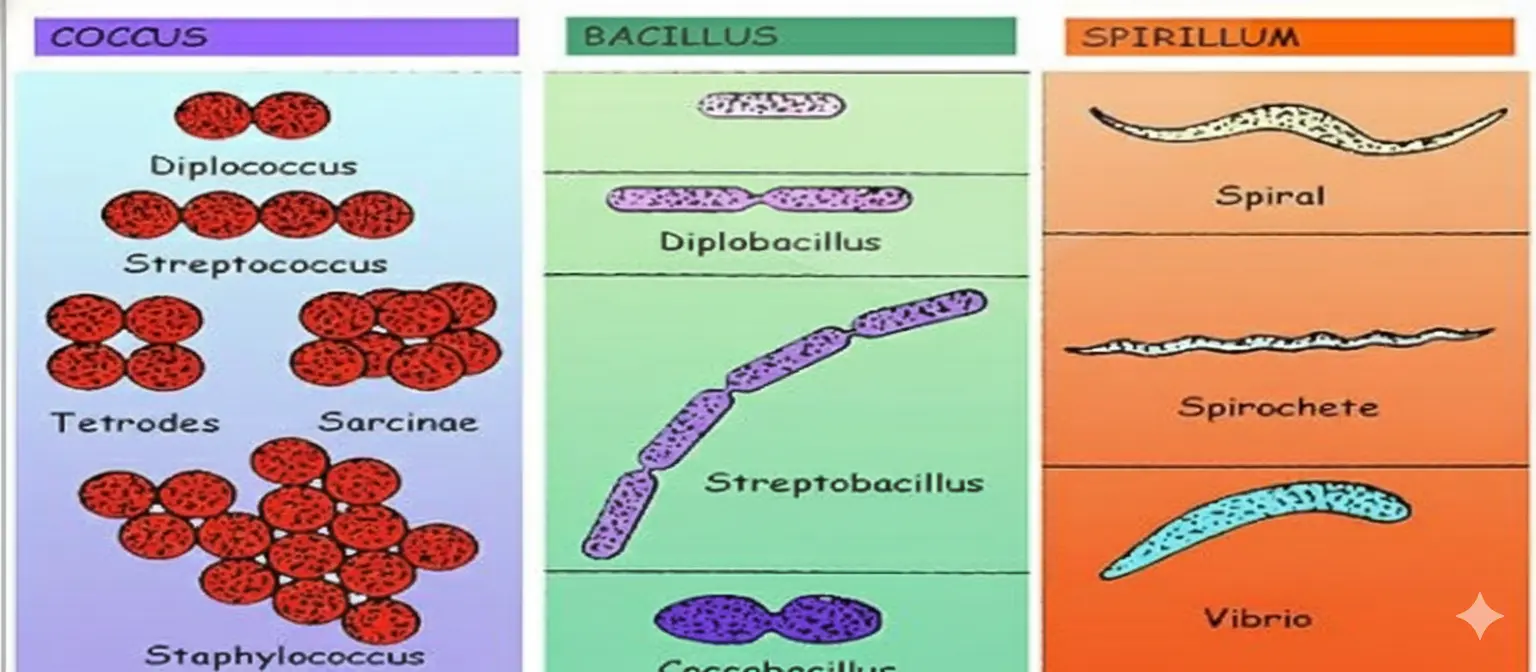
1. Classification of Microorganisms
Microorganisms (microbes) are organisms so small they can only be seen with a microscope. The study of these life forms is called Microbiology. They are categorized into four primary groups:
Bacteria: Single-celled organisms with a simple structure (e.g., Lactobacillus).
Fungi: Can be single-celled (yeast) or multicellular (mushrooms/molds). They are saprophytic (feed on dead matter).
Protozoa: Single-celled animal-like organisms (e.g., Amoeba, Paramecium).
Algae: Plant-like organisms that perform photosynthesis (e.g., Spirogyra, Chlamydomonas).
2. Viruses: The Biological Paradox
Viruses are unique because they do not show signs of life until they enter a Host Cell (plant, animal, or bacterium).
Diseases: They cause the common cold, influenza (flu), coughs, and more serious conditions like Polio, Chicken Pox, and COVID-19.
Reproduction: They hijack the host's machinery to replicate themselves.
3. Bacteria: Earth's First Inhabitants
Bacteria appeared about 4 billion years ago and are the most abundant life forms.
Structure: They lack a defined nucleus. Their genetic info is kept in a single loop of DNA. Some also have a Plasmid (extra DNA circle).
Plasmids & Antibiotic Resistance: Plasmids often contain genes that help bacteria survive antibiotics, a major concern in modern medicine.
Shapes: Bacteria are classified by three main shapes:
1. Coccus: Spherical.
2. Bacillus: Rod-shaped.
3. Spirillum: Spiral.
4. Habitat and Lifestyle
Single vs. Multicellular: Bacteria and protozoa are mostly single-celled. Fungi and algae can be multicellular.
Solitary vs. Colonial: Amoebas live alone, whereas bacteria and fungi often form massive colonies to thrive.
| Type of Microbe | Diseases Caused |
|---|---|
| Virus | Common cold, Influenza, Polio, Chicken Pox |
| Bacteria | Typhoid, Tuberculosis (TB), Anthrax |
| Protozoa | Malaria, Dysentery |
| Fungi | Skin infections, Athlete's foot |
Prelims tips
- Viruses: Not included in the traditional Five Kingdom classification because they are acellular.
- Plasmid: Small, circular, double-stranded DNA molecule that is distinct from a cell's chromosomal DNA.
- Antibiotic Resistance: Often spread through the exchange of plasmids between bacteria.
- Cyanobacteria: Also known as blue-green algae, they are actually bacteria, not algae.
Mains points
- Public Health: The rise of Superbugs (Multi-drug resistant bacteria) due to the misuse of antibiotics is a global health emergency.
- Biotechnology: Bacteria are the workhorses of genetic engineering; plasmids are used as vectors to insert genes into other organisms.
- Evolution: The endosymbiotic theory suggests that mitochondria in our cells were once free-living bacteria.
- Industrial Use: Microbes play a vital role in sewage treatment, biogas production, and the fermentation industry (bread, alcohol).
Did you know?
- There are more bacteria in your mouth right now than there are people on the entire planet!
- Viruses are considered the 'bridge' between living and non-living things.
- Bacteria are used to make curd (Lactobacillus), antibiotics, and even clean up oil spills in the ocean.
Fungi and Viruses: Life on the Edge
Fungi and Viruses represent two very different biological strategies. While fungi are complex decomposers essential for nutrient cycling, viruses are the smallest infectious agents that exist on the boundary between living and non-living. For UPSC, understanding their structures and the diseases they cause in both humans and agriculture is vital.
1. Fungi: The Great Decomposers
Fungi range from microscopic single-celled organisms like yeast to large multicellular structures like mushrooms. Most live on land, particularly in soil or on decaying matter.
Ecological Role: As decomposers, they break down dead plant and animal matter, playing a critical role in the Carbon Cycle and recycling essential elements back into the soil.
Major Groups:
1. Multicellular Filamentous Moulds: Thread-like structures often seen on stale bread.
2. Macroscopic Filamentous Fungi: These produce large 'fruiting bodies' known as Mushrooms.
3. Single-celled Yeasts: Microscopic fungi used in baking and brewing.
Fungal Diseases:
In Plants: Mildews, rusts, scabs, and cankers (causing major economic loss in crops).
In Humans: Skin infections like Athlete’s foot, Ringworm, and Thrush.
2. Viruses: The Molecular Hijackers
Viruses are the smallest of all microbes, so tiny that millions can fit on a pinhead. They are neither plants, animals, nor bacteria.
Structure: A core of genetic material (DNA or RNA) protected by a protein coat called a Capsid. Some viruses also have an outer 'spikey' envelope.
The Host Cell: Viruses cannot multiply on their own. They must latch onto and enter a Host Cell, using its machinery to reproduce.
Taxonomic Position: They occupy a special place in biology because they are only 'alive' when inside a host.
3. Comparison of Life Strategies
Unlike bacteria or fungi, viruses are considered acellular (not made of cells). Fungi are Eukaryotic, meaning they have a complex cell structure with a nucleus, whereas viruses are simple infectious packages of genetic code.
| Feature | Fungi | Virus |
|---|---|---|
| Cell Type | Eukaryotic (Cellular) | Acellular (No cells) |
| Reproduction | Sexual/Asexual (Independent) | Only inside a host cell |
| Genetic Material | Both DNA and RNA | Either DNA or RNA |
| Antibiotic Effect | Not affected by antibiotics | Not affected by antibiotics |
| Beneficial Uses | Baking, Brewing, Decomposing | Gene therapy (modified viruses) |
Prelims tips
- Viruses: Not killed by antibiotics (antibiotics only work on bacteria).
- Fungal Infections: Often treated with antifungal creams or medicines.
- Acellular: Term used for viruses because they lack cell organelles.
- Mycology: The branch of biology concerned with the study of fungi.
Mains points
- Economic Impact: Fungal diseases in staples like wheat or rice can threaten national food security and lead to inflation in food prices.
- Viral Outbreaks: Understanding viral replication is key to developing Antiviral drugs and vaccines (like mRNA technology) for pandemics.
- Symbiosis: Fungi form 'Mycorrhiza' with plant roots, helping them absorb water and minerals—essential for sustainable agriculture.
- Biotechnology: Viruses are used as vectors in Gene Therapy to deliver healthy genes to patients with genetic disorders.
Did you know?
- The largest organism in the world is actually a fungus in Oregon that covers over 2,300 acres!
- Viruses are so small that they can even infect bacteria; these specialized viruses are called Bacteriophages.
- Penicillin, the world's first antibiotic, was derived from a fungus (mould) called Penicillium.
Bacterial Diseases: Pathogens, Toxins, and Resistance
Bacteria are ubiquitous single-celled organisms. While many are vital for health (like gut flora), pathogenic bacteria cause disease by releasing toxins or damaging tissues. For UPSC, it is essential to distinguish between bacterial and viral infections, as the treatment—antibiotics—is specific only to bacteria. The rise of Antimicrobial Resistance (AMR) is a critical global health concern linked to this topic.
1. Nature of Pathogenic Bacteria
Bacteria are diverse and highly adaptable. Pathogenic (disease-causing) bacteria trigger illnesses primarily through two methods:
Toxin Secretion: Bacteria release poisonous substances (toxins) that damage host cells.
Tissue Invasion: Direct damage to organs or systems by multiplying rapidly within the body.
2. Interaction with the Immune System
Viral-Bacterial Link: Often, a viral infection (like the flu) weakens the immune system. This allows 'opportunistic' bacteria, which might normally be harmless, to cause a secondary bacterial infection.
Immune Compromise: When the body's defenses are low, even 'good' bacteria can sometimes become pathogenic.
3. Treatment and the Challenge of Resistance
Antibiotics: These are medicines used to kill or inhibit the growth of bacteria. They are ineffective against viruses.
Antimicrobial Resistance (AMR): Overuse or incomplete courses of antibiotics allow stronger bacteria to survive and multiply. These 'superbugs' are resistant to standard treatments, making common infections potentially deadly.
4. Major Bacterial Diseases in Humans
Bacterial infections can affect various systems—from the respiratory tract to the nervous system:
Gastrointestinal: Cholera, Typhoid, Salmonella, E. coli infection (often spread through contaminated food/water).
Respiratory: Tuberculosis (TB), Diphtheria, Strep throat.
Nervous System: Bacterial Meningitis, Tetanus (lockjaw), Botulism.
Integumentary (Skin): Cellulitis.
Sexually Transmitted (STIs): Gonorrhoea, Syphilis.
Other: Lyme disease (spread by ticks), Urinary Tract Infections (UTI).
| Mode of Transmission | Diseases |
|---|---|
| Contaminated Food/Water | Cholera, Typhoid, Salmonella, Botulism |
| Airborne / Droplets | Tuberculosis (TB), Diphtheria, Strep throat |
| Direct Contact / STIs | Syphilis, Gonorrhoea |
| Wounds / Soil | Tetanus |
| Vectors (Ticks) | Lyme Disease |
Prelims tips
- Antibiotics: Only kill bacteria, NOT viruses or fungi.
- Tuberculosis (TB): Caused by Mycobacterium tuberculosis; primarily affects lungs.
- Typhoid: Confirmed by the Widal Test.
- AMR (Antimicrobial Resistance): A major topic for Science & Tech; refers to bacteria evolving to survive drugs.
Mains points
- Global Health Challenge: The rise of Multi-Drug Resistant TB (MDR-TB) poses a significant challenge to the 'End TB' campaign in India.
- One Health Approach: Recognizing the link between human health, animal health, and the environment is crucial for managing bacterial outbreaks like Anthrax.
- Ethical Medicine: Addressing the 'over-prescription' of antibiotics in outpatient care to mitigate the acceleration of AMR.
- Sanitation and Policy: Programs like Swachh Bharat Abhiyan are indirect but vital tools in reducing water-borne bacterial diseases like Cholera and Typhoid.
Did you know?
- Tetanus is caused by bacteria often found in soil; it's the toxin they produce that causes muscle spasms, not the 'rusty nail' itself.
- The Plague (Black Death), which wiped out millions in history, is a bacterial disease spread by fleas.
- Botulism toxin is one of the deadliest substances known, yet in tiny, controlled amounts, it is used in cosmetic procedures as Botox.
Viral Diseases: The Intracellular Hijackers
Viruses are unique pathogens that exist on the edge of life. Unlike bacteria, they cannot survive or reproduce on their own; they must hijack a Host Cell to replicate. Because they hide inside our own cells and lack their own metabolism, viral infections are notably immune to antibiotics, making prevention through vaccines our most effective tool.
1. How Viruses Multiply
Viruses are essentially 'genetic codes' (DNA or RNA) wrapped in a protein shell. Their life cycle follows a specific path of invasion:
Invasion: The virus attaches to a healthy host cell and injects its genetic material.
Replication: It hijacks the cell's 'machinery' (like ribosomes) to produce viral parts instead of human proteins.
Release: New viruses burst out of the cell, often destroying it in the process, to infect neighboring cells.
2. Dormancy and Recurrence
One of the trickiest aspects of viruses is Latency or dormancy. Some viruses can hide inside your cells without multiplying for weeks or even years.
Hidden Phase: A person might feel healthy while the virus is 'sleeping.'
Reactivation: If the immune system weakens, the virus starts multiplying again. This explains why infections like Shingles or Herpes can reappear long after the initial sickness.
3. Transmission and Treatment Challenges
Transmission: Viruses spread through Respiratory Droplets (airborne), direct contact with bodily fluids (blood/saliva), or vectors like mosquitoes (Dengue).
The Antibiotic Myth: Antibiotics do NOT work against viruses. Antibiotics target bacterial cell walls or metabolism, which viruses don't have. Treating a virus with antibiotics is useless and contributes to drug resistance.
Treatment: Doctors use Antiviral Drugs (which stop replication) or Vaccines (which train the immune system to recognize the virus).
4. Notable Viral Diseases
Viral diseases range from the mild to the life-threatening:
Respiratory: Common cold, Flu (Influenza), Coronavirus (COVID-19), Measles.
Hemorrhagic/Vector-borne: Dengue fever, Yellow fever.
Skin/Mucosa: Warts, Chickenpox, Shingles, Herpes.
Chronic/Systemic: HIV/AIDS, Hepatitis (A, B, C, etc.), Viral Meningitis.
| Mode | Mechanism | Examples |
|---|---|---|
| Airborne | Droplets from coughing/sneezing | Common Cold, Flu, COVID-19 |
| Body Fluids | Contact with blood, semen, or saliva | HIV/AIDS, Hepatitis B |
| Vector-borne | Bite of infected mosquitoes/insects | Dengue, Yellow Fever, Zika |
| Fecal-Oral | Contaminated food or water | Hepatitis A, Gastroenteritis |
Prelims tips
- Acellular: Viruses are not made of cells and don't have organelles like mitochondria or ribosomes.
- Genetic Material: A virus contains either DNA or RNA, never both.
- Antibiotics: Strictly for bacterial infections. Taking them for a cold/flu is medically incorrect.
- Vaccines: Preventive measure that helps the body produce antibodies before the real virus attacks.
Mains points
- Pandemic Preparedness: The rapid mutation of RNA viruses (like Influenza or COVID-19) makes them prone to causing global pandemics, requiring constant vaccine updates.
- Zoonotic Diseases: Many viral outbreaks (Ebola, COVID-19) originate in animals and jump to humans, highlighting the importance of the 'One Health' approach.
- Eradication Challenges: Unlike Smallpox (which was eradicated via vaccines), viruses with animal reservoirs (like Rabies or Ebola) are nearly impossible to fully eliminate.
- Biotechnology: The development of mRNA vaccines represents a major leap in using viral genetic code to trigger immunity without using a live virus.
Did you know?
- The word 'Virus' comes from the Latin word for 'poison'.
- Viruses are so small that you could fit about 500 million rhinoviruses on the head of a single pin.
- Not all viruses are bad; scientists use modified viruses in Gene Therapy to deliver good genes into human cells to cure genetic diseases.
Fungal and Protozoan Diseases: Complex Microscopic Pathogens
Unlike bacteria and viruses, Fungi and Protozoa are Eukaryotic organisms, meaning their cells are more similar to human cells. This complexity often makes them harder to treat without damaging the host's own cells. While fungal diseases often target the skin and respiratory system, protozoan diseases like Malaria are frequently spread through vectors like mosquitoes.
1. Fungal Diseases: Resilient Pathogens
Fungi are spore-producing organisms that thrive on organic matter. While millions of species exist, only a small fraction are pathogenic to humans.
Biological Shield: Fungi are hard to kill because they possess a thick cell wall (made of chitin) and a protected nucleus.
Overgrowth: Many fungi live naturally on the human body (like Candida). Disease occurs when the body's balance is disrupted, leading to 'overgrowth.'
Contagion: Several fungal infections, particularly skin-related ones, are contagious and spread through direct contact or shared items like towels.
2. Common Fungal Infections
Fungal diseases can be superficial (skin/nails) or systemic (internal organs):
Skin & Nails: Ringworm, Athlete’s foot, Jock itch, and Onychomycosis (nail infection).
Respiratory (Lungs): Pneumocystis pneumonia, Histoplasmosis, Aspergillosis, and Valley Fever.
Yeast Infections: Candidiasis, Thrush (oral yeast), and Vaginal yeast infections.
3. Protozoan Diseases: Mobile Invaders
Protozoa are versatile, single-celled organisms. They are highly mobile and can live in diverse habitats or act as parasites within human hosts.
Classification of Infectious Protozoa:
1. Sarcodina (Amoebas): Move using pseudopodia (false feet).
2. Mastigophora (Flagellates): Move using whip-like tails called flagella.
3. Ciliophora (Ciliates): Move using hair-like structures called cilia.
4. Sporozoa: Non-motile adult stages; often have complex life cycles (e.g., Plasmodium).
4. Transmission of Protozoa
Fecal-Oral Route: Spread through contaminated food or water (e.g., Amoebic dysentery).
Vector-borne: Transmitted by arthropods like mosquitoes or flies (e.g., Malaria via Anopheles mosquito).
| Disease | Protozoan Pathogen | Vector / Mode |
|---|---|---|
| Malaria | Plasmodium | Female Anopheles Mosquito |
| Amoebiasis | Entamoeba histolytica | Contaminated Food/Water |
| Kala-azar | Leishmania | Sandfly |
| Sleeping Sickness | Trypanosoma | Tsetse Fly |
Prelims tips
- Eukaryotic: Both Fungi and Protozoa have a nucleus (unlike Bacteria).
- Chitin: The material that makes up the fungal cell wall.
- Vectors: Insects like Sandflies (Kala-azar) and Mosquitoes (Malaria) are critical for protozoan transmission.
- Opportunistic Infections: Fungal diseases like Candidiasis are common in patients with weakened immunity (e.g., HIV/AIDS).
Mains points
- Antifungal Resistance: Similar to AMR in bacteria, the emergence of multi-drug resistant fungi (like Candida auris) is a growing clinical threat.
- Vector Control: Public health policies in India focus heavily on controlling vectors (Sandflies/Mosquitoes) to eliminate protozoan diseases like Kala-azar and Malaria.
- Climate Change: Rising temperatures and changing rainfall patterns are expanding the habitats of vectors and soil-based fungi, leading to outbreaks in new regions.
- Zoonosis: Many protozoan parasites have complex life cycles involving both human and animal hosts, requiring a 'One Health' strategy for eradication.
Did you know?
- Fungal spores are everywhere—you are likely breathing them in right now, but a healthy immune system keeps them from growing!
- The protozoan Amoeba gets its name from the Greek word 'amoibe,' meaning change, because of its constantly shifting shape.
- Valley Fever is caused by fungi that live in the soil of dry regions like the Southwestern US and parts of Mexico.
Helminths and Friendly Microbes: The Dual Nature of Microorganisms
While we often associate microbes with disease, they are a 'double-edged sword.' Helminths (parasitic worms) cause significant health burdens globally through contaminated water, yet trillions of other microbes form our Microbiome, essential for digestion and immunity. From the discovery of Penicillin to the fermentation of bread, microorganisms are cornerstones of human survival and industry.
1. Helminthic Diseases: The Macro-Parasites
Helminths are multicellular parasitic worms. Unlike bacteria or viruses, adult helminths are often visible to the naked eye. However, they are studied in microbiology because their eggs and larvae are microscopic and are the primary source of infection.
Transmission: Most infections occur via the fecal-oral route, primarily by consuming water or food contaminated with eggs or larvae.
The Three Main Groups:
1. Flatworms (Platyhelminthes): Includes flukes and tapeworms.
2. Roundworms (Nematodes): Can cause infections in the intestines or lymphatic system (e.g., Ascaris).
3. Thorny-headed worms (Acanthocephalans): Complex parasites that reside in the gastrointestinal tract.
2. Friendly Microorganisms: Our Biological Allies
Not all microbes are pathogens. Many contribute to human welfare through food production and health maintenance.
A. Food Industry & Fermentation
Curd Making: Lactobacillus bacteria turn milk into curd by producing lactic acid.
Baking: Yeast ($Saccharomyces$ $cerevisiae$) respires to release $CO_2$ bubbles, which cause dough to rise. This is vital for bread, pastries, and cakes.
Alcohol Production: Yeast converts natural sugars (from grains or fruits) into alcohol. This process is called Fermentation, discovered by Louis Pasteur.
3. Medicinal Use: The Antibiotic Revolution
Microbes are also used to fight other microbes. Antibiotics are chemicals produced by certain fungi or bacteria that kill or inhibit the growth of pathogenic bacteria.
Major Discoveries: Alexander Fleming discovered the first antibiotic, Penicillin, from a mold (fungus).
Common Examples: Streptomycin, Tetracycline, and Erythromycin.
Key Reminder: Antibiotics are ineffective against viruses (Cold/Flu).
4. The Human Microbiome
Your body is an ecosystem. Trillions of 'good' microbes live in your gut and on your skin. They:
Help digest complex fibers.
Produce essential vitamins (like Vitamin K).
Occupy space to prevent 'bad' bacteria from settling in.
| Microbe | Application | Output/Benefit |
|---|---|---|
| Lactobacillus | Dairy Industry | Milk to Curd |
| Yeast | Baking/Brewing | Bread (CO2), Alcohol (Ethanol) |
| Penicillium (Fungus) | Medicine | Penicillin (Antibiotic) |
| Gut Bacteria | Digestion | Vitamin Production & Immunity |
Prelims tips
- Louis Pasteur: Discovered Fermentation and Pasteurization.
- Alexander Fleming: Discovered Penicillin (1928).
- Fermentation: Anaerobic process (without oxygen) where yeast converts sugar to alcohol.
- Antibiotics: Derived from bacteria/fungi; target bacterial structures like cell walls.
- Helminths: Not always microscopic as adults, but categorized under microbiology due to their larvae/eggs.
Mains points
- Public Health: Soil-Transmitted Helminths (STH) are a major focus of India's 'National Deworming Day' to improve child nutrition and cognitive development.
- Industrial Biotechnology: Large-scale fermentation is the basis for the production of biofuels, vitamins, and life-saving drugs.
- Antibiotic Policy: The 'Red Line Campaign' in India aims to prevent the misuse of antibiotics and curb the rise of superbugs.
- Ecological Balance: Microbes are the primary decomposers in every ecosystem; without them, the global Biogeochemical Cycles (Carbon, Nitrogen) would collapse.
Did you know?
- You actually have more microbial cells in your body than human cells!
- Penicillin was discovered by accident when Alexander Fleming noticed that mold on a Petri dish killed the bacteria surrounding it.
- Without microbes, the Earth would be covered in dead plants and animals, as there would be nothing to decompose them.
Vaccines, Nitrogen Fixation, and Plant Physiology
The survival of life on Earth depends on microscopic and molecular processes. Vaccines utilize the body's own defense mechanisms to prevent deadly diseases, while Biological Nitrogen Fixers enrich the soil to support plant growth. Plant Physiology ties these together by studying the vital functions—like photosynthesis and respiration—that allow plants to thrive and sustain the food chain.
1. Vaccines: Training the Immune System
A vaccine is a biological preparation that provides active acquired immunity to a particular infectious disease.
How it Works: When a dead or weakened microbe enters the body, the immune system produces Antibodies. These antibodies 'remember' the invader. If the real disease-carrying microbe attacks later, the body recognizes and destroys it immediately.
Historical Milestone: Edward Jenner discovered the first vaccine (for Smallpox) in 1798. This discovery eventually led to the global eradication of the disease.
Preventable Diseases: Cholera, Tuberculosis (TB), Smallpox, and Hepatitis.
2. Increasing Soil Fertility: Biological Nitrogen Fixers
Plants need nitrogen to grow, but they cannot absorb it directly from the air (where it is most abundant).
The Fixers: Certain bacteria (like Rhizobium) and Blue-Green Algae (Cyanobacteria) can take atmospheric nitrogen and convert it into compounds that plants can use.
Benefit: This process enriches the soil naturally without the need for chemical fertilizers. These microbes are known as Biological Nitrogen Fixers.
3. Plant Physiology: The Inner Workings of Plants
Plant physiology is the sub-discipline of Botany that studies how plants function internally. It looks at the chemical and physical processes that occur in the life of a plant.
Core Processes Studied:
1. Photosynthesis: How plants use sunlight to manufacture food from CO2 and water.
2. Mineral Nutrition: How plants absorb and utilize essential nutrients from the soil.
3. Respiration: How plants break down food to release energy for growth.
4. Transportation: The movement of water through the Xylem and food through the Phloem.
5. Plant Growth & Development: How plants respond to hormones and environmental signals like light and gravity.
| Process | Description | UPSC Significance |
|---|---|---|
| Photosynthesis | Conversion of light energy to chemical energy. | Basis of food security & Carbon cycle. |
| Transpiration | Loss of water vapor from leaves. | Cooling effect & Water cycle. |
| Nitrogen Fixation | Converting N2 gas into nitrates. | Sustainable agriculture & Soil health. |
| Respiration | Breaking down glucose for energy. | Essential for plant survival & growth. |
Prelims tips
- Smallpox: The first human disease to be officially eradicated worldwide through vaccination.
- Cyanobacteria: Also called Blue-Green Algae; they are vital nitrogen fixers found in paddy fields.
- Xylem vs Phloem: Xylem carries water/minerals; Phloem carries food (glucose).
- Antibodies: Proteins produced by the immune system in response to vaccines or infections.
Mains points
- Public Health Policy: India's 'Universal Immunization Programme' (UIP) and 'Mission Indradhanush' aim to ensure full vaccination coverage for children and pregnant women.
- Sustainable Agriculture: The use of Bio-fertilizers (Nitrogen fixers) is a critical component of Zero Budget Natural Farming (ZBNF) and organic farming policies.
- Climate Change: Studying Plant Physiology helps in developing drought-resistant and heat-tolerant crop varieties, essential for future food security.
- Immunization Ethics: The debate over vaccine equity and misinformation remains a key challenge in global health governance.
Did you know?
- The first vaccine was actually developed using the relatively harmless 'cowpox' virus to protect humans against the deadly 'smallpox'!
- Pulse crops (like lentils and peas) are often planted by farmers to replenish soil nitrogen naturally because of the bacteria in their roots.
- Plants can sense gravity! This is a physiological process called Gravitropism, which tells roots to grow down and stems to grow up.
Plant Anatomy: The Root System
The root is the essential underground anchor of a plant, evolved to absorb water and nutrients while providing physical stability. From the Radicle of a seed to the complex internal structures of Monocots and Dicots, the root system is a masterpiece of biological engineering. For UPSC, understanding the structural differences between these root types is crucial for identifying plant families and their growth patterns.
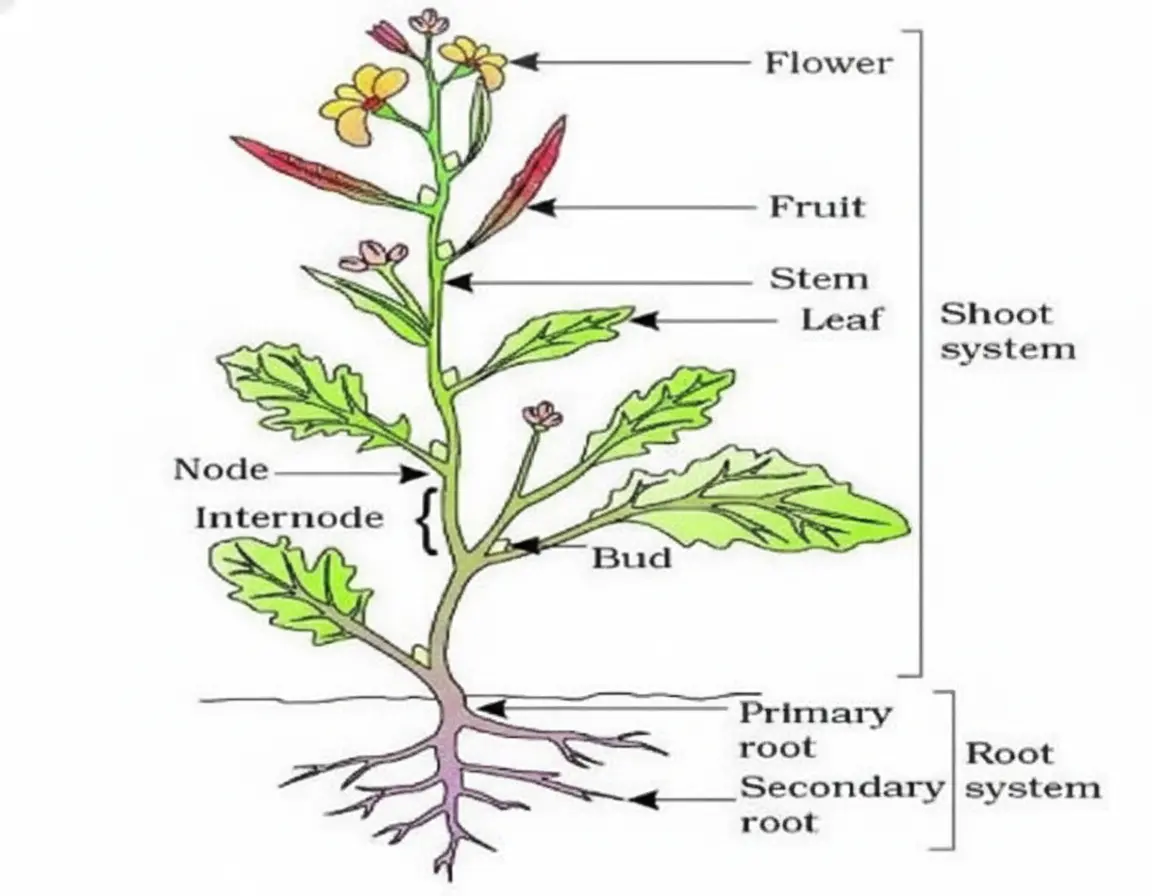
1. Anatomy of the Root
A root is the descending, non-green part of the plant. Unlike the stem, it lacks nodes, internodes, and leaves. It grows toward the soil (positive geotropism).
Origin: The first structure to emerge from a seed coat is the Radicle. This develops into the primary root.
Key Functions:
1. Absorption: Pulling water and inorganic nutrients from the soil.
2. Anchorage: Securing the plant body firmly in the ground.
3. Storage: Acting as a reservoir for food and nutrients (e.g., carrots, sweet potatoes).
2. Monocot vs. Dicot Roots: Structural Comparison
Plants are classified into Monocots (one seed leaf) and Dicots (two seed leaves). Their roots show distinct internal differences:
A. The Vascular System (Xylem and Phloem)
Dicot: Fewer vascular bundles (usually 2 to 6). The xylem vessels are angular in shape.
Monocot: Numerous vascular bundles (often 8 to 46). The xylem vessels are oval or rounded.
B. The Pith and Growth
Pith: This is the central tissue. In Dicots, the pith is very small or absent. In Monocots, the pith is well-developed.
Secondary Growth: Only Dicot roots undergo secondary growth (thickening over time) through the formation of vascular cambium and cork. Monocot roots do not show secondary growth.
C. Protective Layers
Casparian Strips: These are waxy bands in the endodermis that regulate water flow. They are prominent in Dicots but only visible in the young roots of Monocots.
Passage Cells: These thin-walled cells that allow water through the endodermis are present in Monocots but generally absent in Dicots.
| Feature | Dicot Root | Monocot Root |
|---|---|---|
| Vascular Bundles | Few (2-6) | Many (Polyarch, 8-46) |
| Pith | Reduced or Absent | Well-developed |
| Secondary Growth | Present | Absent |
| Xylem Vessel Shape | Angular | Oval or Rounded |
| Cortex | Narrow | Wide |
| Pericycle | Produces lateral roots & cambium | Produces only lateral roots |
Prelims tips
- Radicle: The origin of the root system.
- Polyarch: A term used for monocot roots having many xylem bundles.
- Secondary Growth: Absent in Monocots; this is why monocots like grass or wheat don't become thick woody trees.
- Casparian Strips: Made of Suberin, they force water into the living cells of the root.
Mains points
- Agricultural Productivity: Understanding root depth and surface area (root hairs) is vital for developing drought-resistant crop varieties.
- Soil Conservation: The extensive root systems of grasses (monocots) are essential for preventing soil erosion by binding soil particles together.
- Secondary Growth: The presence of secondary growth in dicots allows for the development of perennial woody shrubs and trees, contributing to forest carbon sequestration.
- Symbiosis: Root structures are the primary site for Mycorrhizal and Rhizobial associations, which are key to sustainable organic farming.
Did you know?
- The Root Cap at the tip of the root is like a tiny hard hat—it protects the delicate growing tissue as the root pushes through rough soil.
- Roots 'breathe' too! They need oxygen from the air spaces in the soil. This is why plants can die in over-watered soil—they literally drown.
- Some roots, like those of Mangroves (Pneumatophores), grow upwards out of the water to catch oxygen from the air.
Plant Vascular Tissues and the Stem System
The survival of a vascular plant depends on its internal transport system, consisting of Xylem and Phloem, housed within the Stem. While the stem provides the structural framework and connects the roots to the leaves, the vascular tissues act as the plant's 'circulatory system,' moving water up and food in every direction.
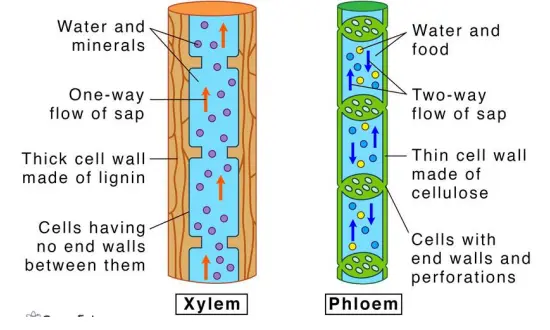
1. The Transport System: Xylem vs. Phloem
Plants have specialized complex permanent tissues to transport materials. These are organized into vascular bundles.
A. Xylem: The Water Highway
Function: Conducts water and dissolved minerals from the roots to the leaves.
Flow: Unidirectional (only upwards).
Composition: Tracheids, vessels, xylem parenchyma, and xylem fibers.
Vitality: Mostly dead tissue (only xylem parenchyma is living). This provides the structural strength needed for wood.
B. Phloem: The Food Distributor
Function: Transports prepared food (sugar) from leaves to all other parts of the plant.
Flow: Bidirectional (up and down depending on need).
Composition: Sieve tubes, companion cells, phloem parenchyma, and phloem fibers.
Vitality: Mostly living tissue (only phloem fibers are dead).
2. The Stem: The Supporting Axis
The stem is the ascending part of the plant axis that develops from the Plumule of the embryo.
Key Characteristics:
Direction: Positively phototropic (grows toward light) and negatively geotropic (grows away from earth).
Features: Divided into Nodes (where leaves grow) and Internodes (the space between nodes).
Growth: Contains terminal buds at the tip for height and axillary buds for branches.
3. Functions and Economic Importance
The stem is more than just a support beam; it is a vital organ for survival and human economy.
Biology: Supports the canopy, conducts nutrients, and even performs photosynthesis in green stems. Thorns (modified stems) protect the plant and reduce water loss (transpiration).
Economic Use:
Food: Sugarcane (sugar), Bamboo, and Asparagus (vegetables).
Spices: Cinnamon is actually the bark of a stem.
Medicine: Quinine (anti-malarial) and Camphor are extracted from stem barks.
| Feature | Xylem | Phloem |
|---|---|---|
| Function | Water & Mineral transport | Food & Organic solute transport |
| Direction of Flow | Unidirectional (Upward) | Bidirectional (Both ways) |
| Main Elements | Tracheids & Vessels | Sieve tubes & Companion cells |
| Living/Dead Status | Mostly Dead (Except Parenchyma) | Mostly Living (Except Fibers) |
| Location | Center of the vascular bundle | Outer side of the vascular bundle |
Prelims tips
- Plumule: The origin of the stem system.
- Sieve Tubes: The primary conducting element of Phloem (lacks a nucleus at maturity).
- Tracheids/Vessels: Primary water conductors in Xylem.
- Phototropism: Stems grow toward light (positive); Roots grow away from it (negative).
- Membrane Biogenesis: In stems, cork cambium helps in the secondary growth (thickening) of dicots.
Mains points
- Agriculture: Girdling (removing a ring of bark/phloem) is used to study nutrient transport; it stops food reaching the roots, proving phloem's role.
- Forestry: The strength of timber is due to the lignified walls of dead xylem vessels, making it a crucial carbon sink and industrial resource.
- Food Security: Stems like potato (tubers) and onion (bulbs) are modified storage organs that are staple foods globally.
- Plant Adaptation: Stem modifications (thorns, tendrils, phylloclades) represent evolutionary strategies to survive in arid or competitive environments.
Did you know?
- The rings in a tree trunk that help us tell its age are actually layers of old Xylem tissue!
- In Cactus, the stem becomes thick and green to perform photosynthesis and store water, while the leaves turn into spines.
- Quinine, obtained from the bark of the Cinchona tree, was the first effective treatment for Malaria.
Leaf Structure and Modifications
The leaf is the primary site of photosynthesis and transpiration. Originating at the Node, it houses an Axillary Bud that can develop into a branch. To survive in diverse environments, leaves often undergo modifications, transforming into spines for protection, tendrils for support, or scales for storage.
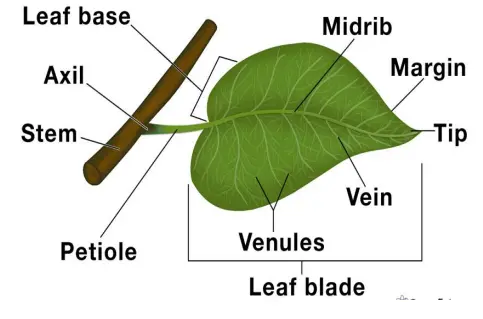
1. Anatomy of a Leaf
A typical leaf consists of a blade (lamina), a stalk (petiole), and a base. The most critical point of a leaf's anatomy is its origin at the node.
Axillary Bud: Located in the axil (the angle between the leaf and the stem), this bud has the potential to grow into a new branch or a flower.
2. Leaf Modifications
When a leaf changes its form to perform functions other than photosynthesis, it is called modification.
A. Leaf Tendrils
Description: The entire leaf or a part of it transforms into a coiled, wire-like structure.
Function: Helps weak-stemmed plants climb for better sunlight.
Example: Wild pea (Lathyrus aphaca).
B. Leaf Spines
Description: Leaves or leaflets turn into sharp, pointed structures.
Function: Reduces water loss (transpiration) and protects the plant from grazing animals.
Example: Opuntia (Cactus), Aloe, Argemone.
C. Leaf Scales
Description: Leaves become thin, dry, and membrane-like.
Function: To protect delicate axillary buds (as in Ficus) or to store food and water (as in Onion).
Example: Onion, Ruscus, Ficus.
| Modification | Primary Function | Common Examples |
|---|---|---|
| Tendrils | Support and Climbing | Wild Pea (Lathyrus) |
| Spines | Defense & Water conservation | Cactus, Aloe, Argemone |
| Scales | Protection & Storage | Onion, Ficus, Ruscus |
| Phyllode | Photosynthesis (Petiole modified) | Australian Acacia |
Prelims tips
- Axillary Bud: A key identifying feature of a leaf; it is found in the angle between the stem and petiole.
- Transpiration: Mostly occurs through Stomata on the leaf surface.
- Opuntia: The stem is modified into a Phylloclade (green & fleshy) and leaves into spines.
- Venation: Monocots usually have parallel venation, while Dicots have reticulate (net-like) venation.
Mains points
- Adaptive Strategies: Leaf modifications like spines and scales are evolutionary responses to xeric (dry) conditions, helping plants like cacti survive in arid climates.
- Agricultural Impact: Understanding leaf area and stomatal density is vital for crop scientists aiming to increase photosynthetic efficiency and water-use productivity.
- Economic Botany: Modified leaves like onion scales are major global food staples, while others provide essential oils, medicines, and fibers.
- Carbon Sequestration: The leaf is the primary organ responsible for the global carbon sink, converting atmospheric $CO_2$ into biomass.
Did you know?
- In Cactus, the green part you see is actually the stem; the true leaves are the needles (spines) to prevent water from evaporating in the desert heat.
- Onion rings are actually fleshy scale leaves that store food for the plant to use later.
- Some leaves are carnivorous! The Venus Flytrap has modified leaves that act as a jaw to catch insects for nitrogen.
The Flower: Reproductive Anatomy and Function
The flower is the reproductive powerhouse of a plant, representing a specialized branch of limited growth. Its primary mission is Sexual Reproduction, leading to the formation of seeds and fruits. The scientific study of flowers is known as Anthology. Understanding its four structural layers—Sepals, Petals, Stamens, and Carpels—is essential for grasping how life continues in the plant kingdom.

1. Structural Layers of a Flower (Whorls)
A typical flower is organized into four distinct layers or 'whorls' attached to a base called the thalamus.
1. Sepals (Calyx): The outermost green, leaf-like structures that protect the flower in the bud stage.
2. Petals (Corolla): The brightly colored parts designed to attract pollinators like bees and butterflies.
3. Stamen (Androecium): The Male reproductive part. Each stamen consists of a stalk (filament) and a pollen-bearing tip (anther).
4. Carpel/Pistil (Gynoecium): The Female reproductive part. It consists of the Stigma (receives pollen), Style (tube), and Ovary (contains ovules/seeds).
2. Sexual Classification of Flowers
Flowers are categorized based on the presence of reproductive organs:
Bisexual (Perfect) Flowers: These contain both Androecium (male) and Gynoecium (female) organs. Example: Hibiscus, Mustard.
Unisexual (Imperfect) Flowers: These contain only one reproductive organ—either stamens or carpels. Example: Papaya, Watermelon.
Staminate: A unisexual flower with only male parts.
Pistillate: A unisexual flower with only female parts.
3. From Flower to Fruit
After Pollination (transfer of pollen to stigma) and Fertilization (fusion of male and female gametes):
The Ovary develops into the Fruit.
The Ovules inside the ovary develop into Seeds.
The petals and sepals usually wither and fall off.
| Organ | System Name | Components | Gender |
|---|---|---|---|
| Stamen | Androecium | Anther and Filament | Male |
| Carpel / Pistil | Gynoecium | Stigma, Style, and Ovary | Female |
| Petal | Corolla | Colorful blades | Non-reproductive |
| Sepal | Calyx | Green base leaves | Non-reproductive |
Prelims tips
- Anthology: Study of flowers.
- Pollination: Transfer of pollen from Anther to Stigma.
- Fruit vs Seed: Ovary becomes Fruit; Ovule becomes Seed.
- Essential Whorls: Androecium and Gynoecium (necessary for reproduction).
- Non-essential Whorls: Calyx and Corolla (supportive roles).
Mains points
- Food Security: Pollinators (bees, butterflies) are vital for the fertilization of flowers; their decline poses a significant threat to global agricultural output.
- Horticulture & Economy: The floriculture industry is a multi-billion dollar sector, providing livelihoods and contributing to India's export earnings.
- Evolutionary Biology: The transition to Angiosperms (flowering plants) allowed plants to colonize land more effectively due to the protection of seeds within fruits.
- Genetics: Mendel's laws of inheritance were discovered using the flowers of the garden pea plant, highlighting the flower's role as a primary site for genetic research.
Did you know?
- The Rafflesia is the world's largest flower—it can grow up to 3 feet across and smells like rotting meat to attract flies for pollination!
- Broccoli and Cauliflower are actually undeveloped flower buds that we eat as vegetables.
- Sunflowers are not actually 'one' flower; they are a cluster of hundreds of tiny individual flowers called florets.
Pollination: The Bridge to Fertilization
Pollination is the vital process of transferring pollen grains from the male Anther to the female Stigma. This act of biological 'couriering' is the prerequisite for fertilization, seed formation, and fruit development. Depending on the plant and environment, this can happen within a single flower or across different plants via wind, water, or animals.
1. Types of Pollination
Pollination is broadly categorized into two types based on the source of the pollen:
A. Self-Pollination (Autogamy)
Mechanism: Pollen from the anther is transferred to the stigma of the same flower or another flower on the same plant.
Advantage: It does not depend on external agents (like bees) and preserves the exact genetic traits of the parent plant.
Disadvantage: It leads to reduced genetic diversity over generations.
B. Cross-Pollination (Allogamy)
Mechanism: Pollen is transferred from the anther of one flower to the stigma of a flower on a different plant of the same species.
Advantage: Increases genetic variation, leading to stronger, more adaptable offspring.
Requirement: Requires external agents or 'pollinators' to carry the pollen.
2. Agents of Pollination
Plants use both non-living (abiotic) and living (biotic) agents to ensure their pollen reaches its destination.
Biotic Agents (Animals)
Entomophily (Insects): Most common. Flowers are usually brightly colored and scented to attract bees, butterflies, and moths.
Ornithophily (Birds): Flowers are often tubular and bright red (e.g., Sunbirds).
Chiropterophily (Bats): Large, pale flowers that open at night with strong odors.
Abiotic Agents (Nature)
Anemophily (Wind): Pollen is light, non-sticky, and produced in huge quantities. Flowers are usually small and lack bright colors (e.g., Wheat, Corn, Grasses).
Hydrophily (Water): Occurs in some aquatic plants like Vallisneria and Hydrilla.
| Feature | Wind Pollinated (Anemophily) | Insect Pollinated (Entomophily) |
|---|---|---|
| Flower Color | Dull, small, no nectar | Bright, large, nectar-rich |
| Pollen Grain | Light, dry, and numerous | Sticky or spiny to cling to insects |
| Stigma | Feathery to catch wind pollen | Sticky to trap pollen from insects |
| Examples | Grasses, Maize, Coconut | Rose, Sunflower, Mango |
Prelims tips
- Anemophily: Wind pollination (Common in cereals like rice/wheat).
- Entomophily: Insect pollination (Most common in angiosperms).
- Pollen Grains: Have a tough outer layer called Exine made of Sporopollenin (the most resistant organic material).
- Nectar: The sugary reward that plants provide to attract biotic agents.
Mains points
- Biodiversity Crisis: The 'Colony Collapse Disorder' in bees poses a direct threat to global food security, as many cash crops depend entirely on cross-pollination.
- Climate Change: Changing seasons can cause a 'mismatch' where flowers bloom before their specific insect pollinators emerge, disrupting the ecosystem.
- Economic Botany: Artificial pollination is used in high-value crops like Vanilla to ensure maximum fruit yield in the absence of natural pollinators.
- Evolution: The co-evolution of flowers and their specific pollinators (like a specific bird's beak matching a flower's shape) is a classic study in evolutionary biology.
Did you know?
- About 80% of all plant pollination is done by insects, with honeybees doing the lion's share of the work.
- Some orchids look and smell exactly like female bees to trick male bees into 'mating' with the flower, thus ensuring pollination!
- Chocolate comes from the cacao tree, which is primarily pollinated by tiny flies called Midges. No midges, no chocolate!
Angiosperms vs. Gymnosperms: The Evolution of Seeds
Plants that produce seeds are divided into two major groups: Angiosperms (flowering plants) and Gymnosperms (naked-seed plants). The primary distinction lies in the 'packaging' of the seed. Angiosperms protect their seeds within fruits, a strategy that has made them the most diverse and dominant group on Earth today.

1. What are Gymnosperms?
The word 'Gymnosperm' comes from the Greek words gymnos (naked) and sperma (seed). These are the ancient ancestors of flowering plants.
Naked Seeds: Their seeds are not enclosed in an ovary or fruit. They usually develop on the surface of scales or leaves, often forming Cones.
Nature: Mostly evergreen with needle-like or scale-like leaves to survive harsh or cold climates.
Reproduction: Primarily rely on Wind to carry pollen to the cones.
2. What are Angiosperms?
Angiosperms are the most advanced and diverse group of plants. The name means 'enclosed seeds'.
Enclosed Seeds: Their seeds develop inside an Ovary, which eventually matures into a Fruit.
Flowering: They produce flowers which can be unisexual or bisexual.
Adaptability: They have high terrestrial adaptability, allowing them to dominate almost every habitat on Earth.
3. Key Anatomical Differences
Wood Quality: Angiosperms generally produce Hardwood (used for furniture), while Gymnosperms produce Softwood (used for paper and lumber).
Reproductive Tissue: Angiosperms have Triploid (3n) endosperm (the food for the seed) formed by double fertilization, whereas Gymnosperms have Haploid (n) endosperm.
Leaf Shape: Angiosperm leaves are typically broad and flat; Gymnosperm leaves are often needle-like (like Pine trees).
| Parameter | Angiosperms | Gymnosperms |
|---|---|---|
| Seeds | Enclosed in ovary/fruit | Naked (on scales/cones) |
| Reproductive Structure | Flowers | Cones |
| Life Cycle | Seasonal (mostly) | Evergreen |
| Pollination Agent | Animals/Insects (mostly) | Wind (mostly) |
| Endosperm | Triploid (3n) | Haploid (n) |
| Wood | Hardwood | Softwood |
| Examples | Mango, Rose, Wheat | Pine, Cycas, Cedar |
Prelims tips
- Triploid Endosperm: A unique feature of Angiosperms due to Double Fertilization.
- Naked Seeds: If a question mentions 'seeds on cones', think Gymnosperms.
- Vessels: Angiosperm xylem has vessels; Gymnosperm xylem mostly lacks them (except Gnetophytes).
- Hardwood vs Softwood: This is a botanical distinction, not just a measure of physical hardness.
Mains points
- Economic Impact: Gymnosperms are the backbone of the global timber and paper industry, while Angiosperms provide global food security through agriculture.
- Evolutionary Success: The development of flowers and fruits in Angiosperms allowed for specialized pollination and seed dispersal, leading to their global dominance.
- Carbon Sequestration: Coniferous forests (Gymnosperms) are massive carbon sinks, playing a vital role in regulating the Earth's climate.
- Biodiversity: Tropical rainforests (predominantly Angiosperms) harbor the highest density of plant species, essential for ecological stability.
Did you know?
- The oldest living gymnosperm is a Bristlecone Pine estimated to be over 4,800 years old!
- About 80% of all known green plants living today are Angiosperms.
- Apples, oranges, and even the grains used for bread (wheat/rice) are all products of Angiosperms.
Reproductive Organs: Androecium, Gynoecium, and Fruit Formation
The transition from a flower to a fruit is a complex biological journey. The Androecium (male) and Gynoecium (female) work in tandem to achieve fertilization. Post-fertilization, the flower undergoes a dramatic transformation where the Ovary matures into a protective Fruit and the Ovules become the Seeds of the next generation.
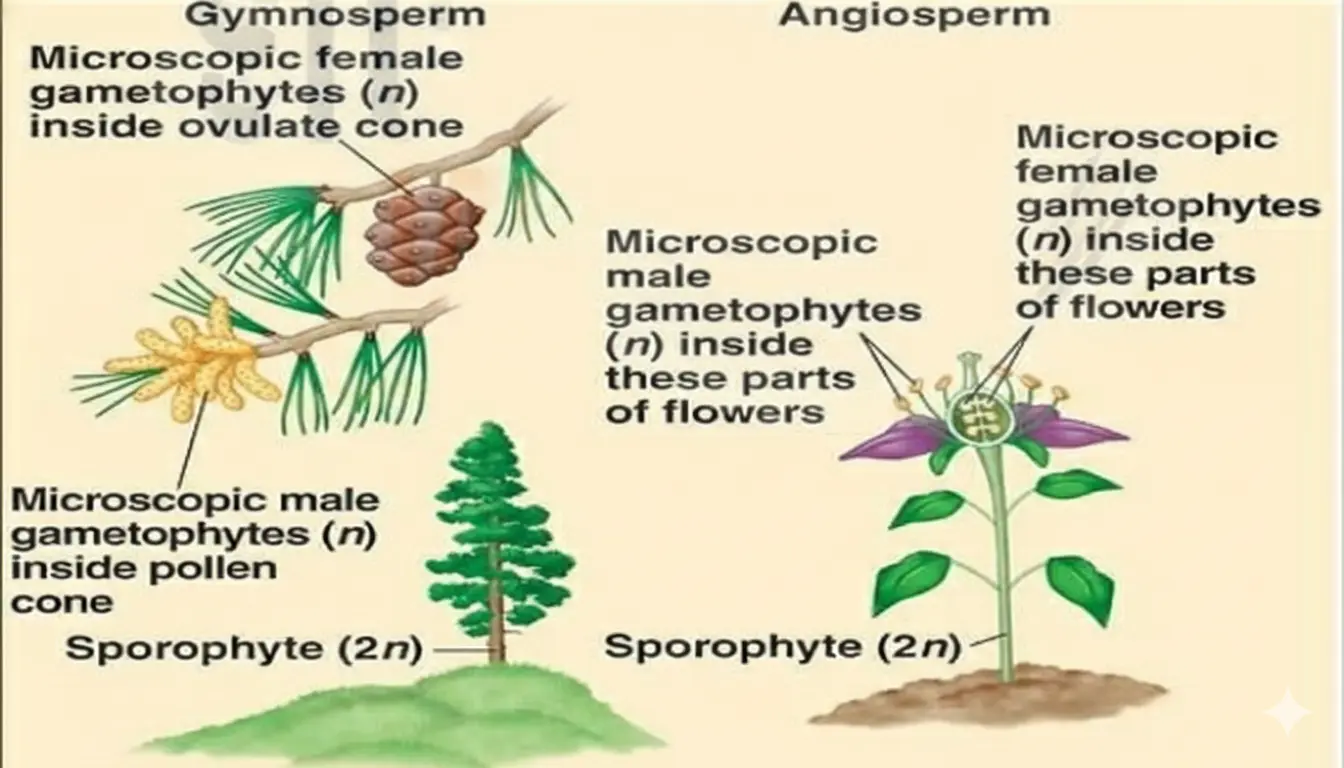
1. Androecium: The Male Reproductive System
The Androecium consists of a collection of Stamens. It is responsible for producing pollen grains (microspores).
Anther: Usually two-lobed, containing pollen sacs where pollen grains are produced. A sterile tissue called the Connective holds these lobes together.
Filament: The long stalk that supports the anther, positioning it to effectively disperse pollen.
2. Gynoecium: The Female Reproductive System
Occupying the center of the flower, the Gynoecium (also called the Pistil or Carpel) is where the fruit begins its life.
Stigma: The receptive tip, often sticky or feathery, designed to capture and hold onto pollen grains.
Style: The tube through which the pollen tube grows to reach the ovary.
Ovary: The enlarged basal portion containing Ovules (macrospores).
3. From Fertilization to Fruit
Once fertilization occurs, the flower's 'essential' work is done, and the transformation begins:
The Fruit: Developed from the Ovary wall. Its primary biological function is to protect the seeds and assist in their dispersal.
The Seeds: Developed from the Ovules. These contain the embryo which will grow into a new plant.
Parthenocarpy: Some fruits develop without fertilization, resulting in seedless varieties like bananas and certain grapes.
| Floral Part | Post-Fertilization Structure |
|---|---|
| Ovary | Fruit |
| Ovary Wall | Pericarp (Fruit Wall) |
| Ovule | Seed |
| Integuments (of Ovule) | Seed Coat |
| Zygote | Embryo |
Prelims tips
- Parthenocarpy: Production of fruit without fertilization (seedless).
- Microspores: Produced by Androecium (Pollen).
- Macrospores: Produced by Gynoecium (Ovules).
- Connective: The sterile tissue joining anther lobes.
- Stigma: The receptive surface for pollen grains.
Mains points
- Horticultural Innovation: Induced parthenocarpy (using hormones) allows for the production of consumer-preferred seedless watermelons and cucumbers.
- Pollination Biology: The structural adaptation of the stigma (feathery vs sticky) is a result of co-evolution with specific wind or insect pollinators.
- Seed Security: Understanding fruit and seed development is critical for the conservation of plant genetic resources in seed banks.
- Economic Botany: Many 'vegetables' in culinary terms (like tomatoes and pumpkins) are botanically fruits because they develop from an ovary.
Did you know?
- A Strawberry is not a 'true' berry! In true fruits, the ovary becomes the flesh. In strawberries, the 'flesh' is the swollen base (thalamus) of the flower.
- Parthenocarpic fruits like bananas are naturally sterile and can only be grown through cuttings or cloning.
- The Stigma of the Crocus flower is harvested to produce Saffron, the most expensive spice in the world.
Human Digestive System: From Ingestion to Absorption
Digestion is the biochemical process of breaking down complex Biomacromolecules into simple, absorbable substances. This journey starts in the Mouth, where mechanical and chemical breakdown begins, and continues through a series of specialized organs designed to extract nutrients and energy essential for survival.
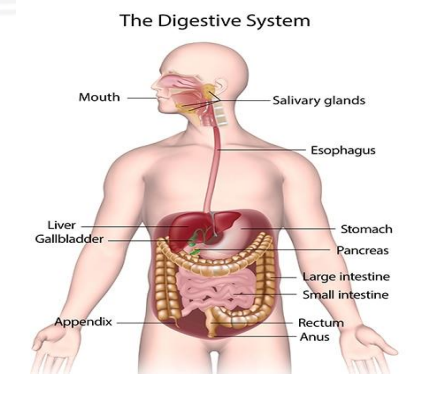
1. The Process of Digestion
Our body cannot utilize carbohydrates or proteins in their original complex form. They must be converted into their simplest units:
Carbohydrates -> Glucose (Simple Sugars)
Fats -> Fatty Acids and Glycerol
Proteins -> Amino Acids
2. The Beginning: Mouth and Buccal Cavity
The first step of the digestive process is Ingestion, taking food into the body through the mouth.
Chemical Digestion: Saliva contains Salivary Amylase, an enzyme that initiates the breakdown of starch (carbohydrates).
Protection: Saliva also contains Lysozyme, which acts as an antibacterial agent to kill harmful microbes entering with food.
The Pharynx: As food moves toward the esophagus, the Epiglottis (a cartilaginous flap) closes the glottis (windpipe opening) to prevent choking.
3. The Gastrointestinal Highway
Once swallowed, food travels through the Oesophagus via a wave-like muscular contraction called Peristalsis.
Stomach: A J-shaped bag that secretes Mucous, Hydrochloric Acid (HCl), and digestive juices. HCl kills bacteria and creates an acidic medium for protein-digesting enzymes like Pepsin.
Small Intestine: This is the site of complete digestion. It receives secretions from the Liver (Bile) and Pancreas (Pancreatic juice).
Large Intestine: Its primary role is to absorb water and salts from undigested food before the waste is expelled.
| Component | Function | Location |
|---|---|---|
| Salivary Amylase | Carbohydrate breakdown | Mouth |
| Lysozyme | Antibacterial defense | Mouth (Saliva) |
| Hydrochloric Acid (HCl) | Kills bacteria / Activates enzymes | Stomach |
| Bile | Fats emulsification | Small Intestine (from Liver) |
| Villi | Nutrient absorption | Small Intestine |
Prelims tips
- Digestion: Conversion of non-absorbable macromolecules to absorbable simple substances.
- Salivary Amylase: It specifically targets starch/carbohydrates.
- Lysozyme: A vital 'First Line of Defense' in the innate immune system within the mouth.
- Peristalsis: The involuntary constriction and relaxation of muscles in the esophagus that pushes food down.
Mains points
- Nutritional Biochemistry: The efficiency of carbohydrate, protein, and fat digestion is the foundation of metabolic health and prevents disorders like malnutrition or obesity.
- Evolutionary Adaptation: The presence of the epiglottis highlights the evolutionary solution to the shared pathway of the respiratory and digestive systems in mammals.
- Public Health: Understanding the role of lysozyme and stomach acid (HCl) explains the body's natural resistance to many common food-borne pathogens.
- Biotechnology: Modern food processing often involves 'pre-digesting' complex molecules using enzymes similar to amylase to make them easier for sensitive digestive systems to handle.
Did you know?
- An adult's small intestine is about 5 meters long! It is called 'small' only because of its narrow diameter compared to the large intestine.
- The Villi in your small intestine increase the surface area for absorption so much that if spread out, they would cover a whole tennis court.
- The Epiglottis is so efficient that you can technically swallow food even while standing on your head (though not recommended!).
Stomach and Small Intestine: Digestion and Absorption
The stomach acts as a chemical processor using Hydrochloric Acid (HCl) to break down proteins, while the Small Intestine serves as the primary site for complete digestion and nutrient absorption. The complex interaction between enzymes and structural adaptations like Villi ensures that the body successfully extracts vital energy from food.
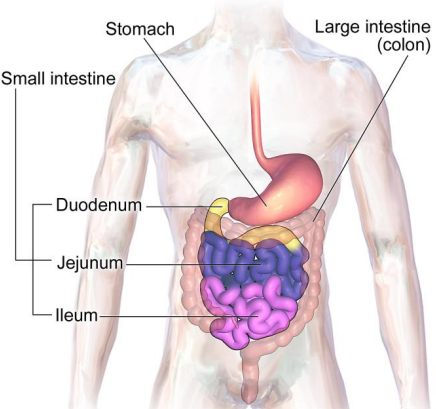
1. The Stomach: Chemical Breakdown
The stomach is a thick-walled, J-shaped bag that receives food from the food pipe. It performs three critical secretory functions:
Mucus: Protects the inner lining of the stomach from the corrosive effects of its own acid.
Hydrochloric Acid (HCl): Creates an acidic medium required for protein-digesting enzymes to work and kills many harmful bacteria that enter with food.
Digestive Juices: Specifically breaks down Proteins into simpler substances (peptones and proteoses).
2. The Small Intestine: The Absorption Hub
The small intestine is a highly coiled tube, approximately 5 meters long. It is divided into three parts: Duodenum, Jejunum, and Ileum.
Secretions: It receives bile from the liver and pancreatic juice from the pancreas to complete the digestion of fats, proteins, and carbohydrates.
Absorption via Villi: The inner walls possess thousands of finger-like outgrowths called Villi. These increase the surface area for the absorption of digested food.
Vascular Connection: Each villus has a network of thin blood vessels. Absorbed substances are transported via these vessels to different organs.
3. Assimilation and Egestion
Assimilation: The process where absorbed nutrients are used by the body to build complex substances like proteins or to produce energy (glucose breakdown with oxygen).
Final Phase: Undigested and unabsorbed food enters the large intestine for water recovery before being expelled.
| Feature | Stomach | Small Intestine |
|---|---|---|
| Primary Function | Protein digestion and disinfecting food | Complete digestion and nutrient absorption |
| Medium | Highly Acidic (due to HCl) | Alkaline (due to Bile and Pancreatic juice) |
| Length | Bag-like structure | Approximately 5 meters |
| Structural Adaptation | Rugae (folds) for expansion | Villi for surface area absorption |
| Main End Product | Chyme (partially digested food) | Simple absorbable nutrients (Glucose, etc.) |
Prelims tips
- HCl Role: It kills pathogens and activates the enzyme Pepsin.
- Small Intestine Parts: Duodenum (proximal), Jejunum (middle), Ileum (distal).
- Assimilation: Focus on the fact that this is the utilization of nutrients, not just the intake.
- Villi: Richly supplied with blood vessels to facilitate immediate transport of nutrients.
Mains points
- Metabolic Disorders: Malabsorption syndromes often stem from damage to the villi, highlighting their central role in maintaining systemic nutrition.
- Evolutionary Efficiency: The extensive length and coiled nature of the small intestine allow for maximum time and surface area to extract energy from a diverse range of diets.
- Public Health: Understanding the acidic barrier of the stomach (HCl) is fundamental in explaining why some pathogens (like Cholera) require a large dose to cause infection.
- Biochemical Coordination: The duodenum acts as a critical junction where acidic chyme from the stomach is neutralized by alkaline secretions, protecting the intestinal lining.
Did you know?
- Despite its name, the Small Intestine is the longest part of the digestive tract; it's called 'small' only because it is narrower than the large intestine.
- Your stomach produces a new layer of mucus every two weeks to prevent itself from digesting its own tissues!
- The Villi are so numerous that the total internal surface area of the small intestine is roughly the size of a studio apartment.
Large Intestine: Water Recovery and Waste Management
The Large Intestine is the final major section of the gastrointestinal tract. While the small intestine focuses on nutrient extraction, the large intestine specializes in reabsorbing water and essential salts from undigested food matter, transforming liquid waste into solid feces for Egestion.
1. Structure and Dimensions
Despite being called 'large', this organ is shorter than the small intestine, measuring approximately 1.5 meters in length. It is called 'large' because of its significantly wider diameter.
Segments: It consists of the Caecum (a small blind sac), the Colon (divided into ascending, transverse, descending, and sigmoid sections), and the Rectum.
Appendix: Attached to the caecum is the vermiform appendix, a vestigial organ that is a narrow finger-like tubular outgrowth.
2. Key Functions: Absorption and Compaction
Unlike the earlier parts of the digestive system, the large intestine does not perform significant chemical digestion of food.
Water Recovery: Its primary function is the absorption of water and some salts from the undigested food material.
Mucus Secretion: It secretes mucus which helps in adhering the waste (undigested) particles together and lubricating it for easy passage.
Waste Storage: The undigested, semi-solid waste (feces) enters the rectum where it is stored temporarily before removal.
3. Egestion: The Final Step
The final stage of the digestive process is Egestion (defecation).
Process: The fecal matter is removed from the body through the Anus.
Regulation: This is a voluntary process carried out by a mass peristaltic movement and controlled by anal sphincters.
| Feature | Small Intestine | Large Intestine |
|---|---|---|
| Length | ~5 Meters (Longer) | ~1.5 Meters (Shorter) |
| Diameter | Narrow | Wide |
| Principal Function | Nutrient absorption | Water and salt absorption |
| Villi | Present | Absent |
| Digestion | Completes here | No significant digestion |
Prelims tips
- Egestion vs. Excretion: Egestion is the removal of undigested food (solid waste); Excretion is the removal of metabolic waste (like urea via urine).
- Appendix: Identified as a vestigial organ in humans, though it may harbor beneficial bacteria.
- Water Balance: The large intestine is critical for preventing dehydration by recovering fluids.
- Bicarbonate: Secreted here to neutralize acids produced by bacterial fermentation.
Mains points
- Microbiome Health: The symbiotic relationship between humans and large intestinal bacteria is vital for immunity and mental health (the gut-brain axis).
- Clinical Significance: Disorders like Diarrhea (insufficient water absorption) and Constipation (excessive water absorption) highlight the delicate balance maintained by this organ.
- Evolutionary perspective: The presence of the caecum and appendix suggests our ancestors had a diet much higher in cellulose, which required more extensive fermentation.
- Policy and Sanitation: Understanding the egestion process underscores the importance of public sanitation and 'Open Defecation Free' (ODF) initiatives to prevent fecal-oral disease transmission.
Did you know?
- The large intestine is home to trillions of Gut Bacteria (Microbiota). These friendly microbes produce Vitamin K and some B vitamins that the human body cannot make on its own.
- It takes about 12 to 48 hours for food to travel through the entire length of the large intestine.
- The 'rumbling' sound your stomach makes is often actually gas moving through the large intestine, a process called Borborygmus.
The Vital Trio: Liver, Pancreas, and Gallbladder
The Liver, Pancreas, and Gallbladder are the primary accessory organs of the digestive system. While food does not pass through them, they secrete essential enzymes and hormones that manage everything from fat emulsification to blood sugar regulation. Their coordinated effort ensures that the body maintains internal chemical balance and efficient energy extraction.
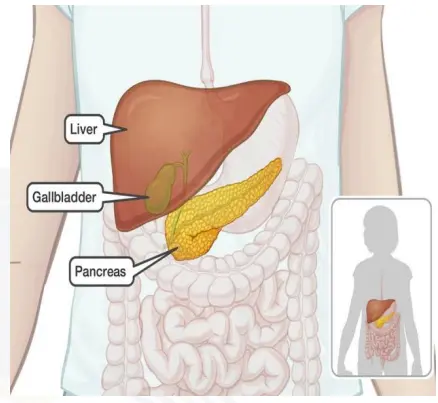
1. The Liver: The Body's Chemical Factory
The liver is the largest gland in the human body, situated in the upper right side of the abdominal cavity.
Bile Secretion: The liver produces Bile Juice, which is essential for the digestion of fats. It performs 'emulsification,' breaking down large fat globules into tiny droplets for enzymes to act upon.
Detoxification: It filters toxins from the blood and manages the storage of vitamins and minerals.
2. The Gallbladder: The Storage Unit
The gallbladder is a small, pear-shaped sac located just below the liver.
Function: It does not produce bile but serves as a storage and concentration chamber for it.
Release: When fatty food enters the small intestine, the gallbladder contracts and releases concentrated bile into the Duodenum via the common bile duct.
3. The Pancreas: The Dual-Function Gland
Located just below the stomach, the pancreas is a unique gland that acts as both an exocrine and endocrine organ.
Exocrine Function: It secretes Pancreatic Juice, which contains enzymes (like Trypsin and Lipase) to digest proteins, fats, and carbohydrates.
Endocrine Function: Specialized cells (Islets of Langerhans) secrete hormones directly into the blood:
Insulin: Lowers blood sugar levels.
Glucagon: Raises blood sugar levels by signaling the liver to release stored glucose.
| Organ | Secretion | Primary Target / Role |
|---|---|---|
| Liver | Bile Juice | Emulsification of Fats |
| Gallbladder | Stored Bile | Concentration and timely release of bile |
| Pancreas | Pancreatic Juice | Digestive enzymes for Carbs, Fats, Proteins |
| Pancreas | Insulin | Lowers Blood Glucose |
| Pancreas | Glucagon | Increases Blood Glucose |
Prelims tips
- Bile: Remember it contains no enzymes but is still vital for digestion.
- Largest Gland: Liver.
- Insulin/Glucagon: These are antagonistic hormones (work opposite to each other).
- Common Bile Duct: Formed by the joining of the cystic duct (from gallbladder) and hepatic duct (from liver).
Mains points
- Endocrine Regulation: The balance between Insulin and Glucagon is the cornerstone of metabolic homeostasis; disruption leads to lifestyle diseases like Type-2 Diabetes.
- Pathology: Gallstones occur when substances in bile (like cholesterol) crystallize, blocking the flow and causing severe pain and digestive issues.
- Public Health: Hepatitis (inflammation of the liver) and Fatty Liver disease are rising health concerns in India, linked to viral infections and dietary habits.
- Metabolic Processing: The liver's role in processing nutrients absorbed from the small intestine (via the portal vein) makes it the primary gatekeeper for systemic nutrition.
Did you know?
- The liver is the only organ in the human body that can completely regenerate itself even if only 25% of the original tissue remains.
- Bile juice is actually what gives feces its brown color; without it, waste would appear grey or clay-colored.
- The pancreas is about 6 inches long and shaped like a flat pear or a fish.
Respiratory System: The Mechanism of Gas Exchange
The Respiratory System is the biological network responsible for the intake of Oxygen (O2) and the removal of Carbon Dioxide (CO2). This continuous exchange is facilitated by the Alveoli in the lungs and the iron-rich protein Haemoglobin in the blood, ensuring that every cell in the body receives the energy needed for metabolism.
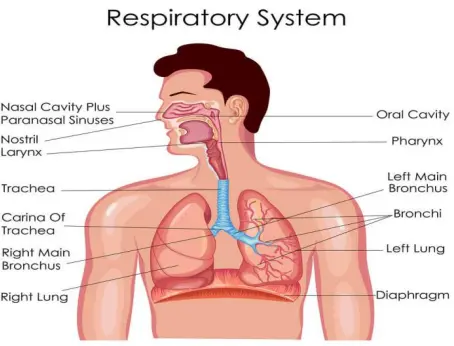
1. Breathing Mechanism
Breathing involves two main phases: Inspiration (inhalation) and Expiration (exhalation). It is driven by pressure gradients created by the diaphragm and intercostal muscles.
Inhalation: The diaphragm contracts and moves downward, increasing the volume of the chest cavity and pulling air into the lungs.
Exhalation: The diaphragm relaxes and moves upward, pushing CO2-rich air out of the lungs.
2. Alveoli: The Primary Exchange Site
The lungs contain millions of tiny, balloon-like structures called Alveoli. These are the actual sites where gas exchange occurs between the air and the blood.
Diffusion: O2 from the inhaled air diffuses across the thin alveolar membrane into the surrounding capillaries, while CO2 moves from the blood into the alveoli to be exhaled.
Surface Area: The vast number of alveoli provides a massive surface area to maximize the efficiency of this exchange.
3. Gas Transport: The Role of Haemoglobin
Once oxygen enters the blood, it must be transported to distant tissues.
Haemoglobin (Hb): A red-colored, iron-containing pigment in Red Blood Cells (RBCs). One Hb molecule can bind with up to four molecules of O2.
Oxyhaemoglobin: Oxygen binds with Hb to form oxyhaemoglobin, which travels through the arteries to reach body cells.
CO2 Transport: While some CO2 is carried by Hb, the majority is transported dissolved in the blood plasma as bicarbonate ions.
| Gas | Direction of Movement | Primary Carrier |
|---|---|---|
| Oxygen (O2) | Alveoli to Blood | Haemoglobin (RBCs) |
| Carbon Dioxide (CO2) | Blood to Alveoli | Plasma (as Bicarbonate) |
Prelims tips
- Alveoli: The structural and functional unit of the lungs.
- Haemoglobin: An iron-rich protein; deficiency leads to Anemia, which reduces oxygen-carrying capacity.
- Diaphragm: The primary muscle of respiration.
- Diffusion: The physical process (passive transport) by which gases move across the alveolar membrane.
Mains points
- Public Health: Air pollution and smoking cause chronic damage to alveoli (Emphysema), reducing the surface area available for gas exchange and leading to respiratory failure.
- High Altitude Adaptation: At high altitudes where O2 pressure is low, the body compensates by increasing RBC production and heart rate.
- Clinical Significance: Pulse oximetry measures the percentage of oxygen-saturated haemoglobin, a critical indicator during respiratory distress (like in COVID-19).
- Biological Efficiency: The thinness of the alveolar-capillary membrane is a prime example of biological engineering for rapid diffusion.
Did you know?
- Your left lung is slightly smaller than your right lung to make room for your heart!
- The total surface area of all the alveoli in an adult human's lungs is roughly the size of a tennis court.
- A person typically breathes about 12 to 16 times per minute while at rest.
Circulatory System: The Human Heart and Blood Flow
The Circulatory System, discovered by William Harvey, is the body's primary transport network. It delivers oxygen and nutrients to cells while removing waste products. In humans, the Heart acts as a muscular pump, ensuring Double Circulation—a specialized process that keeps oxygenated and deoxygenated blood separate for maximum efficiency.
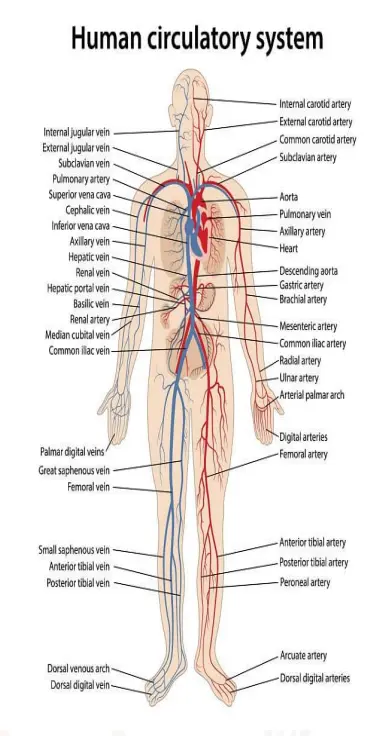
1. Structure of the Human Heart
The human heart is a four-chambered muscular organ roughly the size of a closed fist, protected by a double-walled membrane called the pericardium.
Atria (Auricles): Two upper, smaller chambers that receive blood.
Ventricles: Two lower, larger chambers with thick muscular walls that pump blood out to the lungs and body.
Valves: Structures like the Tricuspid and Bicuspid (Mitral) valves ensure that blood flows in only one direction, preventing backflow.
2. The Cardiac Cycle and Blood Pressure
The rhythmic contraction and relaxation of the heart constitute the cardiac cycle.
Heartbeat: A normal heart beats about 72 times per minute. Each cycle includes Systole (contraction) and Diastole (relaxation).
Cardiac Output: The heart pumps about 5 liters of blood per minute in a healthy adult.
Blood Pressure: It is the pressure exerted by blood against the walls of arteries. Normal BP is 120/80 mmHg.
3. Double Circulation and Blood Vessels
Humans possess double circulation, meaning blood passes through the heart twice for each complete circuit of the body.
Pulmonary Circulation: Deoxygenated blood travels from the heart to the lungs and returns oxygenated.
Systemic Circulation: Oxygenated blood travels from the heart to the rest of the body and returns deoxygenated.
Arteries vs. Veins: Arteries carry oxygen-rich blood away from the heart (high pressure), while veins carry oxygen-poor blood toward the heart (lower pressure, possess valves).
| Condition | Description | Impact |
|---|---|---|
| Hypertension | Blood pressure consistently above 140/90 | Damages brain and kidneys |
| Angina Pectoris | Acute chest pain due to low oxygen | Warning sign of heart issues |
| Heart Failure | Heart doesn't pump enough blood | Leads to fluid buildup in lungs |
| Atherosclerosis | Deposition of fats/cholesterol in arteries | Narrows the blood pathway |
Prelims tips
- William Harvey: Discovered the blood circulation system.
- SA Node: Known as the 'Natural Pacemaker', located in the right atrium.
- Arteries vs Veins: Pulmonary artery is the ONLY artery carrying deoxygenated blood; Pulmonary vein is the ONLY vein carrying oxygenated blood.
- Heart Sounds: 'Lub' is the closure of AV valves; 'Dub' is the closure of semilunar valves.
Mains points
- Non-Communicable Diseases (NCDs): Cardiovascular diseases (CVDs) are the leading cause of death globally, necessitating focus on preventive lifestyle changes.
- Public Health: The National Program for Prevention and Control of Cancer, Diabetes, Cardiovascular Diseases and Stroke (NPCDCS) in India targets early screening of hypertension.
- Technological Advancements: The use of Artificial Hearts and Stents represents the pinnacle of biomedical engineering in treating coronary artery diseases.
- Biological Integration: The close link between the respiratory and circulatory systems (Pulmonary circuit) highlights how the body optimizes gas transport for aerobic respiration.
Did you know?
- Your heart creates enough pressure to squirt blood up to 30 feet!
- The 'lub-dub' sound of a heartbeat is actually the sound of heart valves closing.
- If you stretched out all the blood vessels in an adult body, they would wrap around the Earth more than twice!
Excretory System: Filtration and Waste Removal
The Excretory System is the body's purification plant, responsible for removing toxic metabolic wastes such as urea and ammonia. By maintaining Homeostasis—the balance of water and salts—it ensures the internal environment remains stable. The Kidneys are the primary organs here, acting as sophisticated biological filters that process hundreds of liters of blood daily.
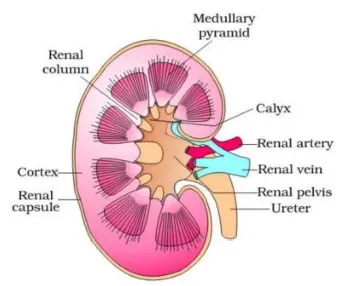
1. Role of the Excretory System
Metabolism produces various nitrogenous wastes that can be toxic if allowed to accumulate. The excretory system filters these from the blood and eliminates them from the body.
Metabolic Wastes: Includes Nitrogenous wastes (Urea, Uric Acid, Ammonia), excess salts, and water.
Primary Organs: A pair of bean-shaped Kidneys located on either side of the backbone.
2. Kidney Function: The Filtration Process
The kidneys filter the entire blood volume many times a day to maintain chemical balance.
Nephrons: Each kidney contains about a million functional units called Nephrons. These are the actual sites where filtration occurs.
Glomerulus: A cluster of capillaries where high-pressure filtration pushes water and waste out of the blood into the tubule.
Reabsorption: As the filtered fluid moves through the tubule, the body 'reclaims' useful substances like glucose, amino acids, and most of the water.
3. The Pathway of Urine
Once the waste is concentrated into urine, it follows a specific exit route:
Ureters: Two thin tubes that carry urine from the kidneys to the urinary bladder.
Urinary Bladder: A muscular sac that stores urine temporarily.
Urethra: The tube through which urine is finally expelled from the body.
| Organ | Function |
|---|---|
| Kidneys | Filter blood and produce urine |
| Ureters | Transport urine from kidney to bladder |
| Urinary Bladder | Temporary storage of urine |
| Urethra | Passage for urine expulsion |
Prelims tips
- Nephron: The structural and functional unit of the kidney.
- Urea: Produced in the Liver but excreted by the Kidney.
- Micturition: The clinical term for the act of passing urine.
- Homeostasis: Maintenance of a constant internal environment (water and salt balance).
Mains points
- Clinical Advancements: When kidneys fail, Dialysis (Artificial Kidney) is used to perform the filtration process, highlighting the vital role of osmotic balance.
- Public Health: High salt intake and dehydration are major causes of Kidney Stones and Chronic Kidney Disease (CKD) in India.
- Biological Regulation: The hormone ADH (Antidiuretic Hormone) controls how much water the kidneys reabsorb, directly linking the nervous system to excretion.
- Organ Donation: Kidney transplants are the most common form of organ transplant surgery, saving thousands from terminal renal failure.
Did you know?
- Your kidneys filter about 180 liters of blood every single day, but you only produce about 1.5 liters of urine!
- A person can live a perfectly healthy life with only one functioning kidney.
- If the nephrons from both kidneys were uncoiled and laid end-to-end, they would stretch for over 16 kilometers (10 miles).
Nephron: The Microscopic Filter and Urine Formation
The Nephron is the structural and functional unit of the kidney, acting as a complex miniature processing plant. Urine formation is not just a simple strain; it is a three-step high-precision process involving Filtration, Reabsorption, and Secretion. This ensures the body retains vital nutrients while precisely maintaining the Glomerular Filtration Rate (GFR) to stabilize internal fluid balance.
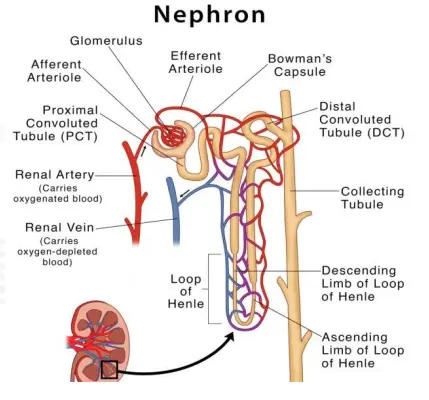
1. The Nephron Structure
Each kidney houses nearly one million nephrons. A nephron consists of two main parts: the Glomerulus and the Renal Tubule.
Glomerulus: A tuft of capillaries where the blood is first filtered under high pressure.
Bowman’s Capsule: A cup-like structure that encloses the glomerulus and collects the initial filtrate.
2. The Three Steps of Urine Formation
Urine is produced through a highly regulated sequence of events:
1. Glomerular Filtration: Blood is filtered through the glomerular membrane. About 1100-1200 ml of blood is filtered by the kidneys per minute.
2. Reabsorption: Nearly 99% of the filtrate is reabsorbed by the renal tubules. Essential substances like glucose, amino acids, and water are taken back into the blood.
3. Secretion: The tubular cells secrete substances like $H^+$ and $K^+$ into the filtrate to maintain the body's ionic and acid-base balance.
3. Glomerular Filtration Rate (GFR)
GFR is the amount of filtrate formed by the kidneys per minute.
Normal Value: In a healthy individual, the GFR is approximately 125 ml/minute, which totals about 180 liters of filtrate per day.
Regulation: The body has built-in mechanisms (like the Juxtaglomerular apparatus) to regulate GFR, ensuring the kidneys don't under-filter or over-filter regardless of blood pressure changes.
| Stage | Process Location | Key Activity |
|---|---|---|
| Filtration | Glomerulus | Filtering blood into the tubule |
| Reabsorption | Renal Tubules (PCT/Loop) | Reclaiming glucose, water, salts |
| Secretion | Renal Tubules (DCT) | Adding waste like $H^+$ ions to urine |
Prelims tips
- Nephron: Unit of Kidney. (Don't confuse with Neuron - Unit of Brain).
- GFR: Normal is 125 ml/min. A lower GFR indicates poor kidney health.
- 99%: The percentage of primary filtrate that is reabsorbed.
- Nitrogenous Waste: Urea is the main waste removed during this process.
Mains points
- Clinical Significance: Chronic Kidney Disease (CKD) is often staged based on GFR values, emphasizing its role as a primary indicator of renal efficiency.
- Homeostatic Balance: The 'Secretion' phase of urine formation is vital for blood pH regulation, highlighting the kidney's role as a metabolic buffer.
- Medical Innovation: Hemodialysis machines mimic the nephron's filtration and reabsorption processes to treat patients with end-stage renal disease.
- Physiological Adaptability: The nephron's ability to selectively reabsorb water is controlled by hormones like Vasopressin (ADH), showing the integration of the endocrine and excretory systems.
Did you know?
- Even though your kidneys create 180 liters of filtrate every day, 178.5 liters are reabsorbed, leaving only 1.5 liters to be excreted as urine.
- The Loop of Henle in the nephron is what allows mammals to produce concentrated urine, helping us conserve water.
- If your GFR drops significantly, it is a clinical sign of kidney failure or chronic kidney disease.
Endocrine and Vertebral Systems: Regulation and Structure
The Endocrine System acts as the body's chemical communication network, using hormones to regulate metabolism, growth, and reproduction. In contrast, the Vertebral System (part of the Skeletal System) provides the physical framework and protection for the central nervous system. Together, they ensure the body is both structurally sound and chemically balanced.
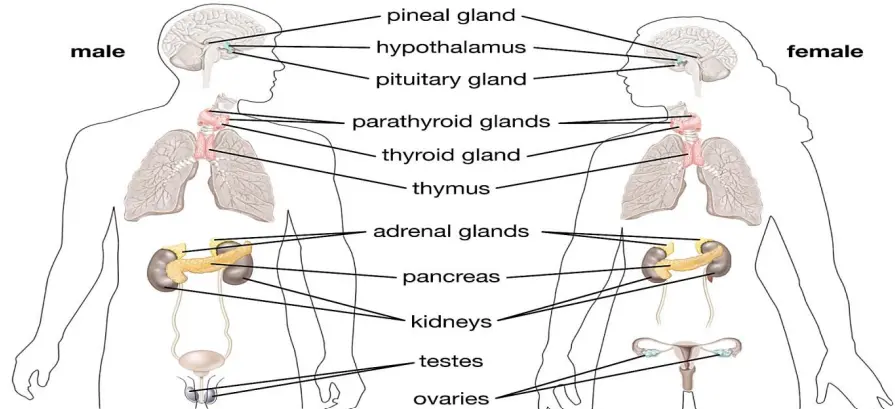
1. The Endocrine System (Chemical Messengers)
Unlike exocrine glands (like salivary glands), endocrine glands are ductless and release Hormones directly into the bloodstream.
Hypothalamus: The master controller; it secretes releasing hormones (like GnRH, TRH) that regulate the pituitary gland.
Pituitary Gland: Known as the 'Master Gland', it produces Growth Hormone (GH), TSH, and LH/FSH.
Thyroid Gland: Produces Thyroxine, which regulates the basal metabolic rate (BMR). It requires iodine for synthesis.
Adrenal Glands: Located atop the kidneys, they release Adrenaline (Epinephrine) for 'Fight or Flight' responses.
Pancreas: A composite gland. Insulin lowers blood sugar, while Glucagon raises it.
2. The Vertebral System (Structural Support)
The vertebral column (backbone) is a key part of the human axial skeleton, consisting of 26 serially arranged units called vertebrae.
Function: It protects the spinal cord, supports the head, and serves as the point of attachment for ribs and musculature.
Regions:
Cervical (7): Neck region.
Thoracic (12): Mid-back, attached to ribs.
Lumbar (5): Lower back, bears the most weight.
Sacrum & Coccyx: Fused vertebrae at the base.
3. Hormones by Chemical Nature
Hormones are classified based on their chemical structure:
Proteins/Peptides: Insulin, Glucagon, Pituitary hormones.
Steroids: Cortisol, Testosterone, Estradiol, Progesterone.
Iodothyronines: Thyroid hormones.
Amino-acid derivatives: Epinephrine (Adrenaline).
| Gland | Key Hormone | Primary Function |
|---|---|---|
| Pituitary | Growth Hormone | Body growth and development |
| Thyroid | Thyroxine | Regulates Metabolism |
| Adrenal | Adrenaline | Emergency response (Fight/Flight) |
| Pancreas | Insulin | Lowers Blood Glucose |
| Thymus | Thymosins | Immune system development |
Prelims tips
- Exocrine vs Endocrine: Exocrine has ducts (Saliva, Sweat); Endocrine is ductless (Hormones).
- Iodine: Essential for Thyroid health; deficiency leads to Goitre.
- Insulin: Produced by Beta cells of Pancreas; deficiency causes Diabetes Mellitus.
- Vertebral Formula: $C7, T12, L5, S1, Co1$ (Total 26 in adults).
Mains points
- Lifestyle Diseases: Hormonal imbalances due to stress and diet are leading to a surge in PCOD, Thyroid issues, and Diabetes in India.
- Ergonomics and Health: Sedentary lifestyles are causing an increase in vertebral disorders like Spondylitis and Slip Disc, impacting workforce productivity.
- Regulatory Feedback: The endocrine system works on a 'negative feedback mechanism'—when hormone levels are high, the body signals to stop production to maintain balance.
- Evolutionary Biology: The transition to a 'Bipedal' (two-legged) walk in humans led to the 'S' shaped curve of the vertebral column to balance the body's weight.
Did you know?
- The Pituitary gland is only about the size of a pea, yet it controls most other endocrine glands in the body.
- Humans and giraffes both have exactly 7 cervical (neck) vertebrae, even though a giraffe's neck is much longer!
- Your Adrenal glands can trigger a strength boost so high during emergencies that people have been known to lift cars to save others.
The Human Brain: Command Center of the Body
The Human Brain is the most complex organ, acting as the central command center for the nervous system. It processes sensory information, regulates blood pressure and breathing, and enables cognitive functions like thinking, memory, and emotion. Structurally, it is divided into three primary regions: the Forebrain, Midbrain, and Hindbrain, each housing specialized centers for vital life processes.
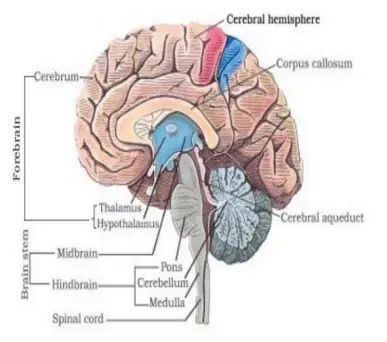
1. Anatomy of the Brain
The brain is protected by the skull (cranium) and cushioned by cerebrospinal fluid. It is divided into three major parts:
Forebrain (Prosencephalon): The largest part. It includes the Cerebrum (seat of intelligence), Thalamus (sensory relay), and Hypothalamus (controls body temperature, hunger, and thirst).
Midbrain (Mesencephalon): Located between the forebrain and hindbrain. it acts as a relay station for auditory and visual signals.
Hindbrain (Rhombencephalon): Consists of the Pons, Cerebellum (maintains balance and posture), and Medulla Oblongata (controls involuntary actions like heartbeat and respiration).
2. The Cerebrum and Hemispheres
The Cerebrum is divided into two halves called left and right cerebral hemispheres, connected by a tract of nerve fibers called the Corpus Callosum.
Frontal Lobe: Reasoning, planning, and speech.
Parietal Lobe: Movement, orientation, and recognition.
Occipital Lobe: Visual processing.
Temporal Lobe: Auditory perception and memory.
3. The Brain Stem
The midbrain and hindbrain (excluding the cerebellum) form the brain stem.
Function: It connects the brain to the spinal cord.
Life Support: It houses centers that regulate critical involuntary functions such as breathing, swallowing, and heart rate.
| Region | Specific Part | Main Function |
|---|---|---|
| Forebrain | Cerebrum | Intelligence, Memory, Logic |
| Forebrain | Hypothalamus | Thermoregulation, Hunger, Thirst |
| Hindbrain | Cerebellum | Precision, Balance, Posture |
| Hindbrain | Medulla | Respiration, Blood Pressure, Gastric secretion |
Prelims tips
- Hypothalamus: Known as the 'thermostat' of the body; also regulates sleep cycles.
- Medulla Oblongata: Essential for life; injury to this part often results in instant death due to respiratory failure.
- Cerebellum: Alcohol affects this part first, which is why intoxicated people lose their balance.
- Grey Matter vs White Matter: Grey matter consists of nerve cell bodies; White matter consists of myelinated axons.
Mains points
- Neuroplasticity: The brain's ability to reorganize itself by forming new neural connections throughout life is vital for recovery from stroke and learning new skills.
- Mental Health: Chemical imbalances in neurotransmitters like Dopamine and Serotonin are linked to clinical depression and anxiety, highlighting the biological basis of mental health.
- Brain-Computer Interface (BCI): Modern technology is developing ways to link human thoughts directly to computers, potentially helping paralyzed individuals regain movement.
- Ethics of AI: As Artificial Intelligence mimics neural networks, understanding the human brain's architecture is essential for setting ethical and functional boundaries for machines.
Did you know?
- The human brain is 75% water and is the fattiest organ in the body, consisting of nearly 60% fat.
- Information in your brain travels at speeds of up to 430 kilometers per hour (268 mph).
- The brain itself cannot feel pain; even though it processes pain signals for the entire body, it lacks pain receptors.
The Neuron: Structural Unit of the Nervous System
A Neuron is a highly specialized microscopic cell responsible for transmitting electrical and chemical signals throughout the body. Known as the functional unit of the nervous system, it allows the brain to communicate with muscles and organs. Unlike most other cells, mature neurons generally do not divide, making their protection and health vital for lifelong cognitive function.
1. Structure of a Neuron
A typical neuron consists of three major parts: the Cell Body, Dendrites, and Axon.
Cell Body (Soma): Contains the nucleus and typical cell organelles. It also has specific granular bodies called Nissl's granules.
Dendrites: Short, branching fibers that project out of the cell body. They receive incoming signals and transmit them toward the cell body.
Axon: A long fiber that transmits impulses away from the cell body to a synapse or neuromuscular junction.
Myelin Sheath: An insulating layer (formed by Schwann cells) that wraps around the axon to increase the speed of signal transmission.
2. Types of Neurons
Based on their function and the number of processes, neurons are categorized as:
Sensory Neurons: Carry impulses from sensory receptors (like skin or eyes) toward the Central Nervous System (CNS).
Motor Neurons: Carry impulses from the CNS to 'effector' organs like muscles and glands.
Interneurons: Located within the brain and spinal cord, they connect sensory and motor neurons.
3. Nerve Impulse Transmission
Signals travel through a neuron as electrical impulses but cross the gap between neurons chemically.
Synapse: The junction between the axon terminal of one neuron and the dendrite of the next.
Neurotransmitters: Chemical messengers (like Acetylcholine or Dopamine) released into the synaptic cleft to pass the signal to the next cell.
| Component | Function |
|---|---|
| Dendrites | Receive signals from other neurons |
| Axon | Conducts impulses away from the cell body |
| Myelin Sheath | Provides electrical insulation and speeds up impulses |
| Synaptic Knob | Releases neurotransmitters into the synapse |
| Nissl's Granules | Site of protein synthesis in the cell body |
Prelims tips
- Nissl's Granules: Unique to neurons, found in the cell body and dendrites but absent in the axon.
- Saltatory Conduction: The rapid jumping of electrical signals between 'Nodes of Ranvier' on myelinated axons.
- Synapse: Signals move in only one direction across a synapse.
- Neurotransmitters: Chemicals stored in synaptic vesicles at the axon terminal.
Mains points
- Degenerative Diseases: Conditions like Alzheimer's and Parkinson's involve the progressive loss of specific neurons, impacting memory and movement.
- Neural Plasticity: The brain's ability to strengthen or weaken synapses based on activity is the biological basis for learning and memory.
- Impact of Toxins: Many neurotoxins (like those in snake venom or certain pesticides) work by blocking the chemical receptors at the synapse, leading to paralysis.
- Artificial Intelligence: Artificial Neural Networks (ANNs) in computing are inspired by the structure and interconnectedness of biological neurons.
Did you know?
- Neurons are the longest cells in the human body; a single motor neuron can stretch from your lower spine all the way to your big toe!
- Unlike skin or bone cells, most neurons in the brain do not regrow if they die, which is why brain and spinal cord injuries are so serious.
- Your brain contains approximately 86 billion neurons, forming trillions of connections.
Biotechnology: From Ancient Fermentation to Modern Genetic Engineering
Biotechnology is the bridge between biology and technology. It involves using living organisms or their systems to create products that improve our lives, ranging from the ancient craft of Bread-making to the sophisticated modern world of Genetically Modified Organisms (GMOs) and biopharmaceuticals.
1. What is Biotechnology?
At its core, biotechnology is Applied Science. It takes what we know about living cells and uses that knowledge to solve problems in healthcare, energy, and the environment.
Classical Biotechnology: This refers to age-old practices like using Yeast to ferment dough for bread or grapes for wine. It relies on the natural capabilities of microbes.
Modern Biotechnology: Emerging in the 1970s, this involves Genetic Engineering—manually moving genes from one organism to another to give it new, desirable traits.
2. The Scope of Modern Applications
Modern biotech operates on an industrial scale, using 'living factories' to produce essential materials.
Healthcare & Medicine: Production of Biopharmaceuticals (like synthetic insulin), vaccines, and gene therapy.
Diagnostics: Creating advanced tools to detect diseases early and accurately.
Agriculture: Developing Genetically Modified (GM) crops that are resistant to pests, drought, or have higher nutritional value.
Energy & Biofuels: Using microbes to break down organic matter into clean fuels like ethanol.
3. Environmental Safety & Waste Management
Biotechnology provides 'green' solutions for planetary health.
Bioremediation: Using bacteria or fungi to clean up oil spills, heavy metals, and toxic pollutants from soil and water.
Waste Treatment: Using specialized microbes to process sewage and industrial waste into harmless or even useful byproducts.
| Sector | Primary Use | Example |
|---|---|---|
| Medicine | Therapeutics & Vaccines | Synthetic Insulin, COVID-19 mRNA vaccines |
| Agriculture | Crop Improvement | Bt Cotton, Golden Rice |
| Environment | Pollution Control | Oil-eating bacteria (Bioremediation) |
| Food Industry | Processing & Preservation | Cheese making, Fermented foods |
Prelims tips
- Genetic Engineering: Also known as Recombinant DNA technology, it's the core of modern biotech.
- Bioremediation: A high-yield term for UPSC; it means using microbes to 'remediate' or fix environmental damage.
- Industrial Biotech: Often called 'White Biotechnology' (Medicine is Red, Agriculture is Green).
- Host Organism: The plant or animal that receives a new gene in genetic engineering.
Mains points
- Ethical Considerations: Genetic engineering raises significant questions about 'playing God,' long-term ecological impacts, and the safety of GM foods.
- Economic Impact: Biotechnology is a key driver of the 'Bio-economy,' offering sustainable alternatives to chemical-heavy industrial processes.
- Self-Reliance: For developing nations, biotech is essential for ensuring food security through climate-resilient crops and affordable healthcare through biosimilars.
- Regulatory Framework: Effective biotechnology requires strict government oversight (like the GEAC in India) to balance innovation with public safety.
Did you know?
- The first Genetically Modified product sold in stores was the 'Flavr Savr' tomato in 1994, designed to stay firm for longer.
- Bacteria are used to produce almost all of the world's supply of Insulin for diabetic patients today.
- Some bacteria can actually 'eat' plastic and oil, making them the ultimate eco-friendly cleanup crew for our oceans.
Genetic Engineering: Redesigning the Blueprint of Life
Genetic Engineering is the precision tool of modern science. Unlike traditional breeding, which is often a game of chance, genetic engineering allows scientists to pinpoint a specific Desirable Gene and insert it into a host organism, changing its traits (phenotype) without bringing along unwanted characteristics.
1. Why Genetic Engineering Over Traditional Hybridization?
To understand the power of genetic engineering, we must compare it to how humans have 'modified' plants and animals for centuries.
Asexual vs. Sexual Reproduction: Asexual reproduction (cloning) keeps genetic info identical. Sexual reproduction creates variation, which is good for evolution but makes results unpredictable in farming.
The Problem with Hybridization: When you cross-breed two plants naturally, you get the 'good' genes, but you also get many undesirable genes. It's like trying to copy one specific sentence from a book but being forced to copy the whole messy chapter.
The Genetic Solution: Genetic engineering bypasses this by 'cutting and pasting' only the specific DNA sequence required.
2. The Three Pillars of Genetic Modification
Creating a Genetically Modified Organism (GMO) follows a strict three-step logical flow:
Step 1: Identification: Scientists find the specific piece of DNA that carries the trait they want (e.g., a gene for vitamin production or pest resistance).
Step 2: Introduction: This identified DNA is introduced into the cells of the host organism. This often requires a 'vehicle' or a Vector (like a modified virus or bacteria).
Step 3: Maintenance & Progeny: The new DNA must be accepted by the host's system so that when the host reproduces, the new gene is passed down to its Progeny (offspring).
3. Changing the Phenotype
By altering the Genotype (the internal DNA chemistry), scientists change the Phenotype (the outward physical appearance or traits).
Example: Changing the DNA of rice to produce Beta-carotene (Genotype change) results in 'Golden Rice' which is yellow in color (Phenotype change).
| Method | Genetic Outcome | Precision |
|---|---|---|
| Asexual Reproduction | Preserves identical info | No change |
| Sexual Reproduction | Permits variation/diversity | Natural mixing |
| Traditional Hybridization | Mixed traits (Desired + Undesired) | Low |
| Genetic Engineering | Specific targeted trait change | Very High |
Prelims tips
- Phenotype vs Genotype: Phenotype is the physical expression; Genotype is the genetic makeup.
- Vector: Often a plasmid or a virus used to carry the desired gene into the host cell.
- Progeny: A technical term for offspring or the next generation.
- Desired vs Undesired: Genetic engineering's main advantage is the exclusion of undesirable genes found in traditional breeding.
Mains points
- Precision Agriculture: Genetic engineering is vital for creating crops that can survive in high-salinity soil or extreme drought caused by climate change.
- Gene Flow: A major concern in environmental science is 'gene flow'—the accidental transfer of engineered genes to wild relatives, potentially creating 'super-weeds'.
- Bio-Ethics: While highly effective, the ability to alter life at a molecular level requires strong regulatory oversight to prevent misuse and ensure long-term biodiversity.
- Economic Efficiency: By eliminating 'undesirable genes' early, genetic engineering saves decades of time that would otherwise be spent in slow, traditional back-crossing breeding programs.
Did you know?
- The tools used to 'cut' DNA are actually proteins called Restriction Enzymes. Think of them as microscopic chemical scissors!
- The first ever genetically engineered medicine was Insulin, created in 1978. Before this, insulin was taken from the pancreases of slaughtered cows and pigs.
- Phenotype is what you see (blue eyes, tall stem), while Genotype is the hidden code in the DNA that causes it.
Chromosomes and the Foundations of Inheritance
Chromosomes are the physical carriers of our genetic code, formed by DNA wrapping tightly around Histone proteins. Understanding how these packages of information move from parents to offspring began with Gregor Mendel, the father of genetics, who discovered that traits are passed down through 'factors' we now call Genes.
1. Chromosomes: The Genetic Library
Inside the nucleus of every cell, the massive strand of DNA is organized into compact structures called chromosomes.
The Packaging: A single human DNA molecule is about 2 meters long! To fit inside a microscopic nucleus, it coils tightly around spool-like proteins called Histones.
The Human Count: Humans have 46 chromosomes in total, which are organized into 23 pairs. One set comes from the mother and the other from the father.
Composition: Think of a chromosome as a single, super-long DNA 'book' containing thousands of individual instructions called genes.
2. Mendel’s Laws of Inheritance
Gregor Mendel studied pea plants (Pisum sativum) to understand how traits like height or seed color are passed down.
Heredity & Inheritance: Inheritance is the specific process by which offspring (progeny) get their genetic 'blueprint' from parents.
Genes and Alleles: Mendel called the units of inheritance 'factors.' Today, we call them Genes. He noticed these factors exist in pairs called Alleles (e.g., one allele for 'Tall' and one for 'Short').
Systematic Study: By choosing plants with contrasting characters (like Purple vs. White flowers), he proved that traits don't just 'blend'—they follow predictable mathematical rules.
3. The Multidisciplinary Nature of Modern Genetics
Today, studying genes isn't just about biology; it involves several complex fields:
Recombinant DNA Technology: Cutting and joining DNA from different sources.
Biostatistics: Using math to analyze the probability of inheriting certain traits.
Bio-Physics: Studying the physical structure and energy of molecules like DNA.
Stem Cell Therapy: Using undifferentiated cells to repair or replace damaged tissues.
| Term | Definition | Simple Analogy |
|---|---|---|
| DNA | The molecule carrying genetic instructions | The Blueprints |
| Chromosome | Compact package of DNA and Protein | A Chapter/Book |
| Gene | A segment of DNA coding for a trait | A single Instruction |
| Allele | Alternative forms of a gene | Different versions of a recipe |
| Inheritance | Passing of traits from parents to progeny | Passing the family torch |
Prelims tips
- Histone: The specific protein that helps in coiling DNA into chromosomes.
- 46 vs 23: Be careful in exams—humans have 23 pairs, but 46 total chromosomes.
- Mendel's Plant: He used Pisum sativum (Garden Pea).
- Factors: This was Mendel's original term for what we now call Genes.
Mains points
- Genetic Determinism: While genes provide the blueprint, environmental factors often influence how those genes are expressed (Epigenetics).
- Medical Ethics: Recombinant DNA technology and Stem Cell therapy offer cures for genetic diseases but raise concerns about 'designer babies' and bio-inequality.
- Statistical Significance: Mendel's success was largely due to his large sample sizes and the application of mathematical logic to biological problems.
- Hereditary Disorders: Understanding chromosomal pairs is essential for diagnosing conditions like Down Syndrome, which involves an extra chromosome (Trisomy 21).
Did you know?
- If you uncoiled all the DNA in your body and put it end-to-end, it would reach from the Earth to the Sun and back over 60 times!
- Mendel was actually an Austrian monk who did his groundbreaking experiments in a small monastery garden.
- Humans share about 99.9% of their DNA with each other; it's that tiny 0.1% difference that makes us unique!
Introduction to IT and the Electromagnetic Spectrum
Information Technology (IT) is the backbone of modern business, serving as a subset of the broader ICT (Information and Communications Technology). At the heart of all wireless communication—from your Wi-Fi to satellite TV—is the Electromagnetic Spectrum, a range of energy waves that travel through space at the speed of light.
1. Defining IT vs. ICT
While often used interchangeably, IT is actually a specialized part of the much larger ICT umbrella.
IT (Information Technology): Focuses on the storage, retrieval, and manipulation of data using computers.
ICT (Information and Communication Technology): A broader term that includes Computer Technology PLUS Telecommunications (phones), Optical Communications (Fiber optics), and Satellite systems.
2. The Electromagnetic (EM) Spectrum
Everything in the digital world travels on waves. These waves differ based on their wavelength and frequency.
Radio Waves: Longest wavelength. Used for FM/AM radio and broadcasting from stars.
Microwaves: Used for cooking food and, more importantly in IT, for point-to-point communication and studying galaxy structures.
Infrared: Sensed as heat. Used in remote controls and night-vision goggles.
Visible Light: The only part of the spectrum human eyes can see.
Ultraviolet (UV): Higher energy waves from the sun; responsible for tanning but also used in specialized space imaging.
X-rays: High energy waves that can penetrate soft tissue (dentistry/security).
Gamma Rays: The highest energy waves. Generated by the universe and used in advanced medical imaging.
| Radiation Type | Everyday Use | Space/Tech Use |
|---|---|---|
| Radio | Radio/TV stations | Emitted by stars |
| Microwave | Microwave ovens | Mapping galaxy structures |
| Infrared | Remote controls / Night vision | Mapping interstellar dust |
| Ultraviolet | Sun tanning / Sterilization | Imaging 'hot' objects in space |
| X-ray | Dental/Airport security | Studying hot gases in Universe |
Prelims tips
- Frequency vs. Wavelength: As frequency increases (Radio → Gamma), wavelength decreases.
- Energy: Higher frequency waves (UV, X-ray, Gamma) carry more energy and can be ionizing/harmful.
- IT Context: Most ICT technologies use the lower frequency end (Radio and Microwave) for communication because they travel longer distances.
- Optical Communication: Uses light (often laser/infrared) through glass fibers.
Mains points
- Digital Divide: While IT drives efficiency, the gap in ICT infrastructure (like satellite vs. fiber access) creates economic disparities between regions.
- Spectrum Management: Governments auction parts of the EM spectrum (like 5G bands) because it is a finite and highly valuable resource.
- Health & Technology: Understanding the non-ionizing nature of Radio/Microwaves vs. the ionizing nature of X-rays is crucial for public policy regarding mobile tower safety.
- Space Exploration: Multi-wavelength astronomy (using IR, X-ray, and Radio telescopes) allows scientists to see parts of the universe that are invisible to the naked eye.
Did you know?
- Radio waves can be as long as a football field, while Gamma rays are as small as the nucleus of an atom!
- Wi-Fi and Bluetooth both operate on the Microwave part of the spectrum (usually 2.4 GHz or 5 GHz).
- Your TV remote 'talks' to your television using pulses of Infrared light that you can't see, but your phone camera often can!
ICT in Everyday Life: The Digital Transformation
The integration of Information and Communications Technology (ICT) into our daily routines has transformed how we communicate, shop, bank, and learn. By using digital platforms to deliver services, we have moved toward a more efficient, Paperless, and Borderless world.
1. Pillars of Modern Digital Interaction
ICT acts as an interface between the service provider and the user, eliminating the need for physical presence in many sectors.
E-mail (Online Communication): Replaced traditional post for instant data transfer. It is the foundation of professional and personal digital correspondence.
E-commerce (Digital Business): Buying and selling goods via the internet (e.g., Amazon, Flipkart). It uses ICT for inventory management, payment gateways, and logistics tracking.
Online Banking (Digital Finance): Allows 24/7 access to financial services. Technologies like IMPS, RTGS, and UPI in India are prime examples of ICT in banking.
E-learning (Digital Education): Breaking geographical barriers, allowing students to access courses from anywhere in the world through platforms like MOOCs (Massive Open Online Courses).
E-government (Digital Governance): Delivering government services (like passport applications, tax filing, and digital lockers) directly to citizens, increasing transparency and reducing corruption.
| Sector | Traditional Method | ICT Method (E-method) |
|---|---|---|
| Communication | Letters/Post | E-mail / Instant Messaging |
| Business | Physical Stores | E-commerce (Websites/Apps) |
| Banking | Visiting Bank Branch | Mobile/Online Banking |
| Governance | Queueing at Offices | E-government Portals |
| Education | Physical Classrooms | E-learning / Virtual Classrooms |
Prelims tips
- E-governance Models: Remember G2C (Gov to Citizen), G2B (Gov to Business), and G2G (Gov to Gov).
- Digital India: A flagship program of the Government of India to transform India into a digitally empowered society.
- SWAYAM: An Indian government platform for E-learning (MOOCs).
- ICT Components: Includes hardware, software, data, and the people/networks that use them.
Mains points
- Social Inclusion: E-governance helps in 'Last Mile Delivery' of social benefits (Direct Benefit Transfer - DBT) directly to the poor without middlemen.
- Economic Efficiency: E-commerce reduces operational costs for businesses, allowing small entrepreneurs to reach a global market.
- Cybersecurity Challenges: As ICT usage grows, the risk of data breaches, phishing, and financial fraud increases, requiring robust cyber laws.
- The Human Element: While ICT bridges distances, the 'Digital Divide' (gap between those with and without internet) remains a major socio-economic challenge.
Did you know?
- The 'e' in e-mail and e-commerce stands for 'Electronic'.
- India’s UPI (Unified Payments Interface) is one of the world's most advanced ICT systems in banking, processing billions of transactions every month.
- The first ever e-mail was sent by Ray Tomlinson in 1971; he is also the one who chose the @ symbol for addresses!
The Solar System: Terrestrial vs. Jovian Worlds
The Solar System is a gravitationally bound system of the Sun and the objects that orbit it. The planets are divided into two distinct families: the small, rocky Inner Planets and the massive, gas-rich Outer Planets, separated by a vast belt of asteroids.
1. Defining a Planet
A planet is a celestial body that orbits a star (the Sun) in an elliptical (oval) path. While planetary orbits are nearly circular, smaller objects like comets often follow highly stretched ellipses.
2. Inner Planets (Terrestrial Planets)
These are the planets of the 'Inner Circle,' located between the Sun and the Asteroid Belt.
Composition: Made up of rock and metals.
Density: High density due to solid surfaces.
Atmosphere: Relatively thin compared to gas giants.
Members: Mercury, Venus, Earth, and Mars.
3. Outer Planets (Jovian/Gas Giants)
These lie beyond the Asteroid Belt and are vastly different in size and composition.
Composition: Mostly hydrogen and helium (Gas Giants) or water, ammonia, and methane (Ice Giants).
Density: Low density; they lack a solid surface you could stand on.
Satellites: They have numerous moons and prominent ring systems.
Members: Jupiter, Saturn, Uranus, and Neptune.
4. The Dividing Line: The Asteroid Belt
Between Mars and Jupiter lies a region filled with millions of rocky fragments. This Asteroid Belt acts as the boundary between the terrestrial and Jovian worlds.
| Feature | Inner (Terrestrial) | Outer (Jovian) |
|---|---|---|
| Distance from Sun | Nearer | Farther |
| Size | Smaller | Much Larger |
| Surface | Solid / Rocky | Gaseous (No solid surface) |
| Rings | Absent | Present |
| Atmosphere | Thin (except Venus/Earth) | Very thick (mostly H and He) |
Prelims tips
- Asteroid Belt Location: Between the orbits of Mars (Inner) and Jupiter (Outer).
- Jovian Meaning: 'Jupiter-like'.
- Densest Planet: Earth is the densest planet in the solar system.
- Orbital Shape: Remember they are 'nearly circular' but scientifically 'elliptical'.
Mains points
- Planetary Formation: The 'Nebular Hypothesis' explains how gravity pulled dust and gas together to form the Sun and planets. Proximity to the Sun prevented gases from condensing on inner planets, making them rocky.
- Habitable Zone (Goldilocks Zone): Earth's unique position allows for liquid water. Exploring Mars is a major focus because it lies on the edge of this zone.
- Space Missions: Understanding the difference between these planets dictates the type of mission—Landers/Rovers for inner planets and Orbiters/Fly-bys for the outer gas giants.
Did you know?
- Venus is the hottest planet in our solar system, even though Mercury is closer to the Sun, due to its thick greenhouse-effect atmosphere.
- Saturn is so low in density that if you had a bathtub big enough, the planet would actually float in water!
- The Kuiper Belt is a region beyond Neptune filled with icy objects, including the dwarf planet Pluto.
Beyond the Planets: Debris and Drifters of the Solar System
Our Solar System is more than just eight planets. It is filled with the 'leftovers' of creation—Asteroids, Comets, and Meteoroids. These objects act as time capsules, helping scientists understand how our cosmic neighborhood was built billions of years ago.
1. The Belt and the Ring
There are two major 'junkyards' in our solar system where remnants of planetary formation gather.
Asteroid Belt: A circular chain of rocky fragments located between Mars and Jupiter. These are rocky remnants that never quite managed to pull together into a planet.
Kuiper Belt: A massive ring of debris beyond Neptune. Unlike the rocky asteroid belt, this region is filled with icy objects. This is the home of Pluto and its large moon, Charon.
2. Comets: The Icy Travelers
Comets are often described as 'dirty snowballs' that travel in long, oval orbits around the Sun.
Composition: Made of ice, dust, and frozen gases.
The Tail: As a comet approaches the Sun, solar radiation causes it to 'outgas.' This creates a glowing atmosphere called a Coma and a tail that always points away from the Sun due to solar winds.
3. Meteoroids, Meteors, and Meteorites
These terms all refer to the same object, but their name changes depending on where they are.
Meteoroid: A solid chunk of debris (from an asteroid or comet) floating in interplanetary space.
Meteor: When a meteoroid enters Earth's atmosphere (usually the Mesosphere) and burns up due to friction, it creates a streak of light known as a 'Shooting Star'.
Meteorite: If the object is large enough to survive the fiery trip and actually hits the Earth's surface, it is called a meteorite.
| Term | Location | Visual Appearance |
|---|---|---|
| Meteoroid | Space | Invisible from Earth |
| Meteor | Atmosphere | Streak of Light (Shooting Star) |
| Meteorite | Earth's Surface | Solid rock/metal chunk |
Prelims tips
- Mesosphere: The specific layer of the atmosphere where meteors usually burn up.
- Kuiper Belt vs. Asteroid Belt: Icy vs. Rocky.
- Shooting Star: Scientifically known as a 'Meteor'.
- Pluto & Charon: Often considered a binary system because they orbit a common point outside Pluto's surface.
Mains points
- Planetary Defense: Space agencies like NASA (DART mission) and ISRO are monitoring 'Near-Earth Objects' (NEOs) to prevent potential asteroid impacts on Earth.
- Origins of Water: Scientists believe that much of Earth's water may have been delivered by Comets crashing into the early Earth billions of years ago.
- Resource Mining: There is growing interest in Asteroid Mining for rare metals like platinum and gold, which could redefine the global economy in the future.
Did you know?
- The Chelyabinsk meteor that exploded over Russia in 2013 was 30 times brighter than the sun and shattered windows for miles!
- Pluto was reclassified as a 'Dwarf Planet' because it is just one of many large objects in the Kuiper Belt, rather than a dominant planet in its own orbit.
- Comets have two tails: one made of Dust and another made of Ionized Gas (blue in color).
Orbits: The Cosmic Tracks
An Orbit is the gravitationally curved path of an object around a celestial body. While most orbits are elliptical, their height and synchronization with Earth determine their utility—ranging from Low Earth Orbits for imaging to Geostationary Orbits for telecommunications.
1. Orbital Mechanics and Shapes
Orbits are rarely perfect circles; they are mostly elliptical. This means the distance between the orbiting body and the parent body changes constantly.
The Ecliptic Plane: Most objects in our solar system orbit the Sun along this flat, imaginary disc.
Earth-Centric Points: The closest point to Earth is the Perigee; the farthest is the Apogee.
Sun-Centric Points: The closest point to the Sun is the Perihelion; the farthest is the Aphelion.
2. Key Celestial Players
Different space objects occupy these orbits based on their origin and size:
Stars: Spheroids of plasma (e.g., the Sun).
Planets: Bodies massive enough to be spherical that revolve around stars.
Satellites: Natural (Moon) or artificial objects orbiting a planet.
Asteroids/Planetoids: Small planets or fragments revolving around the Sun.
3. Classification of Earth Orbits
Engineers choose specific orbits based on what the satellite needs to do.
Low Earth Orbit (LEO): 160km to 2,000km. Used for imaging and the International Space Station (ISS).
Medium Earth Orbit (MEO): 2,000km to 35,786km. Primarily used for Navigation (GPS/NavIC).
Geostationary Orbit (GEO): Exactly 35,786km above the equator. The satellite matches Earth's rotation, appearing 'fixed' in the sky. Ideal for TV and Weather.
Polar & Sun-Synchronous (SSO): Satellites travel from North to South. SSO ensures the satellite passes over a spot at the same local solar time, vital for consistent Earth Observation.
Transfer Orbits (GTO): A temporary 'intermediate' path used to move a satellite from a low altitude to a high geostationary altitude.
| Orbit Type | Altitude (Approx) | Primary Application |
|---|---|---|
| LEO | 160 - 2,000 km | Earth Observation, ISS, Spy Satellites |
| MEO | 2,000 - 35,786 km | GPS (USA), NavIC (India), GLONASS |
| GEO/GSO | 35,786 km | Telecommunication, Satellite TV, Weather |
| Polar/SSO | 600 - 1,000 km | Mapping, Environmental Monitoring |
Prelims tips
- Apogee/Perigee: Related to Earth. Aphelion/Perihelion: Related to the Sun.
- NavIC: India's navigation system uses a mix of GEO and GSO orbits.
- Sun-Synchronous: Crucial for 'Remote Sensing' because it provides consistent lighting for photos.
- Ecliptic Plane: The imaginary disc containing Earth's orbit around the Sun.
Mains points
- Kessler Syndrome: The growing danger of space debris in LEO, where one collision could trigger a chain reaction, making orbits unusable for generations.
- Strategic Importance of GTO: India's heavy-lift rockets (GSLV) are specialized to inject satellites into the Geostationary Transfer Orbit, a high-value capability in the global space market.
- Orbit Crowding: With mega-constellations like Starlink, international laws for 'Space Traffic Management' are becoming a necessity to prevent collisions.
- Remote Sensing in SSO: India's prowess in agriculture and disaster management relies heavily on its fleet of satellites in Sun-Synchronous Orbits.
Did you know?
- Satellites in GEO are so high up that they can see about 42% of the Earth's surface at once. Just three satellites can provide global coverage!
- The International Space Station (ISS) is in LEO and travels so fast (28,000 km/h) that astronauts see 16 sunrises and sunsets every day.
- Graveyard Orbits are located above GEO; they are where dead satellites are pushed at the end of their life to prevent collisions.
Radioactivity and Nuclear Decay: The Subatomic Transition
Radioactive Decay is the spontaneous process by which an unstable atomic nucleus loses energy by emitting radiation. Discovered by Henri Becquerel in 1896, this phenomenon is governed by the laws of quantum mechanics. In 2026, the application of radioisotopes has expanded from basic power generation to precision Nuclear Medicine (Targeted Alpha Therapy) and advanced Industrial Radiography.
1. The Mechanics of Decay
An unstable nucleus decomposes spontaneously into a more stable configuration. This process is random for a single atom but follows a predictable exponential rate for a large group.
Decay Constant (lambda): The probability of decay per unit time.
Half-Life (t1/2): The time taken for half the radioactive nuclei in a sample to decay. For Carbon-14, this is approximately 5,730 years.
Activity: Measured in Becquerel (Bq), where 1 Bq = 1 decay per second. Another common unit is the Curie (Ci).
2. Types of Radioactive Decay
There are three primary modes, each with distinct physical properties.
Alpha (alpha) Decay: Emission of a Helium nucleus (composed of 2 protons and 2 neutrons). It reduces the atomic number by 2 and mass number by 4. High ionizing power but low penetration.
Beta (beta) Decay: A neutron turns into a proton (or vice versa), emitting an electron (beta minus) or positron (beta plus). Changes the atomic number by plus or minus 1.
Gamma (gamma) Decay: High-energy electromagnetic radiation (photons). It changes only the energy state of the nucleus, not the element itself.
3. Real-World Applications (2026 Update)
Carbon-14 Dating: Used to date organic remains up to 50,000 years old by measuring the ratio of stable C-12 to radioactive C-14.
Nuclear Medicine: Technetium-99m is the most used medical isotope for imaging. In 2026, Lutetium-177 is the standard for targeted 'Theranostics' (therapy + diagnostics) for prostate cancer.
Industry: Americium-241 is used in smoke detectors, while Cobalt-60 is used to sterilize medical equipment and preserve food (Irradiation).
Space: Plutonium-238 powers RTGs (Radioisotope Thermoelectric Generators) for deep-space probes like Voyager and New Horizons.
| Property | Alpha | Beta | Gamma |
|---|---|---|---|
| Nature | Helium Nucleus | Electron / Positron | EM Waves (Photons) |
| Charge | +2 | -1 / +1 | Neutral (0) |
| Mass | Heavy (4 amu) | Very Light | Zero |
| Penetrating Power | Lowest | Medium | Highest |
| Ionizing Power | Highest | Medium | Lowest |
Prelims tips
- Spontaneous Process: Decay happens without any external influence like temperature or pressure.
- Magic Numbers: Nuclei with specific numbers of protons or neutrons (2, 8, 20, 28, 50, 82, 126) are exceptionally stable.
- Lead (Pb): The ultimate stable 'end-point' for most heavy radioactive decay chains.
- Radon Gas: A natural alpha-emitter found in rocks and soil; a leading cause of lung cancer globally.
- Becquerel vs. Curie: Modern SI unit is Becquerel; 1 Curie is approximately 37 billion Becquerels.
Mains points
- Nuclear Waste Management: The long half-lives of some isotopes (like Plutonium-239 at 24,000 years) present an ethical and technical challenge for Deep Geological Repositories.
- Energy Transition: Radioactivity-driven Nuclear Fission provides a low-carbon energy alternative, but public perception remains shaped by safety concerns.
- Scientific Advancements: The use of 'Radiotracers' has revolutionized our understanding of biological metabolic pathways and deep-sea ocean currents.
- Security Implications: The illegal trafficking of radioactive 'sealed sources' poses a risk for 'Dirty Bombs', requiring strict IAEA oversight.
Did you know?
- Bananas are slightly radioactive! They contain Potassium-40, and eating one exposes you to a tiny, harmless dose of radiation known as the 'Banana Equivalent Dose'.
- Marie Curie, who coined the term 'radioactivity', died from radiation exposure. Her 100-year-old notebooks are still radioactive and must be kept in lead-lined boxes.
- Carbon dating isn't just for fossils; it was used to prove that the Shroud of Turin likely dates to the medieval period rather than the time of Christ.
Understanding Half-Life: The Subatomic Clock
Half-life is a fundamental constant used to measure the stability of a radioactive substance. It represents the fixed time it takes for 50% of the atoms in a sample to transform into a different state. Whether a sample has 1 gram or 1 ton of material, the time required for half of it to decay remains exactly the same.
1. Defining the Half-Life
Radioactive decay is a random process at the level of a single atom, but for a large group of atoms, it follows a very precise mathematical pattern.
Primary Definition: The time interval required for one-half of the atomic nuclei in a radioactive sample to decay.
Alternative Definition: The time required for the 'activity' (disintegrations per second) of a material to drop by exactly 50%.
Predictability: While we cannot predict which specific atom will decay next, we can predict with 100% certainty how much material will be left after several half-lives.
2. The Exponential Nature of Decay
Half-life does not mean that the entire sample will disappear in two half-lives. Instead, the sample gets smaller by half, then half again, in a 'cascading' effect.
1 Half-life: 50% of the original sample remains.
2 Half-lives: 25% remains (half of 50%).
3 Half-lives: 12.5% remains (half of 25%).
Infinite Decay: Theoretically, a radioactive sample never truly reaches zero; it just becomes so small that it is no longer detectable.
3. Real-World Significance
Half-lives vary wildly between different isotopes, ranging from fractions of a second to billions of years.
Short Half-lives: Isotopes like Technetium-99m (6 hours) are ideal for medical imaging because they leave the body quickly.
Long Half-lives: Isotopes like Uranium-238 (4.5 billion years) are used to date the age of the Earth itself.
Nuclear Waste: Plutonium-239 has a half-life of 24,000 years, which is why nuclear waste storage is such a complex long-term challenge.
| Number of Half-Lives | Fraction Remaining | Percentage Remaining |
|---|---|---|
| 0 | 1/1 | 100% |
| 1 | 1/2 | 50% |
| 2 | 1/4 | 25% |
| 3 | 1/8 | 12.5% |
| 4 | 1/16 | 6.25% |
Prelims tips
- Constant Value: Half-life is independent of physical conditions like temperature, pressure, or chemical state.
- Calculation Formula: N(t) = N0 (1/2)^(t / t1/2).
- Medical Use: Short half-life = Less radiation exposure over time.
- Waste Management: Long half-life = Persistent environmental hazard.
- Radioactive Equilibrium: When a parent isotope and daughter isotope have a constant ratio of activity.
Mains points
- Environmental Policy: The long half-lives of isotopes like Caesium-137 (30 years) mean that regions affected by nuclear accidents (like Chernobyl) remain restricted for human habitation for centuries.
- Archaeological Integrity: Half-life provides an unbiased 'absolute dating' method, allowing historians to verify timelines of ancient civilizations without relying on written records alone.
- Nuclear Energy Ethics: The storage of 'high-level waste' (which lasts for thousands of half-lives) raises questions about our responsibility toward future generations who must manage our energy residues.
- Industrial Safety: Understanding half-life is critical for calibrating radiotherapy machines in hospitals and industrial X-ray scanners to ensure dosages remain effective and safe.
Did you know?
- If you have a billion radioactive atoms, exactly half a billion will decay in one half-life, but there is no way to know which specific atoms were the ones that changed!
- The most stable isotope of Bismuth was thought to be stable forever, until 2003 when scientists discovered its half-life is 19 quintillion years—over a billion times longer than the age of the universe.
- Carbon-14 dating works because every living thing has a 'clock' that starts ticking (decaying) the moment it dies and stops eating new carbon.
Nanomaterials: Engineering the Very Small
Nanomaterials are substances with at least one dimension sized between 1 and 100 nanometers (where a nanometer is one-billionth of a meter). At this scale, materials stop behaving according to classical physics and start following Quantum Mechanics, leading to extraordinary changes in strength, conductivity, and chemical reactivity.
1. What are Nanomaterials?
Nanotechnology involves the creation and manipulation of these materials to take advantage of their unique properties.
The Scale: To put it in perspective, a human hair is roughly 80,000 to 100,000 nanometers wide. A single gold nanoparticle is to a football what a football is to the Earth.
High Surface Area: As particles get smaller, their surface area relative to their volume increases drastically. This makes them highly reactive, which is why they are excellent catalysts.
Quantum Effects: At the nano-scale, materials can change color (e.g., gold looks red or blue) or become much stronger (e.g., carbon nanotubes are 100 times stronger than steel but 6 times lighter).
2. Classification of Nanomaterials
0D (Zero-Dimensional): All dimensions are at the nanoscale (e.g., Quantum Dots, nanoparticles).
1D (One-Dimensional): Two dimensions are at the nanoscale, but one is long (e.g., Nanowires, Nanotubes).
2D (Two-Dimensional): Only one dimension is at the nanoscale (e.g., Graphene, thin films).
3D (Three-Dimensional): Bulk materials made of nano-sized crystals or structures (e.g., nanocomposites).
3. Revolutionary Applications (2026)
Medicine (Nanomedicine): Targeted drug delivery where 'nanobots' or lipid nanoparticles deliver medicine directly to cancer cells, sparing healthy ones.
Electronics: Transistors are now reaching the 2nm process, allowing for faster, smaller, and more energy-efficient smartphones and AI chips.
Environment: Nanofilters can remove even the smallest viruses and heavy metals from water, providing a solution to global water scarcity.
Energy: Nano-coatings on solar cells increase light absorption, while 'Nanopore' batteries provide 10x faster charging than current Li-ion tech.
| Property | Bulk Material | Nanomaterial |
|---|---|---|
| Surface Area | Low | Extremely High |
| Physics | Classical Physics | Quantum Mechanics |
| Chemical Reactivity | Stable/Standard | Highly Reactive / Catalytic |
| Optical Property | Constant Color | Changes with particle size |
| Strength | Standard | Significantly Higher (e.g. CNTs) |
Prelims tips
- Scale: 1 to 100 nm.
- Quantum Dots: Semi-conductor particles that emit specific colors of light when hit by UV rays (used in QLED TVs).
- Fullerenes (Buckyballs): Carbon molecules shaped like a hollow sphere or tube.
- Nanotoxicity: A concern that nanoparticles are so small they can cross the blood-brain barrier, posing health risks.
- Top-down vs. Bottom-up: Top-down is slicing bulk material into nano; Bottom-up is building atom-by-atom.
Mains points
- Strategic Importance: Nations that lead in Nanotechnology in 2026 will dominate the fields of AI, stealth defense, and renewable energy storage.
- Health and Safety Regulations: As nanomaterials become common in cosmetics and food packaging, there is an urgent need for global regulatory frameworks to monitor long-term biological impacts.
- Environmental Cleanup: Nanotechnology offers 'Green Chemistry' solutions, such as oil-absorbing sponges (using carbon nanotubes) that can clean ocean oil spills without chemical dispersants.
- Ethical Concerns: The ability to manipulate matter at the molecular level raises concerns about privacy (invisible sensors) and the widening 'Nano-divide' between developed and developing nations.
Did you know?
- Silver nanoparticles are used in modern socks and washing machines because they have natural antibacterial properties that kill odor-causing bacteria!
- The Lycurgus Cup, a 4th-century Roman glass chalice, uses gold and silver nanotechnology to change color from green to red depending on the light hitting it.
- Graphene is so thin that it is considered two-dimensional, yet it is so strong that a hammock made of graphene could support a cat while being invisible to the naked eye.
Nanoparticles: The Building Blocks of Nanotechnology
Nanoparticles are particles between 1 and 100 nanometers in size that act as a bridge between bulk materials and atomic structures. By 2026, they have become essential in precision agriculture for targeted nutrient delivery and in electronics for high-density data storage, though their environmental impact remains a subject of intense scientific scrutiny.
1. What are Nanoparticles?
A nanoparticle is defined as a small object that behaves as a whole unit with respect to its transport and properties.
High Reactivity: Because they have a massive surface-area-to-volume ratio, they are much more chemically reactive than the same material in bulk form.
Natural vs. Synthetic: Nanoparticles occur naturally (volcanic ash, sea spray) or can be engineered (Silver, Gold, Titanium Dioxide).
Quantum Confinement: At this size, the movement of electrons is restricted, which changes the material's optical and electrical properties.
2. Types of Nanoparticles
Carbon-based: Includes Fullerenes (Buckyballs) and Carbon Nanotubes (CNTs) known for high strength and conductivity.
Inorganic: Metal-based (Gold, Silver) and Metal Oxides (Zinc Oxide). Used in sunscreens and antimicrobial coatings.
Organic: Dendrimers and Liposomes. Frequently used in targeted drug delivery because they are biodegradable.
Composite: Combinations of nanoparticles with other nanoparticles or larger materials to enhance strength.
3. Industrial and Scientific Applications (2026)
Cosmetics: Zinc Oxide (ZnO) and Titanium Dioxide (TiO2) nanoparticles are used in transparent sunscreens to block UV rays without leaving a white residue.
Healthcare: Silver nanoparticles (AgNPs) are used in wound dressings and medical tools for their powerful antibacterial properties.
Electronics: Quantum dots are used in high-definition displays (QLED) to produce more vibrant and accurate colors.
Defense: Nano-energetic materials are used to create more powerful and stable explosives and propellants.
| Material | Nanoparticle Form | Primary Use |
|---|---|---|
| Silver (Ag) | Silver Nanoparticles | Antibacterial / Odor control |
| Carbon (C) | Fullerenes / Nanotubes | Structural strength / Sensors |
| Titanium (Ti) | Titanium Dioxide | UV protection in Sunscreens |
| Gold (Au) | Gold Nanoparticles | Cancer diagnostics / Bio-imaging |
| Iron (Fe) | Nano-iron | Groundwater remediation / Cleaning spills |
Prelims tips
- Size Range: 1 nm to 100 nm.
- Brownian Motion: Nanoparticles in a liquid are constantly moving due to collisions with solvent molecules.
- Surface Area: The defining feature of nanoparticles; lower volume + higher surface = higher reactivity.
- Bio-accumulation: The risk of nanoparticles building up in the food chain (from soil to plants to humans).
- Sol-Gel Process: A common chemical method used to synthesize nanoparticles from a liquid phase.
Mains points
- Toxicology and Regulation: In 2026, there is a global push for 'Nano-vigilance' because these particles are small enough to enter human cells and cross the blood-brain barrier, requiring new safety standards.
- Precision Agriculture: Nanoparticles are helping India achieve its 'Evergreen Revolution' goals by acting as Nano-fertilizers that release nutrients slowly, reducing runoff and soil degradation.
- Environmental Remediation: Using magnetic nanoparticles to extract microplastics and heavy metals from oceans is a key research priority under the 'Blue Economy' initiatives.
- Space and Weight: By using nano-composite materials in satellites and rockets, ISRO is reducing the 'payload penalty,' allowing for more equipment to be carried for the same amount of fuel.
Did you know?
- Nanoparticles are the reason why church stained glass windows have such rich colors! Medieval artisans unknowingly used gold and silver nanoparticles to create vibrant reds and yellows.
- If you ground up a bar of gold into nanoparticles, it wouldn't look gold anymore—it would appear deep red or even purple.
- Nano-iron is so effective at cleaning that it is used to 'eat' toxic chemicals in polluted groundwater, turning them into harmless salts.