
How Space Research has Transformed Healthcare
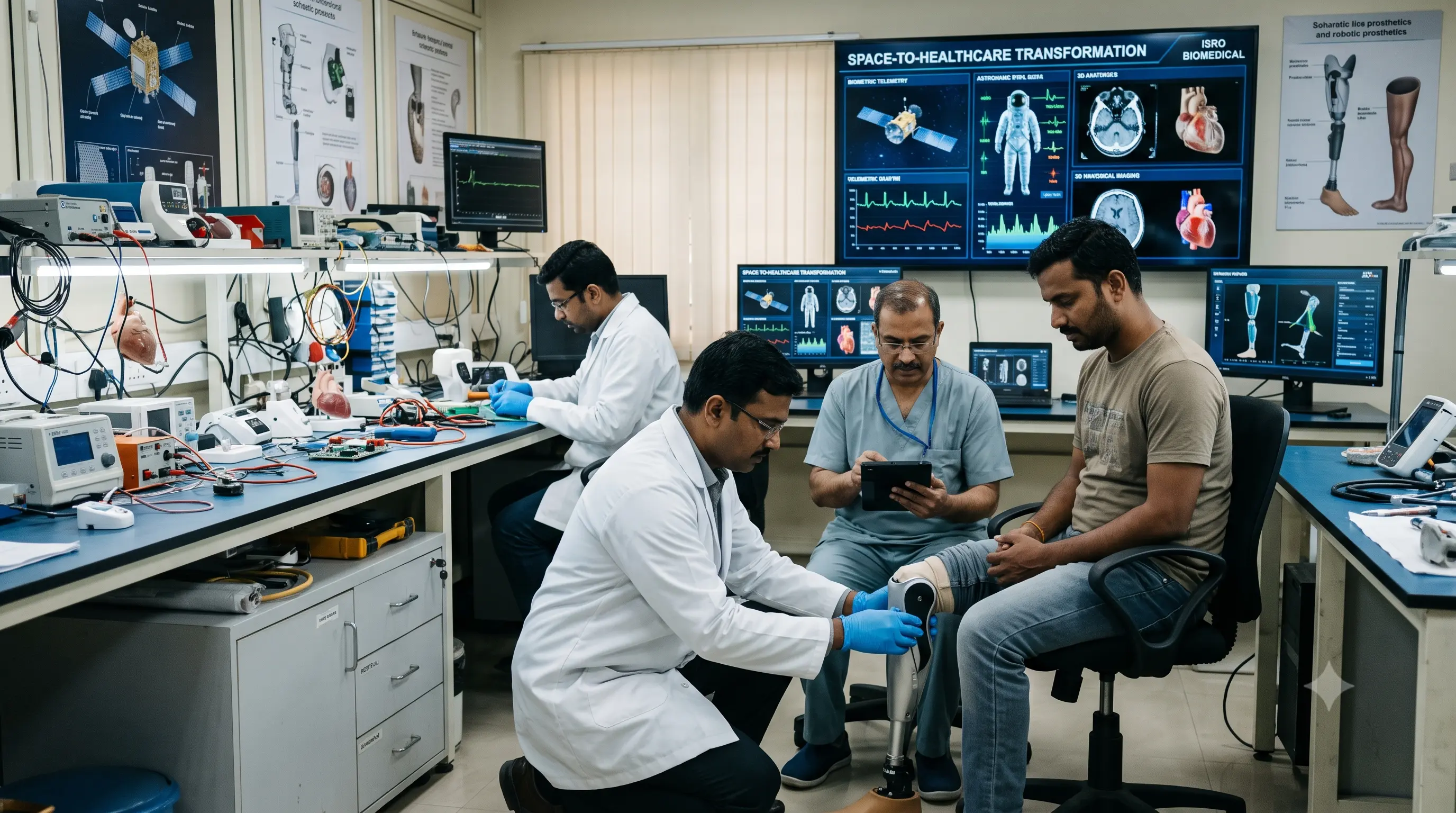
Space exploration demands highly reliable and efficient technologies for survival in extreme environments. Over the years, these innovations by space agencies like NASA and ISRO have found critical civilian applications, revolutionizing healthcare through improved diagnostics, telemedicine, wearables, and indigenous medical devices on Earth.
Introduction
Context & Background
Key Points
- •Diagnostics and Medical Imaging: Digital image-processing techniques used today in CT scans, MRIs, and mammography originated directly from planetary and astronomical image analysis.
- •Miniaturised Diagnostics: The necessity to conduct blood tests in microgravity led to the development of compact blood analysers, evolving into modern lab-on-chip and point-of-care diagnostic devices.
- •Wearables and Monitoring: Modern smartwatches and wearables tracking heart rate, respiration, and movement trace their roots back to early astronaut biotelemetry and biomonitoring systems.
- •Telemedicine Access: Satellite-based communication systems have enabled teleradiology and specialist consultations in remote areas. In India, ISRO’s VSAT-enabled mobile units are crucial for underserved regions.
- •Biomedical Research: Astronaut studies on bone loss, muscle atrophy, and cardiovascular changes in space have heavily informed terrestrial treatments for osteoporosis and prolonged bed rest.
Space Technologies and their Healthcare Applications
| Healthcare Field | Space Origin | Civilian Application | Bookmark |
|---|---|---|---|
| Diagnostics & Imaging | Planetary and astronomical image analysis | CT scans, MRIs, Ultrasounds, and Infrared ear thermometers. | |
| Infection Control | Closed spacecraft environments | HEPA filters, catalytic oxidisers, and antimicrobial clinical surfaces. | |
| Wearables & Monitoring | Astronaut biotelemetry systems | Heart rate trackers, ECG, glucose monitoring, and smart textiles. | |
| Medical Logistics | Off-grid space operations & satellite navigation | Solar-powered vaccine refrigerators and drone-based medical deliveries. | |
| Rehab & Prosthetics | Space-grade materials and astronaut exercise systems | Robotic rehabilitation, lightweight bionic limbs, and cochlear implants. |
Key Healthcare Technologies Developed by ISRO
| Technology | Application / Description | Bookmark |
|---|---|---|
| Satellite-Based Telemedicine | Enables real-time consultations between rural hospitals and urban super-specialty centres. | |
| VSAT-Enabled Mobile Medical Units | Portable clinics delivering diagnostics and healthcare in remote/inaccessible regions. | |
| ISRO Smart Limb Prosthetic | A low-cost, lightweight bionic limb developed using space-grade materials for amputees. | |
| Cancer Detection Sensors | Capacitive space sensors adapted to detect malignancy in leukocytes. | |
| Low-Cost Heart Assist Pump | A cardiac support device utilizing rocket-grade materials for patients with left ventricular failure. |
Related Entities
Impact & Significance
- •Bridging Rural–Urban Healthcare Gaps: Satellite telemedicine and mobile medical units bring specialist care to remote, tribal, and underserved regions.
- •Affordable and Indigenous Solutions: Space-driven innovation promotes low-cost, reliable medical devices (like the ISRO Smart Limb) suited to Indian conditions, reducing expensive import dependence.
- •Strengthening Public Health Systems: Earth-observation and satellite data improve disease surveillance, disaster response, and regional health planning.
- •Enhancing Medical Logistics: Satellite navigation and solar-powered cold chains ensure efficient delivery of vaccines and vital medical supplies via drones and off-grid refrigerators.
Challenges & Criticism
- •Commercial Translation: Converting space-grade technologies into mass-market healthcare products often faces steep regulatory hurdles, clinical trials, and high initial commercialization costs.
- •Infrastructure Bottlenecks: While ISRO provides VSAT technology for telemedicine, the lack of basic ground infrastructure (electricity, local maintenance) in remote areas can hinder successful deployment.
- •Cost of Advanced Materials: Although space tech aims to create low-cost indigenous devices eventually, the initial extraction or manufacturing of specialized space-grade alloys and polyurethanes can be capital intensive.
Future Outlook
- •Boosting Self-Reliance (Atmanirbhar Bharat): Continued technology transfers from ISRO will support local startups and the indigenous health industry, significantly reducing import dependence for high-tech medical devices.
- •Advanced Telemedicine Infrastructure: Expansion of satellite-based communication networks aims to completely integrate rural and tribal belts into the national healthcare grid.
- •Space-Grade Material Commercialization: Wider commercial production of affordable prosthetics (like polyurethane feet) and medical implants utilizing lightweight, durable space-age materials.
UPSC Relevance
- • GS-3 (Science and Technology): Developments and their applications and effects in everyday life; Indigenization of technology and developing new technology.
- • GS-2 (Social Justice / Health): Issues relating to development and management of Social Sector/Services relating to Health.
- • Essay Topics: 'Space exploration is not a luxury, but a necessity for human advancement on Earth'.
Sample Questions
Prelims
Which of the following everyday healthcare technologies have their origins in space research programs? 1. Digital image-processing techniques for CT scans 2. Infrared ear thermometers 3. Wearable biotelemetry trackers for heart rate
1. 1 and 2 only
2. 2 and 3 only
3. 1, 2, and 3
4. 1 only
Answer: Option 3
Explanation: All three technologies have space origins. Digital imaging originated from planetary image analysis; infrared sensors were used for stellar temperature measurement; and modern wearables trace their origins back to astronaut biotelemetry systems.
Mains
“Investments in space exploration yield significant socio-economic dividends, particularly in the healthcare sector.” Discuss this statement with reference to the technology spillovers from space agencies like ISRO.
Introduction: Define space-technology spillovers. Introduce the dual-use nature of space innovations, specifically highlighting how technologies designed for extreme microgravity environments are adapted for medical use.
Body:
• Scale of Spillovers: Highlight how survival tech translates to civilian use. Cite NASA's 2000+ spinoffs and ISRO's 350+ technology transfers to industry.
• Key Healthcare Applications: Discuss diagnostics (image processing for MRIs), miniaturised lab-on-chip devices, astronaut biotelemetry leading to wearables, and infection control systems (HEPA filters).
• Significance for India (ISRO's contribution): Detail ISRO's specific interventions like VSAT-enabled telemedicine for rural areas, low-cost Smart Limb Prosthetics, and rocket-grade material used for heart assist pumps.
Conclusion: Conclude by emphasizing that space research is an engine for societal transformation, aligning with the goals of public health accessibility and 'Atmanirbhar Bharat'.