
Ancient Indian History · UPSC Notes
Indus Valley Civilization — UPSC Ancient History Notes
Free, exam-focused notes for UPSC Prelims and Mains, with Prelims tips and Mains points for every topic. 9 topics.
Open in the interactive reader: bookmarks, progress tracking and read-aloud.
Indus Valley Civilization (IVC): Background and Origin
The Indus Valley Civilization (IVC) , also called the Harappan Civilization , was one of the world’s earliest urban civilizations. Its mature urban phase is generally dated to c. 2600–1900 BCE; the broader Harappan sequence begins earlier and continues later in regional forms. It is a protohistoric Bronze Age culture, known for city planning, exchange networks, and craft specialization.
Background (The Basics — for beginners)
The IVC is a Bronze Age civilization because people used bronze (copper + tin) tools; bronze is stronger than pure copper, so tools lasted longer.
It is Proto-History : they had a script on seals, but it is undeciphered , so we rely mainly on archaeology (not readable texts).
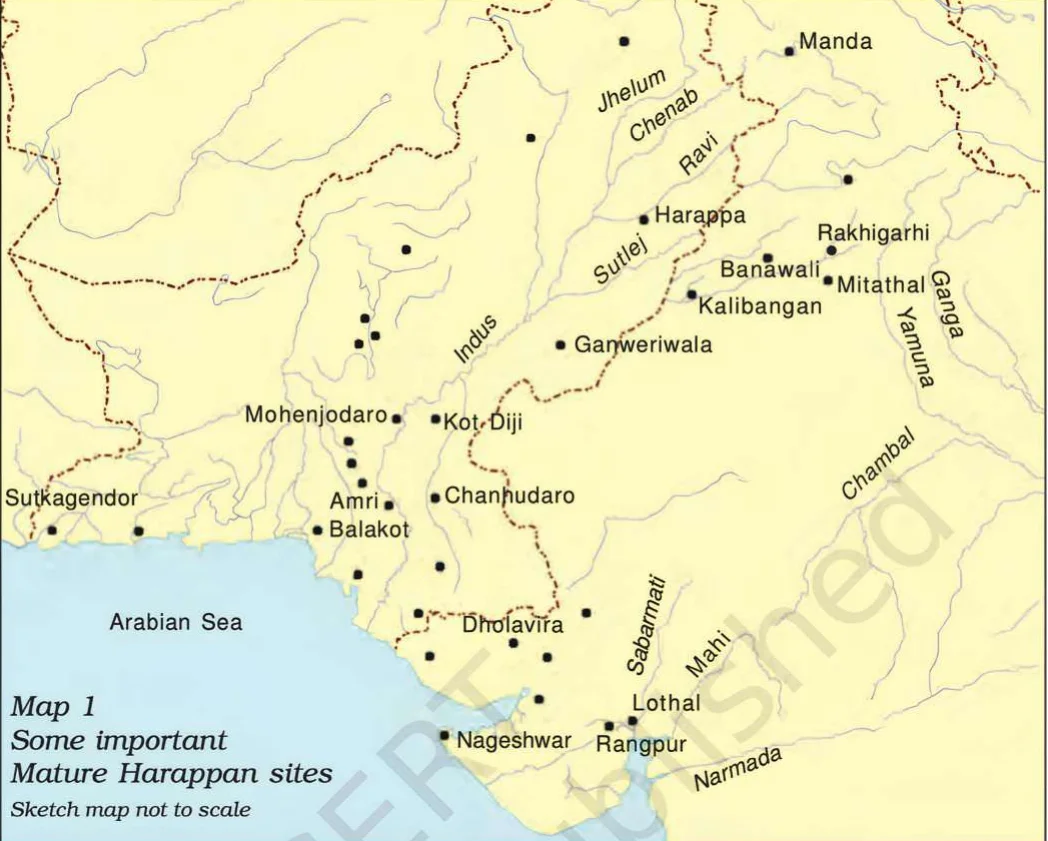
It flourished along the Indus and its tributaries across today’s Pakistan and western India (Punjab, Sindh, Gujarat, Haryana, Rajasthan).
First major sites: Harappa (1921, Daya Ram Sahni) and Mohenjo-daro (1922, R.D. Banerjee) .
Famous for urban planning , standardized weights , seals , and advanced drainage .
Origin (How it Grew — simple view)
Not sudden: it evolved from local Neolithic–Chalcolithic farming cultures (steady growth in village size, storage, craft).
Early Harappan (3300–2600 BCE): move from villages to towns; grain storage increases; more trade; potters and bead-makers specialize. Mehrgarh is an early farming precursor.
Mature Harappan (2600–1900 BCE): peak urban phase with planned cities , standard bricks , writing on seals, long-distance trade.
Late Harappan (1900–1500 BCE): de-urbanization and a return to smaller, rural settlements.
Most accepted view: largely indigenous rise built on local farming, with external trade links (e.g., Mesopotamia) helping growth.
| Phase | Time Period | Key Features |
|---|---|---|
| Early Harappan | 3300–2600 BCE | Village → town transition; storage and trade begin |
| Mature Harappan | 2600–1900 BCE | Planned cities , Bronze , seals , long-distance trade |
| Late Harappan | 1900–1500 BCE | De-urbanization , rural shift, cultural thinning |
Prelims tips
- Harappa (1921, Daya Ram Sahni ); Mohenjo-daro (1922, R.D. Banerjee ).
- Mehrgarh (7000 BCE) = key precursor .
- Mature IVC: 2600–1900 BCE .
- Bronze Age with trade to Mesopotamia .
Mains points
- Answer opening: The Harappan civilisation represents South Asia's first large-scale urbanisation, distinguished by standardisation, craft production and a wide settlement network rather than by a single excavated capital.
- Urbanism: Planned streets, drainage, weights and specialised production show coordination across many sites, but they do not by themselves prove a particular political model such as a priest-king or a modern-style central state.
- Economic base: Agricultural surplus, pastoral resources, craft specialisation and exchange with regions including Mesopotamia together sustained urban life; use sites such as Dholavira, Lothal and Chanhudaro as evidence.
- Evidence and limits: The undeciphered script limits certainty. Seals, burials and figurines permit interpretations, but a mains answer should distinguish material evidence from claims about religion, gender or government.
- Decline debate: De-urbanisation after c. 1900 BCE is best explained as a regional, multi-causal process involving ecological change, shifting river systems, changing exchange networks and settlement relocation—not a single invasion theory.
- Answer conclusion: The Harappan legacy lies in the resilience and regional diversity of its post-urban communities as much as in its mature cities.
Did you know?
- Harappans cultivated cotton early; Greeks later called it ‘ Sindon ’.
- Great Bath at Mohenjo-daro is among the earliest public water tanks.
- No huge palaces/temples: religion and power looked different from Egypt/Mesopotamia.
- Standard weights suggest tightly managed trade and administration.
Important Indus Valley Civilization Sites (The Key Excavations)
The IVC had over 1,000 sites spread across modern India, Pakistan, and Afghanistan. For UPSC, it's essential to link each major site to its unique features to understand the diversity and technological sophistication of the Harappan culture.
Major Sites and Features (Crucial for Prelims)
Harappa (Punjab, Pakistan)
First site discovered (1921) — this is why the whole culture is also called “Harappan”.
Key finds: Granaries (big storage buildings for grain) outside the citadel, Cemetery R-37 (burials showing how people were laid to rest), and many seals used for trade/identity.
Beginner tip: Think “H” for Harappa and Huge grain storage.
Mohenjo-daro (Sindh, Pakistan)
Among the largest site of the IVC (often paired with Rakhigarhi).
Key structures: the Great Bath (a large tank for ritual/public bathing), a massive Granary , and an Assembly Hall (gathering space).
Key finds: the Bronze Dancing Girl (lost-wax casting, shows metal skill) and the Bearded Priest statue (elite/ritual imagery).
Beginner tip: “M” for Mohenjo-daro and Massive Bath .
Lothal (Gujarat, India)
A major Port City (coastal) — think boats and overseas trade.
Unique find: an artificial Dockyard (rectangular basin linked to sea channels) — strong proof of maritime trade.
Also known for Rice remains (rare in IVC), bead-making workshops (agate/carnelian), and fire altars (ritual spots).
Beginner tip: “Lo-‘thal’” → like “ lo ading at the thal (dock)”.
Kalibangan (Rajasthan, India)
Name means ‘ Black Bangles ’.
Unique find: clearly marked ploughed fields (furrow marks) — direct evidence of farming technique; multiple fire altars (ritual).
Beginner tip: “Kali- bang an” → bang les + ploughed fields.
Dholavira (Gujarat, India)
Urban layout is special: divided into three parts — Citadel (upper), Middle Town, and Lower Town (most IVC towns have two parts).
Key finds: very large Water Reservoirs (advanced water harvesting) and a long Harappan inscription on a signboard (rare, shows public display of signs).
Beginner tip: “Dho-la- water ” → remember water management and three -part town.
Rakhigarhi (Haryana, India)
Currently the Largest Harappan site in India (area-wise).
Evidence: wide streets, house layouts, granaries , and burials — shows a major urban center in the Saraswati-Ghaggar belt.
Beginner tip: Rakhi -garhi → tie the “largest in India” fact to your memory like a rakhi.
Mehrgarh (Baluchistan, Pakistan)
A Pre-Harappan Neolithic–Chalcolithic site (c. 7000 BCE).
Earliest agriculture and domestication in the region; pottery, storage, and village life evolved here — seen as a cultural foundation for IVC’s later urban rise.
Beginner tip: “Mehr” (more/early) → more early farming .
| Site | Region | Unique Features |
|---|---|---|
| Harappa | Punjab (Pakistan) | Granaries , seals, Cemetery R-37 |
| Mohenjo-daro | Sindh (Pakistan) | Great Bath , Dancing Girl , Bearded Priest |
| Lothal | Gujarat (India) | Dockyard , rice remains, bead-making |
| Kalibangan | Rajasthan (India) | Ploughed fields , Fire Altars |
| Dholavira | Gujarat (India) | Water reservoirs , Three-part division |
| Rakhigarhi | Haryana (India) | Largest Harappan site in India , burials |
| Surkotada | Gujarat (India) | Horse bones , fortified settlement |
| Ropar | Punjab (India) | Burial with dog and human skeletons |
| Chanhudaro | Sindh (Pakistan) | Bead-making, No Citadel (only lower town) |
| Mehrgarh | Baluchistan (Pakistan) | Precursor to Harappan culture (Early Farming) |
Prelims tips
- Harappa – Granaries and Cemetery R-37 = storage + burial evidence.
- Mohenjo-daro – Great Bath + Dancing Girl = public works + metal art.
- Lothal – Dockyard proves sea trade; remember rice remains.
- Kalibangan – Ploughed fields and fire altars = farming + ritual.
- Dholavira – Reservoirs + three-part city = unique planning.
- Rakhigarhi – largest site in India; tie this fact like a ‘rakhi’.
- Banawali (Haryana) – barley and a terracotta plough model; Ganweriwala (Cholistan, Pakistan) – one of the five largest Harappan cities; Rakhigarhi (Haryana) is the largest Harappan site in India.
Mains points
- The wide spread of sites — from Shortughai to Daimabad and Sutkagen Dor to Alamgirpur — shows the vast reach of Harappan culture.
- Each site reveals a specialised role: Lothal (trade and craft), Kalibangan (agriculture and fire altars), Dholavira (water management), Chanhudaro (bead-making).
- Excavations in India after 1947 (Kalibangan, Lothal, Dholavira, Rakhigarhi) greatly expanded knowledge beyond Harappa and Mohenjo-daro.
- Site-level evidence allows comparison of planning, economy and religion across regions of the civilisation.
Indus Valley Civilization: Civic and Political Features
The IVC (especially c. 2600–1900 BCE) was remarkable for its civic planning, drainage, and fortified settlements. Archaeology does not provide unambiguous evidence for the form of its political organisation: no clearly identified royal palace, royal tomb, or deciphered record of a king has been found, so claims of monarchy or collective governance remain interpretations.
Town Planning (The Grid System)
Streets: Cities were laid out in a neat grid pattern . Main roads ran North–South and East–West and met at right angles , making navigation easy and traffic organized.
Division: Most cities had two zones — a higher Citadel (public buildings, storage, special activities) and a larger Lower Town (residential area for people).
Construction: Houses and public buildings used standardized burnt bricks (4:2:1 ratio). This meant parts were uniform, faster to build, and easier to maintain.
Houses: Usually had rooms around a central courtyard, private wells/bath areas, and doors opening to side lanes (privacy + cleanliness).
Drainage System (Civic Sense)
Civil engineering: One of the world’s earliest covered drainage systems. Drains made of baked bricks ran along streets and were covered with stone slabs or bricks.
House connection: Many excavated houses had drains leading toward street drains; soak-pits and settling jars occur at several sites. The arrangement varied by settlement and neighbourhood.
Maintenance: Inspection holes were provided at intervals for cleaning — proof of regular municipal care.
Why it matters: Shows awareness of hygiene , flood control, and urban planning far ahead of many contemporary cultures.
Fortification
Citadel platforms were raised and fortified with strong brick walls.
Uses: Likely for defense, flood protection, and to keep important buildings (granaries, halls, baths) safe.
Takeaway for exams: Fortified citadel ≠ royal palace; it’s a public/administrative zone.
Political Structure (A Puzzle)
Absence of kingship markers: No clear palaces , royal tombs , or large temples like in Egypt/Mesopotamia.
Yet high uniformity: Standardized weights, brick proportions, town-planning conventions, and seal use indicate extensive shared norms and coordination. They do not by themselves establish a particular political model.
Interpretations: Governance by elites, councils, or other institutions has been proposed; the so-called “Priest-King” figurine is not proof of kingship.
Exam hint: Write “the political organisation is debated; archaeological standardisation indicates coordination, not a proven monarchy or democracy.”
| Feature | UPSC Significance |
|---|---|
| Street Planning | Grid Pattern , right-angle roads → planned, predictable, efficient city life |
| Drainage | Covered, baked brick drains , soak-pits, inspection holes → hygiene + maintenance |
| Fortification | Citadel platforms, walls → defense + flood control; public buildings located here |
| Political Structure | No monarchy evidence ; uniform standards → collective/merchant council style governance |
Prelims tips
- Use the phrase: “ Grid roads + covered drains + citadel = IVC standard.”
- Standard bricks (4:2:1) are a signature of Harappan construction.
- Citadel ≠ palace: think public/administrative zone .
- Write “ No clear monarchy ; likely collective governance based on uniform standards and seals.”
Mains points
- Grid-pattern streets, covered drains and standardised bricks reflect advanced civic planning and some form of municipal authority.
- The absence of palaces and royal tombs has led scholars to debate whether the Harappans had kings, priests or merchant elites in power.
- Uniformity across distant cities suggests strong institutions, even if the exact nature of the polity remains unknown.
- Harappan sanitation and water management offer early models of urban public health.
Indus Valley Civilization: Art, Economy and Trade
The IVC economy was robust, built on agricultural surplus , specialized crafts, and extensive trade networks . Their art was expressive, with notable achievements in terracotta , bronze casting , and sealing technology—clear signs of high technical skill.
Art and Craft (High Skill Level, Simple Words)
Terracotta Figurines (baked clay): Small clay figures of animals, toys, carts, and the Mother Goddess . Terracotta simply means clay objects fired in a kiln so they become hard.
Bronze Figurines: Made by the lost-wax casting method ( Cire Perdue ): first make a wax model → cover with clay → melt the wax → pour in molten metal. Famous example: 'Dancing Girl' of Mohenjo-daro (slim figure, confident pose, detailed bangles).
Stone Sculptures: Fewer in number but very refined; the Bearded Priest shows patterned robe and headband—suggesting elite or ritual roles.
Seals (for stamping): Over 4,000, mostly square, carved on steatite (soft stone; easy to carve, turns hard after firing). They show animal motifs (bull, elephant, unicorn ) plus short undeciphered script . The Pashupati seal (figure surrounded by animals) is the most famous.
Jewellery and Beads: Gold, silver and stones like carnelian and lapis lazuli . Cities like Lothal and Chanhudaro had specialised bead-making workshops—beads were drilled with very fine tools, showing precision.
Pottery: Mostly red/black painted designs (geometric, floral). Large storage jars and fine tableware show both utility and aesthetics.
Economy (How People Earned and Stored Wealth)
Agriculture was primary: Main crops: wheat , barley ; they were the first to cultivate cotton (later called ‘Sindon’ by Greeks). Rice remains occur at sites like Lothal and Rangpur (not everywhere).
Why surplus matters: Surplus grain (kept in granaries ) feeds non-farmers (craftspeople, traders, administrators). This is how cities and specialisations grow.
Handicrafts & Metallurgy: Advanced pottery , bead-making , and metal work in copper and bronze . Crafts were often done in dedicated areas (workshops), suggesting organised production.
Animals and Tools: Oxen pulled carts and ploughs; the humped bull icon hints at its value in farming and transport.
Trade and Commerce (How Goods Moved)
Standardized weights & measures: Weights often follow multiples of 16 (16, 32, 64...). Standardisation means fair deals across far-flung towns.
Internal trade: Bullock carts and boats moved goods along roads and rivers. Seals probably marked ownership or quality (like a brand logo + tag).
External trade: Sea and land links to Mesopotamia (Sumer), Oman , Bahrain , Iran , and Central Asia . Harappans likely exported cotton textiles, beads, carnelian, shell items; they imported metals (copper, tin), lapis lazuli , and other stones.
Archaeological clues: Harappan seals found in cities like Ur and Susa ; the dockyard at Lothal shows planned maritime trade.
Beginner Memory Aids
Art = 3 S’s: Seals (trade/admin), Sculptures (bronze & stone), Storage pottery (daily life).
Economy = 3 G’s: Grain (farming), Granaries (storage), Guild-like crafts (specialists).
Trade = 3 R’s: Roads , Rivers , Routes overseas (Lothal).
| Aspect | Key Features |
|---|---|
| Art | Dancing Girl (Bronze, lost-wax), Bearded Priest (Stone), Mother Goddess (Terracotta), Seals (steatite) |
| Economy | First to cultivate cotton ; wheat & barley; granaries ; specialised workshops |
| Trade | Standard weights (16-based); Harappan seals abroad ; Lothal dockyard = maritime links |
Prelims tips
- The 'Dancing Girl' is a bronze figurine from Mohenjo-daro made via lost-wax casting.
- Harappans were the first to grow and export cotton from South Asia.
- Lothal = bead-making hub + dockyard (maritime trade).
- Harappan weights often follow a 16-based system (16, 32, 64...).
- The Unicorn is the most frequent animal motif on seals.
Mains points
- Harappan art — seals, bronze figures, terracottas and beads — shows high craft specialisation and aesthetic sense.
- An agrarian surplus (wheat, barley, cotton) supported cities, crafts and long-distance trade.
- Trade with Mesopotamia and the Gulf, regulated by seals and weights, made the Harappans part of a wider Bronze Age world.
- Craft centres like Chanhudaro and Lothal show organised production, possibly under specialised artisan groups.
Indus Valley Civilization: Religion and Beliefs
Harappan religious life can only be inferred from material remains because the script is undeciphered. Seals, figurines, burials, the Great Bath, and structures sometimes called ‘fire altars’ are important evidence, but their meanings and links with later traditions remain debated.
Key Figures and Deities
Terracotta figurines: Numerous human and animal figurines occur at Harappan sites. Calling particular female figurines a ‘Mother Goddess’ is an interpretation, not an established identification.
‘Pashupati’ seal: A famous Mohenjo-daro seal shows a horned, seated figure surrounded by animals. The ‘Proto-Shiva’ or ‘Pashupati’ label is a long-standing scholarly interpretation, not a deciphered Harappan belief.
Nature Worship
Plants and animals: Pipal motifs and animal motifs, including the frequently depicted ‘unicorn’, occur on seals. Their religious or symbolic meaning cannot be read with certainty.
Great Bath: Its watertight construction and prominent location make a ritual or communal function plausible, but its exact use is not known.
Rituals and Practices
Fire installations: Structures described as ‘fire altars’ at sites such as Kalibangan and Lothal may have had ritual functions, but this identification is debated.
Small objects and ornaments: Beads, bangles, and other personal objects are common; their use as amulets cannot be assumed without contextual evidence.
Burial Practices (Belief in Afterlife)
Harappans practiced both complete burial (laying the body out) and fractional burial (burial of bones after exposure).
Some burials contain pottery and personal objects. Such grave goods may indicate mortuary practice or status, but do not by themselves prove a specific doctrine of afterlife or ancestor worship.
| Evidence / motif | Archaeological basis | UPSC-safe interpretation |
|---|---|---|
| Horned seated figure | Mohenjo-daro seal | Often called ‘Pashupati’ or Proto-Shiva, but the identification is debated. |
| Female terracotta figurines | Figurines from several sites | May have had varied uses; ‘Mother Goddess’ is an interpretation. |
| Plant and animal motifs | Pipal and animal images on seals | Their symbolic or religious meaning is unknown. |
| Great Bath | Large watertight structure at Mohenjo-daro | A ritual or communal function is plausible, not proven. |
| Fire installations | Structures at Kalibangan and Lothal | Their identification as ritual altars is debated. |
| Burials with objects | Pottery and personal objects in some graves | Shows mortuary practice; it does not prove a specific afterlife belief. |
Prelims tips
- Pashupati Seal and Dancing Girl are from Mohenjo-daro .
- Mother Goddess figurines are mostly terracotta (not bronze/stone).
- Fire Altars are key finds at Kalibangan and Lothal .
- The Unicorn is the most commonly depicted animal on Harappan seals.
Mains points
- Harappan religious practices must be reconstructed from archaeology; the absence of clearly identified large temples does not establish the nature of belief or polity.
- For UPSC answers, distinguish archaeological evidence (seals, figurines, burials, water structures) from interpretations such as Proto-Shiva, Mother Goddess, or direct continuity with later Hindu traditions.
- Do not infer a political structure from the absence of temples or palaces alone.
Decline of the Indus Valley Civilization
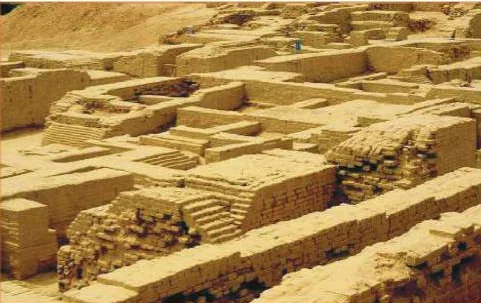
The decline of the IVC (c. 1900–1500 BCE) was a gradual process across regions—often called de-urbanization . It likely resulted from combined ecological , economic , and internal pressures, not a single invasion.
Nature and Evidence of Decline (What We Actually See)
Gradual & uneven: Big cities shrank first; people moved to smaller towns/villages.
Loss of standardisation: Weights , seal usage , and tight town planning become irregular in late layers.
Late Harappan cultures: Eg., Cemetery H (Punjab), Jhukar (Sindh), Rangpur (Gujarat) show continuity of some traditions but simpler life.
Major Causes (Easy to Remember: 3 E’s — Environment, Economy, (internal) Elasticity break)
1) Ecological & Climatic (Most accepted)
River shifts/drying: The Saraswati (Ghaggar-Hakra) system weakened; other rivers changed course → less reliable water for cities/farms.
Less rainfall: Drier climate → desertification in some zones → lower crop yields.
Flood cycles: Repeated floods (e.g., at Mohenjo-daro layers) also damaged settlements.
2) Economic & Social
Trade decline: Long-distance trade with Mesopotamia reduced after c. 1900 BCE → urban industries suffered.
Soil stress & population pressure: Overuse of land and growing cities may have lowered farm output per head.
Management limits: Without clear kingship, citywide crisis management may have been hard—standards and big projects slowed.
3) Invasion/Migration (older idea)
Earlier scholars proposed an Aryan invasion ; modern research finds no firm evidence for a sudden, large-scale military collapse. The change looks internal + environmental .
What Happened Next (Consequences)
From city to village: Crafts continued but at smaller scales; daily life became more local.
Cultural continuity: Some pottery styles, symbols, and farming practices carried into later cultures of the Gangetic plains.
Beginner Memory Aids
3 D’s: Drier climate + Damaged rivers + Declining trade.
De-urbanization = fewer big public works, more small rural settlements.
| Theory Type | Explanation |
|---|---|
| Ecological/Climatic | River shifts/drying (e.g., Saraswati ), drier climate, floods → farm/water stress ( most accepted ) |
| Economic | Trade with Mesopotamia declines; soil exhaustion; city industries weaken |
| Social/Administrative | Population/resource pressure; limited capacity to coordinate big public works |
| Invasion (older) | Large, sudden conquest not supported by current evidence |
Prelims tips
- Think De-urbanization from ~ 1900 BCE : cities shrink, villages rise.
- Saraswati (Ghaggar-Hakra) river changes are a key ecological factor.
- Invasion-only explanations are outdated ; multi-factor decline fits evidence.
- Cemetery H, Jhukar, Rangpur = important Late Harappan cultures.
Mains points
- IVC decline was a gradual, multi-factor shift, not a single catastrophic event.
- Ecology (river/climate) + Economy (trade/soil) + Administration (coordination limits) together explain the pattern.
- Transition to Late Harappan shows continuity + adaptation : smaller rural units replace mega-cities.
Did you know?
- Some Harappan pottery motifs and religious symbols survive into later Gangetic cultures—showing cultural memory.
- Large water-management at Dholavira helped the city last long even under stress—adaptation before decline.
- Late Harappan Gujarat shows rural revival , proving the farming base stayed resilient.
Harappan Script, Seals, Weights and Measures
The Harappans used an undeciphered script of about 400 signs, written mainly right to left, mostly on square steatite seals. A standardised system of cubical chert weights and graduated scales shows remarkable uniformity and control across a vast area.
The Indus Script
Signs: About 400 (estimates range roughly 375–425) — too many for an alphabet; most scholars think it is logo-syllabic (signs for words and syllables).
Direction: Mainly right to left (seen from cramped signs at the left end); a few inscriptions may be boustrophedon.
Length: Inscriptions are very short (often around five signs). The Dholavira 'signboard' has ten large signs.
Status: Undeciphered — no bilingual text (like the Rosetta Stone) has been found.
First find: Alexander Cunningham published a Harappan seal in 1875, long before the civilisation was recognised (1924).
Seals
Material and shape: Mostly square steatite seals, carved in reverse (intaglio), with a perforated boss on the back.
Motifs: The unicorn is the most common; also humped bull (zebu), elephant, rhinoceros, tiger, buffalo; the cow is absent and the horse is not shown on seals.
Pashupati seal (Mohenjo-daro): a seated figure surrounded by an elephant, tiger, rhinoceros and buffalo, with two deer below; John Marshall called it 'Proto-Shiva'.
Uses: Stamping clay sealings on goods and doors (trade and administration), identity of merchants or officials, possibly amulets.
Abroad: Indus seals have been found at Ur and Kish (Mesopotamia); a round Persian Gulf type seal was found at Lothal.
Weights and Measures
Weights: Mostly cubical chert weights, following a binary series (1, 2, 4, 8, 16, 32, 64) and then decimal multiples (160, 320, 640…).
One common unit weighed about 13.7 g, and the same standards are found from Shortughai to Gujarat.
Linear measures: An ivory scale at Lothal, a shell scale at Mohenjo-daro and a bronze rod at Harappa.
Why it matters
Uniform weights, seals and bricks across about a million square kilometres suggest strong regulation of trade and possibly a shared authority.
| Item | Key facts |
|---|---|
| Script | About 400 signs, mainly right to left, undeciphered, very short texts |
| Seals | Square, steatite, intaglio, boss on back; unicorn most common |
| Pashupati seal | Mohenjo-daro; elephant, tiger, rhinoceros, buffalo around; two deer below |
| Weights | Cubical chert; binary then decimal series |
| Scales | Ivory (Lothal), shell (Mohenjo-daro), bronze rod (Harappa) |
Prelims tips
- Unicorn → most frequent animal on seals; cow absent, horse not on seals.
- Pashupati seal → no lion and no bull around the figure; deer below the seat.
- Script → mostly right to left; about 400 signs; undeciphered.
- Weights → cubical chert, binary series (1, 2, 4, 8, 16…).
- Ivory scale → Lothal; Dholavira → ten-sign 'signboard'.
Mains points
- Standardised weights, seals and brick ratios across distant sites point to an integrated economy and strong regulatory institutions.
- Seals and sealings reveal a commercial administration — tracking goods, ownership and possibly taxation.
- Because the script is undeciphered, our understanding of Harappan polity, religion and language rests on archaeology and remains tentative.
- Harappan seals found in Mesopotamia provide independent dating and proof of long-distance contact.
Did you know?
- More than 4,000 inscribed objects are known, yet no text is long enough to crack the script.
- Some Harappan weights are so precise that they differ from one another by only a few per cent.
- Clay sealings with seal impressions have been found still attached to the knots of tied bundles.
Harappan Trade and External Contacts
Harappan trade combined internal exchange of raw materials (copper, tin, lapis lazuli, carnelian, shell) with overseas trade with Mesopotamia, where the Indus region was called Meluhha. Trade was by barter, regulated with seals and standard weights, through ports such as Lothal and outposts like Shortughai.
Sources of Raw Materials
Copper: Khetri region (Rajasthan) and Baluchistan.
Tin: Scarce in India; probably from Afghanistan and Central Asia.
Lapis lazuli: Badakhshan (Afghanistan), through the trading settlement of Shortughai on the Amu Darya.
Carnelian and agate: Gujarat; shell: Gujarat and Makran coasts; gold: probably Karnataka; timber: the Himalayas.
Trade with Mesopotamia
Akkadian texts from the time of Sargon of Akkad (c. 24th century BCE) mention ships from Meluhha (Indus region), Dilmun (Bahrain) and Magan (Oman/Makran).
Exports: Carnelian (including etched beads), ivory, timber, precious stones and possibly cotton.
Imports: Probably silver, tin, woollen goods and oils, though few Mesopotamian objects have been found in the Indus region.
Evidence: Indus seals and etched carnelian beads at Ur, Kish and other sites; a Persian Gulf seal at Lothal.
Ports and Trading Centres
Lothal (Gujarat) — a brick basin interpreted as a dockyard (some scholars see it as a reservoir), warehouse and bead factory.
Sutkagen Dor and Sotka Koh (Makran coast), Balakot, Dholavira and Kuntasi.
How Trade Worked
Barter — no coins; seals and clay sealings marked goods; standard weights ensured fair exchange.
Transport: Bullock carts (terracotta toy carts), river boats and sea-going ships (boat on a Mohenjo-daro seal, terracotta boat models from Lothal).
Decline of Overseas Trade
References to Meluhha fade in Mesopotamian records after about 1900 BCE, coinciding with Harappan de-urbanisation.
| Region / name | Identified with | Items or evidence |
|---|---|---|
| Meluhha | Indus region | Carnelian, ivory, timber; Indus seals at Ur and Kish |
| Dilmun | Bahrain | Intermediary port; Persian Gulf seal at Lothal |
| Magan | Oman / Makran | Copper and stone; sea route |
| Shortughai | Northern Afghanistan | Harappan trading post for lapis lazuli |
| Khetri | Rajasthan | Copper (Ganeshwar–Jodhpura complex) |
Prelims tips
- Meluhha → Indus; Dilmun → Bahrain; Magan → Oman/Makran.
- Shortughai (Afghanistan) → Harappan outpost for lapis lazuli from Badakhshan.
- No coins → barter; seals and sealings used to mark goods.
- Lothal → dockyard (debated), bead factory, Persian Gulf seal.
- Sutkagen Dor → westernmost Harappan site, on the Makran coast.
Mains points
- The Harappans built one of the earliest long-distance trade networks, linking South Asia, the Gulf and Mesopotamia.
- Control over resource zones (Khetri, Gujarat, Badakhshan) explains the location of many sites and outposts.
- Trade without coinage relied on standard weights and seals, implying trust and regulation by institutions.
- The decline of Gulf trade after c. 1900 BCE may have weakened urban centres, contributing to de-urbanisation.
Did you know?
- A Mesopotamian cylinder seal names a 'Meluhha interpreter', suggesting Indus traders were present there.
- Etched carnelian beads made with a special bleaching technique are a hallmark Harappan export found in royal graves at Ur.
- The Lothal 'dockyard' is about 214 m long — some scholars still argue it was a water tank.
Phases of the Harappan Civilization and Recent Discoveries
The Harappan tradition passed through Early (c. 3300–2600 BCE), Mature (c. 2600–1900 BCE) and Late (c. 1900–1300 BCE) phases. Recent work — the Rakhigarhi ancient DNA study (2019), Dholavira's UNESCO listing (2021) and finds at Sinauli and Bhirrana — keeps reshaping our picture of its origins and end.
Background
Mehrgarh (Baluchistan, from c. 7000 BCE) shows the Neolithic farming base from which later Indus cultures developed.
Early Harappan (c. 3300–2600 BCE)
Regional cultures such as Kot Diji, Amri, Sothi–Siswal and Hakra; fortified settlements, wheel-made pottery and the beginnings of standardisation.
Kalibangan's early phase shows a ploughed field with criss-cross furrows.
Mature Harappan (c. 2600–1900 BCE)
The urban phase: planned cities, burnt-brick architecture, drainage, uniform seals, script and weights across a vast area.
Late Harappan (c. 1900–1300 BCE)
De-urbanisation: cities shrank and regional cultures emerged — Cemetery H culture (Punjab), Jhukar (Sindh) and Rangpur (Gujarat, with Lustrous Red Ware).
Many settlements shifted east into the Ganga–Yamuna doab; the script and seals largely disappeared.
Recent Discoveries
Rakhigarhi (Hisar, Haryana) — one of the largest Harappan sites. An ancient DNA study of a woman's skeleton (published 2019) found ancestry from Iranian-related and South Asian hunter-gatherer populations and no steppe ancestry.
Dholavira (Kutch) — inscribed as a UNESCO World Heritage Site in July 2021, India's 40th site and the first Harappan city in India on the list (Mohenjo-daro in Pakistan was listed in 1980).
Bhirrana (Haryana) — excavators claim its earliest Hakra levels go back to the 7th–6th millennium BCE; the dating is debated.
Sinauli (Baghpat, UP) — burials with copper-covered objects and possible carts or chariots (early 2nd millennium BCE).
Lothal — a National Maritime Heritage Complex is being developed to showcase India's maritime history.
Key Idea
The Harappan civilisation did not vanish suddenly; it transformed into regional rural cultures, showing continuity with later Indian traditions.
| Phase | Approx. date | Key features | Example sites |
|---|---|---|---|
| Early Harappan | c. 3300–2600 BCE | Regional cultures, fortified villages, early standardisation | Kot Diji, Amri, Kalibangan I, Rehman Dheri |
| Mature Harappan | c. 2600–1900 BCE | Planned cities, script, seals, uniform weights | Mohenjo-daro, Harappa, Dholavira, Lothal, Rakhigarhi |
| Late Harappan | c. 1900–1300 BCE | De-urbanisation, regional cultures, eastward shift | Cemetery H, Jhukar, Rangpur |
Prelims tips
- Mature Harappan → c. 2600–1900 BCE (the urban phase).
- Dholavira → UNESCO World Heritage Site, July 2021 (India's 40th).
- Rakhigarhi → ancient DNA study (2019); among the largest Harappan sites.
- Late Harappan cultures → Cemetery H (Punjab), Jhukar (Sindh), Rangpur (Gujarat).
- Mehrgarh → Neolithic precursor (c. 7000 BCE) in Baluchistan.
Mains points
- Seeing the Harappan story in phases replaces the idea of a sudden collapse with gradual de-urbanisation and regional continuity.
- Ancient DNA from Rakhigarhi adds genetic evidence to debates on the origins of South Asian populations and later migrations.
- Dholavira's water management and planning offer lessons for climate-resilient urban design today.
- New excavations show that the Harappan world was larger and more varied than early scholars assumed.
Did you know?
- Dholavira had large stone-cut reservoirs to store monsoon water in the dry Rann of Kutch.
- The Rakhigarhi DNA came from the inner ear (petrous) bone, which preserves DNA best in hot climates.
- Cemetery H at Harappa has painted burial urns with motifs some scholars link to later beliefs about the soul's journey.