
Science & Technology · UPSC Notes
Biotechnology — UPSC Science & Tech Notes
Free, exam-focused notes for UPSC Prelims and Mains, with Prelims tips and Mains points for every topic. 22 topics.
Open in the interactive reader: bookmarks, progress tracking and read-aloud.
Biotechnology: From Ancient Fermentation to Modern Genetic Engineering
Biotechnology is the bridge between biology and technology. It involves using living organisms or their systems to create products that improve our lives, ranging from the ancient craft of Bread-making to the sophisticated modern world of Genetically Modified Organisms (GMOs) and biopharmaceuticals.
1. What is Biotechnology?
At its core, biotechnology is Applied Science. It takes what we know about living cells and uses that knowledge to solve problems in healthcare, energy, and the environment.
Classical Biotechnology: This refers to age-old practices like using Yeast to ferment dough for bread or grapes for wine. It relies on the natural capabilities of microbes.
Modern Biotechnology: Emerging in the 1970s, this involves Genetic Engineering—manually moving genes from one organism to another to give it new, desirable traits.
2. The Scope of Modern Applications
Modern biotech operates on an industrial scale, using 'living factories' to produce essential materials.
Healthcare & Medicine: Production of Biopharmaceuticals (like synthetic insulin), vaccines, and gene therapy.
Diagnostics: Creating advanced tools to detect diseases early and accurately.
Agriculture: Developing Genetically Modified (GM) crops that are resistant to pests, drought, or have higher nutritional value.
Energy & Biofuels: Using microbes to break down organic matter into clean fuels like ethanol.
3. Environmental Safety & Waste Management
Biotechnology provides 'green' solutions for planetary health.
Bioremediation: Using bacteria or fungi to clean up oil spills, heavy metals, and toxic pollutants from soil and water.
Waste Treatment: Using specialized microbes to process sewage and industrial waste into harmless or even useful byproducts.
| Sector | Primary Use | Example |
|---|---|---|
| Medicine | Therapeutics & Vaccines | Synthetic Insulin, COVID-19 mRNA vaccines |
| Agriculture | Crop Improvement | Bt Cotton, Golden Rice |
| Environment | Pollution Control | Oil-eating bacteria (Bioremediation) |
| Food Industry | Processing & Preservation | Cheese making, Fermented foods |
Prelims tips
- Genetic Engineering: Also known as Recombinant DNA technology, it's the core of modern biotech.
- Bioremediation: A high-yield term for UPSC; it means using microbes to 'remediate' or fix environmental damage.
- Industrial Biotech: Often called 'White Biotechnology' (Medicine is Red, Agriculture is Green).
- Host Organism: The plant or animal that receives a new gene in genetic engineering.
Mains points
- Ethical Considerations: Genetic engineering raises significant questions about 'playing God,' long-term ecological impacts, and the safety of GM foods.
- Economic Impact: Biotechnology is a key driver of the 'Bio-economy,' offering sustainable alternatives to chemical-heavy industrial processes.
- Self-Reliance: For developing nations, biotech is essential for ensuring food security through climate-resilient crops and affordable healthcare through biosimilars.
- Regulatory Framework: Effective biotechnology requires strict government oversight (like the GEAC in India) to balance innovation with public safety.
Did you know?
- The first Genetically Modified product sold in stores was the 'Flavr Savr' tomato in 1994, designed to stay firm for longer.
- Bacteria are used to produce almost all of the world's supply of Insulin for diabetic patients today.
- Some bacteria can actually 'eat' plastic and oil, making them the ultimate eco-friendly cleanup crew for our oceans.
Genetic Engineering: Redesigning the Blueprint of Life
Genetic Engineering is the precision tool of modern science. Unlike traditional breeding, which is often a game of chance, genetic engineering allows scientists to pinpoint a specific Desirable Gene and insert it into a host organism, changing its traits (phenotype) without bringing along unwanted characteristics.
1. Why Genetic Engineering Over Traditional Hybridization?
To understand the power of genetic engineering, we must compare it to how humans have 'modified' plants and animals for centuries.
Asexual vs. Sexual Reproduction: Asexual reproduction (cloning) keeps genetic info identical. Sexual reproduction creates variation, which is good for evolution but makes results unpredictable in farming.
The Problem with Hybridization: When you cross-breed two plants naturally, you get the 'good' genes, but you also get many undesirable genes. It's like trying to copy one specific sentence from a book but being forced to copy the whole messy chapter.
The Genetic Solution: Genetic engineering bypasses this by 'cutting and pasting' only the specific DNA sequence required.
2. The Three Pillars of Genetic Modification
Creating a Genetically Modified Organism (GMO) follows a strict three-step logical flow:
Step 1: Identification: Scientists find the specific piece of DNA that carries the trait they want (e.g., a gene for vitamin production or pest resistance).
Step 2: Introduction: This identified DNA is introduced into the cells of the host organism. This often requires a 'vehicle' or a Vector (like a modified virus or bacteria).
Step 3: Maintenance & Progeny: The new DNA must be accepted by the host's system so that when the host reproduces, the new gene is passed down to its Progeny (offspring).
3. Changing the Phenotype
By altering the Genotype (the internal DNA chemistry), scientists change the Phenotype (the outward physical appearance or traits).
Example: Changing the DNA of rice to produce Beta-carotene (Genotype change) results in 'Golden Rice' which is yellow in color (Phenotype change).
| Method | Genetic Outcome | Precision |
|---|---|---|
| Asexual Reproduction | Preserves identical info | No change |
| Sexual Reproduction | Permits variation/diversity | Natural mixing |
| Traditional Hybridization | Mixed traits (Desired + Undesired) | Low |
| Genetic Engineering | Specific targeted trait change | Very High |
Prelims tips
- Phenotype vs Genotype: Phenotype is the physical expression; Genotype is the genetic makeup.
- Vector: Often a plasmid or a virus used to carry the desired gene into the host cell.
- Progeny: A technical term for offspring or the next generation.
- Desired vs Undesired: Genetic engineering's main advantage is the exclusion of undesirable genes found in traditional breeding.
Mains points
- Precision Agriculture: Genetic engineering is vital for creating crops that can survive in high-salinity soil or extreme drought caused by climate change.
- Gene Flow: A major concern in environmental science is 'gene flow'—the accidental transfer of engineered genes to wild relatives, potentially creating 'super-weeds'.
- Bio-Ethics: While highly effective, the ability to alter life at a molecular level requires strong regulatory oversight to prevent misuse and ensure long-term biodiversity.
- Economic Efficiency: By eliminating 'undesirable genes' early, genetic engineering saves decades of time that would otherwise be spent in slow, traditional back-crossing breeding programs.
Did you know?
- The tools used to 'cut' DNA are actually proteins called Restriction Enzymes. Think of them as microscopic chemical scissors!
- The first ever genetically engineered medicine was Insulin, created in 1978. Before this, insulin was taken from the pancreases of slaughtered cows and pigs.
- Phenotype is what you see (blue eyes, tall stem), while Genotype is the hidden code in the DNA that causes it.
Chromosomes and the Foundations of Inheritance
Chromosomes are the physical carriers of our genetic code, formed by DNA wrapping tightly around Histone proteins. Understanding how these packages of information move from parents to offspring began with Gregor Mendel, the father of genetics, who discovered that traits are passed down through 'factors' we now call Genes.
1. Chromosomes: The Genetic Library
Inside the nucleus of every cell, the massive strand of DNA is organized into compact structures called chromosomes.
The Packaging: A single human DNA molecule is about 2 meters long! To fit inside a microscopic nucleus, it coils tightly around spool-like proteins called Histones.
The Human Count: Humans have 46 chromosomes in total, which are organized into 23 pairs. One set comes from the mother and the other from the father.
Composition: Think of a chromosome as a single, super-long DNA 'book' containing thousands of individual instructions called genes.
2. Mendel’s Laws of Inheritance
Gregor Mendel studied pea plants (Pisum sativum) to understand how traits like height or seed color are passed down.
Heredity & Inheritance: Inheritance is the specific process by which offspring (progeny) get their genetic 'blueprint' from parents.
Genes and Alleles: Mendel called the units of inheritance 'factors.' Today, we call them Genes. He noticed these factors exist in pairs called Alleles (e.g., one allele for 'Tall' and one for 'Short').
Systematic Study: By choosing plants with contrasting characters (like Purple vs. White flowers), he proved that traits don't just 'blend'—they follow predictable mathematical rules.
3. The Multidisciplinary Nature of Modern Genetics
Today, studying genes isn't just about biology; it involves several complex fields:
Recombinant DNA Technology: Cutting and joining DNA from different sources.
Biostatistics: Using math to analyze the probability of inheriting certain traits.
Bio-Physics: Studying the physical structure and energy of molecules like DNA.
Stem Cell Therapy: Using undifferentiated cells to repair or replace damaged tissues.
| Term | Definition | Simple Analogy |
|---|---|---|
| DNA | The molecule carrying genetic instructions | The Blueprints |
| Chromosome | Compact package of DNA and Protein | A Chapter/Book |
| Gene | A segment of DNA coding for a trait | A single Instruction |
| Allele | Alternative forms of a gene | Different versions of a recipe |
| Inheritance | Passing of traits from parents to progeny | Passing the family torch |
Prelims tips
- Histone: The specific protein that helps in coiling DNA into chromosomes.
- 46 vs 23: Be careful in exams—humans have 23 pairs, but 46 total chromosomes.
- Mendel's Plant: He used Pisum sativum (Garden Pea).
- Factors: This was Mendel's original term for what we now call Genes.
Mains points
- Genetic Determinism: While genes provide the blueprint, environmental factors often influence how those genes are expressed (Epigenetics).
- Medical Ethics: Recombinant DNA technology and Stem Cell therapy offer cures for genetic diseases but raise concerns about 'designer babies' and bio-inequality.
- Statistical Significance: Mendel's success was largely due to his large sample sizes and the application of mathematical logic to biological problems.
- Hereditary Disorders: Understanding chromosomal pairs is essential for diagnosing conditions like Down Syndrome, which involves an extra chromosome (Trisomy 21).
Did you know?
- If you uncoiled all the DNA in your body and put it end-to-end, it would reach from the Earth to the Sun and back over 60 times!
- Mendel was actually an Austrian monk who did his groundbreaking experiments in a small monastery garden.
- Humans share about 99.9% of their DNA with each other; it's that tiny 0.1% difference that makes us unique!
Mendel’s Three Laws of Inheritance
Gregor Mendel’s laws explain the mathematical logic behind why you might look like your parents—or why a trait can skip a generation and reappear later. These laws describe how Dominant traits mask Recessive ones, how genes separate into Gametes, and how different traits are inherited independently of one another.
1. Law of Dominance (Mendel’s First Law)
This law explains why a 'hybrid' offspring (a mix of two different parents) often looks like only one of the parents.
The Dominant Allele: In a pair of contrasting traits, one is 'stronger' and expresses itself in the physical appearance (phenotype). This is the Dominant trait.
The Recessive Allele: The 'hidden' trait that does not show up in the hybrid is the Recessive trait. It only appears if both alleles are recessive.
Example: If a plant has one gene for 'Purple' flowers (Dominant) and one for 'White' (Recessive), the flower will be Purple.
2. Law of Segregation (Mendel’s Third Law)
This law ensures that an offspring gets exactly half of its genetic material from each parent.
Separation: Every individual has two alleles for a trait. When they create Gametes (egg or sperm), these two alleles separate so that each gamete carries only one allele.
Random Reunion: During fertilization, the gametes from two parents reunite randomly, restoring the pair of alleles in the child.
Purity of Gametes: This is also called the 'Law of Purity of Gametes' because a gamete is never a 'mix'; it is always purely one allele or the other.
3. Law of Independent Assortment (Mendel’s Second Law)
This law explains why you can have your father's eyes but your mother's hair—traits don't have to travel as a 'package.'
Independent Movement: The way one pair of traits (like seed color) separates into gametes has nothing to do with how another pair (like seed shape) separates.
Variety: Because traits assort independently, nature can create endless combinations of characteristics, leading to the vast diversity we see in living things.
| Law | Key Concept | Result in Offspring |
|---|---|---|
| Dominance | One allele masks the other | Only the dominant trait is visible |
| Segregation | Alleles separate into gametes | Offspring get 50% from each parent |
| Independent Assortment | Traits are inherited separately | New combinations of traits appear |
Prelims tips
- Dominant vs Recessive: Dominant is expressed in both Homozygous (TT) and Heterozygous (Tt) conditions. Recessive is only expressed in Homozygous (tt).
- Universal Law: The Law of Segregation is considered universally applicable to all sexually reproducing organisms, while the others have some exceptions (like Linkage).
- Gametes: Always contain a Haploid (half) set of chromosomes.
- Dihybrid Cross: The experiment Mendel used to prove the Law of Independent Assortment.
Mains points
- Genetic Diversity: Independent Assortment is a major driver of evolution because it creates new genetic combinations that might be better suited for a changing environment.
- Medical Genetics: These laws help doctors calculate the probability of a child inheriting a genetic disorder like Cystic Fibrosis or Sickle Cell Anemia.
- Exceptions: Modern science has found exceptions to these laws, such as Incomplete Dominance (where traits blend, like pink flowers) and Linkage (where genes are so close on a chromosome they stay together).
- Agricultural Breeding: By applying these laws, breeders can predict the outcome of crop crosses, saving years of trial and error in food production.
Did you know?
- Mendel’s work was so ahead of its time that it was ignored for 34 years! It was only 'rediscovered' in 1900, long after he had passed away.
- The Law of Independent Assortment is the reason why siblings from the same parents can look so incredibly different from each other.
- Humans have about 20,000 genes, and these laws apply to almost all of them!
Genotype vs. Phenotype: The Code and the Result
The Genotype is the internal 'instruction manual' written in your DNA, while the Phenotype is the physical result you see on the outside. Understanding the difference is key to seeing how genes and the environment interact to create a living organism.
1. Genotype: The Hidden Blueprint
Genotype refers to the specific combination of alleles (gene versions) an organism carries for a particular trait.
Internal Code: It is hereditary information that is passed down from parents. You cannot see it just by looking at someone; it requires genetic testing.
Notation: Scientists represent genotypes using letters. For example, TT (homozygous dominant), Tt (heterozygous), or tt (homozygous recessive).
Fixed: Generally, your genotype remains constant throughout your life.
2. Phenotype: The Observable Reality
Phenotype is the set of observable characteristics or traits of an individual.
Visible Traits: This includes physical appearance (height, eye color, hair texture) as well as behaviors and physiological properties.
The Formula: Phenotype is not just determined by genes; it is the result of Genotype + Environment.
Dynamic: Phenotypes can change. For example, a person may have the genotype for being tall, but if they suffer from poor nutrition (environment), their phenotype might be a shorter height.
| Feature | Genotype | Phenotype |
|---|---|---|
| Definition | The genetic makeup (DNA) | Physical appearance/traits |
| Visibility | Hidden; internal | Visible; observable |
| Representation | Letters (e.g., AA, Aa, aa) | Descriptive words (e.g., Tall, Blue eyes) |
| Influenced by | Inheritance from parents | Genotype and Environmental factors |
| Example | The 'Tt' allele pair | A tall pea plant |
Prelims tips
- Homozygous vs Heterozygous: Terms used to describe Genotypes. TT/tt are homozygous; Tt is heterozygous.
- Dominant Expression: Both TT and Tt result in the same Phenotype if the 'T' trait is dominant.
- Environmental Impact: Remember that Phenotype is not 100% genes; nutrition, sunlight, and lifestyle play a major role.
- Mendel's Ratio: In a monohybrid cross, the Phenotypic ratio is 3:1, but the Genotypic ratio is 1:2:1.
Mains points
- Epigenetics: Modern science shows that environment can 'turn on' or 'turn off' certain genes, showing that the bridge between genotype and phenotype is more flexible than previously thought.
- Clinical Significance: Doctors use genotypes to predict a patient's risk for diseases, but the phenotype (the actual onset of disease) may be prevented by altering environmental factors like diet.
- Conservation Biology: Maintaining high genotypic diversity within a species is essential for its long-term survival, as it allows for a wide range of phenotypes to adapt to climate change.
- Agricultural Selection: Farmers select for desired phenotypes (like high-yield crops) and then use genetic mapping to identify the underlying genotypes for future breeding.
Did you know?
- Identical twins have the exact same Genotype, but they often have slightly different Phenotypes because of different life experiences and environments!
- Two organisms can have the same Phenotype (both look tall) but have different Genotypes (one is TT and the other is Tt).
- A flamingo’s pink color is part of its phenotype, but it’s actually caused by the food they eat—if they stop eating shrimp, their phenotype turns white!
The ABO Blood Group System
The discovery of Blood Groups by Karl Landsteiner revolutionized medicine, making life-saving blood transfusions possible. By identifying specific Antigens on the surface of red blood cells, we can determine who can safely give or receive blood, leading to the concepts of Universal Donors and Universal Recipients.
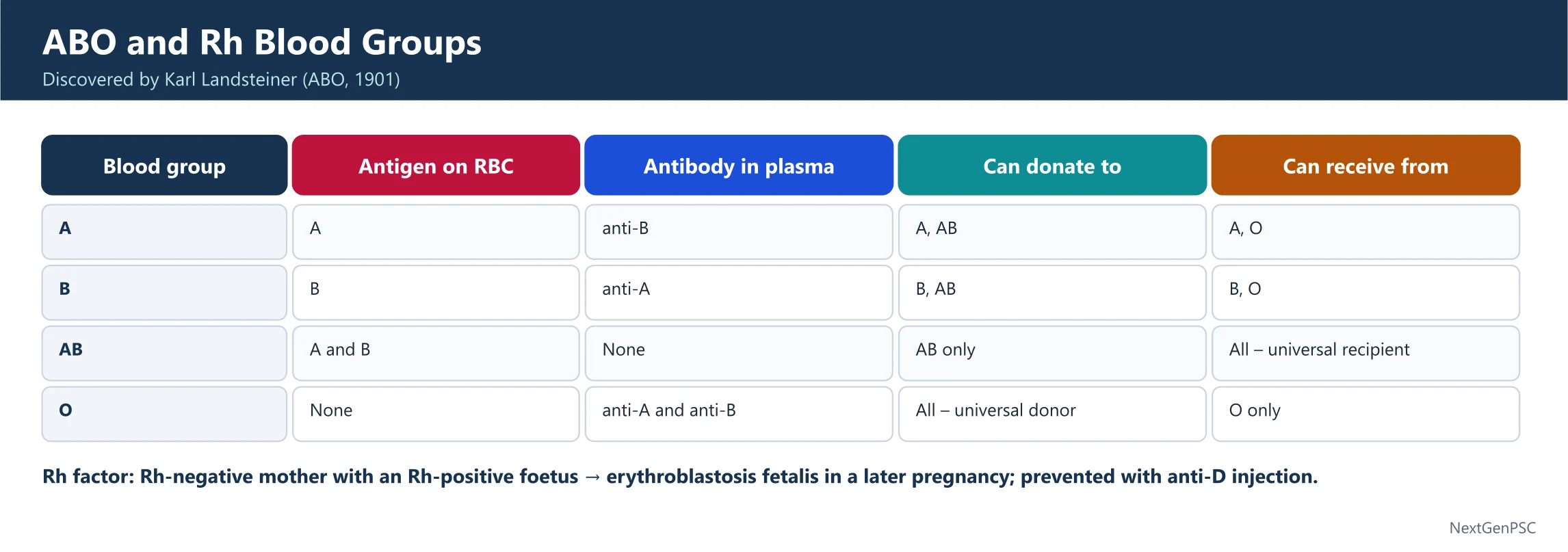
1. The Classification of Blood
Human blood may look the same, but it differs chemically based on the presence of certain proteins called antigens on the surface of red blood cells.
The Four Groups: A, B, AB, and O.
Antigens: Group A has A antigens, Group B has B antigens, Group AB has both, and Group O has none.
Antibodies: Our plasma contains antibodies that act against antigens NOT present in our own blood. For example, Type A blood has Anti-B antibodies.
2. Universal Donor: Type O
Group O blood is unique because its red blood cells lack both A and B antigens.
Why it's a Donor: Since there are no antigens on the surface, the recipient's immune system will not recognize the blood as a 'threat.'
Critical Note: This makes Group O (specifically O Negative) the Universal Donor, essential in emergency situations when the patient's blood type is unknown.
3. Universal Recipient: Type AB
Group AB blood contains both A and B antigens on the red blood cells.
Why it's a Recipient: Because the body is already familiar with both A and B antigens, it does not produce antibodies against them.
Compatibility: A person with Type AB can safely receive blood from any other group (A, B, AB, or O), making them the Universal Recipient.
| Blood Type | Antigens on Cell | Can Give To | Can Receive From |
|---|---|---|---|
| A | A | A, AB | A, O |
| B | B | B, AB | B, O |
| AB | A and B | AB only | A, B, AB, O (Universal) |
| O | None | A, B, AB, O (Universal) | O only |
Prelims tips
- Karl Landsteiner: Won the Nobel Prize for discovering human blood groups.
- Antigen vs Antibody: Antigens are on the cell surface; Antibodies are in the plasma.
- Rh Factor: Also discovered by Landsteiner (along with Alexander Wiener). It determines the '+' or '-' sign.
- Erythroblastosis Fetalis: A condition that can occur if an Rh-negative mother carries an Rh-positive baby.
Mains points
- Public Health: Establishing efficient blood banks and voluntary donation systems is a cornerstone of modern emergency healthcare infrastructure.
- Forensic Science: While DNA testing is now the gold standard, blood typing remains a vital first step in narrowing down suspects at a crime scene.
- Evolutionary Biology: Different blood groups may have evolved as a defense mechanism against specific infectious diseases like malaria or cholera.
- Medical Ethics: Ensuring equitable access to rare blood types and preventing the 'commercialization' of blood donation are key ethical challenges.
Did you know?
- Blood type O Positive is the most common blood type in the world, while AB Negative is often the rarest.
- Mosquitoes have been shown in some studies to prefer people with Type O blood twice as much as those with Type A!
- Besides the ABO system, there is an Rh factor (Positive or Negative). If you have the Rh protein, you are '+'; if not, you are '-'.
The Rh Factor: The Plus and Minus of Blood
The Rh Factor is a specific protein found on the surface of red blood cells. Named after the Rhesus monkey where it was first discovered, this factor determines whether your blood type is Positive (+) or Negative (-). While often overlooked, it is a critical factor in safe blood transfusions and healthy pregnancies.
1. What is the Rh Factor?
Discovered in 1940 by Landsteiner and Weiner, the Rh factor is an additional antigen (specifically an agglutinogen) on the red blood cell.
Rh Positive (Rh+): If your blood cells have this protein, you are Rh+. This is true for the vast majority of people.
Rh Negative (Rh-): If your blood cells lack this protein, you are Rh-.
Origin: The name comes from the Rhesus monkey, as the antigen was first identified in their blood before being found in humans.
2. Antibodies and Transfusion
Unlike the ABO system where antibodies are present from birth, Rh- people do not naturally carry anti-Rh antibodies.
Sensitization: If an Rh- person receives Rh+ blood, their immune system sees the Rh protein as a foreign invader and starts producing antibodies against it.
The Danger: While the first 'wrong' transfusion might not be fatal, any subsequent Rh+ transfusion will trigger a massive immune attack on the donor blood.
3. Rh Incompatibility in Pregnancy
The Rh factor is most famous for its role in Maternal-Fetal Incompatibility.
The Scenario: If an Rh- mother carries an Rh+ baby (inherited from an Rh+ father).
The First Pregnancy: Usually safe, but during birth, the baby's Rh+ blood may mix with the mother's Rh- blood.
The Second Pregnancy: If the next baby is also Rh+, the mother's now-ready antibodies can cross the placenta and attack the baby's red blood cells, a condition called Erythroblastosis Fetalis.
| Recipient Type | Can Receive From | Key Reason |
|---|---|---|
| Rh Positive (+) | Both + and - | Already has the protein; '-' blood has no protein to attack |
| Rh Negative (-) | Only Rh Negative | Will develop antibodies if exposed to '+' blood |
Prelims tips
- Rhesus monkey: The source of the name 'Rh'.
- Sensitization: The process of an Rh- person creating antibodies after exposure to Rh+ blood.
- Agglutinogen: Another term for the Rh antigen.
- Transfusion Rule: Rh- can give to Rh+, but Rh+ cannot give to Rh-.
Mains points
- Medical Intervention: Today, Rh incompatibility is managed using Anti-D injections (RhoGAM) given to Rh- mothers to prevent their bodies from becoming sensitized.
- Blood Bank Logistics: Rh-negative blood is much harder to source, making its collection and storage a priority for national health organizations.
- Evolutionary Mystery: Scientists are still unsure why the human population split into Rh+ and Rh-, though some hypothesize it may have offered protection against certain parasites.
- Prenatal Screening: Standard blood tests for pregnant women now always include Rh typing to prevent hemolytic diseases of the newborn.
Did you know?
- About 85% of the human population is Rh Positive, making Rh Negative a minority.
- People with O Negative blood are the true 'Universal Donors' because they have no A, B, or Rh antigens for anyone's immune system to fight.
- There is an extremely rare blood type called 'Rh-null' (Golden Blood) which lacks all Rh antigens. Only about 50 people in the world are known to have it!
Recombinant DNA: The 'Cut and Paste' of Life
Recombinant DNA (rDNA) technology allows scientists to combine genetic material from different species into a single molecule. This is possible because all life—from bacteria to humans—uses the same chemical 'alphabet'. By using Molecular Scissors to cut DNA and Vectors to transport it, we can create organisms with entirely new capabilities.
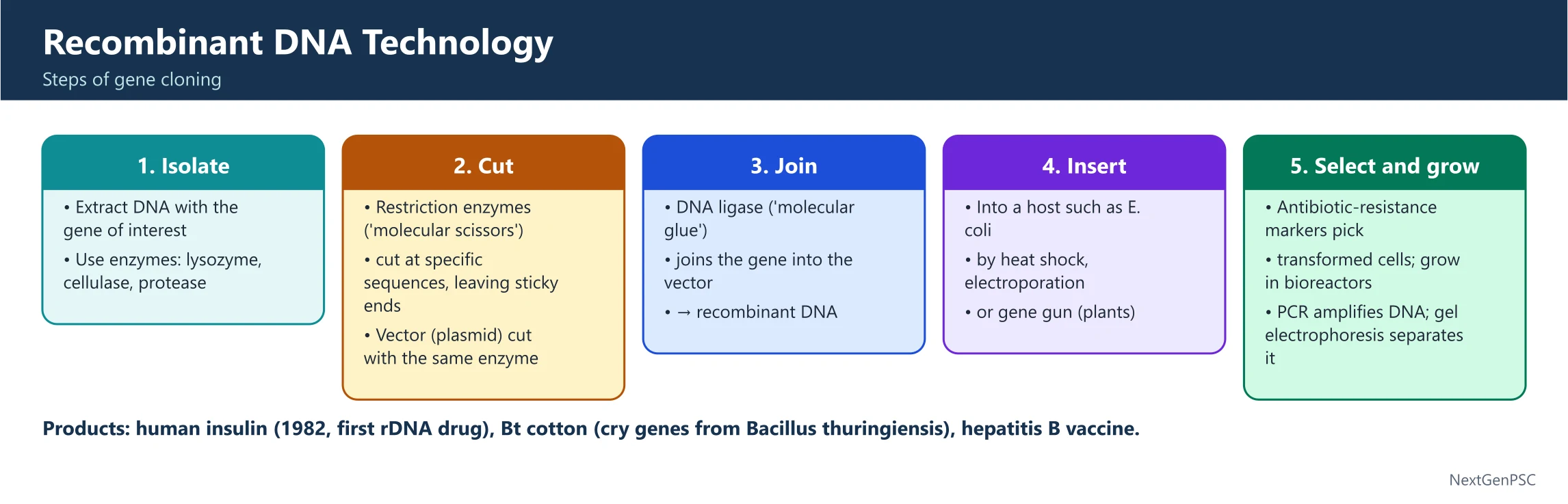
1. The Universal Language of DNA
DNA from every organism on Earth has the same basic chemical structure. The only thing that makes a rose different from a rhino is the sequence of nucleotides (the order of the letters A, T, G, and C).
Hybrid Molecules: Because the chemistry is identical, we can take a piece of human DNA and 'stitch' it into bacterial DNA. This resulting hybrid is called Recombinant DNA.
Stable Phenotypes: Interestingly, adding a small piece of foreign DNA usually doesn't change the overall look or behavior of the host; it simply gives it a specific new function (like a bacteria that can now produce human insulin).
2. Molecular Scissors: Restriction Enzymes
Scientists can't use physical tools to cut DNA; they use special proteins called Nucleases.
Exonucleases: These 'nibble' or remove nucleotides from the ends of the DNA strand.
Endonucleases: These act as precision cutters, making slices at specific positions within the DNA strand. These are the primary tools for genetic engineering.
3. Vectors: The Biological Delivery Vans
Once you have a piece of desired DNA, you need a way to get it into the host cell. This is where a Vector comes in.
Plasmids: These are small, circular DNA molecules found in bacteria. Scientists cut a plasmid open, insert the foreign DNA, and the plasmid carries it into the host.
The Mosquito Analogy: Just as a Mosquito acts as a vector to carry the malaria parasite into a human, a Plasmid acts as a vector to carry a new gene into a cell.
| Type | Action | Analogy |
|---|---|---|
| Exonucleases | Cuts DNA from the ends | Trimming the edges of a ribbon |
| Endonucleases | Cuts DNA at specific internal sites | Cutting a specific scene out of a film |
| Ligase | Joins two DNA pieces together | The biological glue |
Prelims tips
- Restriction Endonucleases: These are the most important for rDNA because they cut at specific 'Palindromic' sequences.
- Vector: Plasmids are the most common vectors in biotechnology.
- DNA Ligase: The enzyme used to 'paste' or join the cut DNA pieces together.
- Universal Structure: rDNA is possible only because DNA is chemically universal across all species.
Mains points
- Pharmaceutical Production: rDNA is the foundation of the modern insulin industry, replacing the need to extract insulin from animals with a safer, human-identical version produced by bacteria.
- Agricultural Innovation: Techniques involving rDNA allow for the creation of pest-resistant plants like Bt Cotton, reducing the need for chemical pesticides.
- Biosecurity: While powerful, the ability to recombinate DNA requires strict international regulations to prevent the creation of harmful pathogens or biological weapons.
- Medical Cures: rDNA technology is the precursor to Gene Therapy, which aims to cure genetic disorders by replacing 'broken' genes with healthy recombinant versions.
Did you know?
- The bacteria used in biotech often have small 'extra' circles of DNA called Plasmids. These are what scientists use as the 'delivery trucks' for new genes.
- Restriction enzymes were originally a defense mechanism! Bacteria used them to 'chop up' and destroy the DNA of invading viruses.
- The first recombinant DNA was created in 1972 by combining DNA from two different viruses.
Gene Cloning: Creating the Recombinant DNA Molecule
Gene Cloning is the process of making multiple identical copies of a specific DNA segment. By 'gluing' a desired gene into a Plasmid Vector using DNA Ligase, scientists create a recombinant molecule that can be smuggled into a host like E. coli to be mass-produced.
1. The Vector: The Molecular Delivery Van
A Plasmid is a small, circular piece of DNA found in bacteria that can replicate independently. In biotechnology, we use it as a 'vector' to carry 'alien' (foreign) DNA into a host cell.
Natural Analogy: Just as a mosquito delivers the malaria parasite, the plasmid delivers our target gene.
2. DNA Ligase: The Biological Glue
After 'Molecular Scissors' (Restriction Enzymes) cut the DNA, we need a way to stick the new gene into the plasmid.
The Action: The enzyme DNA Ligase acts on the cut ends of the DNA molecules and joins them together.
Result: This creates Recombinant DNA—a new combination of genetic material that did not exist in nature.
3. Transformation and Cloning in E. coli
Once the recombinant DNA is ready in a test tube (in vitro), it must be placed into a living factory.
Host Entry: The recombinant plasmid is transferred into Escherichia coli (E. coli), a common bacterium.
Replication: The plasmid uses the host's own DNA Polymerase enzyme to start making copies of itself.
Cloning: As the E. coli bacteria divide, they pass the recombinant DNA to their offspring. This multiplication of the gene (like an antibiotic resistance gene) is called Cloning.
| Tool | Biological Role | Simple Analogy |
|---|---|---|
| Restriction Enzyme | Cuts DNA at specific sites | The Scissors |
| DNA Ligase | Joins DNA fragments | The Glue |
| Plasmid | Carries foreign DNA | The Delivery Van |
| E. coli | Replicates the gene | The Photocopier |
Prelims tips
- In Vitro: Means 'in glass' (test tube); In Vivo: Means 'in life' (inside a living cell).
- DNA Polymerase: The enzyme responsible for actually synthesizing new DNA strands during replication.
- Autonomous Replication: The ability of plasmids to copy themselves without waiting for the main bacterial chromosome to divide.
- Antibiotic Resistance: Often used as a 'marker' to identify which bacteria successfully took up the recombinant DNA.
Mains points
- Scaling Production: Gene cloning allows for the industrial production of life-saving hormones like Insulin and Growth Hormone, ensuring they are affordable and pure.
- Research Utility: Cloning is the first step in Genomic Libraries, where scientists store fragments of an entire organism's DNA in bacteria for future study.
- Safety Protocols: Because cloning can create bacteria with dangerous traits (like antibiotic resistance), labs must follow strict biosafety levels (BSL) to prevent accidental release.
- Agricultural Impact: This technology is the foundation for creating Transgenic Plants that produce their own pesticides, significantly reducing chemical runoff in farming.
Did you know?
- The first successful recombinant DNA experiment involved moving an antibiotic resistance gene into Salmonella, making it 'super-resistant' to drugs.
- E. coli is the superstar of lab research because it reproduces incredibly fast—one cell can become millions in just a few hours!
- DNA Ligase is so essential that without it, your own cells wouldn't be able to repair broken DNA, leading to immediate cell death.
DNA Fingerprinting: The Biological Identity Card
DNA Fingerprinting is a revolutionary forensic technique that identifies individuals with near-perfect accuracy. By focusing on the 0.1% of DNA that is unique to every person—specifically the repetitive patterns called Minisatellites—scientists can create a 'barcode' of life that is unique to everyone except identical twins.
1. The 0.1% Difference
While all humans share 99.9% of their DNA (which is why we all have two arms, a heart, and lungs), it is the tiny 0.1% sliver that holds the key to our individuality.
Unique Code: No two humans have the same DNA pattern, except for Identical Twins, who develop from the same fertilized egg.
Universal Presence: Since every cell in your body (blood, hair root, skin, saliva) contains the same DNA, a 'fingerprint' can be made from almost any biological sample found at a scene.
2. Minisatellites and 'Stutters'
The secret to identification lies in the non-coding regions of our DNA—areas that don't make proteins but contain repetitive sequences.
Minisatellites: These are short sequences (10-60 base pairs) that repeat over and over again.
The 'Stutter' Effect: The number of times these sequences repeat varies wildly between people. One person might have a sequence repeat 5 times, while another has it 20 times at the same location. These variations are often called Stutters.
Visualizing the Pattern: When these repeats are separated and visualized, they look like a barcode, which is unique to that individual.
3. How the 'Fingerprint' is Created
The process involves extracting DNA, cutting it into fragments, and separating them by size.
Extraction: DNA is taken from a sample (e.g., a drop of blood).
Amplification: If the sample is tiny, a technique called PCR is used to make millions of copies.
Electrophoresis: The fragments are placed in a gel and an electric current is applied. Smaller 'stutters' move faster than larger ones, creating a distinct Banding Pattern.
| Concept | Detail | Significance |
|---|---|---|
| Genetic Similarity | 99.9% shared | Defines us as a species |
| Genetic Variation | 0.1% unique | Basis for individual identity |
| Minisatellites | 10-60 base pair repeats | The 'Target' for the test |
| Stutters | Variable repeat counts | Creates the unique 'Barcode' |
Prelims tips
- Paternity Testing: DNA fingerprinting is the gold standard for proving biological relationships.
- VNTRs: Variable Number Tandem Repeats—another technical name for these minisatellites.
- Non-coding DNA: Most DNA fingerprinting looks at the parts of DNA that don't code for proteins.
- PCR: Often used alongside fingerprinting to amplify small samples.
Mains points
- Forensic Justice: DNA fingerprinting has not only helped catch criminals but has also exonerated hundreds of wrongly convicted individuals through 'Innocence Projects'.
- Wildlife Conservation: This technique is used to track ivory poachers by matching confiscated tusks to specific elephant populations in Africa.
- Ethical Concerns: The creation of national DNA databases raises significant privacy issues regarding 'genetic surveillance' and the potential for biological data breaches.
- Anthropological Studies: Scientists use DNA patterns to trace human migration patterns over tens of thousands of years, mapping our journey 'Out of Africa'.
Did you know?
- DNA fingerprinting was first developed by Sir Alec Jeffreys in 1984.
- The first time this was used in a legal case was to prove a boy was his mother's biological son in an immigration dispute.
- You leave your 'DNA fingerprint' on everything you touch—even a used soda straw or a single strand of hair is enough to identify you!
Paternity Disputes and Forensic Applications of DNA Fingerprinting
DNA fingerprinting is the ultimate 'truth-teller' in biological disputes. Because a child inherits exactly 50% of their DNA from each biological parent, their DNA fingerprint pattern must be a perfect combination of the 'stutters' found in the mother and the father.
1. How Paternity Testing Works
In a paternity test, the DNA fingerprints of the mother, the child, and the alleged father are compared side-by-side.
The 50/50 Rule: Every single 'band' (stutter) in the child's DNA profile must have a matching band in either the mother's or the father's profile.
Matching Bands: Scientists first identify which bands the child inherited from the mother. Any remaining bands must come from the biological father. If the alleged father does not share these specific remaining bands, he is excluded as the parent.
2. Forensic Investigations
DNA is often called the 'silent witness.' Even when a criminal leaves no visible fingerprints, they leave biological traces.
Crime Scene Evidence: DNA can be extracted from blood, skin cells, hair follicles, or even a 'touch' sample from a weapon.
Individual Match: In criminal cases, a 100% match of the minisatellite pattern (stutters) between the evidence and a suspect provides near-certain proof of presence at the scene.
3. Beyond Humans: Wildlife Forensics
This technology isn't just for people; it's used to protect the planet.
Poaching: By creating DNA databases of elephants and rhinos, authorities can match confiscated ivory or horns to specific poaching sites.
Illegal Trade: It helps identify whether exotic pets were bred in captivity or illegally captured from the wild.
| Application | Main Goal | Accuracy |
|---|---|---|
| Paternity Testing | Establish biological parenthood | 99.99% |
| Forensics | Link a suspect to a crime scene | Near 100% |
| Immigration | Prove family relationships | High |
| Species Identification | Track wildlife poaching | Very High |
Prelims tips
- Exclusion vs. Inclusion: DNA testing is most powerful at 100% excluding someone as a father. Inclusion is usually calculated as a 99.9% probability.
- Minisatellites: These are the repetitive 'non-coding' regions that differ in length between individuals.
- Mitochondrial DNA: Used for tracing maternal lineage (mother's side) over many generations.
- Y-Chromosome testing: Used for tracing paternal lineage (father's side).
Mains points
- Social Justice: The use of DNA testing has revolutionized family law, ensuring that biological parents take financial and legal responsibility for their children.
- Cold Cases: Advancements in DNA extraction allow police to solve 'cold cases' from decades ago, bringing closure to victims' families.
- Genetic Privacy: The debate over DNA Databases is intense; while they help solve crimes, they also raise concerns about 'genetic stalking' or insurance companies discriminating based on DNA data.
- Judicial Reliability: Courts worldwide now accept DNA evidence as the 'Gold Standard,' often prioritizing it over eyewitness testimony, which can be unreliable.
Did you know?
- While standard fingerprints can be altered or blurred, your DNA Fingerprint is exactly the same in every part of your body and stays the same even after death.
- A single drop of dried blood from 20 years ago can still provide enough DNA for a successful identification today!
- In 1987, Colin Pitchfork became the first person to be caught and convicted of murder using DNA fingerprinting evidence.
DNA Profiling: The Digital Catalog of Genetic Identity
DNA Profiling is the sophisticated process of creating a genetic map unique to an individual. By converting biological patterns into digital data and storing them in Computer Databases, forensic scientists can solve 'cold cases' and identify perpetrators even when there are no initial suspects.
1. What is a DNA Profile?
A DNA profile is the final 'barcode' or numerical representation obtained after analyzing specific sections of a person's DNA. While DNA Fingerprinting is the technique, the Profile is the recorded result.
Unique Patterns: The profile targets specific markers in the genome that vary significantly between individuals.
Digital Identity: Once generated, this profile can be converted into a string of numbers or a digital image, making it easy to share and compare across different jurisdictions.
2. Solving Crimes without Suspects
One of the most powerful applications of profiling is the use of National DNA Databases (like CODIS in the USA or DNA banks in India).
The Search Process: Forensic scientists take a sample from a crime scene (e.g., a drop of sweat or blood), create a profile, and run it through a computer database.
'Cold' Hits: If the profile matches a record already in the system (from a previous offender), the computer identifies the suspect immediately, even if the police had no leads.
Exoneration: Profiling is equally important for proving innocence. If a suspect's profile does not match the crime scene profile, they can be cleared of charges.
3. DNA Profiling vs. Fingerprinting
Though the terms are often used interchangeably, there is a slight technical difference:
DNA Fingerprinting: Usually refers to the visual 'banding' patterns created on a gel (often using older methods like RFLP).
DNA Profiling: Usually refers to modern, more sensitive methods (like STR - Short Tandem Repeats) that can be easily digitized and analyzed by computers.
| Feature | DNA Fingerprinting | DNA Profiling |
|---|---|---|
| Format | Visual bands on a gel | Digital peaks/Numbers |
| Sensitivity | Requires large samples | Can use tiny/degraded samples |
| Analysis | Manual comparison | Automated computer matching |
| Storage | Physical records/Images | Secure Digital Databases |
Prelims tips
- STRs (Short Tandem Repeats): The primary markers used in modern DNA profiling.
- Databases: Computer data banks allow for cross-border criminal tracking.
- Exoneration: Profiling is a tool for both prosecution and defense.
- Cold Case: An unsolved criminal investigation that remains open pending new evidence (like DNA profiling).
Mains points
- National Security: Governments are increasingly legislating for mandatory DNA profiling of certain offenders, creating a balance between state security and individual privacy.
- The 'CSI Effect': The high accuracy of DNA profiling has changed jury expectations, where a lack of DNA evidence can sometimes lead to acquittals even when other evidence is strong.
- Technological Ethics: The use of 'Familial Searching' (using a relative's DNA to find a suspect) is a major debate in legal ethics regarding the privacy rights of innocent relatives.
- Disaster Victim Identification (DVI): DNA profiling is indispensable in identifying victims of mass disasters (tsunamis, plane crashes) when traditional methods like dental records are unavailable.
Did you know?
- DNA profiling is so sensitive that it can be performed on 'Touch DNA'—the microscopic skin cells left behind just by touching an object.
- Scientists have used DNA profiling to identify the remains of historical figures, such as King Richard III of England, whose body was found under a parking lot centuries later!
- Even if a twin is an identical match, modern 'Ultra-Deep' profiling can sometimes find tiny mutations that happen after birth to tell them apart.
The Genome: The Master Blueprint of Life
The Genome is the complete set of genetic instructions for an organism. Think of it as a massive, 3-billion-letter-long instruction manual containing every detail required to build, operate, and maintain you throughout your entire life.
1. Defining the Genome
A genome is the total sum of all genetic material in a living being. This includes not just the genes (which make proteins) but also the vast 'non-coding' regions of DNA.
Complete Set: It includes all the DNA found in the nucleus (chromosomes) and even the tiny bit found in the mitochondria.
Biological Encyclopedia: The genome contains the instructions for everything—from the color of your eyes to how your body fights off a virus.
2. The Scale of the Human Genome
In humans, the genome is incredibly vast and complex.
3 Billion Base Pairs: The human genome is made up of approximately 3,000,000,000 (3 billion) chemical 'letters' or base pairs (A, T, G, and C).
The Physical Size: If you were to read the human genome out loud (one letter per second), it would take you about 95 years to finish!
Packing Efficiency: All 3 billion base pairs are packed into the microscopic nucleus of almost every cell in your body.
3. Genome vs. Gene
It is important to understand the hierarchy of genetic information:
The Genome: The entire library (the complete set).
The Chromosome: The individual books in the library (23 pairs in humans).
The Gene: The specific chapters or paragraphs within those books that give instructions for a particular trait.
| Unit | Description | Scale (Human) |
|---|---|---|
| Genome | All genetic material | 1 set |
| Chromosome | Compact DNA packages | 46 (23 pairs) |
| Gene | Instructions for traits | Approx. 20,000 - 25,000 |
| Base Pair | Chemical 'Letters' (A-T, G-C) | 3 Billion |
Prelims tips
- 3 Billion: Remember the specific number of base pairs in the human genome.
- Human Genome Project (HGP): An international research effort to determine the DNA sequence of the entire human genome.
- Non-coding DNA: Portions of the genome that do not provide instructions for making proteins but regulate gene activity.
- Genome Mapping: The process of identifying the location of genes on a chromosome.
Mains points
- Personalized Medicine: By sequencing an individual's genome, doctors can predict which diseases they are prone to and which medications will work best for them.
- Agricultural Resilience: Sequencing the genomes of crops like rice and wheat allows scientists to identify genes for drought resistance and high yield.
- Evolutionary Mapping: Comparing genomes across different species allows scientists to trace the evolutionary history of all life on Earth.
- Genomic Sovereignty: The collection and storage of genomic data of a nation's population raise concerns about data privacy and biological security.
Did you know?
- A Japanese Canopy Plant has a genome that is 50 times larger than a human's!
- Despite having 3 billion base pairs, only about 1% to 2% of our genome actually codes for proteins. The rest was once called 'Junk DNA,' but we now know it acts as a complex control panel.
- The Human Genome Project, which first mapped the entire human genome, took 13 years and cost nearly 3 billion dollars.
Mapping India’s DNA: GIP, IndiGen, and INSACOG
India is one of the most genetically diverse nations in the world. Through initiatives like the Genome India Project and IndiGen, scientists are mapping this diversity to create a 'Reference Genome' for Indians. This data is crucial for Personalized Medicine and tracking viral mutations through INSACOG.
1. Genome India Project (GIP)
Launched in 2020 by the Department of Biotechnology (DBT), GIP is an ambitious 'Gene Mapping' mission.
The Goal: To collect 10,000 genetic samples from citizens across India to build a Reference Genome specifically for the Indian population.
Nodal Point: The Centre for Brain Research at IISc Bangalore leads a network of 20 top institutions.
Significance: Most global genomic data is based on Caucasian populations. GIP ensures that medical research actually accounts for Indian genetics.
2. IndiGen: The Precursor
Before the large-scale GIP, the CSIR conducted a pilot exercise to prove the feasibility of whole-genome sequencing in India.
The Study: Conducted 'whole-genome sequencing' of 1,008 Indians from diverse ethnic groups over six months.
Executing Bodies: Led by CSIR-IGIB (Delhi) and CSIR-CCMB (Hyderabad).
Outcome: It provided the foundational data and technology roadmap for the current Genome India Project.
3. INSACOG: Monitoring Viral Threats
While GIP looks at human DNA, INSACOG focuses on the DNA/RNA of viruses, specifically SARS-CoV-2.
The Network: A consortium of over 10 (now expanded to dozens) national laboratories established in late 2020.
Whole Genome Sequencing (WGS): By reading the entire genetic code of virus samples from patients, INSACOG tracks how the virus mutates into new variants (like Delta or Omicron).
Impact: This real-time data helps the government design better vaccines, diagnostics, and public health policies.
| Project | Focus | Lead Agency | Scale |
|---|---|---|---|
| IndiGen | Human (Pilot) | CSIR | 1,008 Samples |
| Genome India Project | Human (National) | DBT / IISc Bangalore | 10,000 Samples |
| INSACOG | Virus (SARS-CoV-2) | DBT / MoHFW | Continuous monitoring |
Prelims tips
- Whole Genome Sequencing (WGS): The technique of determining the complete DNA sequence of an organism's genome at a single time.
- Nodal Point for GIP: IISc Bangalore (Centre for Brain Research).
- DBT vs CSIR: GIP is under DBT; IndiGen was under CSIR.
- Reference Genome: A digital nucleic acid sequence database, assembled by scientists as a representative example of a species' genes.
Mains points
- Predictive Healthcare: GIP will shift India from 'one-size-fits-all' medicine to 'Precision Medicine,' where treatments are tailored to the genetic makeup of Indian sub-populations.
- Rare Diseases: Genome mapping is crucial for identifying the genetic basis of rare diseases that are often found in endogamous groups within India.
- Bio-Data Sovereignty: Storing the genomic data of 1.4 billion people within national boundaries is a matter of strategic security to prevent 'Bio-piracy' by foreign entities.
- Pandemic Preparedness: The INSACOG model shows how a network of labs can act as a frontline defense against future biological threats through rapid genomic surveillance.
Did you know?
- India has over 4,500 anthropologically well-defined groups. This makes our 'genetic library' one of the most interesting in the world for scientists!
- Through INSACOG, India was able to identify many locally emerging variants of COVID-19, helping the world prepare for new waves of the pandemic.
- A 'Reference Genome' is like a standard dictionary; once we have an Indian one, we can easily spot 'typos' (mutations) in an individual's DNA that cause diseases.
CRISPR vs. Traditional GMOs and the Designer Baby Debate
While Traditional GMOs involve 'pasting' foreign DNA into an organism, CRISPR allows for precise 'editing' of the organism's own DNA. This precision has opened the door to curing genetic diseases but has also triggered a global ethical debate over Designer Babies and the future of human evolution.
1. CRISPR vs. Traditional GMOs
Understanding the difference is crucial for policy-making and public safety.
Transgenic (Traditional GMO): Usually involves taking a gene from a different species (like a bacterial gene into cotton) and inserting it randomly. This is 'Alien DNA' insertion.
Gene Edited (CRISPR): Often involves only 'tweaking' the plant's existing DNA—turning a gene on or off, or fixing a typo. No foreign DNA is necessarily added. This is why many countries regulate CRISPR-edited crops less strictly than GMOs.
2. The 'Designer Baby' Debate
CRISPR's ability to edit human embryos leads to two types of modifications:
Somatic Editing: Editing cells in a living person (like blood cells) to cure a disease. These changes are not passed to children. Most scientists support this.
Germline Editing: Editing embryos, sperm, or eggs. These changes are passed to all future generations. This is the 'Designer Baby' territory.
3. The Pros and Cons of Human Gene Editing
Pros:
Eradicating Disease: Could permanently end hereditary diseases like Huntington’s or Hemophilia.
Healthier Future: Possible resistance to viruses like HIV or malaria.
Cons:
Ethics & Inequality: Could lead to a 'genetic divide' where only the wealthy can afford to enhance their children's intelligence or physical traits.
Unintended Consequences: Cutting DNA is precise, but biology is complex. Fixing one gene might accidentally 'break' another system we don't fully understand yet (Off-target effects).
| Feature | Traditional GMO | CRISPR Editing |
|---|---|---|
| Foreign DNA | Required (Transgenic) | Often None (Cisgenic) |
| Precision | Low (Random insertion) | High (Targeted snip) |
| Regulation | Very Strict | Varies (Moderate) |
| Cost/Time | Expensive & Slow | Cheaper & Fast |
Prelims tips
- Off-target effects: When CRISPR cuts the DNA at a location other than the intended target.
- Germline: Cells that pass genetic info to offspring (Sperm/Egg).
- Cas9: The 'Scissors' enzyme (always remember this for UPSC/Exams).
- SDN-1 & SDN-2: Terms often used for CRISPR categories that don't involve foreign DNA.
Mains points
- Regulatory Challenges: India's 'Guidelines for Safety Assessment of Genome Edited Plants (2022)' exempt SDN-1 and SDN-2 categories from the strict rules applied to GMOs, promoting innovation.
- The Genetic Divide: If enhancement (intelligence, stamina) becomes possible, it could create a permanent biological class system, exacerbating social inequality.
- Ecological Risk: Using CRISPR for Gene Drives to wipe out pests could collapse entire food chains if the species plays a hidden, vital role in the ecosystem.
- Future of Evolution: For the first time, humans have the power to direct their own evolution, shifting from 'Natural Selection' to 'Intentional Selection'.
Did you know?
- In some countries, CRISPR-edited mushrooms that don't turn brown are sold as 'non-GMO' because they contain no foreign DNA!
- The He Jiankui case in 2018, where a scientist edited babies to be HIV-resistant, led to his imprisonment and a global moratorium on human germline editing.
- CRISPR is so simple that some 'biohackers' have tried to perform gene editing on themselves in their home garages!
Gene Therapy: Repairing the Code of Life
Gene Therapy is a medical technique that treats or prevents disease by correcting the underlying genetic problem. Instead of using drugs or surgery, it involves replacing defective genes with healthy ones or adding new genes to help the body fight infections and disorders at the molecular level.
1. What is Gene Therapy?
Gene therapy is essentially the 'repair kit' for genetic disorders. It uses sections of DNA to treat diseases that were once considered incurable.
The Core Logic: If a person has a 'broken' or mutated gene that causes a disease, scientists can introduce a functional, healthy copy of that gene to take over its job.
Artificial Introduction: Since DNA cannot easily enter cells on its own, scientists often use Vectors (usually deactivated viruses) to deliver the new DNA directly into the patient's cells.
2. Somatic vs. Germline Gene Therapy
Depending on which cells are treated, the impact on future generations varies greatly.
Somatic Gene Therapy: Targets non-reproductive cells (like lung, skin, or blood cells). The clinical effects are limited to the individual patient and are not passed on to their children. This is the only type currently used in human medicine.
Germline Gene Therapy (Gametes): Targets sperm or egg cells. Any changes made here will be permanent and passed down to all future generations. Due to ethical concerns, this is currently banned or highly restricted globally.
3. Key Objectives of Gene Therapy
Gene therapy isn't just about fixing broken parts; it can also be used as a 'booster' for the immune system.
Gene Replacement: Replacing a mutated gene that causes disease with a healthy copy (e.g., for Cystic Fibrosis).
Gene Addition: Adding a new gene to help the body recognize and destroy diseased cells (e.g., helping the body fight Cancer).
Gene Inactivation: 'Turning off' or knocking out a mutated gene that is functioning improperly.
| Type | Target Cells | Heritable? | Current Status |
|---|---|---|---|
| Somatic | Body cells (Bone marrow, Liver, etc.) | No | Widely studied/Clinical use |
| Germline | Reproductive cells (Sperm, Egg) | Yes | Prohibited/Ethical concerns |
Prelims tips
- Vector: The vehicle (often a virus) used to carry the healthy DNA into the cell.
- Genetic Disorders: These are the primary targets for gene therapy (e.g., Thalassemia, Sickle Cell Anemia).
- Somatic vs Gamete: Remember that Somatic changes die with the individual, but Gamete changes are permanent for the lineage.
- CRISPR-Cas9: A tool that can be used inside gene therapy to perform the actual 'editing' of the DNA.
Mains points
- Ethical Dilemma: Germline therapy raises the risk of 'Designer Babies' where traits like height or intelligence could be selected, leading to social inequality.
- High Cost: Gene therapies are currently some of the most expensive medical treatments in the world, often costing millions of dollars per dose.
- Immune Response: A major challenge is the body’s immune system attacking the viral vectors used to deliver the therapy.
- Precision Medicine: Gene therapy is the ultimate form of precision medicine, treating the root cause of a disease rather than just managing its symptoms.
Did you know?
- The first successful gene therapy was performed in 1990 on a four-year-old girl with a rare genetic immune deficiency.
- Viruses are the most common 'delivery trucks' for gene therapy because they are naturally experts at 'infecting' cells with genetic material!
- In the future, gene therapy might be used to cure Color Blindness by adding the missing color-detecting genes to the eyes.
Stem Cells: The Body's Master Builders
Stem Cells are the raw materials of the body—undifferentiated cells from which all other cells with specialized functions are generated. Their unique ability to both self-renew and transform into specific cell types (like heart or nerve cells) makes them the cornerstone of regenerative medicine.
1. What Makes Stem Cells Unique?
Stem cells differ from regular cells (like skin or blood cells) in two fundamental ways:
Self-Renewal: They can divide and multiply to produce more identical stem cells for long periods.
Differentiation: Under certain conditions, they can be 'instructed' to become specialized cells (e.g., a stem cell becoming a beating heart muscle cell).
2. Classification of Stem Cells
Stem cells are categorized based on where they come from and their level of flexibility.
Embryonic Stem Cells (ESCs): Taken from embryos at a very early stage (3-5 days old). They are Pluripotent, meaning they can become any cell type in the body.
Adult Stem Cells: Found in small numbers in most adult tissues (like bone marrow or fat). Their primary job is to repair the specific tissue they live in. They are more limited in what they can become.
Induced Pluripotent Stem Cells (iPSCs): These are adult cells (like skin cells) that have been 'reprogrammed' in a lab to behave like embryonic stem cells. This breakthrough (2007) avoids the ethical issues of using embryos.
| Type | Source | Potency | Ethical Concern |
|---|---|---|---|
| Embryonic | Early-stage Embryos | Pluripotent (High) | High |
| Adult | Bone Marrow, Tissues | Multipotent (Low) | Low |
| iPSC | Reprogrammed Adult Cells | Pluripotent (High) | Low |
Prelims tips
- Pluripotent: Can become almost any cell type. Multipotent: Can become a limited range of cell types.
- iPSC Year: First generated in 2007.
- Therapeutic Cloning: Creating an embryo to harvest stem cells for treatment.
- Regenerative Medicine: The field of medicine focused on using stem cells to regrow damaged tissues.
Mains points
- Ethical Debate: Embryonic stem cell research is controversial because it involves the destruction of human embryos, leading to strict regulations in many countries.
- Medical Revolution: iPSCs are a game-changer because they allow for 'personalized' stem cell therapy using a patient's own skin cells, eliminating the risk of immune rejection.
- Clinical Trials: Stem cells are currently being tested to treat Parkinson's, Type 1 Diabetes, and Spinal Cord Injuries by replacing dead or damaged neurons.
- Drug Testing: Instead of testing new drugs on animals, scientists can use iPSCs to grow human heart or liver cells in a dish to see how the drug reacts.
Did you know?
- The 2012 Nobel Prize was awarded to Shinya Yamanaka for discovering that adult cells can be turned back into stem cells (iPSCs).
- Your Bone Marrow is a stem cell factory, producing billions of new blood cells every single day.
- Salamanders have incredible stem cells that allow them to regrow entire limbs or tails if they are lost!
Mitochondrial DNA and the Science of Designer Babies
While most of our DNA is packed in the nucleus, a tiny but vital portion exists in the Mitochondria. Because this DNA is inherited solely from the mother, it provides a unique window into maternal lineage. However, mutations here can lead to severe energy-depletion disorders, sparking the development of 'Three-Parent Baby' technology and the broader concept of Designer Babies.
1. Mitochondrial DNA (mtDNA): The Maternal Legacy
Mitochondria are the 'powerhouses' of the cell, but they also carry their own unique genetic material.
The Shape: Unlike the long strands of nuclear DNA, mtDNA is small and circular.
Maternal Inheritance: When a sperm fertilizes an egg, the sperm's mitochondria are usually destroyed. Therefore, almost 100% of your mtDNA comes from your Mother via the egg cell.
The Tracker: Because it doesn't mix (recombine) with paternal DNA, scientists use it to trace human ancestry back thousands of years through the maternal line.
2. Mitochondrial Disorders
If the 'powerhouse' has a faulty blueprint, the body's high-energy organs suffer the most.
The Cause: Occurs when mtDNA mutations prevent mitochondria from converting food and oxygen into energy (ATP).
Prevalence: Roughly 1 in 5,000 people suffer from these genetic conditions.
Common Symptoms:
Muscles & Eyes: External ophthalmoplegia (weak eye muscles) and myopathy (muscle weakness).
Senses: Deafness and optic atrophy (vision loss).
Organs: Diabetes mellitus and cardiomyopathy (heart issues).
3. Designer Babies: Engineering the Future
A designer baby is a child whose genetic makeup has been artificially selected or edited.
Prevention of Disease: The primary use is to remove genes associated with hereditary diseases (like mitochondrial disorders).
Three-Parent Babies: A specific technique where the mother's faulty mitochondria are replaced with healthy mitochondria from a female donor, resulting in a baby with DNA from three people (Father, Mother, and Donor).
Enhancement: The controversial side involves selecting traits like eye color, height, or intelligence.
| Feature | Nuclear DNA | Mitochondrial DNA |
|---|---|---|
| Inheritance | From both parents (50/50) | Exclusively from Mother |
| Shape | Linear strands | Small and Circular |
| Location | Cell Nucleus | Inside Mitochondria |
| Function | All body instructions | Primarily energy production |
Prelims tips
- Maternal Inheritance: High-probability question. mtDNA does not undergo recombination like nuclear DNA.
- Three-Parent Baby: Specifically targets mitochondrial diseases, not nuclear DNA diseases.
- ATP: The energy currency of the cell produced by mitochondria.
- WGS (Whole Genome Sequencing): Includes sequencing both nuclear and mitochondrial DNA.
Mains points
- Bioethics of Design: Designer baby technology raises the threat of 'Eugenics,' where society might start devaluing individuals who are not genetically 'perfect.'
- Regulatory Landscape: The UK was the first country to legally allow Three-Parent Baby (Mitochondrial Replacement Therapy) under strict medical supervision.
- Medical Necessity vs. Luxury: There is a thin line between using gene editing to save a life (Therapy) and using it to pick a child's height or hair color (Enhancement).
- Genetic Diversity: While removing disease is beneficial, over-reliance on 'designing' babies could reduce the natural genetic diversity that helps the human species survive global environmental changes.
Did you know?
- You have thousands of copies of mitochondrial DNA in every cell, but only two copies of nuclear DNA. This makes mtDNA much easier for forensic scientists to find in old bones!
- The first 'Three-Parent Baby' was born in 2016 to a Jordanian couple, using a technique performed in Mexico to avoid a fatal neurological disorder.
- Because of strict maternal inheritance, all humans can trace their mtDNA back to a single woman who lived in Africa about 150,000 years ago, often called 'Mitochondrial Eve'.
Gene Cloning: The Art of Biological Replication
Cloning is the process of creating an exact genetic replica of a cell, tissue, or an entire living organism. From the historic birth of Dolly the Sheep to modern Therapeutic Cloning, this technology allows us to bypass traditional reproduction to duplicate the 'Master Blueprint' of life.
1. What is Cloning?
Cloning is the production of an exact copy of a biological entity. This can happen at different levels: a single gene, a cell, or a multi-cellular organism.
The Milestone: The first successful cloning of a mammal was performed by Ian Wilmut and his team in 1996. They created Dolly the Sheep.
How it was done: Dolly was created using a technique called Somatic Cell Nuclear Transfer (SCNT). A nucleus from an adult mammary gland cell (somatic cell) was placed into an egg cell that had its own nucleus removed.
2. Types of Cloning
Cloning is generally divided into two main categories based on the final goal.
Reproductive Cloning: The goal is to create a complete, living, breathing duplicate of an organism. This involves placing the cloned embryo into a surrogate mother’s uterus (e.g., Dolly).
Therapeutic Cloning: The goal is not to create a baby, but to create Stem Cells. These cloned embryos are grown in a lab to harvest cells that can be used to treat diseases like Parkinson’s or Diabetes without the risk of immune rejection.
3. Methods of Cloning
There are two primary ways scientists 'copy' life artificially:
Embryo Splitting: Manually breaking an early-stage embryo into two or more parts. This mimics how identical twins are formed naturally.
Nuclear Transfer: Using donor gametes (egg cells) and somatic cells (body cells) from the original organism. This is the more advanced method used for 'cloning' an existing adult.
| Feature | Reproductive Cloning | Therapeutic Cloning |
|---|---|---|
| End Goal | A new living organism | Stem cells for medical treatment |
| Surrogate Mother | Required | Not required (Grown in lab) |
| Ethical Status | Highly controversial / Banned | Widely debated / Regulated |
| Genetic Match | 100% match to donor | 100% match to patient |
Prelims tips
- Somatic Cell: Any cell in the body except for sperm and egg cells.
- SCNT: Somatic Cell Nuclear Transfer – the specific process used to create Dolly.
- Ian Wilmut: The scientist credited with the first mammalian clone.
- Dolly: The first cloned mammal (Sheep, 1996).
Mains points
- Ethics of Cloning: Reproductive cloning is met with strong resistance due to concerns over 'human dignity,' potential health defects, and the low success rate of the process.
- Medical Promise: Therapeutic cloning could lead to 'personalized' organ transplants, where a new kidney or heart is grown from your own cells, ending the wait for organ donors.
- Biodiversity & De-extinction: Scientists are exploring using cloning to bring back extinct species, like the Woolly Mammoth, or to save endangered ones.
- Success Rate: Cloning remains technically difficult; it took 277 attempts to successfully produce just one Dolly.
Did you know?
- Dolly the sheep was named after the singer Dolly Parton because the cell used to clone her came from a mammary gland!
- Dolly lived for 6 years and gave birth to six lambs naturally, proving that clones can reproduce.
- Since Dolly, scientists have cloned many animals, including cats, dogs, horses, and even monkeys, but human reproductive cloning remains globally banned.
Genetically Modified (GM) Crops: Engineering Food Security
Genetically Modified (GM) Crops are plants whose DNA has been altered using genetic engineering to include traits that do not occur naturally. By borrowing beneficial genes from other organisms—like the Bacillus thuringiensis bacteria—scientists create crops that can fight pests, survive droughts, and provide better nutrition.
1. What are GM Crops?
GM crops are 'Transgenic' plants. This means genetic material from an entirely different species (bacteria, virus, or another plant) is inserted into the crop's genome to give it a specific advantage.
Abiotic Stress Tolerance: Better survival in cold, drought, salt, or extreme heat.
Reduced Chemical Use: Plants produce their own 'pesticides,' reducing the need for toxic sprays.
Nutritional Enhancement: Adding vitamins or minerals (e.g., Vitamin A in Golden Rice).
2. The Science of Bt Technology
Bt crops utilize a natural toxin from the soil bacterium Bacillus thuringiensis (Bt).
The Inactive Form: The bacteria produce a protein called a Protoxin, which is harmless on its own.
The Activation: When an insect (like a budworm or beetle) eats the plant, the alkaline pH of its gut converts the protoxin into an Active Toxin.
The Result: The active toxin creates pores in the insect's gut wall, causing it to die. Crucially, humans have acidic stomachs, so the toxin remains inactive and harmless to us.
3. GM Crops in India: The Current Status
India has a cautious approach toward GM food, managed by the GEAC (Genetic Engineering Appraisal Committee).
Bt Cotton: The only GM crop commercially cultivated in India. It is highly resistant to the Pink Bollworm and covers millions of hectares.
Bt Brinjal: Developed to fight the fruit and shoot borer. Though recommended in 2007, it faced a moratorium (ban) due to public concerns.
GM Mustard (DMH-11): Developed by Delhi University to increase yields. It is a hybrid variety that has undergone extensive review and recent environmental release trials.
4. Global GM Varieties
GM Corn/Maize: Resistant to larvae; used heavily for animal feed.
GM Soybeans: Designed to be 'Herbicide Tolerant,' meaning farmers can spray weed-killers that kill weeds but leave the soybean plants unharmed.
GM Canola: Modified for better oil quality and used as an emulsifier in processed foods.
| Crop | Modification | Target Pest/Problem | Status in India |
|---|---|---|---|
| Bt Cotton | Cry genes from Bt bacteria | Pink Bollworm | Commercial Cultivation |
| Bt Brinjal | Cry1Ac gene | Fruit and Shoot Borer | Under Moratorium |
| GM Mustard | Barnase/Barstar system | Low yield / Hybridization | Under Review/Trial |
Prelims tips
- GEAC: The apex body under the Ministry of Environment that approves GM crops in India.
- Cry Proteins: The specific name for the toxic proteins produced by Bt bacteria.
- Protoxin: The inactive form of the toxin that requires an alkaline pH to become active.
- DMH-11: Dhara Mustard Hybrid-11 (remember this for India-specific questions).
Mains points
- Food Security: With a growing population and shrinking arable land, GM crops are a key tool for increasing global food production.
- Environmental Concerns: Critics argue that GM crops might lead to 'Super-weeds' or harm non-target beneficial insects like bees and butterflies.
- Corporate Monopoly: There is a concern that a few multinational companies holding patents for GM seeds could exploit farmers and threaten seed sovereignty.
- Biosafety Protocols: India follows the 'Cartagena Protocol on Biosafety' to ensure the safe handling and use of living modified organisms.
Did you know?
- Because Bt toxin is natural, organic farmers have used Bt bacteria spray for decades. Genetic engineering just puts the 'spray' inside the plant cells!
- Golden Rice is a GM variety that produces Beta-carotene (Vitamin A) to help prevent blindness in developing nations.
- GM crops can actually help the environment by reducing the amount of CO2 released, as 'Herbicide Tolerant' crops allow for 'no-till' farming which keeps carbon in the soil.
GEAC: The Gatekeeper of India’s Biotechnology
The Genetic Engineering Appraisal Committee (GEAC) is the apex statutory body in India that decides the fate of genetically modified organisms. Operating under the Ministry of Environment, it ensures that any 'lab-created' life form is safe for the environment before it reaches the field or the factory.
1. Statutory Status & Legal Framework
GEAC is not just an advisory group; it is a Statutory Committee, meaning it derives its power from the law.
The Law: It functions under the Environment Protection Act (EPA), 1986 . Specifically, it follows the 'Rules for Manufacture, Use, Import, Export, and Storage of Hazardous Microorganisms, Genetically Engineered Organisms or Cells, 1989' (known as Rules, 1989).
Ministry: It is housed within the Ministry of Environment, Forest, and Climate Change (MoEF&CC).
2. Core Responsibilities
The committee acts as a scientific 'filter' for high-risk biological research and industrial production.
Large-Scale Use: It appraises activities involving hazardous microorganisms and recombinants used in industries and research.
Environmental Release: No Genetically Engineered (GE) organism (like Bt Cotton or GM Mustard) can be released into the open environment or used in field trials without GEAC's approval.
Safety First: It evaluates every proposal from an environmental angle to ensure there are no 'ecological leaks' or unintended damage to biodiversity.
3. Organizational Structure
The GEAC is designed to be a bridge between environmental policy and biological science.
Leadership: It is chaired by the Special Secretary/Additional Secretary of the MoEF&CC.
Co-Chair: A representative from the Department of Biotechnology (DBT) serves as the Co-Chair, ensuring technical expertise.
Members: It consists of 24 members who meet monthly to review pending applications.
| Aspect | Details |
|---|---|
| Legal Basis | Environment Protection Act, 1986 (Rules 1989) |
| Parent Ministry | MoEF&CC |
| Mandatory For | GM Crops, Hazardous Microbes, Field Trials |
| Meeting Frequency | Monthly |
| Leadership | Special/Additional Secretary (Chair) |
Prelims tips
- Statutory vs Regulatory: Remember, GEAC is a Statutory body under EPA 1986.
- Nodal Ministry: Always MoEF&CC, not the Ministry of Science & Technology.
- Chairperson: Special/Additional Secretary of MoEF&CC (UPSC often asks this).
- Rules 1989: These are the specific rules that define GEAC’s working powers.
Mains points
- Scientific Rigor vs. Public Sentiment: GEAC often faces the challenge of balancing scientific data (showing a crop is safe) with public and political opposition regarding GM foods.
- Center-State Relations: While GEAC gives central clearance, several State Governments in India have refused to allow field trials in their territories, leading to a complex regulatory landscape.
- Biosafety Levels: GEAC ensures that labs handling hazardous recombinants follow the required containment protocols to prevent accidental environmental contamination.
- Promotion of Innovation: By meeting monthly and having a clear appraisal process, GEAC aims to provide a predictable environment for biotech startups and research institutions in India.
Did you know?
- Even though GEAC approves a crop, the final decision for commercial release often rests with the Central Government, which may consider socio-economic factors.
- GEAC was formerly known as the Genetic Engineering Approval Committee. The name was changed to Appraisal Committee in 2010 to reflect its role as an evaluator.
- The Cartagena Protocol on Biosafety is the international treaty that influences the safety standards GEAC follows.
The Regulatory Landscape of Biotechnology in India
India’s biotechnology sector is governed by a multi-layered legal framework. From the Environment Protection Act to specialized Food Safety laws, these regulations ensure that the development, import, and consumption of genetically modified organisms (GMOs) are safe for the environment and human health.
1. The Core Legal Pillars
The regulation of biotech in India isn't found in a single law, but across several key acts that cover environment, biodiversity, and trade.
Environment (Protection) Act, 1986: The umbrella legislation for all environmental safety in India. It provides the legal authority for the GEAC.
Rules, 1989: These specific rules under the EPA govern the manufacture, use, import, and storage of hazardous microorganisms and GE cells. They are the 'operating manual' for biotech regulation.
The Biological Diversity Act, 2002: Focuses on the conservation of biological resources and ensures 'fair and equitable' sharing of benefits arising from their use. It prevents Bio-piracy.
2. Specialized Controls: Food and Plants
Once a biotech product moves toward the market or crosses borders, other laws come into play.
Food Safety and Standards Act, 2006: Managed by FSSAI. It regulates the manufacture, storage, and sale of GM foods to ensure they are safe for human consumption.
Plant Quarantine Order, 2003: Regulates the import of plants and plant products into India to prevent the accidental entry of exotic pests or diseases that could devastate Indian agriculture.
3. The Evolution of GEAC
The Genetic Engineering Appraisal Committee is the nodal body for evaluating GM products.
Name Change (2010): Originally called the 'Approval' Committee, it was renamed the 'Appraisal' Committee to signify its role in scientifically evaluating (appraising) risks rather than just granting permits.
| Act / Order | Primary Focus | Governing Body |
|---|---|---|
| Environment Protection Act (1986) | Biosafety and Environment | MoEF&CC / GEAC |
| Biological Diversity Act (2002) | Resource Conservation | National Biodiversity Authority |
| FSS Act (2006) | GM Food Safety | FSSAI (Ministry of Health) |
| Plant Quarantine Order (2003) | Safe Import of Plants | Directorate of Plant Protection |
Prelims tips
- GEAC Parent Act: EPA, 1986 (UPSC frequently tests this).
- GEAC Status: It is a Statutory body.
- NBA: National Biodiversity Authority is based in Chennai.
- FSSAI: Falls under the Ministry of Health, while GEAC falls under MoEF&CC.
Mains points
- The Precautionary Principle: India's regulatory framework follows this principle, meaning that if an action has a suspected risk of causing harm, the burden of proof that it is not harmful falls on those taking the action.
- Bio-Piracy Protection: The Biological Diversity Act is a strategic tool to protect Indian traditional knowledge (like Neem or Turmeric) from being patented by foreign corporations without sharing profits.
- Streamlining Regulation: There have been discussions about creating a single Biotechnology Regulatory Authority of India (BRAI) to act as a one-stop-shop for all biotech approvals, replacing the current multi-ministry system.
- Global Compliance: These laws align India with international treaties like the Cartagena Protocol (Biosafety) and the Nagoya Protocol (Benefit Sharing).
Did you know?
- India has one of the world's most rigorous regulatory systems for GM crops, which is why it takes many years for a new GM variety to reach Indian farmers.
- The FSSAI recently proposed mandatory labeling for any food product that contains 1% or more GM ingredients.
- The Biological Diversity Act was created in response to India joining the UN Convention on Biological Diversity (CBD).