
Science & Technology · UPSC Notes
General Biology — UPSC Science & Tech Notes
Free, exam-focused notes for UPSC Prelims and Mains, with Prelims tips and Mains points for every topic. 23 topics.
Open in the interactive reader: bookmarks, progress tracking and read-aloud.
Introduction to Biology: The Science of Life and Cells
Biology is the vast scientific field dedicated to the study of living organisms—from the tiniest bacteria to the largest whales. It explores how life originates, grows, and interacts with the environment. At its core is Cell Biology, the study of the 'building blocks of life' which perform all the vital functions necessary for an organism to survive.
1. What is Biology?
The term 'Biology' comes from the Greek words 'Bios' (meaning life) and 'Logos' (meaning study). It is the branch of science that examines every aspect of living beings.
Why study Biology for UPSC?
Understanding biology is essential for issues regarding Public Health (medicine and diseases), Environment (conservation and climate change), and Food Security (agriculture and population growth).
2. Important Branches of Biology
Biology is a vast field divided into several specialized sub-branches:
Botany: The scientific study of plants.
Zoology: The scientific study of animals.
Morphology: Study of the form and structure of organisms and their specific structural features.
Anatomy: Study of the internal structure of organisms (revealed by dissection).
Taxonomy: The science of naming, describing, and classifying organisms.
Ecology: Study of how organisms interact with one another and their physical environment.
Genetics: The study of genes, genetic variation, and heredity in organisms.
3. Cell Biology: The Foundation of Life
A Cell is the smallest unit of life that can replicate independently. It is often called the 'building block of life.'
Timeline of Major Discoveries:
1. 1665 - Robert Hooke: First discovered and coined the term 'Cell' while looking at a slice of cork under a microscope.
2. 1831 - Robert Brown: Discovered the Nucleus, the control center of the cell.
3. 1839 - Schleiden & Schwann: Proposed the Cell Theory, stating that all plants and animals are made of cells and that the cell is the basic unit of life.
4. 1860s - Gregor Mendel: Known as the 'Father of Genetics' for his work on pea plants, explaining how traits are inherited.
5. 1940s - Electron Microscope: Its discovery allowed scientists to see complex Organelles (structures inside the cell) for the first time.
4. Modern Biology
Today, biology uses advanced technology to study life at the molecular level. This includes Biotechnology, where we manipulate cells to create better medicines, and Genomics, which helps us understand the entire DNA code of an organism.
| Scientist | Contribution | Year |
|---|---|---|
| Robert Hooke | Discovered the Cell | 1665 |
| Robert Brown | Discovered the Nucleus | 1831 |
| Schleiden & Schwann | Proposed Cell Theory | 1839 |
| Gregor Mendel | Father of Genetics | 1860s |
Prelims tips
- Cell Theory: All living things are made of cells; the cell is the basic unit of life; all cells come from pre-existing cells.
- Robert Hooke observed dead cork cells, while Antonie van Leeuwenhoek was the first to observe living cells.
- Taxonomy: Carolus Linnaeus is considered the 'Father of Taxonomy.'
- Morphology deals with external structure, whereas Anatomy deals with internal structure.
Mains points
- Biological Ethics: Advances in cell biology and genetics raise critical questions about gene editing (CRISPR) and cloning.
- Healthcare Revolution: Understanding cell function is the basis for modern vaccines (like mRNA vaccines) and cancer treatments (immunotherapy).
- Biodiversity Conservation: Taxonomy and Ecology are vital for the Red Data Book and managing endangered species list.
- Sustainable Agriculture: Botany and Genetics help in developing high-yield, pest-resistant crop varieties to ensure food security.
Did you know?
- The word 'Cell' comes from the Latin word 'Cella', which means 'small room'—Robert Hooke thought the cork cells looked like the tiny rooms monks lived in.
- Your body is made of approximately 37 trillion cells!
- The largest single cell in the world is an ostrich egg.
Plant Cells vs. Animal Cells: The Building Blocks of Life
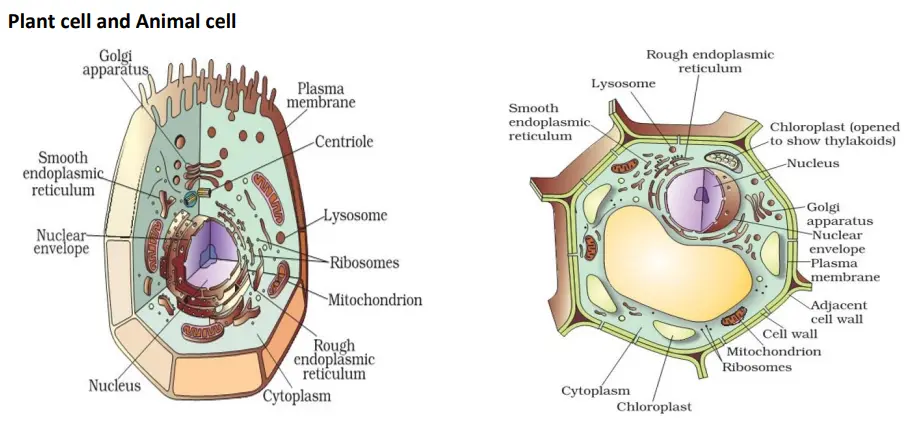
While all living things are made of cells, there are fundamental differences between Plant Cells and Animal Cells. These differences reflect how these organisms live: plants make their own food through photosynthesis and need a rigid structure to grow tall, while animals must move to find food and require flexible bodies. For UPSC, understanding these Organelles (the 'organs' of the cell) is key to biology.
1. The Core Components of All Cells
Before looking at the differences, remember that both types share major features:
Nucleus: The 'brain' or control center containing DNA.
Cytoplasm: The jelly-like substance where all chemical reactions happen.
Cell Membrane: The 'security guard' that controls what enters and exits the cell.
Mitochondria: The 'powerhouse' that produces energy (ATP).
2. Plant Cells: The Solar-Powered Factories
Plant cells have three unique features that animal cells lack:
1. Cell Wall: A tough, outer layer made of Cellulose. It provides protection and structural support, allowing plants to grow high without a skeleton.
2. Chloroplasts: Green organelles containing Chlorophyll. They capture sunlight to make food through Photosynthesis.
3. Large Central Vacuole: A huge 'storage tank' filled with water. When full, it pushes against the cell wall to keep the plant upright (turgidity).
3. Animal Cells: Flexible and Mobile
Animal cells are generally smaller and irregular in shape compared to the fixed, rectangular shape of plant cells.
No Cell Wall: This allows animal cells to take various shapes and allows for movement and muscle contraction.
Small Vacuoles: Animals have many tiny, temporary vacuoles used for storing waste or food, rather than one giant central one.
Centrioles: These are special structures involved in cell division, which are usually absent in higher plants.
4. Key Organelles to Remember
Mitochondria: Known as the Powerhouse of the cell. It performs cellular respiration to generate energy.
Ribosomes: Tiny factories where Proteins are made.
Endoplasmic Reticulum (ER): A network of 'highways' for transporting materials. Rough ER has ribosomes attached; Smooth ER does not.
Golgi Apparatus: The 'post office' that packages and labels proteins for delivery.
Lysosomes: The 'suicide bags' or waste disposal system (more common in animal cells).
| Feature | Plant Cell | Animal Cell |
|---|---|---|
| Cell Wall | Present (made of Cellulose) | Absent |
| Chloroplast | Present | Absent |
| Vacuole | One large central vacuole | Many small vacuoles |
| Shape | Fixed, Rectangular | Irregular, Circular |
| Energy Storage | Starch | Glycogen |
Prelims tips
- Cell Wall: Only in plants, fungi, and bacteria. Never in animals.
- Photosynthesis: Occurs in Chloroplasts (Plants only).
- Cellular Respiration: Occurs in Mitochondria (Both plants and animals).
- Protein Synthesis: Occurs in Ribosomes.
- Glycogen: Animals store energy as glycogen; plants store it as Starch.
Mains points
- Cell Specialization: In multicellular organisms, cells specialize (e.g., muscle cells have more mitochondria for energy).
- Bio-technology: Understanding cell organelles is vital for genetic engineering (like producing insulin in bacteria).
- Evolutionary Biology: The presence of DNA in mitochondria and chloroplasts supports the Endosymbiotic Theory of evolution.
- Metabolism: The interaction between Chloroplasts (converting light to chemical energy) and Mitochondria (converting chemical energy to ATP) is the cycle that supports all life on Earth.
Did you know?
- Mitochondria have their own DNA, separate from the cell's nucleus! Scientists believe they were once independent bacteria that were swallowed by larger cells millions of years ago.
- If a lysosome bursts, its digestive enzymes can eat the entire cell—that’s why they are called 'suicide bags'.
- Plants wilt when their large vacuoles lose water, causing the cell to lose its internal pressure (turgor).
Cell Structure and Organelles: The Microscopic Machinery
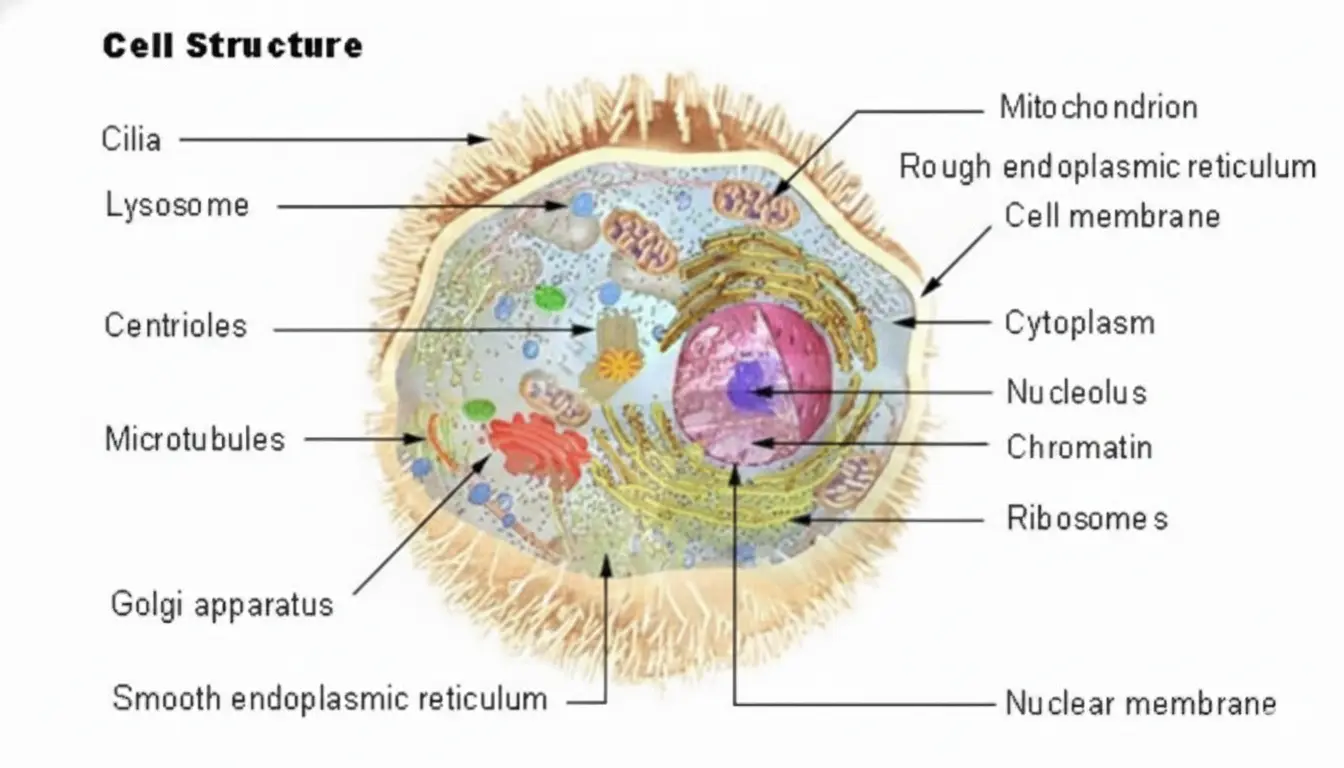
Cells are the smallest units capable of maintaining life and reproducing. While they may appear as simple sacs of fluid, they contain a complex world of Organelles—specialized structures that act like tiny organs. Each organelle is membrane-bound to ensure its chemical reactions do not interfere with others, allowing the cell to function as a highly efficient biological factory.
1. The Three Fundamental Parts of a Cell
Regardless of its specific job (like a blood cell or a nerve cell), almost every human cell has three main components:
1. Cell Membrane (Plasma Membrane): The outer boundary that holds the cell together and selectively allows materials to enter or exit.
2. Nucleus: Often called the 'Control Center', it contains the genetic material (DNA) that directs all cellular activities.
3. Cytoplasm: A jelly-like fluid that fills the space between the membrane and the nucleus. It serves as the 'floor' where organelles are located.
2. What are Cell Organelles?
Organelles are the living parts of the cell. Just as your body has a heart, lungs, and stomach, the cell has organelles to perform specific tasks. To maintain efficiency, these organelles are usually membrane-bound, keeping their internal chemical environments separate from the rest of the cytoplasm.
3. Key Organelles and Their Functions
Each organelle has a distinct shape and structure tailored to its function:
Mitochondria: The 'Powerhouse' of the cell. They convert nutrients (glucose) into energy (ATP) through cellular respiration.
Endoplasmic Reticulum (ER): A network of membranes used for transporting materials. Rough ER (with ribosomes) synthesizes proteins, while Smooth ER (without ribosomes) creates lipids/fats.
Golgi Apparatus: The 'Post Office' of the cell. It modifies, sorts, and packages proteins for secretion or delivery to other organelles.
Ribosomes: Tiny structures that act as Protein Factories. They can be free-floating in the cytoplasm or attached to the ER.
Lysosomes: The 'Waste Disposal System'. They contain enzymes that break down waste materials and cellular debris. In extreme cases, they can digest the entire cell, earning the name 'Suicide Bags'.
Vacuoles: Storage sacs for food, water, or waste products.
4. Why are Cells Microscopic?
Most human cells are too small to see without a microscope. This small size is necessary because it allows nutrients to move in and waste to move out very quickly across the cell membrane. If a cell grew too large, it would starve or be poisoned by its own waste before materials could travel through its volume.
| Organelle | Function | Analogy |
|---|---|---|
| Nucleus | Directs cell activities | Control Center / CEO |
| Mitochondria | Energy production (ATP) | Powerhouse / Battery |
| Ribosomes | Protein synthesis | Factories |
| Golgi Apparatus | Packaging & Distribution | Post Office / Courier |
| Lysosomes | Digestion & Waste removal | Suicide Bag / Janitor |
Prelims tips
- Smallest Cell: Mycoplasma (PPLO).
- Largest Cell: Ostrich egg.
- Suicide Bags: Lysosomes (due to digestive enzymes).
- Energy Currency: ATP (Adenosine Triphosphate), produced in mitochondria.
- Nuclear Membrane: Eukaryotic cells have it; Prokaryotic cells (like bacteria) do not.
Mains points
- Cellular Basis of Disease: Many genetic disorders are caused by the malfunctioning of specific organelles (e.g., Mitochondrial diseases).
- Biotechnology: Manipulation of the nucleus (DNA) is the core of Genetic Engineering and Gene Therapy.
- Stem Cells: Understanding how a single cell differentiates into various specialized tissues is vital for regenerative medicine.
- Membrane Bound Organelles: The presence of these structures distinguishes higher organisms (Eukaryotes) from primitive ones (Prokaryotes), marking a major evolutionary step.
Did you know?
- The human body starts as just one single cell—a fertilized egg—which then divides into trillions of specialized cells.
- Red blood cells are unique because they lose their nucleus as they mature to make more room for oxygen-carrying hemoglobin!
- Lysosomes are so efficient that they can recycle damaged parts of the cell into new building blocks.
Cell Membrane and Cytoplasm: The Protective Border and Living Fluid
All living organisms are defined by their cellular boundaries. Whether a simple Prokaryote (like bacteria) or a complex Eukaryote (like humans), every cell relies on a Cell Membrane to control its internal environment and Cytoplasm to house its vital machinery. These structures ensure that the cell can breathe, eat, and maintain life functions.
1. Prokaryotes vs. Eukaryotes
Cellular life is organized into two main categories based on the structure of their nucleus:
Prokaryotes: Primitive cells (like bacteria and blue-green algae) that lack a defined nucleus. Their genetic material just floats in the cytoplasm.
Eukaryotes: Advanced cells (found in plants, animals, and fungi) that have a well-defined nucleus enclosed in a membrane.
Common Ground: Both types use a Cell Membrane to separate their internal 'living' parts from the outside world.
2. The Cell Membrane (Plasma Membrane)
Think of the cell membrane as a 'smart plastic bag' with tiny, selective holes. It is primarily composed of Phospholipids and Proteins.
Key Features:
Selective Permeability: It doesn't let everything in. The 'holes' are controlled by proteins that act as gates for specific molecules.
Composition: The Phospholipids form the flexible bag, while Proteins act as pumps and channels to move molecules in and out.
3. How Materials Move: Diffusion and Osmosis
The cell membrane uses physical laws to transport necessities like Oxygen and Water:
Diffusion: The movement of substances (like $CO_2$ and $O_2$) from an area of high concentration to an area of low concentration. No energy is required for this.
Osmosis: This is the specific term for the diffusion of water across a semi-permeable membrane. Water moves toward where there are more solutes (like salt or sugar) to balance the concentration.
4. Cytoplasm: The Living Fluid
The Cytoplasm is the jelly-like substance that fills the space between the nucleus and the cell membrane.
Internal Content: It contains the 'organ cells' or Organelles, which perform specific functions (like energy production or waste management).
Protoplasm vs. Cytoplasm: Historically, scientists used the term 'protoplasm' for the entire living content of the cell. Today, 'cytoplasm' specifically refers to the fluid outside the nucleus.
Function: It acts as a medium for chemical reactions and helps the cell maintain its shape.
| Process | What Moves? | Direction |
|---|---|---|
| Diffusion | Gases (O2, CO2) | High to Low Concentration |
| Osmosis | Water Molecules | Toward higher solute concentration |
| Active Transport | Ions/Nutrients | Against concentration (Uses Energy) |
Prelims tips
- Prokaryotes: No membrane-bound nucleus; examples: Bacteria, Mycoplasma.
- Eukaryotes: Membrane-bound nucleus; examples: Plants, Animals, Amoeba.
- Plasma Membrane: Made of Proteins + Lipids.
- Osmosis: Movement of solvent (water) only.
- Diffusion: Movement of solute or gas particles.
Mains points
- Cellular Integrity: The cell membrane is the first line of defense against pathogens and environmental toxins.
- Prokaryotic Research: Studying prokaryotes is vital for understanding antibiotic resistance and the origins of life on Earth.
- Medical Application: Understanding osmosis is crucial for medical treatments like Dialysis (for kidney failure) and IV fluid balance.
- Evolution: The transition from prokaryotic to eukaryotic cells (Endosymbiosis) is one of the most significant events in the history of biological complexity.
Did you know?
- The cell membrane is so thin that it would take about 10,000 of them stacked together to equal the thickness of a single sheet of paper!
- Bacteria (Prokaryotes) are the oldest form of life on Earth, existing for over 3.5 billion years.
- If a cell is placed in very salty water, it will shrink because of Osmosis as water leaves the cell to balance the salt outside.
The Control Center and Storage: Nucleus, Vacuoles, and Lysosomes
The Nucleus serves as the cell's 'brain,' housing the genetic blueprint of life, while Vacuoles and Lysosomes handle storage and waste management. Understanding these organelles is fundamental for UPSC as they explain how cells grow, store energy, and protect themselves from damage through internal 'recycling' systems.
1. The Nucleus: The Cell's Brain
The nucleus is the most critical organelle in a eukaryotic cell. It directs all activities including movement, metabolism, and reproduction.
Components of the Nucleus:
Nuclear Envelope: A double membrane that protects the nucleus. It is porous to allow communication with the rest of the cell.
Chromatin: A thread-like network of DNA, RNA, and proteins found when the cell is at 'rest'.
Chromosomes: During cell division, chromatin condenses into rod-shaped structures called chromosomes. These carry Genes, which are the hereditary units of life.
Nucleolus: A small, dense region inside the nucleus responsible for producing ribosomes. Larger nucleoli are found in cells that are very active in protein synthesis, like neurons.
2. Vacuoles: The Storage Units
Vacuoles are membrane-bound sacs filled with fluid. They act as storage containers for the cell.
In Plant Cells: They are very large, sometimes occupying up to 90% of the cell volume. They provide Turgidity (firmness) to the plant.
In Animal Cells: They are small, temporary, and used for storing nutrients or waste.
What do they store? Water, minerals, amino acids, sugars, organic acids, and proteins.
3. Lysosomes: The Waste Disposal System
Lysosomes are filled with powerful digestive enzymes. Their primary job is to keep the cell clean by breaking down 'trash' (bacteria, food particles, or worn-out organelles).
The 'Suicide Bags': If a cell is severely damaged or diseased, the lysosomes can burst. Their enzymes then digest the entire cell itself. This is a programmed process to protect the rest of the organism.
Defense Mechanism: They digest foreign materials like bacteria that enter the cell, acting as part of the cell's immune system.
| Organelle | Main Function | Key Feature |
|---|---|---|
| Nucleus | Control Center | Contains DNA / Genetic Info |
| Vacuole | Storage | Provides Turgidity in plants |
| Lysosome | Waste Disposal | Contains Digestive Enzymes |
Prelims tips
- Suicide Bag: Lysosome.
- Genetic Material: DNA in Chromosomes (Nucleus).
- Turgidity in plants: Maintained by large central Vacuoles.
- Chromosomes: Visible only during cell division.
- Prokaryotes: Lack a true nucleus and membrane-bound organelles like lysosomes.
Mains points
- Genetic Engineering: Understanding the nucleus is the foundation for CRISPR technology and gene editing.
- Cellular Aging: Malfunctioning lysosomes are linked to several aging diseases and neurodegenerative disorders.
- Agricultural Resilience: Vacuoles play a key role in how plants survive drought by regulating water storage and pressure.
- Apoptosis: The controlled 'bursting' of lysosomes is part of a natural process called 'Programmed Cell Death' which prevents cancer.
Did you know?
- Red blood cells in humans do not have a nucleus! This gives them more space to carry Oxygen.
- If you water a wilted plant, the vacuoles fill up with water, pushing against the cell walls to make the plant stand up straight again.
- Lysosomes were discovered by Christian de Duve, who won a Nobel Prize for his work on cell organelles.
Golgi Apparatus, Ribosomes, and Membrane Biogenesis
The cell functions like a city, where Ribosomes act as the factories producing proteins, and the Golgi Apparatus serves as the post office, packaging and shipping those products. These processes are not only vital for internal functions but also for Membrane Biogenesis—the constant repair and building of the cell's own protective borders.
1. Golgi Apparatus: The Cell’s Packaging Center
The Golgi apparatus (or Golgi complex) consists of a stack of flattened, membrane-bound sacs called Cisternae. It is usually located near the nucleus and the Endoplasmic Reticulum (ER).
Key Functions:
Processing & Packaging: It receives proteins and lipids from the ER, modifies them (making them more complex), and packages them into tiny bubbles called Vesicles.
Dispatch Center: These vesicles are either stored for later use or sent out of the cell to their specific destinations.
Lysosome Production: The Golgi apparatus is responsible for creating Lysosomes, which are the cell's digestive machines.
Plant Cells: While animal cells have one or few Golgi complexes, plant cells can contain hundreds of them.
2. Ribosomes: The Protein Factories
Ribosomes are small, dense structures made of RNA and proteins. They are the sites where the 'genetic code' from the nucleus is translated into actual Protein chains.
Why are they important?
Protein Synthesis: This is the primary function of all living cells. Without ribosomes, the cell cannot build enzymes, structural tissues, or hormones.
Location: They can be found floating freely in the cytoplasm or attached to the Rough Endoplasmic Reticulum (RER).
3. Membrane Biogenesis and Detoxification
The proteins made by ribosomes and the fats (lipids) made by the Smooth Endoplasmic Reticulum (SER) have critical roles in the cell's life cycle.
Membrane Biogenesis: This is the process of using proteins and lipids to build and repair the cell membrane. The ER and Golgi work together to ensure the cell's 'walls' are constantly maintained.
Enzymes and Hormones: Not all proteins are used for structures; many function as biological catalysts (enzymes) or chemical messengers (hormones).
Detoxification: The SER (Smooth ER) in liver cells plays a heroic role in detoxifying poisons and drugs, keeping the organism safe from toxins.
| Site of Synthesis | Product | Final Function |
|---|---|---|
| Ribosomes / Rough ER | Proteins | Membrane building, Enzymes, Hormones |
| Smooth ER | Lipids (Fats) | Membrane building, Detoxification |
| Golgi Apparatus | Complex Molecules | Packaging and Lysosome formation |
Prelims tips
- Membrane Biogenesis: Involves both Proteins (from RER) and Lipids (from SER).
- Detoxification: Primarily the function of the Smooth ER in liver cells.
- Lysosome Origin: Created by the Golgi Apparatus.
- Protein Synthesis: Also known as Translation.
- Cisternae: The flattened sacs that make up the Golgi body.
Mains points
- Cellular Logistics: The Golgi apparatus is a prime example of biological efficiency, ensuring that proteins reach their destination without errors (misfolding can cause diseases like Alzheimer's).
- Industrial Application: Understanding ribosomes and protein synthesis is the basis for Antibiotics; many antibiotics work by specifically shutting down bacterial ribosomes while leaving human ones alone.
- Health and Detoxification: Chronic drug or alcohol use can cause the SER in liver cells to expand, which is part of the body's attempt to handle increased toxic loads.
- Regenerative Medicine: Membrane biogenesis principles are being studied to create synthetic membranes for artificial organs and advanced drug delivery systems.
Did you know?
- The Golgi Apparatus is named after Camillo Golgi, an Italian biologist who first identified it in 1898 using a silver staining technique.
- Ribosomes are the only organelles found in both Prokaryotes (bacteria) and Eukaryotes (humans), showing how fundamental they are to life.
- The liver has an massive amount of Smooth ER because its main job is to filter and detoxify your blood.
Endoplasmic Reticulum and Mitochondria: Transport and Power
The cell relies on two massive systems for its survival: the Endoplasmic Reticulum (ER), which acts as a manufacturing and transport highway, and the Mitochondria, which serves as the energy plant. These organelles are unique because they provide the structural framework and the 'currency' (ATP) needed for every biological process in the human body.
1. Endoplasmic Reticulum (ER): The Cellular Highway
The ER is a vast network of membrane-bound tubes and sheets that stretches from the nuclear membrane to the plasma membrane.
Types of ER:
1. Rough Endoplasmic Reticulum (RER): It appears 'rough' because Ribosomes are attached to its surface. It is the primary site for Protein Synthesis.
2. Smooth Endoplasmic Reticulum (SER): It lacks ribosomes. It is specialized for the manufacture of Lipids (fats) and steroids.
Key Functions of ER:
Transport: It acts as a channel to move proteins between the cytoplasm and the nucleus.
Structural Support: It forms the internal skeleton framework that keeps the cell's shape.
Membrane Biogenesis: It produces the proteins and lipids needed to build the cell's own membrane.
Detoxification: In the liver, the SER helps neutralize poisons and drugs.
2. Mitochondria: The Powerhouse of the Cell
Mitochondria are rod-shaped organelles responsible for producing the energy the cell needs to perform its functions.
Why is it called a 'Powerhouse'?
ATP Production: It converts nutrients into ATP (Adenosine Triphosphate) through cellular respiration. ATP is the 'Energy Currency' of the cell; without it, biological work stops.
Mechanical Work: The energy stored in ATP is used for movement (mechanical work) and building new chemical compounds.
Unique Features:
Semiautonomous: They are 'strange' because they have their own DNA and Ribosomes. This means they can replicate and make their own proteins independently of the nucleus.
Double Membrane: They have two membranes; the inner one is deeply folded (cristae) to increase the surface area for energy production.
Absence: Mitochondria are absent in bacteria (Prokaryotes) and Red Blood Cells (RBCs) of mammals.
| Feature | Rough ER (RER) | Smooth ER (SER) |
|---|---|---|
| Ribosomes | Present | Absent |
| Main Product | Proteins | Lipids / Fats |
| Appearance | Granular/Rough | Smooth tubes |
| Primary Function | Protein transport & synthesis | Detoxification & fat synthesis |
Prelims tips
- Energy Currency: ATP.
- Semiautonomous Organelles: Mitochondria and Chloroplasts (both have own DNA).
- Membrane Biogenesis: Process of building cell membrane using ER products.
- RBC Exception: Mature mammalian RBCs lack a nucleus and mitochondria to maximize space for Oxygen.
- Detoxification: Major role of SER in the liver.
Mains points
- Endosymbiotic Theory: The fact that mitochondria have their own DNA suggests they were once independent bacteria that entered into a symbiotic relationship with larger cells.
- Mitochondrial Diseases: Genetic defects in mitochondrial DNA can lead to multi-system failures, often affecting the heart and brain.
- Clinical Detoxification: The role of SER in metabolizing drugs is a fundamental concept in pharmacology and drug-dose calculations.
- Cellular Efficiency: The folded inner membrane (cristae) of the mitochondria is a classic example of how biological structures maximize surface area to increase reaction rates.
Did you know?
- You inherit all your Mitochondrial DNA only from your mother!
- Muscle cells have significantly more mitochondria than skin cells because they need massive amounts of energy to move.
- If a cell is starving, it can actually digest its own ER to stay alive temporarily.
Plastids and the Detailed Comparison of Plant vs. Animal Cells
Plastids are specialized organelles found exclusively in plant cells, acting as the primary centers for food manufacture and storage. Like mitochondria, they possess their own genetic material, making them semi-autonomous. Understanding the intricate structural differences between plant and animal cells is a frequent area of focus in UPSC Biology, as it explains the diverse survival strategies of these two kingdoms.
1. Plastids: The Multi-Colored Organelles
Plastids are double-membrane organelles found only in plants and algae. They are classified based on their pigments and functions.
Types of Plastids:
1. Chromoplasts (Colored): These contain pigments like carotene and xanthophylls, giving vibrant colors to flowers and fruits to attract pollinators.
2. Chloroplasts (Green): A type of chromoplast containing Chlorophyll. These are the 'Kitchens of the Cell' where Photosynthesis takes place.
3. Leucoplasts (Colorless): These primarily serve as storage units for starch, oils, and protein granules.
Unique Features:
Self-Replication: Like mitochondria, plastids have their own DNA and Ribosomes, allowing them to divide independently within the cell.
Internal Structure: The internal organization consists of numerous membrane layers embedded in a material called the Stroma.
2. Advanced Comparison: Plant Cell vs. Animal Cell
While basic differences (like the cell wall) are well known, advanced structural variations define their biological complexity.
Key Structural Differences:
The Nucleus: In plants, the nucleus is often elliptical and pushed to the side by the large vacuole. In animals, it is typically rounded and central.
Mitochondria: Animals require more energy for movement, thus they have numerous mitochondria, whereas plants have fewer.
Cell Division: During division, animals use Centrioles to form 'amphiastral' spindles, while most plants lack centrioles and form 'anastral' spindles.
Cytokinesis: At the end of cell division, plants build a middle lamella (cell plate), while animal cells simply pinch inward through cleavage.
Survival in Water: Due to the rigid Cell Wall, plant cells do not burst in hypotonic (low salt) solutions, whereas animal cells may swell and burst.
3. Specialized Organelles
Lysosomes: Common in animals ('suicide bags'); very rare in plant cells.
Glyoxysomes: Specialized peroxisomes found in plants that convert lipids to carbohydrates; absent in animals.
Dictyosomes: In plants, the Golgi apparatus is simplified into many separate units called dictyosomes.
| Feature | Plant Cell | Animal Cell |
|---|---|---|
| Nucleus Shape | Elliptical | Rounded |
| Centrioles | Absent (usually) | Present |
| Lysosomes | Rare | Common |
| Energy Storage | Starch | Glycogen |
| Junctions | Plasmodesmata | Gap/Tight Junctions |
Prelims tips
- Semiautonomous organelles: Mitochondria & Plastids (Chloroplasts).
- Cell Wall: Prevents bursting in hypotonic solutions.
- Photosynthesis Site: Chloroplasts.
- Dictyosomes: The term used for Golgi bodies in plant cells.
- Plasmodesmata: Channels that connect adjacent plant cells.
Mains points
- Endosymbiotic Theory: The presence of DNA in Plastids supports the evolutionary link between bacteria and complex life.
- Food Security: Understanding Chloroplast function is fundamental to developing genetically modified crops (GMOs) that can perform better photosynthesis.
- Cellular Connectivity: In animals, cell-to-cell communication is via complex protein junctions, while plants use physical gaps in the cell wall (Plasmodesmata), reflecting their stationary vs. mobile lifestyles.
- Metabolism: Glyoxysomes in germinating seeds are crucial for converting stored fats into sugars, enabling growth before the plant can photosynthesize.
Did you know?
- Plastids are thought to have evolved from cyanobacteria that were taken in by a primitive eukaryotic cell billions of years ago.
- The reason leaves turn yellow or red in autumn is that chlorophyll breaks down, revealing the chromoplasts underneath.
- Plant cells are like little inflatable rooms; the high pressure inside them (turgor pressure) is what keeps them standing up!
Plastids and Detailed Comparison: Plant Cell vs. Animal Cell
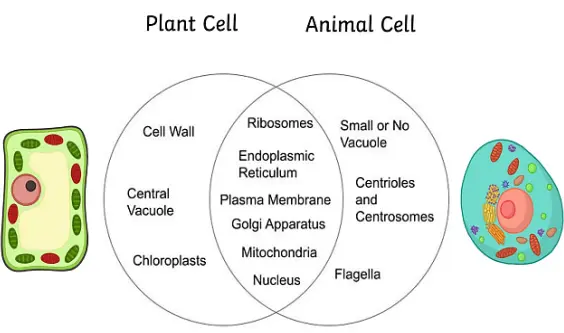
Plastids are specialized organelles found only in plants, acting as factories for food and storage. Understanding the structural nuances between Plant and Animal cells is a cornerstone of UPSC Biology, as it explains how plants stand rigid and make food while animals remain mobile and flexible.
1. Plastids: The Multi-functional Organelles
Plastids are double-membrane organelles found exclusively in plant cells. They are self-replicating because they contain their own DNA and Ribosomes.
Types of Plastids:
Chloroplasts: Green plastids containing Chlorophyll. They are the primary site for Photosynthesis (the kitchen of the cell).
Chromoplasts: Colored plastids that give bright colors to flowers and fruits, helping in pollination and seed dispersal.
Leucoplasts: Colorless plastids used for storing nutrients like starch, oils, and proteins.
2. Structural Dynamics
Beyond just the cell wall, several internal differences define these two types of cells. For instance, plant cells contain Glyoxysomes to convert fats into sugars, which are absent in animals. Conversely, animal cells rely on Lysosomes for waste management, which are rare in plants.
Survival in Solutions
A major difference is how they react to water. When placed in a Hypotonic solution (pure water), an animal cell will swell and burst because it lacks a boundary. A plant cell will become firm (turgid) but will not burst because the rigid cell wall provides counter-pressure.
| Feature | Plant Cell | Animal Cell |
|---|---|---|
| Nucleus | Elliptical (oval) in shape | Rounded in shape |
| Mitochondria | Fewer in number | Numerous (high energy demand) |
| Reaction to Water | Do not burst in hypotonic solutions | Usually burst in hypotonic solutions |
| Centrioles | Absent (except in lower plants) | Present |
| Spindle Type | Astral type (no centrioles) | Amphiastral type |
| Golgi Apparatus | Consists of separate units (Dictyosomes) | Consists of a single complex |
| Lysosomes | Rarely present | Commonly present |
| Glyoxysomes | Present (converts fat to sugar) | Absent |
| Inorganic Crystals | Occur inside the cell | Usually do not occur |
| Cell Connectivity | Through Plasmodesmata channels | Through various membrane junctions |
| Cytokinesis | By middle lamella (cell plate) | By cleavage (furrowing) |
Prelims tips
- Semiautonomous: Mitochondria and Plastids (have their own DNA).
- Dictyosomes: Plant version of Golgi Bodies.
- Cleavage vs. Cell Plate: Animals divide by pinching (cleavage); plants build a wall (cell plate).
- Starch vs. Glycogen: Plants store energy as starch; animals as glycogen.
Mains points
- Cellular Adaptations: The rigid cell wall and large vacuole are evolutionary adaptations that allow plants to remain stationary and withstand environmental osmotic pressure.
- Energy Efficiency: Animal cells possess more mitochondria due to the high metabolic cost of locomotion and complex nervous system functions.
- Genetic Engineering: Understanding Plasmodesmata and Cell Walls is crucial for developing transgenic plants that are resistant to viral infections.
- Endosymbiosis: The distinct DNA in plastids and mitochondria provides evidence for the origin of complex life from primitive bacteria.
Did you know?
- Plant cells use Plasmodesmata—tiny bridges through their cell walls—to talk to their neighbors and share food!
- The reason plants stay standing even without bones is Turgor Pressure; the large vacuole pushes water against the cell wall like an inflated balloon in a cardboard box.
- Mitochondria and Plastids are 'cells within cells' because they have their own genetic blueprints (DNA).
Microorganisms: The Unseen World
Microorganisms are the oldest and most diverse inhabitants of Earth. While some cause diseases like polio or influenza, most are essential for life, aiding in decomposition, nitrogen fixation, and industrial processes. For UPSC, distinguishing between the four major groups and understanding the unique 'living-nonliving' bridge of Viruses is crucial.
1. Classification of Microorganisms
Microorganisms (microbes) are organisms so small they can only be seen with a microscope. The study of these life forms is called Microbiology. They are categorized into four primary groups:
Bacteria: Single-celled organisms with a simple structure (e.g., Lactobacillus).
Fungi: Can be single-celled (yeast) or multicellular (mushrooms/molds). They are saprophytic (feed on dead matter).
Protozoa: Single-celled animal-like organisms (e.g., Amoeba, Paramecium).
Algae: Plant-like organisms that perform photosynthesis (e.g., Spirogyra, Chlamydomonas).
2. Viruses: The Biological Paradox
Viruses are unique because they do not show signs of life until they enter a Host Cell (plant, animal, or bacterium).
Diseases: They cause the common cold, influenza (flu), coughs, and more serious conditions like Polio, Chicken Pox, and COVID-19.
Reproduction: They hijack the host's machinery to replicate themselves.
3. Bacteria: Earth's First Inhabitants
Bacteria appeared about 4 billion years ago and are the most abundant life forms.
Structure: They lack a defined nucleus. Their genetic info is kept in a single loop of DNA. Some also have a Plasmid (extra DNA circle).
Plasmids & Antibiotic Resistance: Plasmids often contain genes that help bacteria survive antibiotics, a major concern in modern medicine.
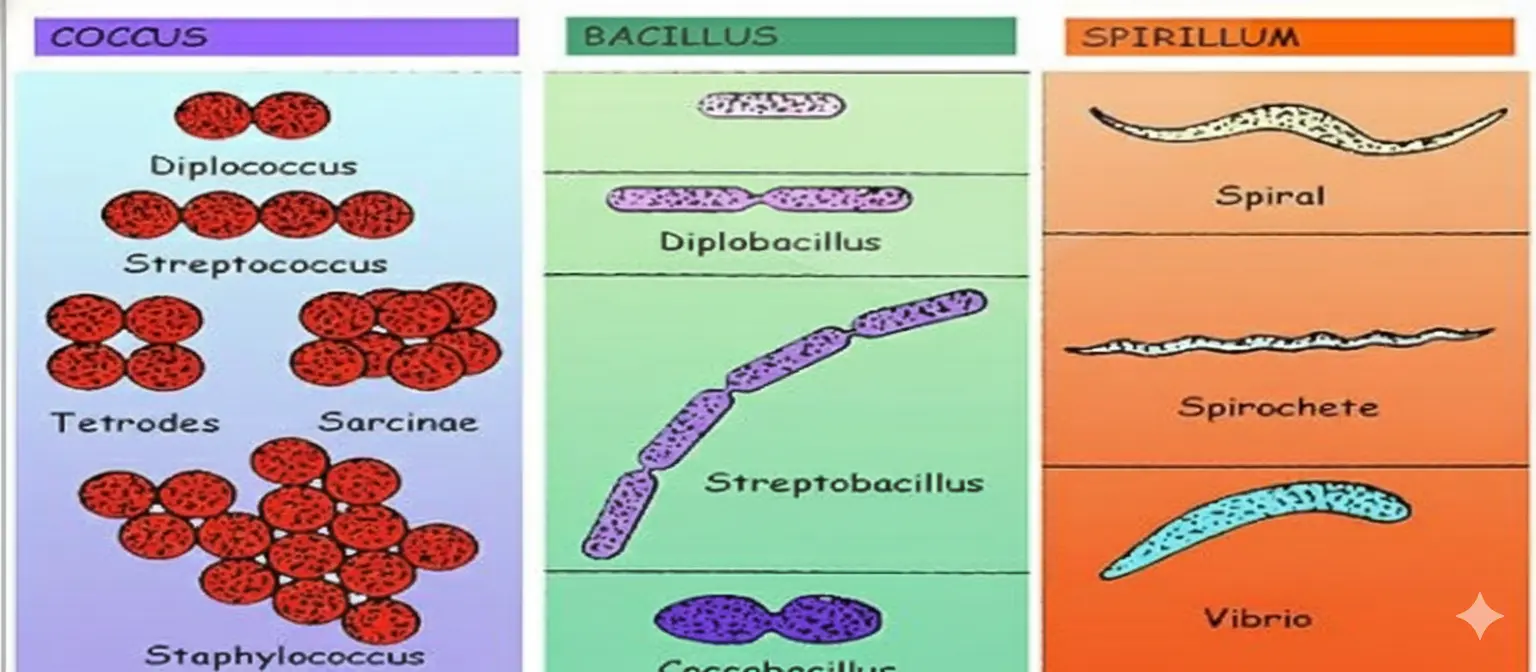
Shapes: Bacteria are classified by three main shapes:
1. Coccus: Spherical.
2. Bacillus: Rod-shaped.
3. Spirillum: Spiral.
4. Habitat and Lifestyle
Single vs. Multicellular: Bacteria and protozoa are mostly single-celled. Fungi and algae can be multicellular.
Solitary vs. Colonial: Amoebas live alone, whereas bacteria and fungi often form massive colonies to thrive.
| Type of Microbe | Diseases Caused |
|---|---|
| Virus | Common cold, Influenza, Polio, Chicken Pox |
| Bacteria | Typhoid, Tuberculosis (TB), Anthrax |
| Protozoa | Malaria, Dysentery |
| Fungi | Skin infections, Athlete's foot |
Prelims tips
- Viruses: Not included in the traditional Five Kingdom classification because they are acellular.
- Plasmid: Small, circular, double-stranded DNA molecule that is distinct from a cell's chromosomal DNA.
- Antibiotic Resistance: Often spread through the exchange of plasmids between bacteria.
- Cyanobacteria: Also known as blue-green algae, they are actually bacteria, not algae.
Mains points
- Public Health: The rise of Superbugs (Multi-drug resistant bacteria) due to the misuse of antibiotics is a global health emergency.
- Biotechnology: Bacteria are the workhorses of genetic engineering; plasmids are used as vectors to insert genes into other organisms.
- Evolution: The endosymbiotic theory suggests that mitochondria in our cells were once free-living bacteria.
- Industrial Use: Microbes play a vital role in sewage treatment, biogas production, and the fermentation industry (bread, alcohol).
Did you know?
- There are more bacteria in your mouth right now than there are people on the entire planet!
- Viruses are considered the 'bridge' between living and non-living things.
- Bacteria are used to make curd (Lactobacillus), antibiotics, and even clean up oil spills in the ocean.
Fungi and Viruses: Life on the Edge
Fungi and Viruses represent two very different biological strategies. While fungi are complex decomposers essential for nutrient cycling, viruses are the smallest infectious agents that exist on the boundary between living and non-living. For UPSC, understanding their structures and the diseases they cause in both humans and agriculture is vital.
1. Fungi: The Great Decomposers
Fungi range from microscopic single-celled organisms like yeast to large multicellular structures like mushrooms. Most live on land, particularly in soil or on decaying matter.
Ecological Role: As decomposers, they break down dead plant and animal matter, playing a critical role in the Carbon Cycle and recycling essential elements back into the soil.
Major Groups:
1. Multicellular Filamentous Moulds: Thread-like structures often seen on stale bread.
2. Macroscopic Filamentous Fungi: These produce large 'fruiting bodies' known as Mushrooms.
3. Single-celled Yeasts: Microscopic fungi used in baking and brewing.
Fungal Diseases:
In Plants: Mildews, rusts, scabs, and cankers (causing major economic loss in crops).
In Humans: Skin infections like Athlete’s foot, Ringworm, and Thrush.
2. Viruses: The Molecular Hijackers
Viruses are the smallest of all microbes, so tiny that millions can fit on a pinhead. They are neither plants, animals, nor bacteria.
Structure: A core of genetic material (DNA or RNA) protected by a protein coat called a Capsid. Some viruses also have an outer 'spikey' envelope.
The Host Cell: Viruses cannot multiply on their own. They must latch onto and enter a Host Cell, using its machinery to reproduce.
Taxonomic Position: They occupy a special place in biology because they are only 'alive' when inside a host.
3. Comparison of Life Strategies
Unlike bacteria or fungi, viruses are considered acellular (not made of cells). Fungi are Eukaryotic, meaning they have a complex cell structure with a nucleus, whereas viruses are simple infectious packages of genetic code.
| Feature | Fungi | Virus |
|---|---|---|
| Cell Type | Eukaryotic (Cellular) | Acellular (No cells) |
| Reproduction | Sexual/Asexual (Independent) | Only inside a host cell |
| Genetic Material | Both DNA and RNA | Either DNA or RNA |
| Antibiotic Effect | Not affected by antibiotics | Not affected by antibiotics |
| Beneficial Uses | Baking, Brewing, Decomposing | Gene therapy (modified viruses) |
Prelims tips
- Viruses: Not killed by antibiotics (antibiotics only work on bacteria).
- Fungal Infections: Often treated with antifungal creams or medicines.
- Acellular: Term used for viruses because they lack cell organelles.
- Mycology: The branch of biology concerned with the study of fungi.
Mains points
- Economic Impact: Fungal diseases in staples like wheat or rice can threaten national food security and lead to inflation in food prices.
- Viral Outbreaks: Understanding viral replication is key to developing Antiviral drugs and vaccines (like mRNA technology) for pandemics.
- Symbiosis: Fungi form 'Mycorrhiza' with plant roots, helping them absorb water and minerals—essential for sustainable agriculture.
- Biotechnology: Viruses are used as vectors in Gene Therapy to deliver healthy genes to patients with genetic disorders.
Did you know?
- The largest organism in the world is actually a fungus in Oregon that covers over 2,300 acres!
- Viruses are so small that they can even infect bacteria; these specialized viruses are called Bacteriophages.
- Penicillin, the world's first antibiotic, was derived from a fungus (mould) called Penicillium.
Bacterial Diseases: Pathogens, Toxins, and Resistance
Bacteria are ubiquitous single-celled organisms. While many are vital for health (like gut flora), pathogenic bacteria cause disease by releasing toxins or damaging tissues. For UPSC, it is essential to distinguish between bacterial and viral infections, as the treatment—antibiotics—is specific only to bacteria. The rise of Antimicrobial Resistance (AMR) is a critical global health concern linked to this topic.
1. Nature of Pathogenic Bacteria
Bacteria are diverse and highly adaptable. Pathogenic (disease-causing) bacteria trigger illnesses primarily through two methods:
Toxin Secretion: Bacteria release poisonous substances (toxins) that damage host cells.
Tissue Invasion: Direct damage to organs or systems by multiplying rapidly within the body.
2. Interaction with the Immune System
Viral-Bacterial Link: Often, a viral infection (like the flu) weakens the immune system. This allows 'opportunistic' bacteria, which might normally be harmless, to cause a secondary bacterial infection.
Immune Compromise: When the body's defenses are low, even 'good' bacteria can sometimes become pathogenic.
3. Treatment and the Challenge of Resistance
Antibiotics: These are medicines used to kill or inhibit the growth of bacteria. They are ineffective against viruses.
Antimicrobial Resistance (AMR): Overuse or incomplete courses of antibiotics allow stronger bacteria to survive and multiply. These 'superbugs' are resistant to standard treatments, making common infections potentially deadly.
4. Major Bacterial Diseases in Humans
Bacterial infections can affect various systems—from the respiratory tract to the nervous system:
Gastrointestinal: Cholera, Typhoid, Salmonella, E. coli infection (often spread through contaminated food/water).
Respiratory: Tuberculosis (TB), Diphtheria, Strep throat.
Nervous System: Bacterial Meningitis, Tetanus (lockjaw), Botulism.
Integumentary (Skin): Cellulitis.
Sexually Transmitted (STIs): Gonorrhoea, Syphilis.
Other: Lyme disease (spread by ticks), Urinary Tract Infections (UTI).
| Mode of Transmission | Diseases |
|---|---|
| Contaminated Food/Water | Cholera, Typhoid, Salmonella, Botulism |
| Airborne / Droplets | Tuberculosis (TB), Diphtheria, Strep throat |
| Direct Contact / STIs | Syphilis, Gonorrhoea |
| Wounds / Soil | Tetanus |
| Vectors (Ticks) | Lyme Disease |
Prelims tips
- Antibiotics: Only kill bacteria, NOT viruses or fungi.
- Tuberculosis (TB): Caused by Mycobacterium tuberculosis; primarily affects lungs.
- Typhoid: Confirmed by the Widal Test.
- AMR (Antimicrobial Resistance): A major topic for Science & Tech; refers to bacteria evolving to survive drugs.
Mains points
- Global Health Challenge: The rise of Multi-Drug Resistant TB (MDR-TB) poses a significant challenge to the 'End TB' campaign in India.
- One Health Approach: Recognizing the link between human health, animal health, and the environment is crucial for managing bacterial outbreaks like Anthrax.
- Ethical Medicine: Addressing the 'over-prescription' of antibiotics in outpatient care to mitigate the acceleration of AMR.
- Sanitation and Policy: Programs like Swachh Bharat Abhiyan are indirect but vital tools in reducing water-borne bacterial diseases like Cholera and Typhoid.
Did you know?
- Tetanus is caused by bacteria often found in soil; it's the toxin they produce that causes muscle spasms, not the 'rusty nail' itself.
- The Plague (Black Death), which wiped out millions in history, is a bacterial disease spread by fleas.
- Botulism toxin is one of the deadliest substances known, yet in tiny, controlled amounts, it is used in cosmetic procedures as Botox.
Viral Diseases: The Intracellular Hijackers
Viruses are unique pathogens that exist on the edge of life. Unlike bacteria, they cannot survive or reproduce on their own; they must hijack a Host Cell to replicate. Because they hide inside our own cells and lack their own metabolism, viral infections are notably immune to antibiotics, making prevention through vaccines our most effective tool.
1. How Viruses Multiply
Viruses are essentially 'genetic codes' (DNA or RNA) wrapped in a protein shell. Their life cycle follows a specific path of invasion:
Invasion: The virus attaches to a healthy host cell and injects its genetic material.
Replication: It hijacks the cell's 'machinery' (like ribosomes) to produce viral parts instead of human proteins.
Release: New viruses burst out of the cell, often destroying it in the process, to infect neighboring cells.
2. Dormancy and Recurrence
One of the trickiest aspects of viruses is Latency or dormancy. Some viruses can hide inside your cells without multiplying for weeks or even years.
Hidden Phase: A person might feel healthy while the virus is 'sleeping.'
Reactivation: If the immune system weakens, the virus starts multiplying again. This explains why infections like Shingles or Herpes can reappear long after the initial sickness.
3. Transmission and Treatment Challenges
Transmission: Viruses spread through Respiratory Droplets (airborne), direct contact with bodily fluids (blood/saliva), or vectors like mosquitoes (Dengue).
The Antibiotic Myth: Antibiotics do NOT work against viruses. Antibiotics target bacterial cell walls or metabolism, which viruses don't have. Treating a virus with antibiotics is useless and contributes to drug resistance.
Treatment: Doctors use Antiviral Drugs (which stop replication) or Vaccines (which train the immune system to recognize the virus).
4. Notable Viral Diseases
Viral diseases range from the mild to the life-threatening:
Respiratory: Common cold, Flu (Influenza), Coronavirus (COVID-19), Measles.
Hemorrhagic/Vector-borne: Dengue fever, Yellow fever.
Skin/Mucosa: Warts, Chickenpox, Shingles, Herpes.
Chronic/Systemic: HIV/AIDS, Hepatitis (A, B, C, etc.), Viral Meningitis.
| Mode | Mechanism | Examples |
|---|---|---|
| Airborne | Droplets from coughing/sneezing | Common Cold, Flu, COVID-19 |
| Body Fluids | Contact with blood, semen, or saliva | HIV/AIDS, Hepatitis B |
| Vector-borne | Bite of infected mosquitoes/insects | Dengue, Yellow Fever, Zika |
| Fecal-Oral | Contaminated food or water | Hepatitis A, Gastroenteritis |
Prelims tips
- Acellular: Viruses are not made of cells and don't have organelles like mitochondria or ribosomes.
- Genetic Material: A virus contains either DNA or RNA, never both.
- Antibiotics: Strictly for bacterial infections. Taking them for a cold/flu is medically incorrect.
- Vaccines: Preventive measure that helps the body produce antibodies before the real virus attacks.
Mains points
- Pandemic Preparedness: The rapid mutation of RNA viruses (like Influenza or COVID-19) makes them prone to causing global pandemics, requiring constant vaccine updates.
- Zoonotic Diseases: Many viral outbreaks (Ebola, COVID-19) originate in animals and jump to humans, highlighting the importance of the 'One Health' approach.
- Eradication Challenges: Unlike Smallpox (which was eradicated via vaccines), viruses with animal reservoirs (like Rabies or Ebola) are nearly impossible to fully eliminate.
- Biotechnology: The development of mRNA vaccines represents a major leap in using viral genetic code to trigger immunity without using a live virus.
Did you know?
- The word 'Virus' comes from the Latin word for 'poison'.
- Viruses are so small that you could fit about 500 million rhinoviruses on the head of a single pin.
- Not all viruses are bad; scientists use modified viruses in Gene Therapy to deliver good genes into human cells to cure genetic diseases.
Fungal and Protozoan Diseases: Complex Microscopic Pathogens
Unlike bacteria and viruses, Fungi and Protozoa are Eukaryotic organisms, meaning their cells are more similar to human cells. This complexity often makes them harder to treat without damaging the host's own cells. While fungal diseases often target the skin and respiratory system, protozoan diseases like Malaria are frequently spread through vectors like mosquitoes.
1. Fungal Diseases: Resilient Pathogens
Fungi are spore-producing organisms that thrive on organic matter. While millions of species exist, only a small fraction are pathogenic to humans.
Biological Shield: Fungi are hard to kill because they possess a thick cell wall (made of chitin) and a protected nucleus.
Overgrowth: Many fungi live naturally on the human body (like Candida). Disease occurs when the body's balance is disrupted, leading to 'overgrowth.'
Contagion: Several fungal infections, particularly skin-related ones, are contagious and spread through direct contact or shared items like towels.
2. Common Fungal Infections
Fungal diseases can be superficial (skin/nails) or systemic (internal organs):
Skin & Nails: Ringworm, Athlete’s foot, Jock itch, and Onychomycosis (nail infection).
Respiratory (Lungs): Pneumocystis pneumonia, Histoplasmosis, Aspergillosis, and Valley Fever.
Yeast Infections: Candidiasis, Thrush (oral yeast), and Vaginal yeast infections.
3. Protozoan Diseases: Mobile Invaders
Protozoa are versatile, single-celled organisms. They are highly mobile and can live in diverse habitats or act as parasites within human hosts.
Classification of Infectious Protozoa:
1. Sarcodina (Amoebas): Move using pseudopodia (false feet).
2. Mastigophora (Flagellates): Move using whip-like tails called flagella.
3. Ciliophora (Ciliates): Move using hair-like structures called cilia.
4. Sporozoa: Non-motile adult stages; often have complex life cycles (e.g., Plasmodium).
4. Transmission of Protozoa
Fecal-Oral Route: Spread through contaminated food or water (e.g., Amoebic dysentery).
Vector-borne: Transmitted by arthropods like mosquitoes or flies (e.g., Malaria via Anopheles mosquito).
| Disease | Protozoan Pathogen | Vector / Mode |
|---|---|---|
| Malaria | Plasmodium | Female Anopheles Mosquito |
| Amoebiasis | Entamoeba histolytica | Contaminated Food/Water |
| Kala-azar | Leishmania | Sandfly |
| Sleeping Sickness | Trypanosoma | Tsetse Fly |
Prelims tips
- Eukaryotic: Both Fungi and Protozoa have a nucleus (unlike Bacteria).
- Chitin: The material that makes up the fungal cell wall.
- Vectors: Insects like Sandflies (Kala-azar) and Mosquitoes (Malaria) are critical for protozoan transmission.
- Opportunistic Infections: Fungal diseases like Candidiasis are common in patients with weakened immunity (e.g., HIV/AIDS).
Mains points
- Antifungal Resistance: Similar to AMR in bacteria, the emergence of multi-drug resistant fungi (like Candida auris) is a growing clinical threat.
- Vector Control: Public health policies in India focus heavily on controlling vectors (Sandflies/Mosquitoes) to eliminate protozoan diseases like Kala-azar and Malaria.
- Climate Change: Rising temperatures and changing rainfall patterns are expanding the habitats of vectors and soil-based fungi, leading to outbreaks in new regions.
- Zoonosis: Many protozoan parasites have complex life cycles involving both human and animal hosts, requiring a 'One Health' strategy for eradication.
Did you know?
- Fungal spores are everywhere—you are likely breathing them in right now, but a healthy immune system keeps them from growing!
- The protozoan Amoeba gets its name from the Greek word 'amoibe,' meaning change, because of its constantly shifting shape.
- Valley Fever is caused by fungi that live in the soil of dry regions like the Southwestern US and parts of Mexico.
Helminths and Friendly Microbes: The Dual Nature of Microorganisms
While we often associate microbes with disease, they are a 'double-edged sword.' Helminths (parasitic worms) cause significant health burdens globally through contaminated water, yet trillions of other microbes form our Microbiome, essential for digestion and immunity. From the discovery of Penicillin to the fermentation of bread, microorganisms are cornerstones of human survival and industry.
1. Helminthic Diseases: The Macro-Parasites
Helminths are multicellular parasitic worms. Unlike bacteria or viruses, adult helminths are often visible to the naked eye. However, they are studied in microbiology because their eggs and larvae are microscopic and are the primary source of infection.
Transmission: Most infections occur via the fecal-oral route, primarily by consuming water or food contaminated with eggs or larvae.
The Three Main Groups:
1. Flatworms (Platyhelminthes): Includes flukes and tapeworms.
2. Roundworms (Nematodes): Can cause infections in the intestines or lymphatic system (e.g., Ascaris).
3. Thorny-headed worms (Acanthocephalans): Complex parasites that reside in the gastrointestinal tract.
2. Friendly Microorganisms: Our Biological Allies
Not all microbes are pathogens. Many contribute to human welfare through food production and health maintenance.
A. Food Industry & Fermentation
Curd Making: Lactobacillus bacteria turn milk into curd by producing lactic acid.
Baking: Yeast ($Saccharomyces$ $cerevisiae$) respires to release $CO_2$ bubbles, which cause dough to rise. This is vital for bread, pastries, and cakes.
Alcohol Production: Yeast converts natural sugars (from grains or fruits) into alcohol. This process is called Fermentation, discovered by Louis Pasteur.
3. Medicinal Use: The Antibiotic Revolution
Microbes are also used to fight other microbes. Antibiotics are chemicals produced by certain fungi or bacteria that kill or inhibit the growth of pathogenic bacteria.
Major Discoveries: Alexander Fleming discovered the first antibiotic, Penicillin, from a mold (fungus).
Common Examples: Streptomycin, Tetracycline, and Erythromycin.
Key Reminder: Antibiotics are ineffective against viruses (Cold/Flu).
4. The Human Microbiome
Your body is an ecosystem. Trillions of 'good' microbes live in your gut and on your skin. They:
Help digest complex fibers.
Produce essential vitamins (like Vitamin K).
Occupy space to prevent 'bad' bacteria from settling in.
| Microbe | Application | Output/Benefit |
|---|---|---|
| Lactobacillus | Dairy Industry | Milk to Curd |
| Yeast | Baking/Brewing | Bread (CO2), Alcohol (Ethanol) |
| Penicillium (Fungus) | Medicine | Penicillin (Antibiotic) |
| Gut Bacteria | Digestion | Vitamin Production & Immunity |
Prelims tips
- Louis Pasteur: Discovered Fermentation and Pasteurization.
- Alexander Fleming: Discovered Penicillin (1928).
- Fermentation: Anaerobic process (without oxygen) where yeast converts sugar to alcohol.
- Antibiotics: Derived from bacteria/fungi; target bacterial structures like cell walls.
- Helminths: Not always microscopic as adults, but categorized under microbiology due to their larvae/eggs.
Mains points
- Public Health: Soil-Transmitted Helminths (STH) are a major focus of India's 'National Deworming Day' to improve child nutrition and cognitive development.
- Industrial Biotechnology: Large-scale fermentation is the basis for the production of biofuels, vitamins, and life-saving drugs.
- Antibiotic Policy: The 'Red Line Campaign' in India aims to prevent the misuse of antibiotics and curb the rise of superbugs.
- Ecological Balance: Microbes are the primary decomposers in every ecosystem; without them, the global Biogeochemical Cycles (Carbon, Nitrogen) would collapse.
Did you know?
- You actually have more microbial cells in your body than human cells!
- Penicillin was discovered by accident when Alexander Fleming noticed that mold on a Petri dish killed the bacteria surrounding it.
- Without microbes, the Earth would be covered in dead plants and animals, as there would be nothing to decompose them.
Vaccines, Nitrogen Fixation, and Plant Physiology
The survival of life on Earth depends on microscopic and molecular processes. Vaccines utilize the body's own defense mechanisms to prevent deadly diseases, while Biological Nitrogen Fixers enrich the soil to support plant growth. Plant Physiology ties these together by studying the vital functions—like photosynthesis and respiration—that allow plants to thrive and sustain the food chain.
1. Vaccines: Training the Immune System
A vaccine is a biological preparation that provides active acquired immunity to a particular infectious disease.
How it Works: When a dead or weakened microbe enters the body, the immune system produces Antibodies. These antibodies 'remember' the invader. If the real disease-carrying microbe attacks later, the body recognizes and destroys it immediately.
Historical Milestone: Edward Jenner discovered the first vaccine (for Smallpox) in 1798. This discovery eventually led to the global eradication of the disease.
Preventable Diseases: Cholera, Tuberculosis (TB), Smallpox, and Hepatitis.
2. Increasing Soil Fertility: Biological Nitrogen Fixers
Plants need nitrogen to grow, but they cannot absorb it directly from the air (where it is most abundant).
The Fixers: Certain bacteria (like Rhizobium) and Blue-Green Algae (Cyanobacteria) can take atmospheric nitrogen and convert it into compounds that plants can use.
Benefit: This process enriches the soil naturally without the need for chemical fertilizers. These microbes are known as Biological Nitrogen Fixers.
3. Plant Physiology: The Inner Workings of Plants
Plant physiology is the sub-discipline of Botany that studies how plants function internally. It looks at the chemical and physical processes that occur in the life of a plant.
Core Processes Studied:
1. Photosynthesis: How plants use sunlight to manufacture food from CO2 and water.
2. Mineral Nutrition: How plants absorb and utilize essential nutrients from the soil.
3. Respiration: How plants break down food to release energy for growth.
4. Transportation: The movement of water through the Xylem and food through the Phloem.
5. Plant Growth & Development: How plants respond to hormones and environmental signals like light and gravity.
| Process | Description | UPSC Significance |
|---|---|---|
| Photosynthesis | Conversion of light energy to chemical energy. | Basis of food security & Carbon cycle. |
| Transpiration | Loss of water vapor from leaves. | Cooling effect & Water cycle. |
| Nitrogen Fixation | Converting N2 gas into nitrates. | Sustainable agriculture & Soil health. |
| Respiration | Breaking down glucose for energy. | Essential for plant survival & growth. |
Prelims tips
- Smallpox: The first human disease to be officially eradicated worldwide through vaccination.
- Cyanobacteria: Also called Blue-Green Algae; they are vital nitrogen fixers found in paddy fields.
- Xylem vs Phloem: Xylem carries water/minerals; Phloem carries food (glucose).
- Antibodies: Proteins produced by the immune system in response to vaccines or infections.
Mains points
- Public Health Policy: India's 'Universal Immunization Programme' (UIP) and 'Mission Indradhanush' aim to ensure full vaccination coverage for children and pregnant women.
- Sustainable Agriculture: The use of Bio-fertilizers (Nitrogen fixers) is a critical component of Zero Budget Natural Farming (ZBNF) and organic farming policies.
- Climate Change: Studying Plant Physiology helps in developing drought-resistant and heat-tolerant crop varieties, essential for future food security.
- Immunization Ethics: The debate over vaccine equity and misinformation remains a key challenge in global health governance.
Did you know?
- The first vaccine was actually developed using the relatively harmless 'cowpox' virus to protect humans against the deadly 'smallpox'!
- Pulse crops (like lentils and peas) are often planted by farmers to replenish soil nitrogen naturally because of the bacteria in their roots.
- Plants can sense gravity! This is a physiological process called Gravitropism, which tells roots to grow down and stems to grow up.
Plant Anatomy: The Root System
The root is the essential underground anchor of a plant, evolved to absorb water and nutrients while providing physical stability. From the Radicle of a seed to the complex internal structures of Monocots and Dicots, the root system is a masterpiece of biological engineering. For UPSC, understanding the structural differences between these root types is crucial for identifying plant families and their growth patterns.
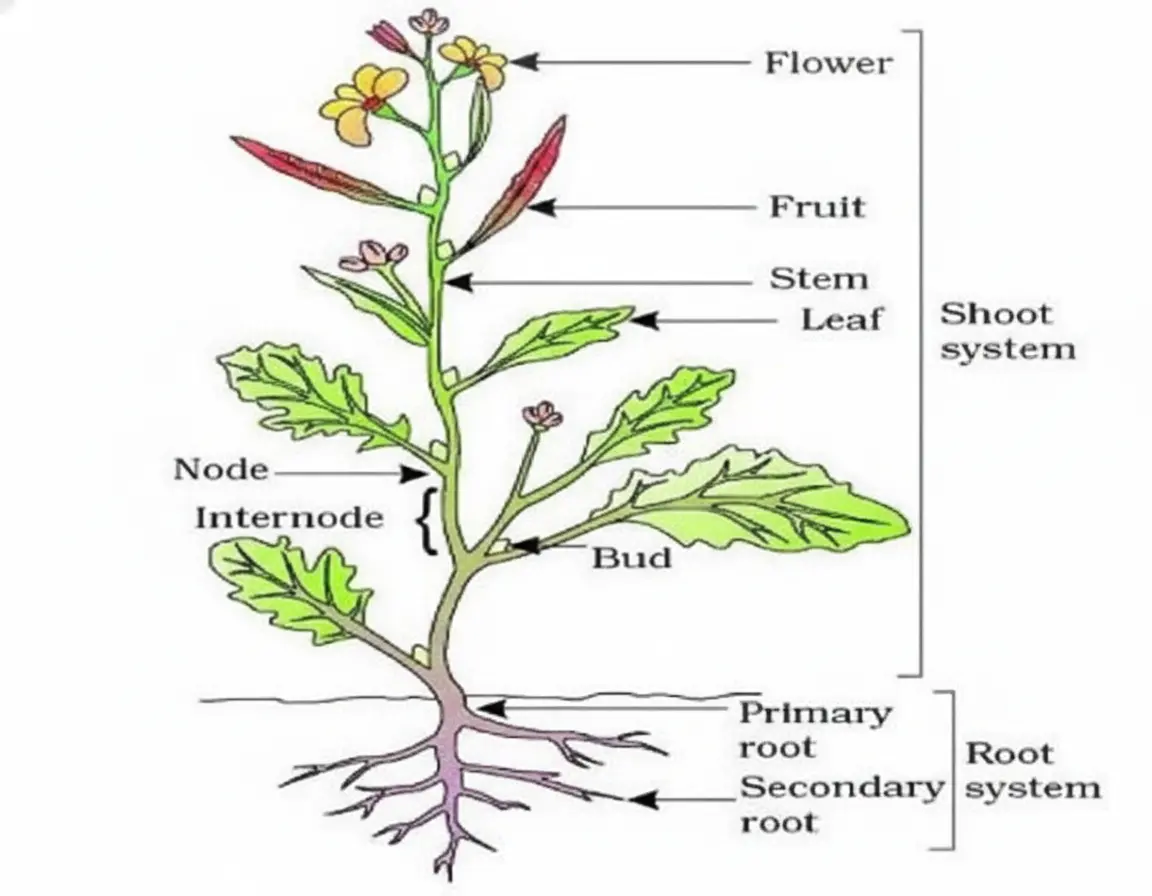
1. Anatomy of the Root
A root is the descending, non-green part of the plant. Unlike the stem, it lacks nodes, internodes, and leaves. It grows toward the soil (positive geotropism).
Origin: The first structure to emerge from a seed coat is the Radicle. This develops into the primary root.
Key Functions:
1. Absorption: Pulling water and inorganic nutrients from the soil.
2. Anchorage: Securing the plant body firmly in the ground.
3. Storage: Acting as a reservoir for food and nutrients (e.g., carrots, sweet potatoes).
2. Monocot vs. Dicot Roots: Structural Comparison
Plants are classified into Monocots (one seed leaf) and Dicots (two seed leaves). Their roots show distinct internal differences:
A. The Vascular System (Xylem and Phloem)
Dicot: Fewer vascular bundles (usually 2 to 6). The xylem vessels are angular in shape.
Monocot: Numerous vascular bundles (often 8 to 46). The xylem vessels are oval or rounded.
B. The Pith and Growth
Pith: This is the central tissue. In Dicots, the pith is very small or absent. In Monocots, the pith is well-developed.
Secondary Growth: Only Dicot roots undergo secondary growth (thickening over time) through the formation of vascular cambium and cork. Monocot roots do not show secondary growth.
C. Protective Layers
Casparian Strips: These are waxy bands in the endodermis that regulate water flow. They are prominent in Dicots but only visible in the young roots of Monocots.
Passage Cells: These thin-walled cells that allow water through the endodermis are present in Monocots but generally absent in Dicots.
| Feature | Dicot Root | Monocot Root |
|---|---|---|
| Vascular Bundles | Few (2-6) | Many (Polyarch, 8-46) |
| Pith | Reduced or Absent | Well-developed |
| Secondary Growth | Present | Absent |
| Xylem Vessel Shape | Angular | Oval or Rounded |
| Cortex | Narrow | Wide |
| Pericycle | Produces lateral roots & cambium | Produces only lateral roots |
Prelims tips
- Radicle: The origin of the root system.
- Polyarch: A term used for monocot roots having many xylem bundles.
- Secondary Growth: Absent in Monocots; this is why monocots like grass or wheat don't become thick woody trees.
- Casparian Strips: Made of Suberin, they force water into the living cells of the root.
Mains points
- Agricultural Productivity: Understanding root depth and surface area (root hairs) is vital for developing drought-resistant crop varieties.
- Soil Conservation: The extensive root systems of grasses (monocots) are essential for preventing soil erosion by binding soil particles together.
- Secondary Growth: The presence of secondary growth in dicots allows for the development of perennial woody shrubs and trees, contributing to forest carbon sequestration.
- Symbiosis: Root structures are the primary site for Mycorrhizal and Rhizobial associations, which are key to sustainable organic farming.
Did you know?
- The Root Cap at the tip of the root is like a tiny hard hat—it protects the delicate growing tissue as the root pushes through rough soil.
- Roots 'breathe' too! They need oxygen from the air spaces in the soil. This is why plants can die in over-watered soil—they literally drown.
- Some roots, like those of Mangroves (Pneumatophores), grow upwards out of the water to catch oxygen from the air.
Plant Vascular Tissues and the Stem System
The survival of a vascular plant depends on its internal transport system, consisting of Xylem and Phloem, housed within the Stem. While the stem provides the structural framework and connects the roots to the leaves, the vascular tissues act as the plant's 'circulatory system,' moving water up and food in every direction.
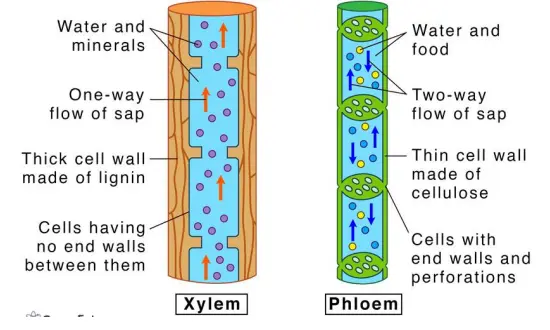
1. The Transport System: Xylem vs. Phloem
Plants have specialized complex permanent tissues to transport materials. These are organized into vascular bundles.
A. Xylem: The Water Highway
Function: Conducts water and dissolved minerals from the roots to the leaves.
Flow: Unidirectional (only upwards).
Composition: Tracheids, vessels, xylem parenchyma, and xylem fibers.
Vitality: Mostly dead tissue (only xylem parenchyma is living). This provides the structural strength needed for wood.
B. Phloem: The Food Distributor
Function: Transports prepared food (sugar) from leaves to all other parts of the plant.
Flow: Bidirectional (up and down depending on need).
Composition: Sieve tubes, companion cells, phloem parenchyma, and phloem fibers.
Vitality: Mostly living tissue (only phloem fibers are dead).
2. The Stem: The Supporting Axis
The stem is the ascending part of the plant axis that develops from the Plumule of the embryo.
Key Characteristics:
Direction: Positively phototropic (grows toward light) and negatively geotropic (grows away from earth).
Features: Divided into Nodes (where leaves grow) and Internodes (the space between nodes).
Growth: Contains terminal buds at the tip for height and axillary buds for branches.
3. Functions and Economic Importance
The stem is more than just a support beam; it is a vital organ for survival and human economy.
Biology: Supports the canopy, conducts nutrients, and even performs photosynthesis in green stems. Thorns (modified stems) protect the plant and reduce water loss (transpiration).
Economic Use:
Food: Sugarcane (sugar), Bamboo, and Asparagus (vegetables).
Spices: Cinnamon is actually the bark of a stem.
Medicine: Quinine (anti-malarial) and Camphor are extracted from stem barks.
| Feature | Xylem | Phloem |
|---|---|---|
| Function | Water & Mineral transport | Food & Organic solute transport |
| Direction of Flow | Unidirectional (Upward) | Bidirectional (Both ways) |
| Main Elements | Tracheids & Vessels | Sieve tubes & Companion cells |
| Living/Dead Status | Mostly Dead (Except Parenchyma) | Mostly Living (Except Fibers) |
| Location | Center of the vascular bundle | Outer side of the vascular bundle |
Prelims tips
- Plumule: The origin of the stem system.
- Sieve Tubes: The primary conducting element of Phloem (lacks a nucleus at maturity).
- Tracheids/Vessels: Primary water conductors in Xylem.
- Phototropism: Stems grow toward light (positive); Roots grow away from it (negative).
- Membrane Biogenesis: In stems, cork cambium helps in the secondary growth (thickening) of dicots.
Mains points
- Agriculture: Girdling (removing a ring of bark/phloem) is used to study nutrient transport; it stops food reaching the roots, proving phloem's role.
- Forestry: The strength of timber is due to the lignified walls of dead xylem vessels, making it a crucial carbon sink and industrial resource.
- Food Security: Stems like potato (tubers) and onion (bulbs) are modified storage organs that are staple foods globally.
- Plant Adaptation: Stem modifications (thorns, tendrils, phylloclades) represent evolutionary strategies to survive in arid or competitive environments.
Did you know?
- The rings in a tree trunk that help us tell its age are actually layers of old Xylem tissue!
- In Cactus, the stem becomes thick and green to perform photosynthesis and store water, while the leaves turn into spines.
- Quinine, obtained from the bark of the Cinchona tree, was the first effective treatment for Malaria.
Leaf Structure and Modifications
The leaf is the primary site of photosynthesis and transpiration. Originating at the Node, it houses an Axillary Bud that can develop into a branch. To survive in diverse environments, leaves often undergo modifications, transforming into spines for protection, tendrils for support, or scales for storage.
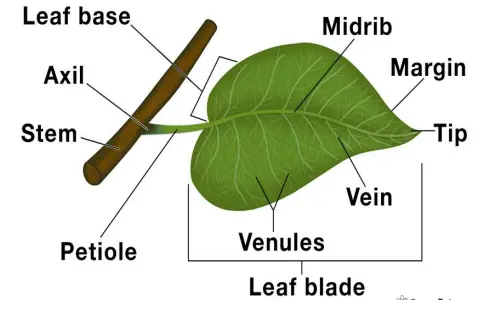
1. Anatomy of a Leaf
A typical leaf consists of a blade (lamina), a stalk (petiole), and a base. The most critical point of a leaf's anatomy is its origin at the node.
Axillary Bud: Located in the axil (the angle between the leaf and the stem), this bud has the potential to grow into a new branch or a flower.
2. Leaf Modifications
When a leaf changes its form to perform functions other than photosynthesis, it is called modification.
A. Leaf Tendrils
Description: The entire leaf or a part of it transforms into a coiled, wire-like structure.
Function: Helps weak-stemmed plants climb for better sunlight.
Example: Wild pea (Lathyrus aphaca).
B. Leaf Spines
Description: Leaves or leaflets turn into sharp, pointed structures.
Function: Reduces water loss (transpiration) and protects the plant from grazing animals.
Example: Opuntia (Cactus), Aloe, Argemone.
C. Leaf Scales
Description: Leaves become thin, dry, and membrane-like.
Function: To protect delicate axillary buds (as in Ficus) or to store food and water (as in Onion).
Example: Onion, Ruscus, Ficus.
| Modification | Primary Function | Common Examples |
|---|---|---|
| Tendrils | Support and Climbing | Wild Pea (Lathyrus) |
| Spines | Defense & Water conservation | Cactus, Aloe, Argemone |
| Scales | Protection & Storage | Onion, Ficus, Ruscus |
| Phyllode | Photosynthesis (Petiole modified) | Australian Acacia |
Prelims tips
- Axillary Bud: A key identifying feature of a leaf; it is found in the angle between the stem and petiole.
- Transpiration: Mostly occurs through Stomata on the leaf surface.
- Opuntia: The stem is modified into a Phylloclade (green & fleshy) and leaves into spines.
- Venation: Monocots usually have parallel venation, while Dicots have reticulate (net-like) venation.
Mains points
- Adaptive Strategies: Leaf modifications like spines and scales are evolutionary responses to xeric (dry) conditions, helping plants like cacti survive in arid climates.
- Agricultural Impact: Understanding leaf area and stomatal density is vital for crop scientists aiming to increase photosynthetic efficiency and water-use productivity.
- Economic Botany: Modified leaves like onion scales are major global food staples, while others provide essential oils, medicines, and fibers.
- Carbon Sequestration: The leaf is the primary organ responsible for the global carbon sink, converting atmospheric $CO_2$ into biomass.
Did you know?
- In Cactus, the green part you see is actually the stem; the true leaves are the needles (spines) to prevent water from evaporating in the desert heat.
- Onion rings are actually fleshy scale leaves that store food for the plant to use later.
- Some leaves are carnivorous! The Venus Flytrap has modified leaves that act as a jaw to catch insects for nitrogen.
The Flower: Reproductive Anatomy and Function
The flower is the reproductive powerhouse of a plant, representing a specialized branch of limited growth. Its primary mission is Sexual Reproduction, leading to the formation of seeds and fruits. The scientific study of flowers is known as Anthology. Understanding its four structural layers—Sepals, Petals, Stamens, and Carpels—is essential for grasping how life continues in the plant kingdom.
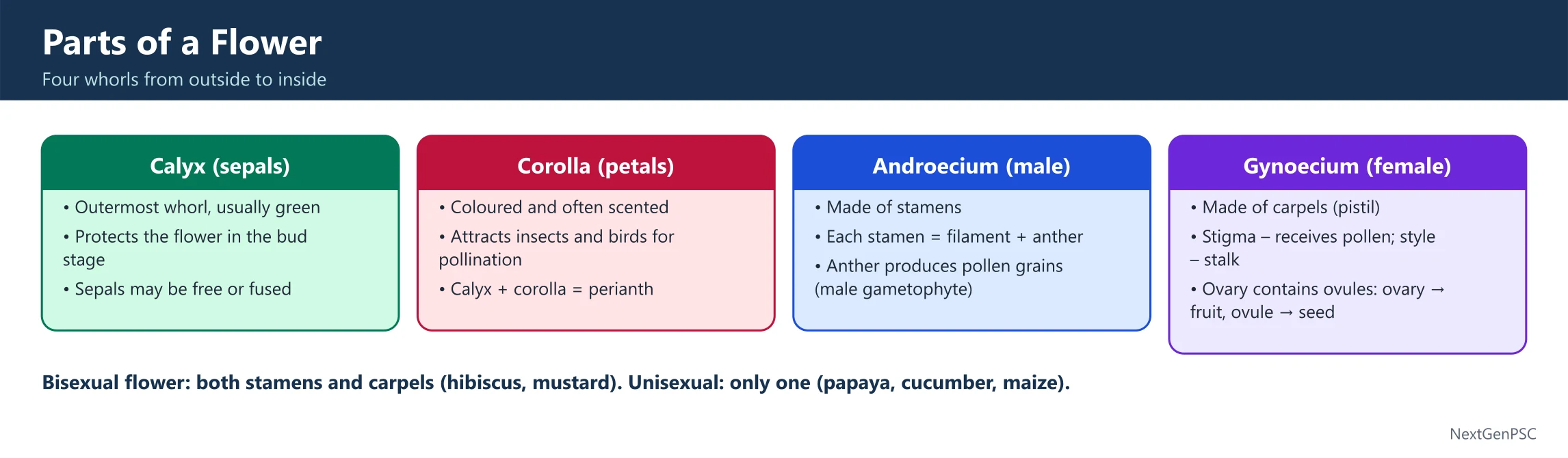
1. Structural Layers of a Flower (Whorls)
A typical flower is organized into four distinct layers or 'whorls' attached to a base called the thalamus.
1. Sepals (Calyx): The outermost green, leaf-like structures that protect the flower in the bud stage.
2. Petals (Corolla): The brightly colored parts designed to attract pollinators like bees and butterflies.
3. Stamen (Androecium): The Male reproductive part. Each stamen consists of a stalk (filament) and a pollen-bearing tip (anther).
4. Carpel/Pistil (Gynoecium): The Female reproductive part. It consists of the Stigma (receives pollen), Style (tube), and Ovary (contains ovules/seeds).
2. Sexual Classification of Flowers
Flowers are categorized based on the presence of reproductive organs:
Bisexual (Perfect) Flowers: These contain both Androecium (male) and Gynoecium (female) organs. Example: Hibiscus, Mustard.
Unisexual (Imperfect) Flowers: These contain only one reproductive organ—either stamens or carpels. Example: Papaya, Watermelon.
Staminate: A unisexual flower with only male parts.
Pistillate: A unisexual flower with only female parts.
3. From Flower to Fruit
After Pollination (transfer of pollen to stigma) and Fertilization (fusion of male and female gametes):
The Ovary develops into the Fruit.
The Ovules inside the ovary develop into Seeds.
The petals and sepals usually wither and fall off.
| Organ | System Name | Components | Gender |
|---|---|---|---|
| Stamen | Androecium | Anther and Filament | Male |
| Carpel / Pistil | Gynoecium | Stigma, Style, and Ovary | Female |
| Petal | Corolla | Colorful blades | Non-reproductive |
| Sepal | Calyx | Green base leaves | Non-reproductive |
Prelims tips
- Anthology: Study of flowers.
- Pollination: Transfer of pollen from Anther to Stigma.
- Fruit vs Seed: Ovary becomes Fruit; Ovule becomes Seed.
- Essential Whorls: Androecium and Gynoecium (necessary for reproduction).
- Non-essential Whorls: Calyx and Corolla (supportive roles).
Mains points
- Food Security: Pollinators (bees, butterflies) are vital for the fertilization of flowers; their decline poses a significant threat to global agricultural output.
- Horticulture & Economy: The floriculture industry is a multi-billion dollar sector, providing livelihoods and contributing to India's export earnings.
- Evolutionary Biology: The transition to Angiosperms (flowering plants) allowed plants to colonize land more effectively due to the protection of seeds within fruits.
- Genetics: Mendel's laws of inheritance were discovered using the flowers of the garden pea plant, highlighting the flower's role as a primary site for genetic research.
Did you know?
- The Rafflesia is the world's largest flower—it can grow up to 3 feet across and smells like rotting meat to attract flies for pollination!
- Broccoli and Cauliflower are actually undeveloped flower buds that we eat as vegetables.
- Sunflowers are not actually 'one' flower; they are a cluster of hundreds of tiny individual flowers called florets.
Pollination: The Bridge to Fertilization
Pollination is the vital process of transferring pollen grains from the male Anther to the female Stigma. This act of biological 'couriering' is the prerequisite for fertilization, seed formation, and fruit development. Depending on the plant and environment, this can happen within a single flower or across different plants via wind, water, or animals.
1. Types of Pollination
Pollination is broadly categorized into two types based on the source of the pollen:
A. Self-Pollination (Autogamy)
Mechanism: Pollen from the anther is transferred to the stigma of the same flower or another flower on the same plant.
Advantage: It does not depend on external agents (like bees) and preserves the exact genetic traits of the parent plant.
Disadvantage: It leads to reduced genetic diversity over generations.
B. Cross-Pollination (Allogamy)
Mechanism: Pollen is transferred from the anther of one flower to the stigma of a flower on a different plant of the same species.
Advantage: Increases genetic variation, leading to stronger, more adaptable offspring.
Requirement: Requires external agents or 'pollinators' to carry the pollen.
2. Agents of Pollination
Plants use both non-living (abiotic) and living (biotic) agents to ensure their pollen reaches its destination.
Biotic Agents (Animals)
Entomophily (Insects): Most common. Flowers are usually brightly colored and scented to attract bees, butterflies, and moths.
Ornithophily (Birds): Flowers are often tubular and bright red (e.g., Sunbirds).
Chiropterophily (Bats): Large, pale flowers that open at night with strong odors.
Abiotic Agents (Nature)
Anemophily (Wind): Pollen is light, non-sticky, and produced in huge quantities. Flowers are usually small and lack bright colors (e.g., Wheat, Corn, Grasses).
Hydrophily (Water): Occurs in some aquatic plants like Vallisneria and Hydrilla.
| Feature | Wind Pollinated (Anemophily) | Insect Pollinated (Entomophily) |
|---|---|---|
| Flower Color | Dull, small, no nectar | Bright, large, nectar-rich |
| Pollen Grain | Light, dry, and numerous | Sticky or spiny to cling to insects |
| Stigma | Feathery to catch wind pollen | Sticky to trap pollen from insects |
| Examples | Grasses, Maize, Coconut | Rose, Sunflower, Mango |
Prelims tips
- Anemophily: Wind pollination (Common in cereals like rice/wheat).
- Entomophily: Insect pollination (Most common in angiosperms).
- Pollen Grains: Have a tough outer layer called Exine made of Sporopollenin (the most resistant organic material).
- Nectar: The sugary reward that plants provide to attract biotic agents.
Mains points
- Biodiversity Crisis: The 'Colony Collapse Disorder' in bees poses a direct threat to global food security, as many cash crops depend entirely on cross-pollination.
- Climate Change: Changing seasons can cause a 'mismatch' where flowers bloom before their specific insect pollinators emerge, disrupting the ecosystem.
- Economic Botany: Artificial pollination is used in high-value crops like Vanilla to ensure maximum fruit yield in the absence of natural pollinators.
- Evolution: The co-evolution of flowers and their specific pollinators (like a specific bird's beak matching a flower's shape) is a classic study in evolutionary biology.
Did you know?
- About 80% of all plant pollination is done by insects, with honeybees doing the lion's share of the work.
- Some orchids look and smell exactly like female bees to trick male bees into 'mating' with the flower, thus ensuring pollination!
- Chocolate comes from the cacao tree, which is primarily pollinated by tiny flies called Midges. No midges, no chocolate!
Angiosperms vs. Gymnosperms: The Evolution of Seeds
Plants that produce seeds are divided into two major groups: Angiosperms (flowering plants) and Gymnosperms (naked-seed plants). The primary distinction lies in the 'packaging' of the seed. Angiosperms protect their seeds within fruits, a strategy that has made them the most diverse and dominant group on Earth today.
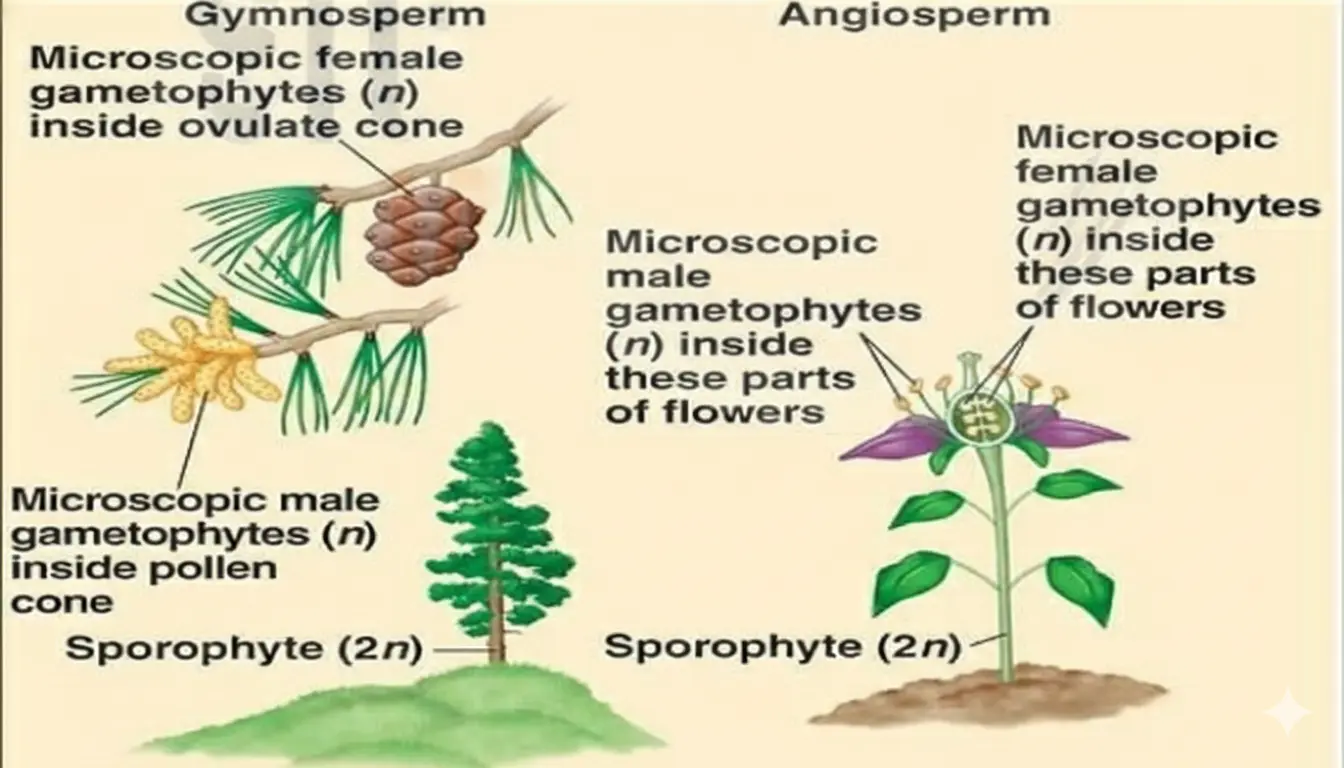
1. What are Gymnosperms?
The word 'Gymnosperm' comes from the Greek words gymnos (naked) and sperma (seed). These are the ancient ancestors of flowering plants.
Naked Seeds: Their seeds are not enclosed in an ovary or fruit. They usually develop on the surface of scales or leaves, often forming Cones.
Nature: Mostly evergreen with needle-like or scale-like leaves to survive harsh or cold climates.
Reproduction: Primarily rely on Wind to carry pollen to the cones.
2. What are Angiosperms?
Angiosperms are the most advanced and diverse group of plants. The name means 'enclosed seeds'.
Enclosed Seeds: Their seeds develop inside an Ovary, which eventually matures into a Fruit.
Flowering: They produce flowers which can be unisexual or bisexual.
Adaptability: They have high terrestrial adaptability, allowing them to dominate almost every habitat on Earth.
3. Key Anatomical Differences
Wood Quality: Angiosperms generally produce Hardwood (used for furniture), while Gymnosperms produce Softwood (used for paper and lumber).
Reproductive Tissue: Angiosperms have Triploid (3n) endosperm (the food for the seed) formed by double fertilization, whereas Gymnosperms have Haploid (n) endosperm.
Leaf Shape: Angiosperm leaves are typically broad and flat; Gymnosperm leaves are often needle-like (like Pine trees).
| Parameter | Angiosperms | Gymnosperms |
|---|---|---|
| Seeds | Enclosed in ovary/fruit | Naked (on scales/cones) |
| Reproductive Structure | Flowers | Cones |
| Life Cycle | Seasonal (mostly) | Evergreen |
| Pollination Agent | Animals/Insects (mostly) | Wind (mostly) |
| Endosperm | Triploid (3n) | Haploid (n) |
| Wood | Hardwood | Softwood |
| Examples | Mango, Rose, Wheat | Pine, Cycas, Cedar |
Prelims tips
- Triploid Endosperm: A unique feature of Angiosperms due to Double Fertilization.
- Naked Seeds: If a question mentions 'seeds on cones', think Gymnosperms.
- Vessels: Angiosperm xylem has vessels; Gymnosperm xylem mostly lacks them (except Gnetophytes).
- Hardwood vs Softwood: This is a botanical distinction, not just a measure of physical hardness.
Mains points
- Economic Impact: Gymnosperms are the backbone of the global timber and paper industry, while Angiosperms provide global food security through agriculture.
- Evolutionary Success: The development of flowers and fruits in Angiosperms allowed for specialized pollination and seed dispersal, leading to their global dominance.
- Carbon Sequestration: Coniferous forests (Gymnosperms) are massive carbon sinks, playing a vital role in regulating the Earth's climate.
- Biodiversity: Tropical rainforests (predominantly Angiosperms) harbor the highest density of plant species, essential for ecological stability.
Did you know?
- The oldest living gymnosperm is a Bristlecone Pine estimated to be over 4,800 years old!
- About 80% of all known green plants living today are Angiosperms.
- Apples, oranges, and even the grains used for bread (wheat/rice) are all products of Angiosperms.
Reproductive Organs: Androecium, Gynoecium, and Fruit Formation
The transition from a flower to a fruit is a complex biological journey. The Androecium (male) and Gynoecium (female) work in tandem to achieve fertilization. Post-fertilization, the flower undergoes a dramatic transformation where the Ovary matures into a protective Fruit and the Ovules become the Seeds of the next generation.
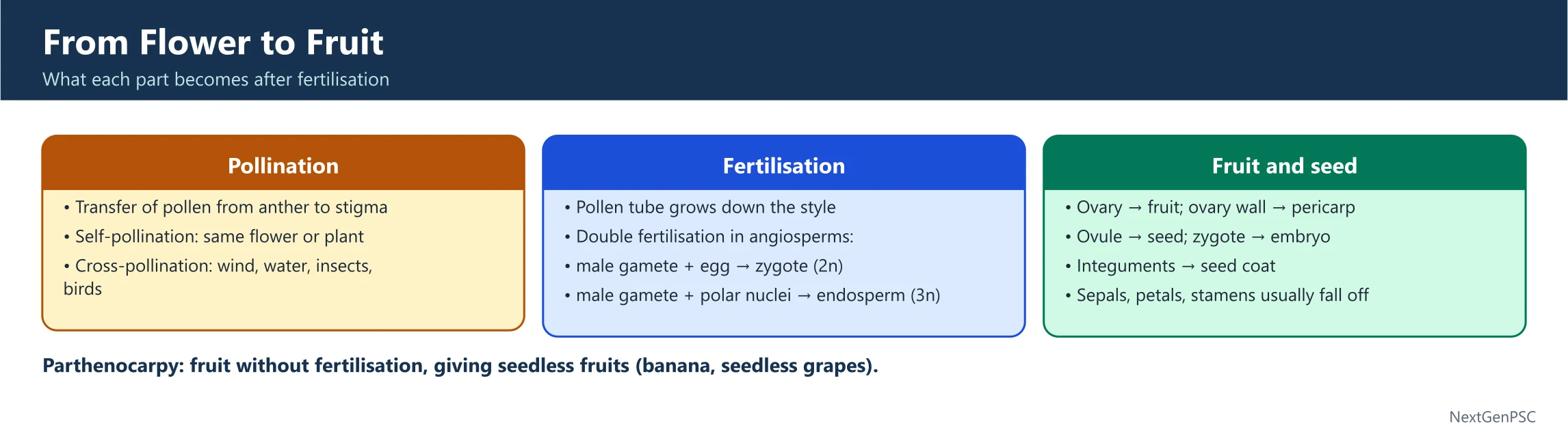
1. Androecium: The Male Reproductive System
The Androecium consists of a collection of Stamens. It is responsible for producing pollen grains (microspores).
Anther: Usually two-lobed, containing pollen sacs where pollen grains are produced. A sterile tissue called the Connective holds these lobes together.
Filament: The long stalk that supports the anther, positioning it to effectively disperse pollen.
2. Gynoecium: The Female Reproductive System
Occupying the center of the flower, the Gynoecium (also called the Pistil or Carpel) is where the fruit begins its life.
Stigma: The receptive tip, often sticky or feathery, designed to capture and hold onto pollen grains.
Style: The tube through which the pollen tube grows to reach the ovary.
Ovary: The enlarged basal portion containing Ovules (macrospores).
3. From Fertilization to Fruit
Once fertilization occurs, the flower's 'essential' work is done, and the transformation begins:
The Fruit: Developed from the Ovary wall. Its primary biological function is to protect the seeds and assist in their dispersal.
The Seeds: Developed from the Ovules. These contain the embryo which will grow into a new plant.
Parthenocarpy: Some fruits develop without fertilization, resulting in seedless varieties like bananas and certain grapes.
| Floral Part | Post-Fertilization Structure |
|---|---|
| Ovary | Fruit |
| Ovary Wall | Pericarp (Fruit Wall) |
| Ovule | Seed |
| Integuments (of Ovule) | Seed Coat |
| Zygote | Embryo |
Prelims tips
- Parthenocarpy: Production of fruit without fertilization (seedless).
- Microspores: Produced by Androecium (Pollen).
- Macrospores: Produced by Gynoecium (Ovules).
- Connective: The sterile tissue joining anther lobes.
- Stigma: The receptive surface for pollen grains.
Mains points
- Horticultural Innovation: Induced parthenocarpy (using hormones) allows for the production of consumer-preferred seedless watermelons and cucumbers.
- Pollination Biology: The structural adaptation of the stigma (feathery vs sticky) is a result of co-evolution with specific wind or insect pollinators.
- Seed Security: Understanding fruit and seed development is critical for the conservation of plant genetic resources in seed banks.
- Economic Botany: Many 'vegetables' in culinary terms (like tomatoes and pumpkins) are botanically fruits because they develop from an ovary.
Did you know?
- A Strawberry is not a 'true' berry! In true fruits, the ovary becomes the flesh. In strawberries, the 'flesh' is the swollen base (thalamus) of the flower.
- Parthenocarpic fruits like bananas are naturally sterile and can only be grown through cuttings or cloning.
- The Stigma of the Crocus flower is harvested to produce Saffron, the most expensive spice in the world.