
Science & Technology · UPSC Notes
General Chemistry — UPSC Science & Tech Notes
Free, exam-focused notes for UPSC Prelims and Mains, with Prelims tips and Mains points for every topic. 8 topics.
Open in the interactive reader: bookmarks, progress tracking and read-aloud.
Introduction to Chemistry: Matter, Atoms, and Subatomic Structures
Chemistry is the fundamental science that explores what the universe is made of. At the microscopic level, everything—from the air we breathe to the stars in the sky—is composed of Atoms. For UPSC, grasping the structure of the atom is the first step toward understanding chemical reactions, nuclear energy, and the periodic table.
1. What is Matter?
Matter is anything that has mass and occupies volume. In simple terms, if it is 'stuff' you can touch or weigh, it is matter. Matter is made of tiny particles called atoms.
Molecules: Atoms rarely stay alone. They join together in groups called molecules. For example, two Hydrogen atoms and one Oxygen atom join to form a Water molecule.
2. The Evolution of Atomic Theory
Scientists didn't always know what an atom looked like. Our current understanding is the result of centuries of discovery:
1. Dalton’s Atomic Theory: He proposed that atoms are like solid, indivisible billiard balls. He was the first to say each element has its own type of atom.
2. J.J. Thomson (Plum Pudding Model): He discovered the Electron. He thought an atom was a positive sphere with negative electrons stuck in it like raisins in a pudding.
3. Ernest Rutherford (Gold Foil Experiment): He discovered the Nucleus. He realized the atom is mostly empty space with a tiny, dense, positive center.
4. Niels Bohr: He suggested that electrons move in fixed circular paths called shells or orbits, similar to planets orbiting the Sun.
5. Schrödinger (Quantum Model): The modern view. Electrons don't follow neat paths; they exist in orbitals (clouds) where they are most likely to be found.
3. Subatomic Particles: The Building Blocks
An atom is composed of three main particles. Their balance determines how an element behaves.
A. Protons (p+)
Identity: The number of protons is the Atomic Number. It acts like a fingerprint—if you change the number of protons, you change the element itself.
Location: Inside the dense central Nucleus.
B. Neutrons (n0)
The Nuclear Glue: Since protons are all positive, they want to repel each other. Neutrons provide the Strong Nuclear Force that holds the nucleus together.
Isotopes: Atoms of the same element can have different numbers of neutrons. These are called Isotopes (e.g., Carbon-12 and Carbon-14).
C. Electrons (e-)
Chemical Reactivity: Electrons are found in the Electron Cloud outside the nucleus. They are responsible for chemical bonding and electricity.
Mass: They are so light (1/1840th of a proton) that their mass is usually ignored when calculating atomic weight.
4. Electron Configuration: Organizing the Shells
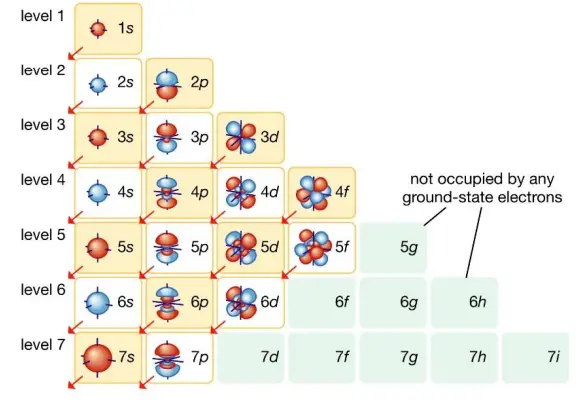
Electrons are not just floating randomly; they occupy specific energy levels or Shells.
Shell Capacity (2n²): The 1st shell (K) holds 2, the 2nd (L) holds 8, the 3rd (M) holds 18.
The Octet Rule: Atoms are most stable when their outermost shell is full (usually with 8 electrons). This is why atoms react—to find or share electrons to reach that 'magic 8'.
Aufbau Principle: This rule states that electrons fill the lowest energy levels first (like filling the ground floor of a building before moving up).
Example: Sodium (Atomic No. 11) has 11 electrons. They fill up as 2 in the first shell, 8 in the second, and 1 in the last (2-8-1).
| Particle | Discovery | Mass (kg) | Significance |
|---|---|---|---|
| Proton | E. Goldstein / Rutherford | 1.672 x 10^-27 | Determines Element Identity |
| Neutron | James Chadwick (1932) | 1.674 x 10^-27 | Nuclear Stability / Isotopes |
| Electron | J.J. Thomson | 9.1 x 10^-31 | Chemical Bonding & Electricity |
Prelims tips
- Atomic Number (Z): Number of Protons.
- Mass Number (A): Protons + Neutrons.
- Valence Electrons: Electrons in the outermost shell; they decide how an atom reacts.
- Anion: Negatively charged atom (gained electrons). Cation: Positively charged atom (lost electrons).
Mains points
- Nuclear Binding Energy: The 'mass deficit' in the nucleus is converted into energy ($E=mc^2$), explaining the immense power of nuclear fission and fusion.
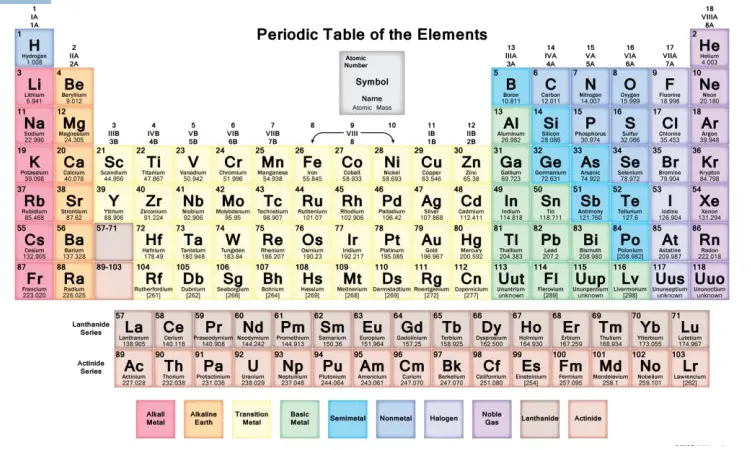
- Chemical Periodicity: The arrangement of elements in the Periodic Table is based directly on the electron configuration of atoms.
- Stable Isotopes vs Radioisotopes: Understanding neutrons is key to applications in medicine (Cancer treatment) and archeology (Carbon dating).
- Quantum Leap: The transition from classical physics to quantum mechanics began with the study of the atom's internal structure.
Did you know?
- If you removed all the 'empty space' from the atoms that make up all the humans on Earth, the entire human race would fit inside a sugar cube (though it would be incredibly heavy!).
- Hydrogen is the only element in the universe that commonly exists without any neutrons.
- Your body is made of 'stardust'—most of the atoms in your body were created inside stars billions of years ago.
Atomic Number, Atomic Mass, and Isotopes
The identity of an element is governed by its Atomic Number (the number of protons), while its weight is defined by its Atomic Mass (protons plus neutrons). For UPSC, understanding these concepts is vital to grasp why some atoms of the same element behave identically chemically but differ physically, such as Isotopes used in medicine and carbon dating.
1. Atomic Number (Z): The Chemical Fingerprint
The Atomic Number is the most fundamental property of an atom. It is the number of protons found in the nucleus.
Why is it important?
Identity: It determines which element the atom is. If an atom has 6 protons, it is Carbon; if it has 92, it is Uranium. No two different elements have the same atomic number.
Neutrality: In a neutral atom, the number of protons equals the number of electrons. Since electrons govern chemical reactions, the atomic number indirectly dictates an element's chemical behavior.
Symbol: Represented by the letter Z.
2. Atomic Mass and AMU
The mass of an atom is concentrated in its nucleus (protons + neutrons). Electrons are so light that their mass is negligible.
Atomic Mass Unit (amu): Because atoms are so small, we use a relative scale. 1 amu is defined as exactly 1/12th the mass of a Carbon-12 atom.
Dalton (Da): Another name for the atomic mass unit.
Standard Reference: Carbon-12 (6 protons and 6 neutrons) is the international standard for measuring the masses of all other elements.
3. Elements and Symbols
An Element is a pure substance consisting of atoms that all have the same atomic number.
Rules for Symbols:
Symbols are shorthand for the element's name (English or Latin).
The first letter is always Uppercase, and the second letter (if present) is always lowercase.
Examples:
Hydrogen: H
Aluminum: Al (not AL)
Cobalt: Co (not CO, which is Carbon Monoxide)
Gold (from Latin Aurum): Au
4. Isotopes: Same Identity, Different Weight
Isotopes are atoms of the same element (same Atomic Number) that have different numbers of neutrons (different Mass Numbers).
Example: Hydrogen's Three Species
1. Protium (1H1): 1 proton, 0 neutrons (Most common).
2. Deuterium (1H2): 1 proton, 1 neutron (Used in heavy water).
3. Tritium (1H3): 1 proton, 2 neutrons (Radioactive).
Properties of Isotopes:
Chemical Properties: They are identical because they have the same number of valence electrons.
Physical Properties: They are different. Their densities, boiling points, and melting points vary slightly due to the difference in mass.
5. Representation of an Atom
In chemical notation, we write the symbol with the Mass Number (A) as a superscript on the top left and the Atomic Number (Z) as a subscript on the bottom left.
Formula: Mass Number (A) = Protons (Z) + Neutrons (n)
| Isotope | Protons | Neutrons | Mass Number |
|---|---|---|---|
| Protium | 1 | 0 | 1 |
| Deuterium | 1 | 1 | 2 |
| Tritium | 1 | 2 | 3 |
Prelims tips
- Atomic Number (Z) = Number of Protons = Number of Electrons (in neutral atoms).
- Mass Number (A) = Protons + Neutrons.
- Isotopes have identical chemical properties but different physical properties.
- Standard reference for atomic mass is Carbon-12.
Mains points
- Applications of Isotopes: Used in medicine (e.g., Iodine-131 for goiter treatment, Cobalt-60 for cancer) and power generation (Uranium-235).
- Scientific Standardization: Why Carbon-12 was chosen over Oxygen or Hydrogen as the atomic mass standard due to its abundance and stability.
- Chemical vs. Physical Identity: How the number of neutrons can change an atom's stability (making it radioactive) without changing what element it is.
Did you know?
- Nearly 99.98% of all Hydrogen on Earth is Protium.
- The name 'Isotope' comes from Greek words meaning 'at the same place,' because they occupy the same spot on the Periodic Table.
- Heavier isotopes (like Deuterium) make 'Heavy Water' (D2O), which is actually used as a moderator in nuclear reactors.
Synthetic Elements, Molecules, and Chemical Bonding
The world around us is built from atoms joining together to form Molecules and Compounds through Chemical Bonds. While most elements are found in nature, humans have expanded the periodic table by creating Synthetic Elements in laboratories. Understanding how electrons are shared or transferred is the key to mastering chemistry for UPSC.
1. Synthetic Elements: Human-Made Wonders
There are 24 known chemical elements that do not occur naturally on Earth. These are called Synthetic Elements.
How they are made: They are created by scientists in labs by manipulating fundamental particles or smashing atoms together in particle accelerators.
Stability: Most synthetic elements are unstable and decay into other elements very quickly (radioactive).
2. Molecules and Atomicity
A Molecule is a group of two or more atoms chemically bonded together. It is the smallest particle of a substance that can exist independently.
A. Molecules of Elements
These contain only one type of atom. The number of atoms in a molecule is its Atomicity.
Monoatomic: Made of 1 atom (e.g., Helium - He, Argon - Ar).
Diatomic: Made of 2 atoms (e.g., Oxygen - O2, Hydrogen - H2).
Triatomic: Made of 3 atoms (e.g., Ozone - O3).
B. Molecules of Compounds
Atoms of different elements join in fixed proportions. For example, Water (H2O) always has 2 Hydrogen atoms for every 1 Oxygen atom.
3. Ions: The Charged Particles
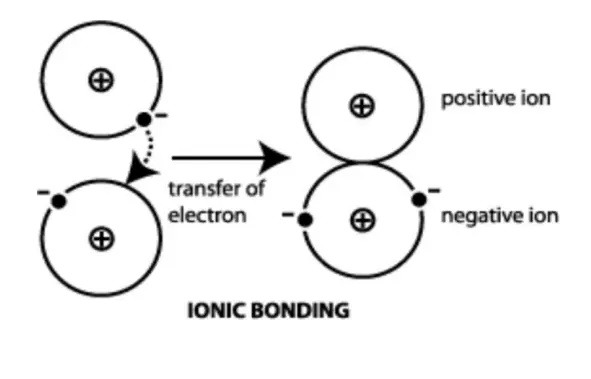
When atoms lose or gain electrons, they become Ions. These carry an electric charge.
Cation: A positively charged ion (formed when an atom loses electrons). Example: Sodium ion (Na+).
Anion: A negatively charged ion (formed when an atom gains electrons). Example: Chloride ion (Cl-).
Polyatomic Ions: A group of atoms that carry a net charge (e.g., Ammonium - NH4+).
4. Chemical Bonding: The Atomic Glue
Chemical bonds are the forces that hold atoms together. Bonding happens because atoms want to achieve a stable electron arrangement (usually 8 electrons in the outer shell).
A. Ionic Bond (Electrovalent Bond)
This bond is formed by the complete transfer of electrons from one atom to another.
Formation: Usually occurs between a Metal (which loses electrons) and a Non-metal (which gains them).
Properties of Ionic Compounds:
1. State: Mostly crystalline solids.
2. Melting/Boiling Points: Very high because of strong electrostatic attraction between ions.
3. Conductivity: They conduct electricity when dissolved in water or melted.
B. Covalent Bond
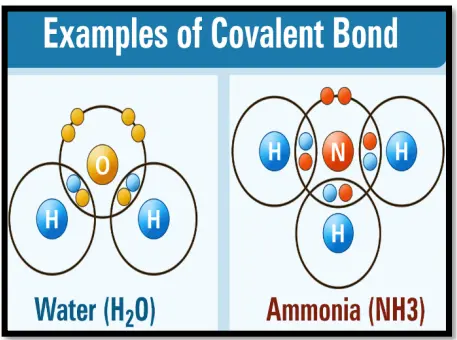
This bond is formed by the equal sharing of electrons between atoms. This usually happens between two non-metals (e.g., H2O, CH4).
C. Metallic Bond
Found in metals, where electrons are not bound to one nucleus but float in a 'sea' of electrons, allowing metals to conduct electricity and heat easily.
| Type | Atomicity | Example |
|---|---|---|
| Monoatomic | 1 | Helium (He), Neon (Ne) |
| Diatomic | 2 | Oxygen (O2), Nitrogen (N2) |
| Triatomic | 3 | Ozone (O3) |
| Polyatomic | 4+ | Phosphorus (P4), Sulphur (S8) |
Prelims tips
- Ionic Bonds: Transfer of electrons; Metal + Non-metal.
- Covalent Bonds: Sharing of electrons; Non-metal + Non-metal.
- Atomicity of Ozone: 3 (Triatomic).
- Anion is negative; Cation is positive (Think: 't' in Cation looks like a '+' plus sign).
Mains points
- Material Science: Understanding chemical bonding is essential for creating new materials like polymers, alloys, and nanomaterials.
- Synthetic Elements: These elements (like Plutonium) are crucial for nuclear energy and specialized medical equipment.
- Chemical Stability: The Octet rule explains the inert nature of Noble Gases and the high reactivity of elements like Fluorine and Sodium.
- Industrial Chemistry: Ionic compounds are the basis for many industrial electrolytes and salts used in manufacturing.
Did you know?
- The first synthetic element ever created was Technetium in 1937.
- Ionic compounds like Table Salt (NaCl) form beautiful crystal lattices because of the perfectly repeating pattern of ions.
- Oxygen is vital for life as O2, but as O3 (Ozone), it is a toxic gas at ground level, though it protects us in the upper atmosphere.
Covalent, Metallic, and Molecular Bonding
Chemical bonds are the invisible forces that determine the state (solid, liquid, or gas) and properties (like conductivity) of everything around us. While Covalent Bonds involve the sharing of electron pairs between non-metals, Metallic Bonds involve a 'sea of electrons' that gives metals their unique shine and conductivity. Understanding these, along with Intermolecular Forces, is vital for UPSC Science and Technology.
1. Covalent Bond: The Power of Sharing
A Covalent Bond is formed when two atoms share electrons equally to achieve stability. This typically happens between two non-metals.
Key Characteristics:
1. Physical State: Unlike ionic compounds, these can be found as solids, liquids, or gases (e.g., Water is liquid, Oxygen is gas, Diamond is solid).
2. Boiling and Melting Points: Generally low compared to ionic bonds because the forces holding individual molecules together are weaker.
3. Thermal Stability: Lower than ionic bonds, meaning they break down more easily under heat.
2. Metallic Bond: The 'Electron Sea'
Metallic bonding occurs in metals like Iron (Fe), Gold, and Copper. In these structures, the outer-shell electrons are not tied to any single atom.
How it works:
Free Electrons: The valence electrons detach from their atoms and form a 'cloud' or 'sea' of electrons.
Attraction: The bond is the strong attraction between these floating negative electrons and the positive metal ions.
Properties of Metals:
High Conductivity: Because the electrons are free to move, they can carry electricity and heat very efficiently.
Strength: They form 'giant structures' that are held together tightly by these forces.
3. Molecular Bonds and Intermolecular Forces
While chemical bonds hold atoms together inside a molecule, Intermolecular Forces are the attractions that exist between different molecules. These forces decide if a substance is a liquid or a gas.
Types of Intermolecular Forces:
1. Hydrogen Bonding: A very strong attraction found in molecules like water. It's why water has such a high boiling point compared to other liquids.
2. Dipole-Dipole: Occurs between molecules that have 'poles' (one side slightly positive, one side slightly negative).
3. London Dispersion Forces: Weak, temporary attractions that happen in all molecules (also called Ion-Dipole forces).
4. Ion-Ion Interaction: The strongest attraction, typically seen in ionic crystals.
| Bond Type | Mechanism | Conductivity | Strength |
|---|---|---|---|
| Covalent | Sharing of electrons | Poor | Moderate |
| Metallic | Sea of free electrons | Very High | Strong |
| Ionic | Transfer of electrons | High (in solution) | Very Strong |
Prelims tips
- Covalent bonds are usually between Non-metal + Non-metal.
- Metallic bonds explain why metals are malleable (can be beaten into sheets) and ductile (can be drawn into wires).
- Hydrogen bonding is specifically found in molecules where Hydrogen is bonded to Oxygen, Nitrogen, or Fluorine (F-O-N).
- Intermolecular forces are weaker than intramolecular (chemical) bonds.
- Common alloys: brass (copper + zinc), bronze (copper + tin), stainless steel (iron + chromium + nickel + carbon), solder (lead + tin), amalgam (mercury + another metal), duralumin (aluminium + copper + magnesium + manganese), German silver (copper + zinc + nickel).
Mains points
- Industrial Importance: The high thermal conductivity of metallic bonds is why metals are used for cooking utensils and heat exchangers.
- Molecular Design: Understanding covalent bonding allows scientists to create complex organic molecules like Polymers and Medicines.
- Modern Electronics: The 'Free Electron Theory' of metallic bonds is the foundation of electrical engineering and semiconductor physics.
- Biological Systems: Intermolecular forces like Hydrogen bonds are responsible for holding the DNA double-helix structure together.
Did you know?
- Diamond is held together by very strong covalent bonds, making it the hardest natural substance on Earth!
- The shimmer/shine of metals is caused by the free electron sea reflecting light.
- Without Hydrogen Bonding, water would be a gas at room temperature, and life as we know it couldn't exist.
Molecular Polarity, Compounds, and Organic Chemistry
The chemical world is organized into Compounds, where atoms join in fixed ratios to create substances with entirely new properties. A critical factor in how these substances behave is Polarity—the balance of electrical charge within a molecule. This distinction, along with the study of Organic Compounds, forms the backbone of life sciences and industrial chemistry.
1. Polarity: The Tug-of-War for Electrons
Polarity describes how electrons are shared between atoms in a covalent bond. It depends on Electronegativity (the 'hunger' an atom has for electrons).
A. Non-Polar Covalent Bonds
Definition: Formed between atoms with the same electronegativity. Electrons are shared equally.
Dipole Moment: It is zero because there is no partial charge.
Example: H2, O2, Cl2 (identical atoms pull equally).
B. Polar Covalent Bonds
Definition: Formed between atoms with different electronegativities. Electrons are shared unequally, spending more time near the stronger atom.
Dipole Moment: Created because one end of the molecule becomes slightly negative (delta -) and the other slightly positive (delta +).
Example: Water (H2O) and Hydrogen Chloride (HCl).
2. Chemical Compounds
A Compound is a pure substance formed when atoms of two or more different elements combine chemically in a fixed ratio.
Properties: The properties of a compound are entirely different from the elements that make it. For example, Sodium (a reactive metal) and Chlorine (a toxic gas) combine to form Table Salt (NaCl), which is essential for life.
Diversity: Everything from our DNA to the water we drink is a compound. Even changing one single atom in a large compound can turn a medicine into a poison.
3. Organic Compounds: The Chemistry of Life
Organic compounds are substances that primarily contain Carbon (C). Carbon is unique because it can form stable bonds with itself and other elements, creating complex structures.
Biological Importance: Fats, proteins, carbohydrates, enzymes, and hormones are all organic compounds.
Structural Framework: Carbon atoms link together to form chains or rings, providing the 'skeleton' of the molecule.
4. Carbon-Carbon Bonds
Carbon can bond with other carbon atoms in three different ways, leading to various types of hydrocarbons:
1. Single Bonds (Alkanes): Known as 'Sigma' bonds. These are saturated hydrocarbons (e.g., Methane, Ethane).
2. Double Bonds (Alkenes): Involves four shared electrons. These are unsaturated (e.g., Ethene).
3. Triple Bonds (Alkynes): Involves six shared electrons. These are highly reactive and unsaturated (e.g., Ethyne/Acetylene).
| Type | Bond Type | Suffix | General Formula |
|---|---|---|---|
| Alkanes | Single (C-C) | -ane | CnH2n+2 |
| Alkenes | Double (C=C) | -ene | CnH2n |
| Alkynes | Triple (C≡C) | -yne | CnH2n-2 |
Prelims tips
- Polarity: Unequal sharing of electrons; results in a dipole moment.
- Organic Compounds: Must contain Carbon (except for simple ones like CO2 or Carbonates which are often treated as inorganic).
- Sigma Bond: The strongest type of covalent chemical bond, found in single bonds.
- Compounds: Have fixed composition and distinct properties from their constituent elements.
Mains points
- Molecular Polarity in Medicine: The solubility of drugs in the human body (water-based) depends on whether the drug molecules are polar or non-polar.
- Versatility of Carbon: Carbon's ability to form single, double, and triple bonds allows for millions of different organic structures, enabling the complexity of life.
- Industrial Importance: Alkanes (Methane/Ethane) are primary fuels, while Alkenes and Alkynes are the starting materials for plastics and synthetic fibers.
- Environmental Chemistry: Polar compounds often interact more strongly with the atmosphere and water systems, influencing how pollutants spread.
Did you know?
- Water is a Polar molecule, which is why it can dissolve so many substances. It's often called the 'Universal Solvent'.
- Oil is Non-Polar. This is the simple chemical reason why oil and water never mix!
- Diamond and Graphite are both made of pure Carbon, but they have different properties because of how the carbon atoms are bonded.
Molecular Polarity, Compounds, and Organic Chemistry
The chemical world is organized into Compounds, where atoms join in fixed ratios to create substances with entirely new properties. A critical factor in how these substances behave is Polarity—the balance of electrical charge within a molecule. This distinction, along with the study of Organic Compounds, forms the backbone of life sciences and industrial chemistry.
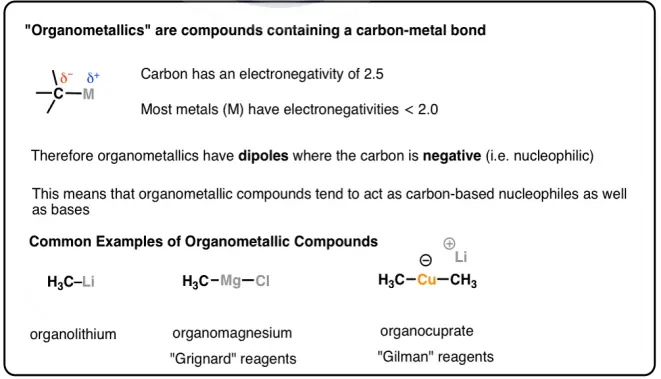
1. Polarity: The Tug-of-War for Electrons
Polarity describes how electrons are shared between atoms in a covalent bond. It depends on Electronegativity, which is the 'hunger' an atom has for electrons. Think of it as a game of tug-of-war where the stronger atom pulls the electrons closer to itself.
A. Non-Polar Covalent Bonds
Definition: Formed between atoms with the same electronegativity (identical pull). Because both atoms are equally strong, the electrons stay right in the middle.
Dipole Moment: It is zero because there is no partial charge on either side.
Example: H2, O2, Cl2. Since both atoms are the same, they share equally.
B. Polar Covalent Bonds
Definition: Formed between atoms with different electronegativities. One atom is a 'bully' and pulls the shared electrons closer to its side.
Dipole Moment: This creates a Dipole. The side with more electrons becomes slightly negative (delta negative), and the side with fewer becomes slightly positive (delta positive).
Example: Water (H2O) and Hydrogen Chloride (HCl). In water, Oxygen pulls electrons away from Hydrogen.
2. Chemical Compounds
A Compound is a pure substance formed when atoms of two or more different elements combine chemically in a fixed ratio (like a specific recipe).
Transformation of Properties: The properties of a compound are entirely different from the elements that make it. For example, Sodium (an explosive metal) and Chlorine (a poisonous gas) combine to make Table Salt (NaCl), which we eat every day!
Complexity: Compounds make up everything from the DNA in your cells to the CO2 we exhale. Even changing one single atom in a large molecule can change a life-saving medicine into a deadly toxin.
3. Organic Compounds: The Chemistry of Life
Organic compounds are substances that primarily contain Carbon (C). Carbon is the 'LEGO brick' of life because it can bond with almost anything, including itself, to form long chains and complex rings.
Biological Importance: Your body is essentially a collection of organic compounds like fats, proteins, carbohydrates, enzymes, and hormones.
Versatility: Carbon's unique ability to form four bonds allows for a staggering variety of millions of different structures.
4. Carbon-Carbon Bonds
The way carbon atoms link together determines what kind of material is formed. These are categorized by the number of shared electron pairs:
1. Single Bonds (Alkanes): These share one pair of electrons. They are called Saturated because they have as much hydrogen as they can possibly hold (e.g., Methane - the gas in your stove).
2. Double Bonds (Alkenes): These share two pairs of electrons. They are Unsaturated and more reactive (e.g., Ethene, used to ripen fruit).
3. Triple Bonds (Alkynes): These share three pairs of electrons. They are highly reactive and contain a lot of energy (e.g., Acetylene, used in welding torches).
| Type | Bond Type | Suffix | General Formula |
|---|---|---|---|
| Alkanes | Single (C-C) | -ane | CnH2n+2 |
| Alkenes | Double (C=C) | -ene | CnH2n |
| Alkynes | Triple (C≡C) | -yne | CnH2n-2 |
Prelims tips
- Polarity: Results from unequal electron sharing due to electronegativity differences.
- Organic Compounds: Always contain Carbon. Note: Simple oxides like CO2 are usually classified as inorganic.
- Sigma vs Pi Bonds: Single bonds consist of one Sigma bond. Double/Triple bonds add 'Pi' bonds, which are weaker and make the molecule more reactive.
- Compound Identity: A compound has a fixed melting and boiling point, unlike a simple mixture.
Mains points
- Molecular Polarity in Medicine: Drug designers must ensure medicines are polar enough to dissolve in blood but non-polar enough to pass through cell membranes.
- The Carbon Economy: Our entire industrial world relies on carbon bonds—from the fossil fuels (Alkanes) that provide energy to the plastics (Polymers) used in manufacturing.
- Saturated vs Unsaturated: In health science, saturated fats (single bonds) are typically solid at room temperature, while unsaturated fats (double bonds) are liquids, affecting heart health differently.
- Environmental Impact: Polar pollutants often dissolve in rain and oceans, while non-polar ones like oil spills sit on the surface, requiring different cleanup strategies.
Did you know?
- Water is a Polar molecule, which is why it can dissolve so many substances like salt and sugar. It acts like a tiny magnet!
- Oil is Non-Polar. Because 'like dissolves like,' oil and water refuse to mix, which is why you see oil floating on top of puddles.
- Carbon is so versatile that there are over 10 million known organic compounds—more than all other elements combined!
Polymers and Chemistry in Everyday Life
Chemistry is not just found in laboratories; it is happening all around us. Polymers form the basis of essential materials like plastic and rubber, while chemical reactions explain why onions make us cry or how soaps clean our skin. For UPSC, connecting these scientific principles to everyday phenomena is key to mastering the General Science section.
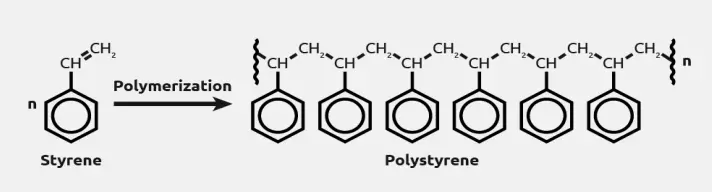
1. What are Polymers?
A Polymer is a giant molecule made by linking hundreds or thousands of smaller units called Monomers.
Polymerization: The chemical process of joining these monomers into a long, chain-like network.
The Hydrocarbon Backbone: Most synthetic polymers (like plastics) have a central chain of Carbon and Hydrogen atoms. This is possible because Carbon is tetravalent (it can form four bonds), allowing it to create incredibly long, stable chains.
Diversity of Polymers:
Flexible: Rubber, polyester, and polythene.
Rigid: Epoxy resins, Bakelite (used in electrical switches), and toughened glass.
2. The Chemistry of Cleaning: Soaps vs. Detergents
How does soap actually remove grease? It uses a special molecular structure that bridges the gap between water and oil.
Micelles: Soap molecules have a 'head' that loves water and a 'tail' that loves oil. They surround oil droplets, lifting them off the skin and suspending them in water so they can be rinsed away.
Soaps: They are sodium or potassium salts of long-chain fatty acids. They are mild but don't work well in 'hard water' (water with high mineral content).
Detergents: These are synthetic derivatives with a much stronger cleaning action. They work effectively even in hard water.
3. Natural Chemistry: Onions and Fruit Ripening
Why do Onions make us cry?
When you cut an onion, you break its cells, releasing enzymes and sulfenic acid. These react to form a gas called Syn-propanethial-S-oxide. When this gas touches the moisture in your eyes, it turns into a mild sulfuric acid, causing your tear glands to react to flush it out.
How do fruits ripen?
The secret is a gaseous plant hormone called Ethylene.
The Signal: As a fruit matures, it begins producing more ethylene. This gas acts as a signal to the fruit to change its color, soften its texture, and convert starches into sugars.
Commercial Use: Farmers often use ethylene gas to ripen green-harvested fruits (like bananas) before they reach the market.
4. Everyday Chemistry Questions for UPSC
Why does Ice float? Because of Hydrogen Bonding, ice forms a crystal lattice that is less dense than liquid water.
What is an Antacid? It is a Base (like Magnesium Hydroxide) used to neutralize excess Hydrochloric acid in the stomach.
Do bottled water expire? The water doesn't, but the Plastic (Polymer) bottle can eventually leak chemicals into the water over time.
How do Sunscreens work? They contain chemicals like Zinc Oxide that either reflect or absorb harmful UV radiation.
| Polymer | Monomer | Typical Use |
|---|---|---|
| Polythene | Ethylene | Plastic bags, packaging |
| PVC | Vinyl Chloride | Pipes, raincoats |
| Teflon | Tetrafluoroethylene | Non-stick cookware |
| Nylon | Amides | Ropes, stockings, bristles |
Prelims tips
- Polymerization: Monomers joining to form Polymers.
- Natural Polymers: DNA, proteins, cellulose, and natural rubber.
- Antacids: Usually contain Milk of Magnesia (Magnesium Hydroxide).
- Ripening Hormone: Ethylene (only gaseous plant hormone).
- Natural acids: citric (lemon), lactic (curd), acetic (vinegar), tartaric (tamarind, grapes), oxalic (tomato, spinach), formic (ant sting, nettle), malic (apple). Baking soda (sodium bicarbonate) neutralises acidity.
Mains points
- Plastic Pollution: The durability of synthetic polymers makes them useful but also creates environmental challenges as they don't decompose easily.
- Food Preservation: Understanding chemical signals like Ethylene helps in cold storage management and reducing food wastage.
- Healthcare: Antacids and antiseptics (soaps) are basic applications of acid-base chemistry in maintaining public health.
- Material Engineering: Designing polymers with specific properties (like heat resistance) is vital for aerospace and defense industries.
Did you know?
- Ethylene is so effective that placing a ripe banana next to unripe tomatoes will cause the tomatoes to ripen faster!
- Morning breath happens because your Saliva (the mouth's natural cleaner) decreases while you sleep, allowing bacteria to grow.
- The first fully synthetic polymer was Bakelite, created in 1907.
Types of Plastics and Food Chemistry
Plastics are specialized polymers categorized by how they respond to heat. Understanding the difference between Thermoplastics and Thermosetting plastics is vital for recycling and manufacturing. Similarly, Food Preservatives use chemical principles to inhibit microbial growth, ensuring food safety and longevity. Both topics are frequent areas of inquiry in the UPSC General Science syllabus.
1. Thermoplastics vs. Thermosetting Plastics
Not all plastics are created equal. Their molecular structure determines whether they can be melted and reshaped or if they stay rigid forever.
A. Thermoplastics
Behavior: These soften on heating and can be reshaped multiple times. They have linear or slightly branched chains.
Recyclability: Highly recyclable because they can be melted down and molded into new products.
Examples: Polythene (bags), PVC (pipes), and Polystyrene (containers).
B. Thermosetting Plastics
Behavior: Once molded and set, they cannot be softened or reshaped by heating. This is due to 'cross-links' between polymer chains that create a permanent 3D network.
Properties: They are heat-resistant and durable.
Examples: Bakelite (used in electrical switches and saucepan handles) and Melamine (used in fire-resistant fabrics and floor tiles).
2. Chemistry of Food Preservatives
Preservatives are substances added to food to prevent spoilage by bacteria, molds, and oxidation.
A. Natural Preservatives
Salt and Sugar: These work through Osmosis. They draw moisture out of food and bacterial cells, preventing microbes from growing.
Oil and Vinegar: Create an environment where most bacteria cannot survive due to high acidity or lack of air.
B. Chemical Preservatives
Sodium Benzoate: Commonly used in fruit juices and squashes to inhibit yeast and mold.
Sodium Metabisulphite: Used in jams and pickles to preserve color and prevent bacterial growth.
Nitrates/Nitrites: Used in processed meats to prevent the growth of deadly botulism bacteria and maintain red color.
3. Other Food Chemicals
Antioxidants: These prevent the Rancidity of fats and oils (the bad smell and taste in stale food) by stopping oxygen from reacting with the food. Example: BHT (Butylated Hydroxytoluene).
Artificial Sweeteners: Compounds like Aspartame or Saccharin provide sweetness without the calories, as they are not metabolized by the body like sugar.
Emulsifiers: Help mix substances that usually don't mix, like oil and water (found in mayonnaise and ice cream).
| Feature | Thermoplastic | Thermosetting |
|---|---|---|
| Response to Heat | Softens and melts | Does not soften/Hardens |
| Structure | Linear chains | Cross-linked network |
| Recyclability | Can be recycled | Cannot be recycled |
| Common Uses | Bottles, toys, combs | Switches, handles, tiles |
Prelims tips
- Melamine: A thermosetting plastic used for making break-resistant crockery and fire-resistant uniforms.
- Teflon: A thermoplastic used for non-stick coating on cookware.
- BHT/BHA: Common antioxidants added to packaged snacks to prevent rancidity.
- Osmosis: The physical principle behind why high salt/sugar content preserves food.
Mains points
- Solid Waste Management: The inability to recycle thermosetting plastics poses a major challenge for landfill management and environmental sustainability.
- Food Safety Standards: The regulation of synthetic preservatives (like Nitrates) is a critical public health issue monitored by bodies like FSSAI in India.
- Innovation in Polymers: Development of Biodegradable Plastics is the current focus of material science to replace traditional thermoplastics.
- Nutrition & Chemistry: Understanding the chemical difference between antioxidants and preservatives is essential for analyzing modern food processing and its impact on human health.
Did you know?
- Bakelite was the first synthetic plastic ever made (1907) and it's still used today because it doesn't conduct electricity or melt easily.
- Honey is a natural preservative—archaeologists have found pots of honey in ancient Egyptian tombs that are 3,000 years old and still perfectly edible!
- The 'Best Before' date on food is often about the quality (taste/texture), whereas the 'Use By' date is about safety and the chemical stability of preservatives.