
Indian Economy · UPSC Notes
Investment Models — UPSC Economy Notes
Free, exam-focused notes for UPSC Prelims and Mains, with Prelims tips and Mains points for every topic. 18 topics.
Open in the interactive reader: bookmarks, progress tracking and read-aloud.
Investment and Gross Fixed Capital Formation (GFCF)
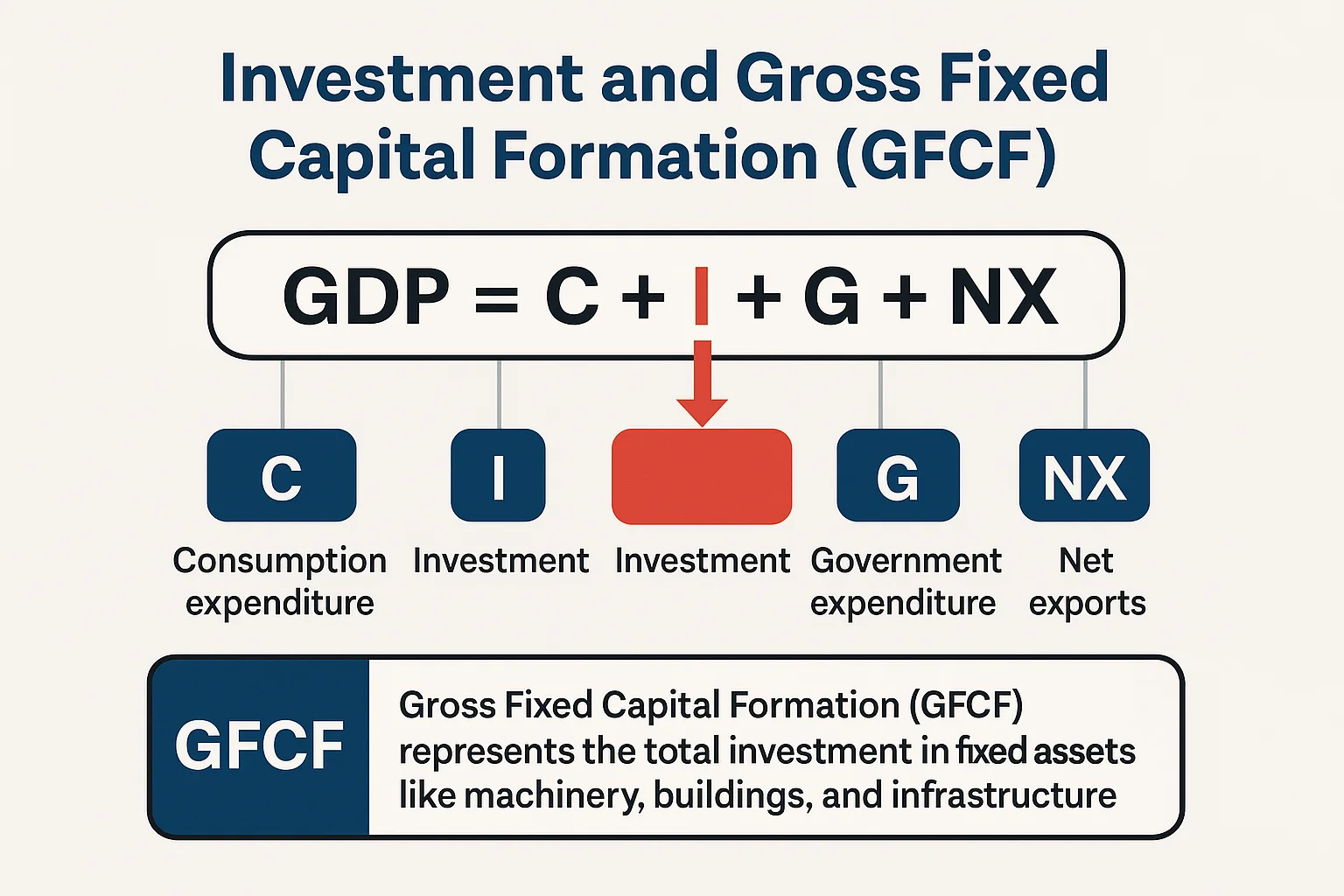
Investment is the process of allocating funds into assets to generate returns or enhance production. It directly influences GDP through the 'I' component in the GDP formula. Gross Fixed Capital Formation (GFCF) represents the total investment in fixed assets like machinery, buildings, and infrastructure, and is a crucial measure of economic growth and productivity.
What is Investment?
Investment means putting money into assets (like factories, machines, roads) with the goal of earning profit or increasing production.
Investments create jobs, improve infrastructure, and contribute to long-term development.
Both government and private sector play vital roles in investment.
Factors affecting investment: income, interest rates, savings rate, taxation, infrastructure, and inflation.
Relation between Investment and GDP
GDP is calculated as: GDP = C + I + G + NX
C = Consumption expenditure by households.
I = Investment in assets and capital goods.
G = Government expenditure.
NX = Net exports (Exports Imports).
Rearranged formula: Investment (I) = GDP C G NX.
Thus, investment is a core driver of GDP growth, as higher investments boost production capacity.
Gross Fixed Capital Formation (GFCF)
Definition: GFCF is the total investment in fixed assets like buildings, equipment, and infrastructure within an economy.
Purpose: It reflects the expansion of capital stock and productive capacity of the nation.
Assets covered: Machinery, industrial equipment, construction projects, infrastructure like roads, power plants, and communication networks.
Importance of GFCF
Economic Growth: More fixed capital = more production = higher GDP.
Employment: Building factories, infrastructure projects generate jobs across multiple sectors.
Technological Progress: Investments introduce new machines and technology, improving efficiency and productivity.
Infrastructure Development: Roads, ports, power, and telecom investments improve connectivity and boost economic stability.
Standard of Living: Higher capital means better availability of goods and services, improving quality of life.
Components of GFCF
Private Sector Investment: Reflects business confidence and willingness to expand.
Public Sector Contribution: Government investment in infrastructure and public goods.
Investment in Non-Produced Assets: Example – land improvement, making land more productive and valuable.
GFCF and Development Standards
Developed countries (like USA) have higher GFCF per capita compared to developing nations.
This means they have more productive capacity, resilience, and better living standards.
GFCF in India (Trends)
GFCF has shown strong growth in India.
2014–15: ₹32.78 lakh crore.
2022–23: ₹54.35 lakh crore.
Indicates robust investment in infrastructure, industries, and public sector assets.
| Component | Meaning |
|---|---|
| C | Consumption expenditure by households |
| I | Investment in fixed assets and capital goods |
| G | Government expenditure |
| NX | Net exports (Exports Imports) |
| Year | GFCF (₹ lakh crore) |
|---|---|
| 2014-15 | 32.78 |
| 2022-23 | 54.35 |
Prelims tips
- Investment contributes directly to GDP (I component).
- GFCF = investment in fixed assets (buildings, machinery, infrastructure).
- Higher GFCF = higher productive capacity = growth and jobs.
- India’s GFCF grew from ₹32.78 lakh crore (2014-15) to ₹54.35 lakh crore (2022-23).
Mains points
- Investment is a key driver of GDP growth and employment generation.
- GFCF reflects the long-term productive capacity of an economy.
- Higher GFCF indicates business confidence, government support, and infrastructure growth.
- India’s rising GFCF shows strong capital formation but per capita levels still lag behind developed nations.
- Balanced growth requires both private and public sector participation in investments.
Infrastructure Investment Models – Public Investment Model
Public Investment Model refers to government-led investments in essential sectors like infrastructure, healthcare, and education. These are funded through taxes or public debt and focus on long-term development, job creation, and public welfare.
What is Public Investment Model?
Investments made directly by the government in public goods and services.
Examples: highways, schools, hospitals, renewable energy projects.
Funded through tax revenues or by raising public debt (government borrowing).
Aims to stimulate growth, create jobs, and ensure public welfare.
Examples of Public Investment
Infrastructure: Roads, bridges, ports, airports → improve connectivity and trade.
Education: Schools, vocational training, scholarships → improve workforce skills.
Healthcare: Hospitals, clinics → better health outcomes, affordable healthcare.
Renewable Energy: Solar, wind, hydro projects → reduce fossil fuel dependence.
Public Safety: Police, fire stations → ensure security and emergency response.
Research & Development: R&D in science and technology → foster innovation.
Pros of Public Investment Model
Government Control Over Priorities: Ensures alignment with national goals.
Corrects Market Failures: Addresses areas where private sector may not invest.
Promotes Sustainable Development: Long-term focus on environment and welfare.
Public Welfare Focus: Improves healthcare, education, social infrastructure.
Risk Management: Government can absorb political, environmental, and social risks, making large projects feasible.
| Sector | Example | Impact |
|---|---|---|
| Infrastructure | Highways, ports, airports | Improves connectivity, trade and jobs |
| Education | Schools, scholarships, training | Skilled workforce, higher productivity |
| Healthcare | Hospitals, clinics | Better health, reduced costs |
| Renewable Energy | Solar, wind, hydro | Sustainable energy, less fossil fuel use |
| Public Safety | Police, fire services | Security and emergency response |
| Research & Development | STEM research | Innovation and technology growth |
Prelims tips
- Public Investment = Government-funded investment in infrastructure, education, healthcare etc.
- Funded by: Taxes or public borrowing.
- Corrects market failures where private sector hesitates to invest.
- Focus: Long-term growth, public welfare, sustainable development.
Mains points
- Public Investment Model ensures that essential services reach everyone, irrespective of profitability.
- Helps in correcting market failures by investing in underdeveloped sectors.
- Government’s role is crucial for long-term projects like renewable energy, R&D, and social welfare.
- Risks are absorbed by government, making large-scale projects feasible.
- Criticism: Sometimes inefficiency, corruption, and lack of accountability may reduce effectiveness.
Public Investment Model – Pros, Cons and Conclusion
While the Public Investment Model has many benefits like public welfare and correcting market failures, it also faces challenges such as inefficiency, bureaucratic delays, limited funding, and political influence. Hence, success depends on efficient management and alignment with long-term development goals.
Cons of Public Investment Models
Limited Innovation and Efficiency: Public sector projects may lack competitive pressure, leading to slower adoption of new technologies and lower efficiency compared to private investment.
Bureaucratic Delays: Red tape, procedural hurdles, and administrative inefficiencies can delay project execution and increase costs.
Political Influence: Public investments are often influenced by political priorities, leading to inconsistency and frequent changes in decision-making.
Funding Constraints: Public investments rely on government budgets, which are limited and may shrink further during fiscal stress or economic downturns.
Conclusion
Public Investment Models are crucial for areas where private sector investment is unfeasible (e.g., rural infrastructure, basic healthcare, primary education).
They can significantly boost economic growth, create jobs, and enhance social welfare.
However, efficiency and accountability must be ensured to prevent wastage of public funds.
Long-term success requires aligning public investments with sustainable development and broader national goals.
| Pros | Cons |
|---|---|
| Government sets strategic priorities | Political interference leads to inconsistent policies |
| Corrects market failures | Bureaucratic delays slow down projects |
| Focus on public welfare | Lower innovation and efficiency |
| Supports sustainable development | Funding limitations during fiscal stress |
| Absorbs risks in large projects | Can suffer from mismanagement or corruption |
Prelims tips
- Public investment often suffers from red tape and inefficiency.
- Political influence can change project priorities frequently.
- Funding limitations are a key weakness compared to private investment.
- Despite challenges, it remains crucial for sectors where private sector hesitates.
Mains points
- Discuss the dual nature of public investment – vital for public goods but vulnerable to inefficiency.
- Analyze how bureaucratic delays and political factors impact timely execution of projects.
- Funding constraints highlight the need for exploring alternate financing (e.g., PPP).
- For sustainable growth, public investment must focus on efficiency, accountability, and national development goals.
Private Investment Model
The Private Investment Model refers to investments made by private individuals, companies, or institutions in assets like stocks, bonds, real estate, commodities, or startups. These investments are mainly profit-driven, unlike public investments which are guided by welfare objectives. Private investment plays a vital role in job creation, innovation, and economic growth, but it also faces challenges like lack of social focus and accountability.
Overview
Investments are done by private players — individuals, firms, or institutions.
Aim: To make profit, create wealth, and expand businesses.
Unlike public investment, it is not directly guided by government welfare policies.
Examples of Private Investment
Stock Market: Buying shares of companies to earn dividends and capital appreciation.
Bonds: Lending money to governments or companies through bonds and earning interest.
Real Estate: Buying property like houses or offices for rental income or resale profits.
Commodities: Investing in gold, silver, or oil to protect against inflation and price fluctuations.
Venture Capital: Funding startups with high growth potential in return for ownership (equity).
Private Equity: Buying or restructuring private companies to increase their value and profits.
Pros (Advantages)
Encourages Entrepreneurial Risk: Private sector takes risks to start new businesses and innovations.
Catalyst for Economic Growth: Creates jobs, increases competition, and drives innovation.
Major Role in India's Development: After 1991 reforms, private sector became main growth engine.
Contribution to Investment: In 2022-23, Gross Fixed Capital Formation (GFCF) rose by 11.5%, with two-thirds coming from private sector.
Green Growth Leadership: Private investors are funding renewable energy and sustainable projects.
Cons (Limitations)
Profit vs Welfare: Focus only on profit may neglect essential sectors (like rural healthcare or education).
Regulatory Challenges: Sometimes avoids rules, ignores labor rights or environmental norms.
Transparency Issues: Private entities may not be fully accountable to the public.
Job Insecurity: Jobs in private sector may not be stable, unlike government jobs.
Limited Service: May ignore areas where profits are low (like rural or backward regions).
Conclusion
Private investment helps economies grow, creates jobs, and promotes innovation.
But it comes with risks like inequality, less social focus, and market volatility.
A balance is required: private sector should grow under effective government regulation so that profits align with social welfare and national development goals.
| Type | Example | Purpose |
|---|---|---|
| Stocks | Buying company shares | Dividends + capital gain |
| Bonds | Govt. or corporate bonds | Fixed interest income |
| Real Estate | Rental/commercial property | Rental income, asset growth |
| Commodities | Gold, silver, oil | Hedge against inflation |
| Venture Capital | Funding startups | Equity ownership, high returns |
| Private Equity | Buying/restructuring companies | Profit by performance improvement |
| Pros | Cons |
|---|---|
| Encourages risk-taking & innovation | Profit motive may ignore welfare |
| Creates jobs & competitiveness | Job insecurity for workers |
| Drives green & sustainable growth | Regulatory & transparency issues |
| Major contributor to India’s growth | Neglect of low-profit rural/essential sectors |
Prelims tips
- Private investment is profit-driven, unlike public investment.
- Includes stocks, bonds, real estate, commodities, VC, and PE.
- Two-thirds of India’s GFCF growth in 2022-23 came from private sector.
- Key driver of Indian growth post-1991 liberalization.
Mains points
- Private investments bring risk-taking and innovation into the economy.
- They are critical for India’s growth, jobs, and competitiveness post-liberalization.
- But they often neglect social sectors where profit is low.
- Transparency, regulation, and accountability are key challenges.
- Balanced approach needed: promote private sector while aligning with national goals.
Public-Private Partnership (PPP) Model
A Public-Private Partnership (PPP) is a cooperative arrangement between the government and private sector companies to finance, build, and manage public infrastructure and services. It combines public welfare objectives with private efficiency and investment. PPPs are important in countries like India to bridge infrastructure gaps, reduce government burden, and increase efficiency.
Overview
PPP = Partnership between public sector (government) and private sector (companies).
Aim: To combine government’s focus on welfare and regulation with private sector’s capital, efficiency, and innovation.
Used mainly for infrastructure: roads, airports, ports, power plants, water supply, metro projects etc.
Why PPPs? (According to Asian Development Bank)
Attract private investment and reduce dependence only on government funding.
Increase efficiency and use resources better by involving private players.
Reform sectors by shifting roles, creating accountability, and aligning incentives.
Status of PPP in India
Before 1990s, infrastructure was largely government monopoly.
1991 Industrial Policy reforms encouraged private participation in infrastructure.
Models used: corporatisation of PSUs (like ONGC, GAIL, IOC), BOT (Build-Operate-Transfer), and Greenfield projects.
Between 1990-2006, 249 infrastructure projects reached financial closure with private involvement.
Today, India has one of the largest PPP programs in the world with nearly 2000 projects (World Bank data).
Pros of PPPs
Meet Infrastructure Needs: Help build highways, airports, and metro projects where government alone cannot provide funds.
Reduce Government Burden: PPP reduces government’s need to raise taxes or borrow heavily.
Efficiency: Private sector is motivated by profit and efficiency; risk-sharing ensures better project delivery.
More Investment: Encourages private and foreign investors to put money in Indian infrastructure.
Cons of PPPs
High Cost of Tendering: Bidding, legal contracts, and negotiations are expensive and time-consuming.
Long-Term Planning Needed: PPP projects often run for 20–30 years, requiring foresight and flexibility.
Contract Modifications: Changing economic or social conditions may force renegotiation, creating disputes.
Measures by Government to Support PPPs
Viability Gap Funding (VGF): Government provides up to 40% of project cost as a grant to make unviable projects financially attractive.
India Infrastructure Project Development Fund (IIPDF): Provides money for feasibility studies, project structuring, and reports.
India Infrastructure Finance Company Limited (IIFCL): Provides long-term loans for large projects (e.g., metro rail, airports).
Foreign Direct Investment (FDI): Up to 100% FDI allowed in Special Purpose Vehicles (SPVs) for PPP projects under automatic route.
| Aspect | Details |
|---|---|
| Definition | Partnership between government & private sector to build/manage projects |
| Aim | Bridge infrastructure gap, improve efficiency, attract investment |
| Examples | Highways (NHAI BOT projects), Airports (Delhi, Mumbai), Metro rail |
| Government Support | VGF, IIPDF, IIFCL loans, FDI allowance |
Prelims tips
- PPP = partnership between government & private sector.
- India has ~2000 PPP projects, one of the largest globally.
- VGF allows up to 40% capital grant to make projects viable.
- FDI up to 100% allowed in Special Purpose Vehicles (SPVs).
Mains points
- PPPs bridge the infrastructure gap by combining public funding with private efficiency.
- India has one of the world’s largest PPP programs, especially in transport and energy.
- Challenges: High tendering cost, long contracts, renegotiations.
- Government support through VGF, IIPDF, IIFCL, and FDI has been crucial.
- PPP success depends on clear contracts, risk-sharing, and transparency.
Models of Public-Private Partnership (PPP)
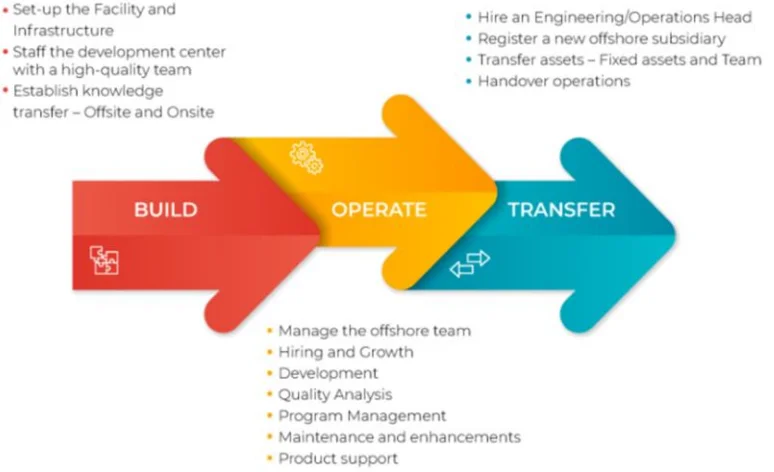
PPP models are different frameworks that define how responsibilities, risks, and ownership are shared between government and private players while developing infrastructure or services. Each model specifies who pays, who builds, who operates, and who ultimately owns the project.
Key PPP Models in India
1. Engineer-Procure-Construct (EPC)
Government bears the full cost of the project – including raw materials, procurement, and construction.
Private sector’s role is limited to providing engineering expertise and technical know-how.
Example: Dams, highways, power plants, and other complex projects.
2. Build-Operate-Transfer (BOT)
Most common PPP model in India (used in two-thirds of PPP projects).
Private entity designs, finances, and builds the project, then operates it commercially for a fixed concession period.
After the concession ends, the project is transferred back to the government.
Example: Toll highways, ports.
3. Hybrid Annuity Model (HAM)
Mixed model where both government and private sector share project costs.
Government pays 40% of cost in 5 annual installments during construction.
Developer arranges the remaining 60%.
After completion, the developer is paid based on performance and asset quality.
Used in highway construction projects.
4. Build-Own-Operate (BOO)
Private entity builds and owns the project, operates it for a fixed time.
Recovers investment by charging user fees (like tolls or service charges).
After operational period, ownership is transferred to the government.
5. Build-Own-Operate-Transfer (BOOT)
Combination of BOT and BOO models.
Private entity builds, owns, and operates the facility for a fixed period, then hands over ownership to the government.
6. Design-Build-Finance-Operate (DBFO)
Private player handles end-to-end responsibilities – designing, financing, constructing, and operating the project.
Ownership shifts to the government after the concession period.
7. Build-Lease-Operate-Transfer (BLOT)
Private entity builds and owns the facility.
Leases it to the government/public authority for a fixed time.
After lease ends, the facility ownership is transferred back to government.
8. Lease-Develop-Operate (LDO)
Government/public sector retains ownership of the infrastructure.
Private entity takes it on lease, develops it further, and operates it commercially.
Commonly used in airport facilities (e.g., private players running airports under lease agreements).
| Model | Who Pays? | Who Builds? | Who Owns? | Who Operates? |
|---|---|---|---|---|
| EPC | Government | Private (Engineering only) | Government | Government |
| BOT | Private | Private | Govt after concession | Private till concession |
| HAM | Govt (40%) + Private (60%) | Private | Govt after completion | Private till payment period |
| BOO | Private | Private | Private (till period) | Private |
| BOOT | Private | Private | Govt after concession | Private till concession |
| DBFO | Private | Private | Govt after concession | Private |
| BLOT | Private | Private | Govt after lease ends | Private (lease period) |
| LDO | Private | Private (development) | Government | Private (lease period) |
Prelims tips
- Most common PPP model in India = BOT.
- HAM = 40% govt support + 60% private funding.
- LDO model often used in airports.
- EPC = government bears full cost; private only provides engineering expertise.
Mains points
- PPP models vary in terms of cost-sharing, risk allocation, and ownership transfer.
- BOT and HAM dominate India’s highway sector.
- Government support is crucial for projects with long gestation and low returns.
- Each model balances efficiency (private) and welfare/public interest (government).
Vijay Kelkar Committee Suggestions on PPPs
The Vijay Kelkar Committee (2015) was set up to review and improve PPP (Public-Private Partnership) frameworks in India. It focused on shifting from fiscal benefits to service delivery, risk allocation, and institutional reforms for effective PPP implementation.
1. Revisiting PPPs
PPP contracts should focus on better service delivery, not just fiscal benefits to government.
Risks must be clearly identified and allocated between government and private players.
Use Viability Gap Funding (VGF) carefully, only when user charges cannot generate stable revenue.
Adopt better fiscal reporting and regular monitoring of project performance.
2. Institutional Reforms
Establish a specialised institute called 3P-I (3P Institute) as a centre of excellence on PPPs to provide policy advice, best practices, and modelling support.
Create Infrastructure PPP Adjudication Review Committee and an Infrastructure PPP Adjudication Tribunal to handle disputes and renegotiations.
Strengthen sector regulators by building their capacity to handle PPP contracts.
Empower PPP Cells in infrastructure ministries and state governments with support from the Department of Economic Affairs.
| Category | Sub-Type | Explanation |
|---|---|---|
| Based on Source | Domestic Investment Model | Funds come from within India – includes public, private, or PPP investments. |
| Based on Source | Foreign Investment Model | Funds come from outside India – can be 100% FDI or a mix of domestic + foreign. |
| Based on Destination | Sector-Specific Investment Model | Investments target specific zones/sectors like SEZs or Multi-Product Industrial Zones. |
| Based on Destination | Cluster Investment Model | Investments focus on industry clusters, e.g., food processing or textile hubs. |
Prelims tips
- Vijay Kelkar Committee suggested PPP shift from fiscal benefits to service delivery.
- Recommended creation of 3P-I as an institution of excellence for PPP.
- Suggested Viability Gap Funding only when user charges are insufficient.
- PPP investments can be classified by Source (Domestic/Foreign) and Destination (Sector/Cluster).
Mains points
- Kelkar Committee emphasized risk-sharing and focusing PPP on service outcomes.
- Institutional reforms like 3P-I, PPP tribunal, and empowered PPP Cells were key suggestions.
- PPP disputes require independent adjudication mechanisms to ensure investor confidence.
- Investment models in India can also be classified by source (domestic/foreign) and target sectors (sector-specific/cluster).
Development Models Used in the Planning Process
Three important models – Harrod-Domar, Solow-Swan, and Feldman-Mahalanobis – provide different perspectives on how savings, investment, capital, technology, and government intervention affect long-term economic growth.
Harrod-Domar Model of Investment
Developed by Roy Harrod (1939) and Evsey Domar (1946).
Focuses on how savings and investment drive economic growth.
Higher savings → more investment in factories, machines, infrastructure → more production → growth.
But if savings are too high and demand is low, recession may occur.
Provides a simple link between investment, savings, and growth but unrealistic assumptions limit real-world use.
Solow-Swan Model
Developed by Robert Solow and Trevor Swan (1950s).
Explains long-term growth using capital, labour, and technology.
Diminishing returns to capital: each additional unit of capital gives less output.
Growth depends on continuous technological progress and higher savings.
Without new technology, the economy will reach a steady state (no further growth).
Widely used to understand why some countries grow faster – because of better technology adoption.
Feldman-Mahalanobis Model
Developed in 1950s by Morris Feldman and P.C. Mahalanobis for India's planning.
Focus: Developing countries face shortage of capital and technology.
Suggests government should take the lead in infrastructure, education, and R&D investment.
Key principles:
Invest in industries with high growth potential and multiplier effect.
Build infrastructure (roads, power, ports) to support trade and industry.
Promote education and research for skilled workforce and innovation.
Protect domestic industries from foreign competition.
Criticism: Over-dependence on government may lead to inefficiency and corruption.
Important for India’s 2nd Five Year Plan, shaping focus on heavy industries.
| Model | Key Focus | Strength | Limitation |
|---|---|---|---|
| Harrod-Domar | Savings & Investment | Simple link between savings and growth | Ignores demand issues & real-world complexity |
| Solow-Swan | Capital & Technology | Explains long-term growth & steady state | Assumes smooth tech progress |
| Feldman-Mahalanobis | Govt. Intervention in Capital Goods & Heavy Industry | Shaped India's planning; Focus on infrastructure | Risk of inefficiency & corruption |
Prelims tips
- Harrod-Domar model links savings rate with investment-led growth.
- Solow-Swan model explains steady state growth and role of technology.
- Feldman-Mahalanobis guided India’s 2nd Five Year Plan with focus on heavy industry.
- Remember: Harrod-Domar = short-run, Solow = long-run, Mahalanobis = India-specific.
- Golden Rule (Solow model, Phelps 1961): the saving rate at which steady-state consumption per worker is the highest; saving more or less than this lowers long-run consumption.
Mains points
- Development models explain how different economies achieve growth.
- Harrod-Domar emphasizes investment rate, Solow-Swan emphasizes technology, and Mahalanobis emphasizes government planning.
- India’s planning history shows reliance on Mahalanobis model, while modern strategies incorporate Solow-like focus on innovation.
- Each model has strengths but also limitations, highlighting the need for a mixed approach.
Rao–Manmohan Model & Miscellaneous Investment Terms
The Rao–Manmohan Model (1991 reforms) was a turning point in Indian economy. Before 1991, India’s economy was closed and controlled by the government. After this model, India opened its doors to the world by reducing restrictions, allowing foreign companies to invest, and encouraging private businesses. This is also called LPG reforms (Liberalisation, Privatisation, Globalisation). Along with this, India also uses special investment methods like Swiss Challenge, Turnkey Projects, and Viability Gap Funding to support infrastructure and PPP projects.
Rao–Manmohan Model (1991 Economic Reforms)
Named after Prime Minister P.V. Narasimha Rao and Finance Minister Dr. Manmohan Singh.
Introduced in 1991 when India was facing a severe economic crisis (low foreign reserves, high inflation, IMF pressure).
Purpose: To save India from bankruptcy and make the economy stronger by linking it with the global market.
Major Steps Taken:
Deregulation of industries: Earlier, to open a factory or business, companies needed government licenses (called License Raj). These licenses were mostly removed to give freedom to industries.
Fiscal reforms: The government reduced subsidies, simplified taxes, and encouraged investment and entrepreneurship.
Trade liberalisation: Tariffs (import taxes) were reduced, and import licensing was removed so that goods could be freely imported/exported.
Financial sector reforms: Banks and stock markets were modernised. Private and foreign banks were allowed. SEBI became strong to regulate stock markets.
Achievements:
Brought Foreign Direct Investment (FDI) into India.
Boosted private sector growth and created lakhs of jobs.
Increased productivity and made India globally competitive.
Criticism:
Poor and marginalised groups were left behind.
Income inequality increased; rich got richer, poor didn’t benefit equally.
Importance: Marked India’s shift from a socialist-style controlled economy to a liberal, globalised economy.
Miscellaneous Investment Terms
Swiss Challenge
A method for awarding projects. A private company gives a proposal to the government (unsolicited bid).
The government makes this proposal public and invites other companies to give their bids.
If another company gives a better bid, the original company gets a chance to match it.
Example: A company proposes to build a highway → Govt. asks others → Best bid is chosen, but original proposer can match it.
Turnkey Project
In this model, the private contractor is responsible for both designing and constructing a facility (like a power plant, road, or factory).
The cost is fixed in advance. The government just pays the agreed fee and gets a fully ready project (like getting a ‘ready-to-use key’ → hence the name Turnkey).
Risk of delay or cost overrun is on the contractor, not on the government.
Viability Gap Funding (VGF)
Some projects are socially very important (like rural roads, hospitals, or public toilets) but not profitable for private companies.
To make them attractive, the government pays up to 40% of project cost as a one-time grant (financial support).
This ensures private companies also take up projects that benefit the poor and society.
India Infrastructure Project Development Fund (IIPDF)
This fund helps governments (central, state, local bodies) to prepare big projects.
Money is given for feasibility studies, planning, project structuring, etc.
Example: Before starting a metro rail project, studies are funded through IIPDF.
India Infrastructure Finance Company Ltd. (IIFCL)
Government-owned company that gives long-term loans for big infrastructure projects (like airports, highways, ports).
Since these projects take many years (long gestation period), IIFCL raises funds from both India and abroad to support them.
Types of Investment Models (General)
1. Equity-based: Buying shares of a company; you own part of the company and earn profits if the company grows.
2. Debt-based: Buying bonds; you lend money and earn interest + repayment later.
3. Real estate-based: Buying property like houses, shops, offices to earn rent or sell later at higher price.
4. Commodity-based: Investing in gold, silver, oil, etc. which protect against inflation.
5. Venture capital: Rich investors funding startups (new businesses) in return for ownership.
6. Mutual funds: Many small investors pool money → invested in stocks/bonds by fund managers.
7. Hedge funds: Risky, high-reward investments for rich people and institutions.
| Mechanism | Purpose (Simple Explanation) |
|---|---|
| Swiss Challenge | Private proposal → govt invites bids → original proposer can match best bid |
| Turnkey Project | Contractor designs + builds → govt gets ready project at fixed cost |
| VGF | Govt. pays up to 40% support for socially important projects |
| IIPDF | Money for project studies before launch |
| IIFCL | Loans for long-term infrastructure projects |
Prelims tips
- 1991 reforms = LPG reforms (Liberalisation, Privatisation, Globalisation).
- Swiss Challenge = original bidder gets right to match best counter-bid.
- VGF = govt. support up to 40% for PPP projects.
- IIFCL = Govt. company providing long-term infrastructure finance.
Mains points
- Rao–Manmohan model opened India’s economy and attracted global capital.
- It modernised industries, trade, and finance, but also increased inequality.
- Mechanisms like Swiss Challenge, VGF, IIPDF, and IIFCL strengthen PPPs.
- Turnkey projects reduce govt. risk by shifting responsibility to private contractors.
- India’s development path combines liberalisation with targeted govt. support.
Accelerator Theory of Investment
The Accelerator Theory suggests that a firm's investment spending depends on the change in economic output (GDP) or consumer demand, not just the current level. When demand increases, firms invest more to expand production capacity, accelerating growth.
What is the Accelerator Theory?
Imagine a bakery that makes 100 cakes a day and has exactly the right machines for it.
Scenario 1: Demand stays at 100 cakes. The bakery doesn't need new machines. Investment = 0 (maybe just for replacing old machines).
Scenario 2: Demand increases to 120 cakes a day. The bakery now needs more machines to meet this higher demand. It makes a significant new investment.
The Core Idea: Net investment (adding new capacity) is triggered by the rate of change (acceleration) in demand or output, not the absolute level.
If GDP grows faster (accelerates) → firms expect higher future demand → they invest more now to build capacity.
If GDP growth slows down (decelerates) → firms expect lower future demand → they cut back on investment.
This creates a multiplier effect: small changes in demand can lead to much larger changes in investment spending.
Formula (Conceptual)
Investment (I) = α (Change in Output/Demand ΔY)
Where α (alpha) is the accelerator coefficient, representing how much capital is needed for each unit of output.
Importance
Helps explain business cycles: Why investment booms during economic expansions and collapses during recessions.
Shows why investment is often more volatile than overall GDP.
Limitations
Assumes firms operate at full capacity (not always true).
Assumes firms can easily get funds for investment (not always true).
Ignores other factors influencing investment, like interest rates, technology, and business confidence ('animal spirits').
It's a simplified view but useful for understanding the link between growth expectations and investment decisions.
Prelims tips
- Accelerator Theory: Investment depends on the change (acceleration) in GDP/demand.
- Faster growth → Higher investment.
- Slower growth → Lower investment.
- Explains why investment is volatile.
Mains points
- The accelerator principle highlights the importance of sustained economic growth to encourage private investment.
- It shows how expectations about future demand drive current investment decisions.
- While simplistic, it explains a key component of business cycles and the volatility of investment spending.
- Policies aimed at stabilizing GDP growth can help stabilize investment.
Asset Monetisation
Asset monetisation is a process where the government unlocks the value of public assets (like roads, power lines, pipelines) by leasing them out to private companies for a specific period. The private sector operates and maintains the asset, paying an upfront fee or regular share to the government, which uses this money for new infrastructure.
What is Asset Monetisation?
It's about generating income from existing, operational public assets without selling them permanently.
Key Idea: Government owns the asset, but a private player operates it for a fixed term (e.g., 15-30 years) and shares revenue or pays a fee.
Focus: 'Brownfield' assets (already built and operational), not 'Greenfield' (new projects).
Purpose: Raise funds for new infrastructure ('financing infra through infra'), improve operational efficiency, and utilize assets better.
National Monetisation Pipeline (NMP)
Launched in August 2021 by the Government of India.
Target: To monetise central government assets worth ₹6 lakh crore over 4 years (FY 2022-25).
Sectors: Roads, Railways, Power, Oil & Gas Pipelines, Telecom, Warehousing, Mining, Aviation, Ports, Stadiums.
Method: Primarily through structured PPP models like Operate-Maintain-Transfer (OMT), Toll-Operate-Transfer (TOT) in roads, or leasing models.
How it Works (Example: TOT in Roads)
1. NHAI (Govt agency) identifies an operational highway stretch with stable toll revenue.
2. Private companies bid to win the right to collect tolls and maintain that road for, say, 15 years.
3. The winning company pays a large upfront amount to NHAI.
4. NHAI uses this money to build new highways.
5. After 15 years, the highway operation goes back to NHAI.
Benefits of Asset Monetisation
New Funding Source: Generates funds for infrastructure without increasing taxes or debt.
Efficiency: Private sector brings operational efficiency and better maintenance.
Better Asset Utilization: Ensures public assets are used optimally.
De-risks New Projects: Uses revenue from stable brownfield assets to fund riskier greenfield projects.
Challenges and Risks
Valuation: Accurately valuing the asset and potential revenue is difficult.
Monopoly Risk: Private operator might exploit monopoly power (e.g., charge high tolls) if regulation is weak.
Contractual Issues: Disputes can arise regarding revenue sharing, maintenance standards, or unforeseen events.
Public Opposition: Concerns about private control over essential public assets.
Execution Capacity: Need for clear frameworks, transaction advisors, and regulatory oversight.
Asset Monetisation vs Privatisation
Monetisation: Ownership remains with the government; operational rights are transferred temporarily (Leasing/Concession).
Privatisation: Ownership and control are permanently transferred to the private sector (Sale).
| Feature | Asset Monetisation | Privatisation |
|---|---|---|
| Ownership Transfer | No (Remains with Govt) | Yes (Permanent) |
| Asset Type | Brownfield (Existing) | Can be Brownfield or Greenfield |
| Control | Operational control transferred temporarily | Full control transferred permanently |
| Primary Goal | Unlock value for reinvestment, improve efficiency | Reduce govt role, raise funds, improve efficiency |
Prelims tips
- Asset Monetisation: Leasing operational public assets (Brownfield) to private players.
- Ownership remains with the government.
- National Monetisation Pipeline (NMP): ₹6 lakh crore target over FY22-25.
- Funds raised are used for new infrastructure.
- Different from Privatisation (permanent sale of ownership).
Mains points
- Asset monetisation is an innovative financing tool for infrastructure development, reducing reliance on traditional budget allocations.
- The NMP aims to create a virtuous cycle: monetise old assets to fund new ones.
- Success depends on proper valuation, transparent bidding, robust contracts, and effective regulation to protect public interest.
- It requires careful balancing of efficiency gains with potential risks like monopoly creation and ensuring service quality for citizens.
Digital Infrastructure & Cyber Security
Digital Infrastructure refers to the foundational technologies like broadband networks, data centres, cloud computing, and digital payment systems that underpin the digital economy. Ensuring its security (Cyber Security) is crucial for protecting data, preventing disruptions, and maintaining public trust in digital services.
What is Digital Infrastructure?
It's the backbone of the modern digital world. Key components include:
Connectivity: Broadband internet (fibre optics, 5G), Wi-Fi networks.
Data Storage & Processing: Data centres, cloud services (like AWS, Azure, Google Cloud).
Digital Platforms: E-commerce sites, social media, government portals (like DigiLocker, CoWIN).
Payment Systems: UPI, digital wallets, online banking infrastructure.
Devices: Smartphones, computers, IoT devices.
Importance of Digital Infrastructure
Economic Growth: Enables e-commerce, digital payments, remote work, and innovation.
Service Delivery: Improves access to education (online learning), healthcare (telemedicine), and government services (Digital India initiatives).
Financial Inclusion: Facilitates digital payments and banking for underserved populations.
Connectivity: Bridges geographical distances, connecting people and businesses.
Cyber Security
Definition: The practice of protecting digital systems, networks, and data from malicious attacks, damage, or unauthorized access.
Why it's Crucial: As reliance on digital infrastructure grows, so does the risk of cyber threats.
Types of Threats:
Malware (Viruses, Ransomware)
Phishing (Tricking users into revealing sensitive information)
Denial-of-Service (DoS) attacks (Overwhelming systems to make them unavailable)
Data Breaches (Stealing personal or financial data)
Attacks on Critical Infrastructure (Power grids, banking systems)
Cyber Security Measures in India
National Cyber Security Policy (2013): Framework to protect information infrastructure.
CERT-In (Indian Computer Emergency Response Team): Nodal agency for responding to cyber security incidents.
National Critical Information Infrastructure Protection Centre (NCIIPC): Protects critical sectors (power, banking, telecom, etc.).
Cyber Surakshit Bharat Initiative: Aims to create awareness and build capacity.
Information Technology Act, 2000 (and amendments): Legal framework for cybercrimes.
Personal Data Protection Bill (now Digital Personal Data Protection Act, 2023): Regulates collection and processing of personal data.
Challenges
Rapidly Evolving Threats: Attackers constantly develop new methods.
Lack of Skilled Professionals: Shortage of cybersecurity experts.
Low Awareness: Many users are unaware of basic security practices.
Cross-Border Nature: Attacks often originate from other countries, making prosecution difficult.
Securing IoT Devices: Increasing number of connected devices creates more vulnerabilities.
Prelims tips
- Digital Infrastructure includes connectivity, data centres, platforms, payment systems.
- Cyber Security protects digital systems from attacks and breaches.
- CERT-In is India's nodal agency for cyber incident response.
- NCIIPC protects critical information infrastructure.
- Digital Personal Data Protection Act, 2023 governs data privacy.
Mains points
- Robust digital infrastructure is fundamental for achieving the goals of Digital India, financial inclusion, and boosting the digital economy.
- Cyber security is not just a technical issue but an economic and national security imperative.
- India needs a multi-pronged approach: strengthening technical defences, enhancing legal frameworks, increasing user awareness, fostering international cooperation, and building skilled cybersecurity workforce.
- Protecting critical infrastructure like banking, power, and telecom from cyber attacks is paramount.
Endogenous Growth Theory
Endogenous Growth Theory argues that long-term economic growth is driven primarily by internal factors ('endogenous') within the economy itself, particularly investments in human capital (education, skills), innovation (R&D), and knowledge. Unlike earlier models that treated technological progress as external ('exogenous'), this theory sees it as a result of deliberate economic actions.
Background: Exogenous vs Endogenous Growth
Exogenous Growth Models (like Solow-Swan): These models assume that technological progress, the main driver of long-run growth, happens outside the economic system (like a happy accident or 'manna from heaven'). They don't explain how technology improves.
Endogenous Growth Theory (Developed from 1980s onwards, Paul Romer, Robert Lucas): This theory argues that technological progress and productivity improvements are internal results of economic activities.
Key Drivers of Endogenous Growth
1. Human Capital: Investments in education, training, and health improve the skills and productivity of the workforce. A more skilled workforce is better at creating, adopting, and using new technologies.
2. Innovation and R&D: Deliberate investment by firms and governments in research and development leads to new products, processes, and technologies, driving productivity growth.
3. Knowledge Spillovers: New knowledge and ideas created by one firm or individual often 'spill over' and benefit others, leading to widespread productivity gains. (e.g., development of the internet).
4. Government Policies: Policies that support education, R&D (like subsidies or tax breaks), protect intellectual property (patents), and ensure stable macroeconomic conditions can foster endogenous growth.
Main Ideas
No Diminishing Returns to Knowledge: Unlike physical capital (Solow model), knowledge and ideas don't necessarily face diminishing returns. New ideas can build on old ones, leading to potentially unlimited growth.
Increasing Returns to Scale: Investments in knowledge and R&D can generate increasing returns – the more you invest, the bigger the payoff in terms of growth.
Role of Policy: Governments can actively influence long-run growth rates through policies that encourage investment in human capital and innovation.
Implications
Developing countries can achieve faster growth by investing heavily in education and R&D, rather than just accumulating physical capital.
Policies promoting openness to trade and ideas can accelerate knowledge spillovers and growth.
Long-term growth is not predetermined but can be influenced by conscious policy choices.
Prelims tips
- Endogenous Growth Theory: Long-run growth is driven by internal factors like human capital, R&D, and knowledge.
- Unlike Solow model, it assumes technology progress is not external (exogenous).
- Key drivers: Education, Innovation, Knowledge Spillovers.
- Implies government policies can influence long-run growth rate.
Mains points
- Endogenous growth theory provides a more optimistic view of long-run growth, suggesting it can be actively fostered through policy.
- It highlights the critical importance of investing in education, research, and creating an environment conducive to innovation for sustained economic development.
- This framework justifies government intervention to support R&D and human capital formation due to positive externalities (knowledge spillovers).
- It shifts the focus from mere capital accumulation to knowledge creation and technological advancement as the primary engines of growth.
Infrastructure Sectors (Aviation, Energy, Ports, Rail, Roads)
Infrastructure is the backbone of an economy, encompassing sectors like transport (aviation, ports, rail, roads) and energy. Developing robust infrastructure is crucial for economic growth, connectivity, trade, and improving quality of life.
Importance of Infrastructure
Infrastructure refers to the basic physical systems of a country – transport, energy, water, communication, etc.
Good infrastructure reduces business costs, attracts investment, facilitates trade, creates jobs, and improves living standards.
Key Infrastructure Sectors in India
1. Roads:
India has one of the largest road networks globally.
Key Programs: Bharatmala Pariyojana (highways development), Pradhan Mantri Gram Sadak Yojana (PMGSY - rural roads).
Focus: Improving connectivity, reducing travel time, enhancing safety.
Funding: Government budget, PPP models (BOT, HAM), NHAI bonds.
2. Railways:
Indian Railways is one of the world's largest rail networks.
Key Initiatives: Dedicated Freight Corridors (DFCs), high-speed rail (bullet train project), station modernization, electrification.
Focus: Increasing freight capacity, improving passenger experience, enhancing safety, reducing carbon footprint.
3. Ports:
Crucial for international trade (handles ~95% of trade by volume).
Major Ports (under Central Govt) and Non-Major Ports (under State Govts).
Key Program: Sagarmala Programme (port modernization, connectivity, coastal community development).
Focus: Increasing capacity, reducing turnaround time for ships, improving port connectivity.
4. Aviation:
Rapidly growing sector connecting cities and boosting tourism/business.
Key Scheme: UDAN (Ude Desh ka Aam Naagrik) - aims to connect underserved regional airports and make flying affordable.
Focus: Modernizing airports, enhancing air traffic management, improving regional connectivity.
PPP model widely used for airport development (e.g., Delhi, Mumbai, Bengaluru).
5. Energy:
Includes power generation (thermal, hydro, nuclear, renewable), transmission, and distribution.
Key Goals: Ensuring 'Power for All', increasing share of renewable energy (solar, wind), improving grid stability, reducing transmission losses.
Key Schemes: National Solar Mission, Green Energy Corridor, UDAY (for improving DISCOM health).
Focus: Energy security, sustainability, affordability.
Cross-Cutting Initiatives
National Infrastructure Pipeline (NIP): A ₹111 lakh crore plan (FY20-25) outlining infrastructure projects across various sectors.
PM GatiShakti National Master Plan: A digital platform integrating planning and coordination among ministries for infrastructure projects to reduce delays and costs.
Prelims tips
- Key Transport Infra: Roads (Bharatmala, PMGSY), Railways (DFCs), Ports (Sagarmala), Aviation (UDAN).
- Key Energy Infra Goals: Power for All, Renewable Energy push.
- Overall Infra Planning: National Infrastructure Pipeline (NIP) and PM GatiShakti.
- PPP models (BOT, HAM) widely used in roads and airports.
Mains points
- Infrastructure development is critical for achieving India's goal of becoming a 5 trillion economy.
- Transport infrastructure (roads, rail, ports, aviation) enhances connectivity, reduces logistics costs, and boosts trade.
- Energy infrastructure is vital for industrial growth, electrification, and transitioning towards cleaner energy sources.
- Initiatives like NIP and GatiShakti aim to create integrated, efficient, and world-class infrastructure through coordinated planning and execution.
- Challenges include land acquisition, environmental clearances, project delays, and ensuring adequate financing (role of PPP, DFIs).
International Infrastructure Finance
International infrastructure finance involves funding large-scale infrastructure projects (like ports, highways, energy grids) through investments and loans from international organizations (World Bank, ADB), foreign governments, or global private investors. It plays a crucial role, especially for developing countries, in bridging funding gaps and accessing technical expertise.
Why is International Finance Needed for Infrastructure?
Huge Funding Requirements: Infrastructure projects (like metro rail, high-speed rail, large ports) require massive amounts of capital, often beyond the capacity of domestic budgets or markets alone.
Long Gestation Periods: These projects take many years to build and start generating revenue, making them less attractive for short-term domestic lenders.
Access to Expertise: International financiers often bring global best practices, technology, and project management skills.
Risk Sharing: Spreads project risks across international partners.
Key Sources of International Infrastructure Finance
1. Multilateral Development Banks (MDBs):
World Bank Group: Provides loans (IBRD), concessional finance (IDA), guarantees (MIGA), and private sector investment (IFC) for infrastructure projects worldwide.
Asian Development Bank (ADB): Focuses on infrastructure development in the Asia-Pacific region.
New Development Bank (NDB): Established by BRICS countries, funds infrastructure and sustainable development projects.
Asian Infrastructure Investment Bank (AIIB): China-led bank focusing on infrastructure in Asia.
2. Bilateral Agencies:
Government agencies of developed countries provide loans or grants for infrastructure in developing countries (e.g., JICA - Japan, KfW - Germany, USAID - USA).
3. Foreign Direct Investment (FDI):
Foreign companies directly invest in building and operating infrastructure projects (e.g., foreign firms investing in Indian airports or power plants via PPP).
4. Sovereign Wealth Funds (SWFs) & Pension Funds:
Large global funds looking for long-term, stable returns often invest in infrastructure assets.
5. International Capital Markets:
Governments or companies can issue bonds (like 'Masala Bonds' issued abroad in Rupees) in international markets to raise funds for infrastructure.
India's Engagement
India is a major recipient of funding from MDBs like the World Bank and ADB for projects like highways, metros, railways, and renewable energy.
India is a founding member of NDB and AIIB.
Actively seeks FDI in infrastructure sectors.
Uses bilateral assistance (e.g., from Japan for the Mumbai-Ahmedabad High-Speed Rail).
Challenges
Exchange Rate Risk: Borrowing in foreign currency exposes projects to risks if the domestic currency depreciates.
Conditionalities: Loans from MDBs or bilateral agencies often come with policy conditions.
Geopolitical Factors: International finance can be influenced by global politics.
Project Preparation Capacity: Developing countries often lack the capacity to prepare bankable projects that meet international standards.
Prelims tips
- International Infra Finance needed due to large costs & long gestation periods.
- Key sources: MDBs (World Bank, ADB, NDB, AIIB), Bilateral Agencies (JICA, KfW), FDI, SWFs, Capital Markets.
- India is a major recipient of MDB funds and founding member of NDB & AIIB.
- Risks include exchange rate fluctuations and conditionalities.
Mains points
- International finance is critical for bridging the infrastructure funding gap in developing countries like India.
- MDBs and bilateral agencies not only provide funds but also technical assistance and promote best practices.
- Attracting FDI and private global capital requires stable policies, a conducive regulatory environment, and bankable projects.
- Managing risks associated with foreign currency borrowing (exchange rate risk) is crucial for project viability.
Investment Concepts: Crowding Out
Crowding out is an economic phenomenon where increased government borrowing to finance its spending drives up interest rates, making it more expensive for private companies and individuals to borrow. This reduction in private investment due to government borrowing is called 'crowding out'.
What is Crowding Out?
Imagine there's a limited pool of savings available in the economy for lending.
Scenario: The government decides to spend heavily on a new project (e.g., building statues) and needs to borrow a large amount from this pool.
Mechanism:
1. Government issues lots of bonds to borrow money.
2. To attract lenders (banks, public), the government might have to offer higher interest rates on its bonds.
3. This increased demand for loanable funds pushes up the overall interest rates in the economy.
4. Now, private companies wanting to invest (e.g., build a factory) find borrowing too expensive due to the higher interest rates.
5. Similarly, individuals wanting loans (e.g., for a house or car) also face higher rates and borrow less.
The Result: The government's borrowing 'crowds out' or displaces private borrowing and investment.
How it Happens
Increased Demand for Loanable Funds: Government borrowing adds to the total demand for loans, pushing up the price (interest rate).
Higher Interest Rates: Make private projects less profitable, leading to fewer investments.
Reduced Private Spending: Higher rates discourage consumer borrowing for big purchases.
Why is it a Concern?
Slows Economic Growth: Private investment is often seen as more efficient and productive than government spending. If private investment falls, long-term growth can suffer.
Inefficient Allocation: Government spending might be on less productive projects compared to the private projects that were crowded out.
Counterarguments ('Crowding In')
Some economists argue that government spending, especially on productive infrastructure (roads, ports), can actually encourage private investment ('crowding in').
Better infrastructure reduces business costs.
Government spending during a recession can boost overall demand, creating opportunities for private firms.
The net effect (crowding out vs crowding in) depends on the state of the economy (recession vs boom) and the type of government spending.
Relevance for India
India often faces concerns about its high fiscal deficit (government borrowing).
If the government borrows too much from the domestic market, it can potentially crowd out private investment, which is needed for job creation and growth.
This is why fiscal consolidation (reducing the deficit) is often emphasized.
Prelims tips
- Crowding Out: Increased government borrowing → Higher interest rates → Reduced private investment.
- It happens when government competes with private sector for limited loanable funds.
- Can slow down long-term economic growth.
- Crowding In: Opposite effect, where productive govt spending encourages private investment.
Mains points
- Crowding out is a potential negative consequence of large fiscal deficits financed by domestic borrowing.
- It highlights the trade-off between government spending and private sector activity.
- The extent of crowding out depends on factors like the overall savings rate, monetary policy stance (whether RBI accommodates the borrowing), and the productivity of government spending.
- Fiscal consolidation and efficient public expenditure management are key to mitigating crowding out concerns.
Lewis Dual-Sector Model
The Lewis Dual-Sector Model, proposed by economist Sir W. Arthur Lewis, explains how developing economies can grow by shifting surplus labor from a traditional, low-productivity agricultural sector to a modern, high-productivity industrial sector. This structural transformation drives industrialization and overall economic development.
The Two Sectors
The model divides a developing economy into two main sectors:
1. Traditional/Subsistence Sector:
Primarily agriculture.
Characterized by low productivity, surplus labor (many workers doing little productive work - 'disguised unemployment'), low wages (at subsistence level), and use of simple technology.
2. Modern/Industrial Sector:
Manufacturing, industry, services.
Characterized by high productivity, use of capital and technology, higher wages, and profit-driven.
The Mechanism of Growth
1. Capital Accumulation in Industry: Industrial firms reinvest their profits to buy more machines and expand.
2. Demand for Labor: Expansion creates demand for workers in the industrial sector.
3. Labor Migration: Surplus labor from the agricultural sector (where their marginal productivity is near zero) is attracted to the higher wages in the industrial sector and migrates from rural to urban areas.
4. Constant Industrial Wages (Initially): Because there's a large pool of surplus labor in agriculture, industries can hire more workers without significantly raising wages initially.
5. Profit Reinvestment Cycle: Higher profits in industry (due to low wages and high productivity) lead to more reinvestment, creating more demand for labor, leading to further migration.
6. Turning Point: This process continues until all surplus labor from agriculture is absorbed. After this 'Lewis Turning Point', agricultural wages start to rise, and industrial wages also need to increase to attract more workers. Industrial profit margins may then shrink.
Assumptions
Surplus labor exists in the agricultural sector.
Industrial wages are higher and initially fixed.
Industrialists reinvest all their profits.
Labor is mobile between sectors.
Relevance
Explains the historical process of industrialization in many countries (including aspects of China's growth).
Highlights the importance of shifting resources from low-productivity to high-productivity sectors for development.
Underscores the role of capital accumulation (investment) in driving this transformation.
Criticisms
Assumes industrialists reinvest all profits (they might consume some).
Assumes surplus labor can easily move and adapt (ignores skill gaps, migration costs, social barriers).
Ignores the possibility of technological progress in agriculture itself.
Potential for urban unemployment if industrial job creation doesn't keep pace with migration.
Prelims tips
- Lewis Model: Explains growth via shifting surplus labor from Agriculture (Traditional) to Industry (Modern).
- Driven by capital accumulation and profit reinvestment in industry.
- Assumes disguised unemployment in agriculture.
- Process continues until the 'Lewis Turning Point' is reached (no more surplus labor).
Mains points
- The Lewis model provides a foundational understanding of structural transformation in developing economies.
- It highlights the importance of industrialization as an engine of growth and labor absorption.
- While its assumptions are simplistic, the core idea of moving resources to more productive uses remains relevant for policy.
- Challenges include managing rural-urban migration, creating sufficient industrial jobs, and addressing skill gaps.
Urban Infrastructure: Smart Cities, AMRUT and Urban Transport
India's cities generate a large share of GDP but suffer from water shortages, flooding, congestion, housing gaps and weak municipal finances. Central missions—Smart Cities Mission and AMRUT (2015), Swachh Bharat Mission (Urban), PMAY-Urban and metro rail projects—aim to upgrade urban infrastructure, but success depends on empowered and financially strong urban local bodies.
1. Urbanisation Context
Census 2011 recorded about 31% urban population; it is projected to rise sharply in coming decades.
Growth of census towns and peri-urban areas governed as villages leads to unplanned sprawl.
2. Major Missions
Smart Cities Mission (2015): 100 cities selected through competition; area-based development and pan-city ICT solutions; Integrated Command and Control Centres; implemented through Special Purpose Vehicles.
AMRUT (2015) and AMRUT 2.0 (2021): Water supply, sewerage, storm-water drains, green spaces; AMRUT 2.0 targets universal tap water coverage in all statutory towns.
Swachh Bharat Mission–Urban 2.0 (2021): Garbage-free cities, waste processing, legacy dumpsite remediation.
PMAY–Urban (2015) and PMAY–U 2.0 (2024): Affordable housing through beneficiary-led construction, partnerships and interest subsidy.
Urban transport: Metro Rail Policy (2017), PM e-Bus Sewa (2023), National Urban Transport Policy (2006) promoting public transport and non-motorised transport.
3. Financing
Municipal revenue is around 1% of GDP, far below many emerging economies.
Tools: Property-tax reform with GIS, municipal bonds (Pune 2017, Indore, Ahmedabad), Value Capture Finance policy (2017), PPPs, Transit-Oriented Development.
Urban Challenge Fund announced in the Union Budget 2025-26 to finance city projects.
4. Challenges
Weak ULBs and parastatal fragmentation; poor drainage and encroachment on lakes causing urban floods; slums and informal housing; traffic and air pollution; low share of public transport; climate risks such as heat islands.
5. Way Forward
Implement the 74th Amendment in spirit (funds, functions, functionaries); metropolitan planning committees; integrated land-use and transport planning; blue-green infrastructure; data-driven governance and citizen participation.
| Mission | Launch | Focus |
|---|---|---|
| Smart Cities Mission | 2015 | Area-based development, ICT solutions in 100 cities |
| AMRUT / AMRUT 2.0 | 2015 / 2021 | Water supply, sewerage, green spaces |
| SBM-Urban 2.0 | 2021 | Garbage-free cities |
| PMAY-Urban / 2.0 | 2015 / 2024 | Affordable housing |
| PM e-Bus Sewa | 2023 | Electric buses for city transport |
Prelims tips
- Smart Cities Mission and AMRUT were launched in June 2015.
- Smart city projects are executed through Special Purpose Vehicles (SPVs).
- Urban local bodies' functions are listed in the 12th Schedule (18 subjects).
- Pune issued municipal bonds in 2017 after a long gap in India.
- Census 2011 urban population: about 31%.
Mains points
- Missions have built assets, but without empowered and accountable ULBs, maintenance and integration suffer.
- SPVs in the Smart Cities Mission speed up execution but can bypass elected councils, raising accountability concerns.
- Urban flooding and heat stress show the need for climate-resilient planning and protection of wetlands and lakes.
- Municipal finance reform—property tax, user charges, bonds—is the foundation of sustainable urban infrastructure.
- Public transport, walking and cycling infrastructure reduce congestion and pollution more than road widening.
Did you know?
- Indore has topped the Swachh Survekshan cleanliness ranking many years in a row.
- Kolkata Metro (1984) was India's first metro rail system.
- Chandigarh, planned by Le Corbusier, was one of independent India's first planned cities.