
Indian Economy · UPSC Notes
Financial Market — UPSC Economy Notes
Free, exam-focused notes for UPSC Prelims and Mains, with Prelims tips and Mains points for every topic. 40 topics.
Open in the interactive reader: bookmarks, progress tracking and read-aloud.
Financial Market
A financial market is a platform where people with extra money (savers/investors) provide funds to those who need money (borrowers/businesses). It enables creation, trading, and exchange of financial assets like shares, bonds, and debentures. It acts as a bridge between savers and users of funds.
Overview
Financial market acts as a link between investors and borrowers.
It includes individual investors, financial institutions, banks, stock exchanges, and intermediaries.
Any place or platform where financial transactions happen is considered a financial market.
It may involve issuing new financial assets (like IPO of shares or bonds) or trading existing ones.
Functions of Financial Market
Mobilisation of Savings: Helps channel savings into productive investments, giving savers multiple investment options.
Facilitating Price Discovery: Demand (by businesses) and supply (from households) determine asset prices.
Providing Liquidity: Makes it easy to buy or sell financial assets, ensuring they can be converted into cash when needed.
Reducing Transaction Costs: Provides a central platform with information, saving time, money, and effort for both buyers and sellers.
Types of Financial Market
Money Market: Provides short-term funds (up to 364 days). Examples: Treasury Bills, Commercial Papers, Certificates of Deposit.
Capital Market: Provides medium to long-term funds (more than 1 year). Examples: Equity shares, Debentures, Bonds.
Both markets serve different financial needs of businesses and individuals.
| Aspect | Money Market | Capital Market |
|---|---|---|
| Nature of Funds | Short-term (up to 364 days) | Medium & long-term (more than 1 year) |
| Examples | T-Bills, Commercial Papers, Certificate of Deposit | Equity Shares, Preference Shares, Bonds, Debentures |
| Purpose | Short-term needs like working capital, cash flow | Long-term needs like business expansion, infrastructure |
| Risk | Lower risk due to short duration | Higher risk due to longer maturity |
| Major Regulator | RBI | SEBI |
| Main Players | RBI, Commercial Banks, Financial Institutions, Mutual Funds | Stock Exchanges, Investors, Brokers, Underwriters |
Prelims tips
- Money Market = short-term funds; Capital Market = long-term funds.
- Money Market is mainly regulated by RBI; Capital Market is mainly regulated by SEBI.
- Money Market instruments are less risky; Capital Market instruments involve higher risk but higher return.
- Examples of Money Market: T-Bills, CP, CDs; Capital Market: Shares, Bonds, Debentures.
Mains points
- Financial market acts as the backbone of the economy by channelising funds.
- It improves savings mobilisation, investment, and overall economic growth.
- Money Market provides liquidity and stability; Capital Market supports long-term growth.
- Helps in price discovery, transparency, and financial inclusion.
- Efficient regulation by RBI and SEBI ensures stability and investor protection.
Money Market
The money market is the part of the financial market where short-term funds (up to one year) are borrowed and lent. It provides liquidity, helps in interest rate determination, and acts as an avenue for the government, banks, and companies to manage short-term financial needs.
Overview
The money market deals with short-term funds, ranging from overnight to 1 year.
In India, it includes Reserve Bank of India (RBI), commercial banks, cooperative banks, financial institutions, and certain NBFCs.
RBI is the leader of the Indian money market, managing liquidity and interest rates.
Other participants include LIC, GIC, and financial institutions that provide and absorb funds.
Functions of Money Market
Facilitating Short-term Borrowing & Lending: Provides a platform for banks and corporates to borrow and lend funds for short durations (like 7–14 days). Example: Certificates of Deposit (CDs).
Providing Liquidity: Ensures that banks, companies, and financial institutions can access short-term funds to meet immediate cash requirements.
Determining Short-term Interest Rates: Supply and demand in the money market influence borrowing and lending rates. Example: RBI issues Treasury Bills (T-Bills) of 91, 182, 364 days to set a benchmark.
Offering Investment Opportunities: Provides safe and liquid investment instruments such as T-Bills, Commercial Papers (CPs), CDs, and repo transactions. Example: Companies issue CPs to investors for short-term funding.
Helping Government Finances: The Government of India issues T-Bills to raise short-term funds to meet expenses or temporary cash shortages.
Enabling Monetary Policy Transmission: RBI uses the money market to influence liquidity and short-term interest rates through policy tools like Repo and Reverse Repo rates.
Managing Liquidity in Banking System: RBI ensures stability through open market operations (OMO), Liquidity Adjustment Facility (LAF), and repo operations.
| Instrument | Description | Example |
|---|---|---|
| Treasury Bills (T-Bills) | Short-term government securities, risk-free | Issued by RBI for 91, 182, 364 days |
| Commercial Papers (CPs) | Unsecured short-term debt by companies | Issued by corporates to raise funds |
| Certificates of Deposit (CDs) | Short-term instruments issued by banks | Banks raise funds from investors |
| Repo Transactions | Short-term borrowing with securities as collateral | Banks borrow using government securities |
| Call Money Market | Overnight borrowing and lending among banks | Banks manage daily liquidity needs |
Prelims tips
- Money market deals with short-term funds (up to 1 year).
- RBI is the leader and regulator of Indian money market.
- T-Bills are risk-free, issued by RBI on behalf of Government of India.
- CPs and CDs are widely used by corporates and banks respectively.
- Call money market = overnight funds among banks.
Mains points
- Money market ensures liquidity and stability in the financial system.
- It plays a crucial role in implementing RBI’s monetary policy.
- Provides safe and flexible short-term investment options.
- Acts as a channel for government to raise short-term funds.
- Improves efficiency of financial system by balancing surplus and deficit of funds.
Money Market Instruments – Call Money
Call Money is a short-term money market instrument where banks and financial institutions borrow and lend funds for just one day (overnight). It helps banks meet temporary liquidity needs without requiring any collateral. The interest rate in this market is called the 'Call Rate'.
Overview
The money market in India has two segments: Unorganised Money Market and Organised Money Market.
Organised Money Market consists of various instruments, one of the most important being 'Call Money'.
Call money refers to short-term borrowing and lending of funds, typically overnight or for a single day, among banks and financial institutions.
It helps banks maintain their daily liquidity and asset-liability balance.
Features of Call Money
Borrowing and lending are done on a daily basis and repaid the same day.
The interest rate charged is known as the Call Rate, which fluctuates depending on demand and supply of funds.
Transactions in the call money market do not require any security or collateral.
It is mainly used by banks to cover short-term mismatches in liquidity.
It is regulated by the Reserve Bank of India (RBI) to ensure efficiency and transparency.
Participation is restricted to banks, financial institutions, and selected eligible NBFCs.
It is considered a risky and volatile segment of the money market.
Example
If Bank A needs funds for just one day, it can borrow from Bank B in the call money market. Bank A repays the loan the same day with interest (call rate).
| Aspect | Details |
|---|---|
| Nature | Short-term borrowing and lending for 1 day (overnight) |
| Interest Rate | Call Rate (highly volatile, demand-supply driven) |
| Collateral | No security or collateral required |
| Participants | Banks, Financial Institutions, select NBFCs |
| Regulator | Reserve Bank of India (RBI) |
| Use | To meet short-term liquidity requirements |
Prelims tips
- Call Money = Overnight borrowing and lending.
- Interest rate is called 'Call Rate'.
- No collateral/security needed.
- Highly volatile segment of the money market.
- RBI regulates and uses call money market for monetary policy transmission.
Mains points
- Call money market provides flexibility and immediate liquidity to banks.
- It plays a role in stabilizing daily operations of banks through inter-bank borrowing.
- RBI uses the call rate as an important tool for monetary policy transmission.
- Absence of collateral makes it fast but also risky and volatile.
- Essential for maintaining short-term balance in the financial system.
Money Market Instruments – Notice Money & Treasury Bills
Notice Money and Treasury Bills (T-bills) are two important instruments of the Indian money market. Notice Money allows borrowing and lending between banks and institutions for 2–14 days, while Treasury Bills are short-term government securities issued at a discount and redeemed at face value.
Notice Money
Short-term borrowing and lending instrument with a maturity of 2 to 14 days.
Interest rate is determined by market forces of demand and supply.
Participation restricted to banks, financial institutions, and selected NBFCs.
Regulated by RBI to ensure fair and efficient functioning.
In 2020, RBI allowed Regional Rural Banks (RRBs) to access the call/notice money market and facilities like LAF and MSF for better liquidity management.
Treasury Bills (T-bills)
Short-term debt instruments issued by the Government of India via RBI.
Considered the safest investment option as they are fully backed by the Government.
Used by government to raise short-term funds to cover temporary mismatches between receipts (taxes, revenues) and expenditure.
Issued at a discount (below face value) and redeemed at par (face value).
They do not carry interest; the return is the difference between issue price and redemption value (discount).
Example: A 91-day T-bill with a face value of ₹100 may be issued at ₹90. At maturity, investor gets ₹100, earning ₹10 as profit.
| Aspect | Notice Money | Treasury Bills |
|---|---|---|
| Nature | Short-term borrowing/lending for 2–14 days | Short-term debt instrument issued by Govt. |
| Issuer | Banks and financial institutions | Government of India (via RBI) |
| Tenure | 2–14 days | 91, 182, 364 days |
| Interest | Market-determined interest rate | No interest; issued at discount, redeemed at face value |
| Participants | Banks, FIs, eligible NBFCs, RRBs (since 2020) | Investors, banks, financial institutions, individuals |
| Risk | Relatively high (market-driven, unsecured) | Lowest risk (sovereign guarantee) |
Prelims tips
- Notice Money = short-term borrowing/lending for 2–14 days.
- RBI in 2020 allowed RRBs to access Notice Money market.
- T-bills = issued by Government via RBI at discount, redeemed at face value.
- T-bills available in 91, 182, 364 days maturities.
- T-bills = zero-coupon securities, safest form of investment.
Mains points
- Notice Money provides very short-term liquidity for banks and financial institutions.
- T-bills provide safe, risk-free investment while also helping the government manage its short-term financing needs.
- Both instruments are crucial for liquidity management and stability of financial markets.
- Notice Money interest rates indicate short-term liquidity stress in banking sector.
- T-bills act as benchmark for short-term risk-free interest rates in India.
Money Market Instruments – Treasury Bills, Cash Management Bills, Certificates of Deposit, and Commercial Papers
Indian Money Market offers various short-term instruments like Treasury Bills, Cash Management Bills, Certificates of Deposit, and Commercial Papers. They differ in issuers, maturity, risk, and purpose but all help manage short-term liquidity and provide investment avenues.
Treasury Bills (T-bills)
Issued by Government of India via RBI with tenures of 91, 182, and 364 days.
Risk-free, highly liquid, and issued at discount to face value.
No interest is paid; the difference between issue price and face value is profit.
Taxation: Short-Term Capital Gains (STCG) applicable as per investor’s tax slab.
Central Government issues T-bills (short-term) and bonds (long-term); State Governments issue only long-term bonds called State Development Loans.
Features of T-bills
Maximum tenure: 364 days.
Safest instrument since backed by Government.
Tradable in secondary market.
Discounted instrument: profit = face value – issue price.
Cash Management Bills (CMBs)
Introduced in 2010 by RBI on behalf of Government of India.
Purpose: Manage temporary cash-flow mismatches of government.
Similar to T-bills but tenure is up to 90 days.
Issued at discount through auctions.
Qualify as SLR securities under Section 24 of Banking Regulation Act, 1949.
Certificate of Deposit (CDs)
Issued by Commercial Banks and Financial Institutions.
Tenure: Banks = 7 days to 1 year; FIs = 1 to 3 years.
Minimum denomination: Rs. 5 lakhs (in multiples of 5 lakhs).
Issued at discount, redeemed at face value.
Virtually risk-free and transferable.
Eligible issuers: Scheduled Commercial Banks, RRBs, Small Finance Banks.
Eligible buyers: Individuals, corporates, mutual funds, insurance companies.
Commercial Paper (CPs)
Unsecured short-term instrument issued by companies, Primary Dealers, and All-India Financial Institutions (with RBI permission).
Used for raising funds for working capital and business needs.
Example: Company ABC Ltd. issues CPs worth ₹10 crores with 90-day maturity at 6% discount; investors buy below face value and receive full redemption value.
Features of CPs
Maturity: 7 days to 1 year, but within validity of credit rating.
Minimum denomination: Rs. 5 lakhs, multiples thereafter.
Require high credit ratings; only strong companies can issue.
Issued at discount, higher rates than government securities, and tradable in secondary market.
| Instrument | Issuer | Tenure | Nature | Risk Level |
|---|---|---|---|---|
| Treasury Bills | Government of India (via RBI) | 91, 182, 364 days | Discounted, no interest | Lowest (sovereign backed) |
| Cash Management Bills | Government of India (via RBI) | Up to 90 days | Discounted, auction-based | Very Low |
| Certificate of Deposit | Banks & FIs | 7 days – 1 year (Banks); 1–3 years (FIs) | Discounted, transferable | Low |
| Commercial Paper | Companies, FIs, PDs | 7 days – 1 year | Discounted, unsecured | Moderate (depends on rating) |
Prelims tips
- T-bills: 91, 182, 364 days; zero-interest, issued at discount.
- CMBs: tenure up to 90 days, introduced in 2010, qualify as SLR.
- CDs: issued by banks/FIs; min denomination Rs. 5 lakh (after 2021).
- CPs: unsecured, issued by high-rated companies; min denomination Rs. 5 lakh.
- T-bills safest; CPs carry higher risk but higher return.
Mains points
- Money Market Instruments are essential for liquidity management in financial markets.
- T-bills and CMBs provide safe borrowing avenues for government.
- CDs help banks and FIs raise short-term funds while offering safe investment.
- CPs allow companies to diversify short-term borrowing sources.
- Together, these instruments support stability, liquidity, and efficient allocation of financial resources.
Money Market Instrument – Trade Bills
Trade Bills (also called Bills of Exchange or Trade Acceptance Bills) are short-term negotiable instruments used in trade financing. They allow sellers to get immediate funds by discounting bills with banks, while buyers get credit time to make payments. When accepted by banks, they are called Commercial Bills.
Overview
Trade Bills are financial instruments used to settle trade transactions on credit.
Issued by the seller (drawer) to the buyer (drawee) for payment on a future date.
Once accepted by the buyer, they become negotiable instruments called Bills of Exchange.
If discounted with a bank, the seller receives immediate funds while the bank collects payment from the buyer on maturity.
Process of Trade Bills
1. Buyer purchases goods on credit from seller.
2. Seller draws a trade bill on buyer mentioning the due amount and date.
3. Buyer accepts bill, making it legally binding.
4. Seller can wait until maturity or discount the bill with a bank to get early payment (at a discount).
5. On maturity, buyer pays full face value to the bank.
Example
Company X sells goods worth ₹10 lakhs to Company Y on 60-day credit.
Company X issues a trade bill on Company Y for ₹10 lakhs.
Company Y accepts it, agreeing to pay after 60 days.
Company X discounts the bill with a bank at 8% p.a. and receives ₹9.2 lakhs immediately.
On maturity, Company Y pays ₹10 lakhs to the bank. The bank earns ₹80,000 as profit.
Features of Trade Bills
Issuer: Seller of goods or services.
Acceptance: Buyer agrees to pay specified amount on due date.
Maturity: Generally 30, 60, or 90 days.
Discounting: Bills can be discounted with banks/financial institutions to get funds before maturity.
When banks accept trade bills, they are known as Commercial Bills.
| Aspect | Details |
|---|---|
| Issuer | Seller of goods/services |
| Acceptor | Buyer of goods/services |
| Maturity | 30, 60, or 90 days |
| Discounting | Bills can be discounted with banks/FIs for early cash |
| When accepted by banks | Called Commercial Bills |
Prelims tips
- Trade Bills = also called Bills of Exchange or Trade Acceptance Bills.
- Discounting allows sellers to get funds before maturity.
- When banks accept Trade Bills, they are termed Commercial Bills.
- Maturity usually 30, 60, 90 days.
- Key participants: Seller (drawer), Buyer (drawee), Bank (discounting).
Mains points
- Trade Bills facilitate short-term credit transactions between buyers and sellers.
- They reduce liquidity risk for sellers by allowing early encashment via discounting.
- They are negotiable instruments and can be transferred or traded.
- They promote trust and financial discipline in trade transactions.
- Commercial Bills provide a formal and secure method of short-term financing.
Money Market Instrument – Repo, Reverse Repo & Triparty Repo
Repo (Repurchase Agreement) and Reverse Repo are short-term money market instruments where securities are sold and repurchased or bought and resold at a future date with interest. Triparty Repo adds a third-party agent to manage settlement, collateral, and custody. These tools are crucial for liquidity management and monetary policy transmission.
Repo (Repurchase Agreement)
Repo is a short-term borrowing instrument.
Borrower sells securities (e.g., government bonds, corporate bonds, CPs, CDs) to lender with an agreement to repurchase them at a future date and agreed price (includes interest).
The agreed price = principal + interest (cost of borrowing).
Used mainly by banks to manage short-term liquidity needs.
Duration: Minimum 1 day to maximum 1 year (commonly overnight).
Settlement: Repo trades are settled along with outright trades in G-secs.
Platform: All repo transactions are reported on Clearcorp Repo Order Matching System (CROMS).
Reverse Repo
Reverse Repo is the opposite of Repo.
Lender buys securities with an agreement to resell them at a future date and agreed price (principal + interest).
RBI uses Reverse Repo as a monetary policy tool to absorb liquidity from the banking system.
Repo Period
The time duration between sale of securities and repurchase/resale is called Repo Period.
Predominantly overnight, but can extend up to 1 year.
Eligible Participants
Central and State Government securities, listed corporate bonds, CPs, CDs are permitted collateral.
Participants: Banks, Financial Institutions, NBFCs, Insurance Companies, Mutual Funds, Corporates, and others approved by RBI.
Institutions like EXIM Bank, NABARD, NHB, and SIDBI are also eligible.
Triparty Repo (TREPS)
Triparty Repo adds a third entity (Tri-Party Agent) between borrower and lender.
Agent manages collateral selection, custody, payment and settlement.
In India, CCIL (Clearing Corporation of India Ltd.) acts as the Central Counterparty and Triparty Repo Agent.
Triparty Repo Dealing System (TREPS) allows borrowing/lending with settlement T+0 or T+1.
Eligible Participants: Public & Private Banks, Foreign Banks, Co-operative Banks, FIs, Insurance Companies, Mutual Funds, Primary Dealers, NBFCs, Corporates, Pension Funds, Payment Banks, Small Finance Banks etc.
| Aspect | Repo | Reverse Repo | Triparty Repo |
|---|---|---|---|
| Nature | Borrowing funds by selling securities with repurchase agreement | Lending funds by buying securities with resale agreement | Borrowing/lending with third-party agent managing settlement & collateral |
| Parties | Borrower (seller of securities), Lender (buyer) | Lender (buyer of securities), Borrower (seller) | Borrower, Lender, Tri-Party Agent (e.g., CCIL) |
| Repo Period | 1 day – 1 year (mainly overnight) | 1 day – 1 year (mainly overnight) | T+0 or T+1 settlement options |
| Collateral | G-secs, corporate bonds, CPs, CDs | G-secs, corporate bonds, CPs, CDs | Same as repo, managed by Tri-Party Agent |
| Regulator/Platform | RBI, CROMS | RBI, CROMS | RBI, TREPS via CCIL |
| Risk | Moderate (secured) | Low (secured, lender position) | Low (secured + third-party guarantee) |
Prelims tips
- Repo = borrowing funds by selling securities with repurchase agreement.
- Reverse Repo = lending funds by buying securities with resale agreement.
- Repo period: 1 day to 1 year (mainly overnight).
- Triparty Repo involves a third-party agent (CCIL in India) for collateral & settlement.
- Platform: CROMS (for Repo/Reverse Repo), TREPS (for Triparty Repo).
Mains points
- Repo and Reverse Repo are key tools for liquidity adjustment in the Indian financial system.
- They are crucial for RBI’s monetary policy transmission to influence short-term interest rates.
- Repo is used to inject liquidity; Reverse Repo to absorb liquidity.
- Triparty Repo increases transparency, reduces counterparty risk, and facilitates broader participation.
- Together, these instruments promote financial stability, liquidity management, and efficient functioning of money markets.
Interest Rate Benchmarks – LIBOR and MIBOR
Interest rate benchmarks like LIBOR (London Interbank Offered Rate) and MIBOR (Mumbai Interbank Offered Rate) are reference rates used in financial markets to price, value, and settle loans, derivatives, and other instruments. They ensure transparency, consistency, and comparability across financial products. While LIBOR was a global benchmark, it has been phased out due to reliability issues. MIBOR continues to serve as the Indian benchmark for interbank borrowing.
Overview
Financial benchmarks are standard reference rates used to price and settle financial contracts.
They influence everything from personal loans to complex derivatives.
Ensure uniformity, credibility, and integrity of financial markets.
LIBOR (London Interbank Offered Rate)
Global benchmark for short-term interbank borrowing.
It is the average interest rate at which major banks in London lend to each other.
Used for pricing derivatives (interest rate swaps, currency swaps), mortgages, and loans.
Administered by Intercontinental Exchange (ICE).
Computed for 5 currencies: USD, GBP, EUR, JPY, CHF.
Tenures: overnight to 12 months (7 different maturities).
Applications:
Deciding call/notice money rates by global banks.
External Commercial Borrowings (ECBs) for Indian companies abroad.
Controversy:
LIBOR was manipulated and became unreliable.
From 2021, UK regulators and global authorities phased it out.
Replaced by alternative benchmarks: SOFR (USA), SONIA (UK), SARON (Switzerland), TONAR (Japan).
MIBOR (Mumbai Interbank Offered Rate)
Indian equivalent of LIBOR, introduced in 1998 by NSE.
It is the rate at which Indian banks borrow unsecured short-term funds from each other.
Based on inputs from 30 banks and primary dealers.
Used as a reference rate for:
Floating rate notes and corporate debentures.
Term deposits and forward rate agreements.
Overnight indexed swaps (used for hedging interest rate risks).
Two related benchmarks: MIBOR (offer rate) and MIBID (bid rate).
| Aspect | LIBOR | MIBOR |
|---|---|---|
| Meaning | London Interbank Offered Rate – Global benchmark | Mumbai Interbank Offered Rate – Indian benchmark |
| Introduced | 1969 (formalised later, administered by ICE) | 1998 (launched by NSE) |
| Currencies | USD, GBP, EUR, JPY, CHF | Indian Rupee (INR) |
| Tenure | Overnight to 12 months | Mostly overnight (short-term) |
| Use | Loans, derivatives, global financial contracts | Indian money market, loans, debentures, swaps |
| Current Status | Phased out since 2021; replaced by SOFR, SONIA, SARON, TONAR | Still in use in India |
Prelims tips
- LIBOR = global interbank rate, phased out in 2021 due to manipulation.
- Replaced by risk-free benchmarks: SOFR (USA), SONIA (UK), SARON (Switzerland), TONAR (Japan).
- MIBOR = Indian equivalent of LIBOR, started in 1998 by NSE.
- MIBOR used for call money, debentures, swaps, and term deposits.
- MIBID = Mumbai Interbank Bid Rate, introduced alongside MIBOR.
Mains points
- Interest rate benchmarks are vital for financial stability and global integration.
- LIBOR was historically the world’s most important benchmark, but manipulation led to its end.
- MIBOR serves as India’s key interbank lending rate, influencing domestic money markets.
- Both highlight the need for credible, transparent benchmarks in finance.
- Transition from LIBOR shows importance of adopting risk-free alternatives to strengthen trust.
Unorganised Money Market in India
The Unorganised Money Market in India has existed since ancient times and continues to operate today. Unlike the organised money market, it is not directly regulated by the Reserve Bank of India but is recognized by the government. It consists of chit funds, Nidhi companies, loan companies, indigenous bankers, and local moneylenders. These provide savings and credit facilities to people with limited access to formal banking.
Overview
Unorganised money markets are not directly regulated by RBI, but they are legally recognized by the government.
These institutions and individuals have historically provided credit and savings facilities in rural and semi-urban India.
They fill the gap for people who do not have easy access to formal banking channels.
Categories of Unorganised Money Market
1. Unregulated Non-Bank Financial Intermediaries
These include chit funds, Nidhi companies, and loan companies.
Chit Funds
Popular saving and borrowing institutions in India, especially among lower and middle-income groups.
Function: A group of people contribute money periodically. Each month, the pooled amount is given to one member through an auction or draw.
Governed by the Chit Funds Act, 1982.
Example: 100 members contribute ₹100 each. Monthly pool = ₹10,000. The winning bidder gets the prize amount (after discount and foreman’s commission), and the discount is distributed among all members.
Nidhi Companies
Aim: Promote thrift and savings among members; operate only for mutual benefit.
Registered under the Companies Act, 2013; regulated by Ministry of Corporate Affairs and partly by RBI.
Borrowing and lending allowed only between members.
Amendments (April 2022): Public company set up as Nidhi (₹10 lakh share capital) must get Union Government declaration before functioning.
Rules:
Minimum 200 members within one year of incorporation.
Minimum net owned funds = ₹10 lakhs.
Lending cannot exceed 25% of net owned funds.
Deposits cannot exceed 20 times net owned funds.
Loan Companies
Provide loans to individuals and small businesses outside the formal banking structure.
Often operate with limited regulation and transparency.
2. Indigenous Bankers
Individuals or private firms functioning like banks.
They accept deposits and provide loans, especially in rural and semi-urban areas.
Operate without strict regulatory oversight, but play a role in local credit supply.
3. Moneylenders
The most localized and informal form of the money market.
Provide small loans quickly, often without documentation.
Known for exploitative practices with very high interest rates.
Continue to exist in villages and small towns where formal credit is absent.
| Category | Description |
|---|---|
| Chit Funds | Community-based saving scheme; regulated by Chit Funds Act, 1982. |
| Nidhi Companies | Member-based companies promoting thrift and savings; registered under Companies Act, 2013. |
| Loan Companies | Provide loans outside the banking system with limited regulation. |
| Indigenous Bankers | Private individuals/firms accepting deposits and lending like banks. |
| Moneylenders | Local lenders giving high-interest loans; often exploitative. |
Prelims tips
- Unorganised money market is not regulated by RBI but recognized by the government.
- Includes chit funds, Nidhi companies, indigenous bankers, and moneylenders.
- Chit Funds: regulated by Chit Funds Act, 1982.
- Nidhi Companies: governed by Companies Act, 2013 and MCA.
- Moneylenders charge high interest; still prevalent in villages.
Mains points
- Unorganised money market fills the credit gap for people excluded from formal banking.
- Provides easy access to funds but often at exploitative terms (especially moneylenders).
- Important historically in India’s financial system, still dominant in rural areas.
- Needs better regulation to protect small borrowers from exploitation.
- Recent reforms (e.g., Nidhi rules) aim at curbing misuse and protecting depositors.
Capital Market – Primary and Secondary Markets
The Capital Market is the long-term financial market of an economy where equity and debt securities are traded. It serves as a bridge between investors with surplus funds and businesses or governments needing funds for long-term projects. The capital market consists of two main segments: the Primary Market (new issue of securities) and the Secondary Market (resale of securities).
Overview of Capital Market
Capital market is a well-organised market for long-term funds, dealing in equity and debt instruments.
It mobilises funds efficiently by connecting savers (households, investors) with borrowers (industry, business, government).
Instruments: equity shares, preference shares, bonds, debentures issued by corporates, government bodies, and semi-government organisations.
It plays a vital role in economic growth by channeling savings into productive investments.
Components: Primary Market and Secondary Market.
Primary Market (New Issue Market)
The market where new securities are issued and sold for the first time.
Companies raise funds directly from investors through mechanisms such as public issues, private placements, rights issues, and preferential allotments.
Functions:
Helps companies raise capital for setting up projects, expansion, diversification, modernisation, or mergers and takeovers.
Mobilises funds directly from banks, insurance companies, mutual funds, financial institutions, and individuals.
Example: Startups raising equity funding from investors (e.g., Zomato raised US250 million in 2021 from 5 investors at a valuation of US5.4 billion).
IPO (Initial Public Offering): After raising capital privately, companies may choose to list their shares on the stock exchange through an IPO to generate more liquid capital.
Once securities are issued in the primary market, they become tradable in the secondary market.
ASBA (Application Supported by Blocked Amount): in a public issue the application money stays in the investor's bank account (only blocked) until allotment, so no refunds are needed; it is mandatory for IPO applications (retail investors can also block funds through UPI).
| Aspect | Details |
|---|---|
| Nature | Long-term financial market (equity & debt) |
| Participants | Investors (households, FIs, mutual funds, insurance) and borrowers (corporates, govt) |
| Instruments | Equity shares, preference shares, bonds, debentures |
| Segments | Primary Market (new issues) and Secondary Market (resale of securities) |
| Objective | Mobilisation of long-term funds for economic growth |
Prelims tips
- Capital market deals in long-term funds (equity and debt).
- Divided into Primary Market (new issues) and Secondary Market (resale of issued securities).
- Primary Market = companies raise funds via IPOs, rights issue, private placement.
- Secondary Market = already issued securities are traded among investors.
- Capital market ensures linkage between savings and investments.
Mains points
- Capital market mobilises long-term funds essential for economic development.
- Primary market enables companies to raise funds directly for growth, expansion, and modernisation.
- Secondary market provides liquidity to investors, allowing them to exit or reallocate funds.
- Capital market improves efficiency of fund allocation in economy.
- It acts as a link between the surplus sector (households) and the deficit sector (industry, government).
Methods of Issuing Shares in Capital Market
Companies raise capital by issuing shares through various methods in the primary market. Common methods include Initial Public Offer (IPO), Follow-on Public Offer (FPO), Preferential Issues, and Rights Issues. Each method has different rules, objectives, and target investors, but all aim to mobilize funds for business expansion, diversification, or debt repayment.
Initial Public Offer (IPO)
IPO is the process by which a private company goes public by offering its shares to the general public for the first time.
Conducted in the primary market and underwritten by investment banks.
Companies must meet stock exchange and securities regulator (SEBI in India, SEC in USA) requirements.
Purpose: Raise capital for business growth, repayment of debt, or expansion.
Example:
Zomato (2021): Raised ₹9,375 crore (1.3 billion) at ₹76/share.
SBI Cards (2020): Raised ₹10,355 crore (1.4 billion) at ₹755/share.
Indian Railway Finance Corporation (2021): Raised ₹4,633 crore (626 million) at ₹26/share.
Follow-on Public Offer (FPO)
When a company that has already issued an IPO raises additional capital by issuing more shares to the public.
Helps the company mobilize more funds after its initial listing.
Target: Existing investors and new investors in stock exchange.
Preferential Issues
Company (listed or unlisted) issues shares or convertible securities to a select group of investors (not to general public).
Preferential shareholders have higher claim over company assets compared to common shareholders in case of liquidation.
Generally, preferential shares do not have voting rights but carry fixed dividends.
Examples:
Tata Steel (2020): Preferential issue of ₹7,000 crore shares at 10% discount to Tata Sons and other investors.
Reliance Communications (2018): Raised ₹537.67 crore at ₹13.65/share, 8% premium to market price.
Rights Issue
A listed company offers new shares to its existing shareholders at a discounted price.
Rights are offered in proportion to the investor’s existing holdings.
Unlike IPO, it is not offered to the general public.
Helps companies raise capital while protecting rights of current shareholders.
| Method | Target Investors | Key Features | Examples |
|---|---|---|---|
| IPO | General Public | First issue of shares by a private company going public | Zomato, SBI Cards, IRFC |
| FPO | Existing & New Investors | Additional shares issued after IPO | Many listed companies use FPOs |
| Preferential Issues | Select Group of Investors | Shares issued to promoters/institutional investors, not public | Tata Steel (2020), Reliance Comm (2018) |
| Rights Issue | Existing Shareholders | Shares offered at discount in proportion to existing holdings | Used by listed companies to raise funds |
Prelims tips
- IPO = first issue to public, FPO = further issue after IPO.
- Preferential issues = select investors, often at discount/premium.
- Rights issue = only for existing shareholders, usually at discounted price.
- IPO requires SEBI approval and investment bank underwriting.
- Rights issue protects shareholder ownership proportion.
Mains points
- Methods of issuing shares provide different ways for companies to mobilize capital.
- IPO helps private firms enter public markets and expand their investor base.
- FPO allows listed companies to raise further funds for growth and debt repayment.
- Preferential issues benefit promoters/institutional investors but can dilute common shareholder value.
- Rights issues protect the interest of existing shareholders and offer capital raising with lower risk.
Secondary Market and Shares in Capital Market
The Secondary Market, also known as the stock market or stock exchange, is where existing securities are bought and sold. It provides liquidity to investors, allowing them to disinvest and reinvest, and helps channel funds into productive sectors. The main instruments traded in the secondary market are shares (equity and preference shares).
Secondary Market – Overview
Secondary market is the market for trading existing securities like shares, bonds, and debentures.
Investors can sell their securities (disinvestment) or purchase new ones (investment).
Provides liquidity and marketability to securities.
Ensures continuous flow of funds in the economy by reallocating capital towards productive investments.
Operations are regulated by SEBI for fair trading, clearing, and settlement.
Instruments in Capital Market – Shares
A share is the smallest unit into which a company’s total capital is divided.
Shareholders are owners of the company in proportion to their shareholding.
They receive dividends as returns, but also bear losses if share prices fall.
Example: If a company needs ₹100 crore, it may issue 10 crore shares of ₹10 each. An investor buying 1 crore shares (₹10 crore) owns 10% of the company.
Types of Shares
Equity Shares (Ordinary Shares)
Represent ownership in the company with voting rights.
Dividends are variable and depend on company’s profits and policies.
Shareholders can attend AGMs and participate in decision-making.
Equity holders are the last to receive payout if the company liquidates.
Higher risk as returns depend on company’s performance and market price.
Example: If ABC Ltd. issues 10,000 equity shares at ₹10 each (₹1,00,000 total), investors may buy them at ₹20/share in the market. A person buying 100 shares spends ₹2,000 and gets voting rights and dividends based on profits.
Preference Shares
Shareholders receive fixed dividends before equity shareholders.
Have preference in payout during liquidation of the company’s assets.
Usually do not carry voting rights, so not part of company management.
Provide stable returns but less risk compared to equity shares.
Not commonly traded in the stock market due to fixed nature.
Example: XYZ Ltd. issues 1,000 preference shares at ₹100 each (₹1,00,000 total). With an 8% dividend rate, each share gives ₹8 dividend annually before equity shareholders receive any payout. In case of liquidation, preference shareholders are paid before equity holders, but after creditors.
| Aspect | Equity Shares | Preference Shares |
|---|---|---|
| Ownership Rights | Full ownership with voting rights | Ownership without voting rights |
| Dividends | Variable, depends on profits | Fixed, paid before equity shareholders |
| Risk | High, as linked to profits and share price | Lower, due to fixed returns |
| Liquidity | Traded actively in stock market | Rarely traded due to fixed nature |
| Liquidation Priority | Last to receive payout | Priority over equity but after creditors |
Prelims tips
- Secondary market = stock market/stock exchange.
- Provides liquidity by allowing sale and purchase of existing securities.
- Equity shares = ownership + voting rights + variable dividends.
- Preference shares = fixed dividends, no voting rights, priority in liquidation.
- SEBI regulates trading, settlement, and investor protection.
Mains points
- Secondary market ensures liquidity and price discovery for securities.
- It facilitates disinvestment and reinvestment, ensuring efficient capital allocation.
- Equity shares represent ownership with higher risk and higher potential returns.
- Preference shares offer stable returns with lower risk and priority in payout.
- Together, equity and preference shares strengthen corporate financing and investor choice.
Derivatives – Meaning and Types
Derivatives are financial instruments whose value is derived from an underlying asset such as commodities, stocks, currencies, or interest rates. They are contracts between two parties and can be traded on exchanges or over-the-counter (OTC). Derivatives help in hedging risks, speculation, and price discovery. Common types are Futures, Options, Forwards, and Swaps.
Overview
Derivatives derive their value from an underlying asset (like wheat, stocks, gold, or currencies).
Value, risk, and function of a derivative depend on the underlying asset’s performance.
Widely used in developed economies, but increasingly important in emerging markets.
Can be traded either on regulated exchanges (transparent, standardized contracts) or over-the-counter (OTC, customized contracts).
Uses: Hedging (reducing risk), Speculation (profit-making on price changes), and Arbitrage (taking advantage of price differences).
Example of a Derivative
A farmer fears that wheat prices may fall in 3 months. To protect himself, he enters into a futures contract with a trader to sell wheat at today’s agreed price in 3 months.
If prices fall, the farmer is protected as he will still sell at the agreed higher price. If prices rise, he loses potential extra profits but ensures minimum guaranteed price.
The futures contract here is a derivative since its value depends on the price of wheat (the underlying asset).
Types of Derivatives
1. Futures
A futures contract obligates the buyer to purchase and the seller to sell the underlying asset at a fixed price and date in the future.
Standardized and traded on exchanges.
Example: A farmer agrees to sell 1,000 bushels of corn at 5 per bushel in 3 months. If corn prices fall to 4, farmer is protected. If prices rise to 6, farmer misses extra profit but is secured at 5.
2. Options
An option gives the holder the right (but not obligation) to buy or sell an underlying asset at a pre-decided price (strike price) on or before a future date.
Two types:
CALL Option: Right to BUY at strike price.
PUT Option: Right to SELL at strike price.
Buyer pays a premium to the seller (writer) of the option.
Example: A trader holds 1,000 shares worth ₹100 each but fears prices may drop. He buys a PUT option with strike price ₹90, paying ₹2 premium/share. If share price drops below ₹90, he can sell at ₹90 and limit his loss. If price stays above ₹90, he loses only the premium paid (₹2,000 total).
| Aspect | Futures | Options |
|---|---|---|
| Nature | Obligation to buy/sell at future date & price | Right (not obligation) to buy/sell at future date & price |
| Traded on | Exchanges (standard contracts) | Exchanges & OTC (flexible contracts) |
| Risk | Higher risk, both parties obligated | Lower risk for buyer (limited to premium paid) |
| Premium | No premium; both bound by contract | Buyer pays premium to seller |
| Use | Hedging, speculation, price lock | Hedging, speculation, flexible exposure |
Prelims tips
- Derivative = contract whose value is derived from underlying asset.
- Common derivatives: Futures, Options, Forwards, Swaps.
- Futures = obligation, Options = right (no obligation).
- Call option = right to buy; Put option = right to sell.
- Uses: Hedging, speculation, arbitrage.
Mains points
- Derivatives are important tools for managing risk and ensuring price stability in markets.
- Futures provide certainty of price but involve high risk due to binding obligations.
- Options provide flexibility since buyer has right but not obligation.
- They help farmers, exporters, importers, and investors to hedge against price fluctuations.
- However, excessive speculation in derivatives can lead to financial instability.
Derivatives – Forwards and Swaps
Forwards and Swaps are over-the-counter (OTC) derivatives, customized contracts between two parties. Forwards are agreements to buy/sell an asset at a fixed price in the future, while Swaps involve exchanging cash flows or liabilities, often based on interest rates or currencies. Both help businesses hedge against risks but carry counterparty risk.
Forwards
A forward contract is a binding agreement between two parties to buy or sell an asset at a predetermined price and date in the future.
Unlike options, forwards are obligations for both parties and cannot be cancelled.
They are over-the-counter (OTC) contracts, meaning they are private agreements and not traded on exchanges.
Commonly used by companies and importers/exporters to hedge against price fluctuations in commodities, currencies, or raw materials.
Example
A U.S. company plans to buy raw materials from an Indian supplier in 6 months. Current price = ₹10,000/ton.
Company signs a forward contract to buy 1,000 tons at ₹10,000/ton in 6 months.
If price rises to ₹12,000/ton, company saves ₹2,000/ton. If price falls to ₹8,000/ton, company pays more but contract is binding.
Thus, forward contract helps lock-in prices and manage risk but can cause losses if market moves favorably.
Swaps
A swap is a derivative where two parties exchange cash flows or liabilities, often based on interest rates, currencies, or commodities.
They are over-the-counter (OTC) contracts, customized to the needs of the parties.
Common types: Interest rate swaps, Currency swaps, Commodity swaps.
In India, swaps are not used in equity markets. RBI permits non-retail users to buy credit default swaps (2013 guidelines).
Example: Currency Swap
India and the UK enter into a currency swap.
India receives 100 million GBP, while the UK receives 110 million worth INR (implying 1 GBP = 1.10 INR for the deal).
Both countries loan each other money in their respective currencies and agree to repay later at the same exchange rate.
This helps them avoid currency fluctuation risks and ensures predictable repayment costs.
| Aspect | Forwards | Swaps |
|---|---|---|
| Definition | Agreement to buy/sell asset in future at fixed price | Exchange of cash flows/liabilities based on interest rates, currencies, or commodities |
| Nature | OTC, binding contract | OTC, customized contract |
| Obligation | Both parties must perform | Both parties exchange flows as per agreement |
| Common Use | Hedging price risk in commodities/currencies | Managing interest rate or currency risk |
| Example | Raw material purchase agreement | India-UK currency swap deal |
Prelims tips
- Forward = OTC contract to buy/sell asset at fixed price in future.
- Forward contracts are binding, unlike options.
- Swaps = exchange of cash flows or liabilities between two parties.
- Common swaps: Interest rate swap, Currency swap.
- Both Forwards and Swaps carry counterparty risk as they are OTC contracts.
Mains points
- Forwards and Swaps are flexible but carry higher risk due to lack of exchange regulation.
- Forwards help businesses lock in prices but can cause loss if prices move favorably.
- Swaps are widely used in international finance for managing interest rate and currency risks.
- Both contracts are essential for hedging but need strong counterparty trust.
- RBI regulates swaps in India, restricting retail participation to avoid misuse.
Bonds – Meaning, Features and Types
A Bond is a long-term debt instrument where an investor lends money to a government, company, or other entity. In return, the issuer pays fixed or variable interest (coupon) at regular intervals and repays the principal (face value) at maturity. Bonds are generally less risky than shares, but also offer limited returns.
Overview
A Bond represents a loan made by an investor to a borrower (corporate, municipality, or government).
It has fixed maturity period and a predetermined interest rate (called coupon).
Bonds are debt instruments, so bondholders are creditors and not owners of the company (unlike shareholders).
They are considered safer than shares as they guarantee fixed interest, though profits are capped.
Common issuers: Companies (Corporate Bonds), Municipalities, State Governments, Central Government (Sovereign Bonds).
Example
A corporation issues a bond of face value ₹1,000 with 5% annual coupon for 5 years.
Investors buy the bond for ₹1,000. Each year, company pays ₹50 interest.
At maturity (5 years), company repays ₹1,000 principal. Investor receives total ₹1,250 (₹1,000 principal + ₹250 interest).
Thus, bonds provide predictable income but no ownership or voting rights.
Features of Bonds
Face Value: Value paid back to bondholder at maturity.
Coupon Rate: Fixed or variable interest rate issuer pays to bondholder.
Tenure: Period after which bond matures and principal is repaid.
Security: Some bonds are secured against company’s assets; others are unsecured.
Liquidity: Bonds can often be traded in secondary markets.
Type of Bond Instrument
Coupon Bonds
Coupon = interest payment on bonds.
Some bonds have detachable coupons (Coupon Bonds).
Investor presents coupon to issuer to claim interest.
Example: A ₹100 bond with 2% coupon has detachable coupons worth ₹2 each year. Investor presents coupon to receive return.
| Aspect | Details |
|---|---|
| Issuer | Corporates, Municipalities, State or Central Government |
| Face Value | Value repaid at maturity (e.g., ₹1,000) |
| Coupon Rate | Fixed or variable annual interest (e.g., 5%) |
| Tenure | Time until maturity (e.g., 5 years) |
| Risk | Lower than shares, but limited returns |
Prelims tips
- Bond = Long-term debt instrument with fixed interest.
- Bondholder = creditor, not owner.
- Safer than shares but limited profit.
- Features: Face value, coupon rate, tenure.
- Coupon Bonds = detachable coupons to claim interest.
Mains points
- Bonds provide long-term funding for governments and corporations.
- They ensure fixed returns to investors, reducing uncertainty.
- Bondholders have higher repayment priority than shareholders in case of liquidation.
- Bond markets are critical for infrastructure and development financing.
- Coupon bonds allow periodic income to investors in addition to principal repayment.
Types of Bonds – Zero-Coupon, Municipal, Sovereign & Sovereign Gold Bonds
Bonds are long-term debt instruments issued by governments, corporations, or municipal bodies. While most bonds pay periodic interest, some special types exist such as Zero-Coupon Bonds (no interest, issued at discount), Municipal Bonds (issued by city corporations), Sovereign Bonds (issued by governments), and Sovereign Gold Bonds (denominated in grams of gold).
Zero-Coupon Bonds
Bonds that pay no periodic interest.
Sold at a discount and redeemed at face value on maturity.
The difference between issue price and redemption value is the investor’s return.
Example: A ₹100 bond sold at ₹95 and redeemed at ₹100. Investor earns ₹5 at maturity.
Municipal Bonds
Debt securities issued by city municipal corporations to raise funds for public infrastructure projects.
Used for financing schools, hospitals, highways, water treatment plants, etc.
Example: Vadodara Municipal Corporation raised ₹100 crores via municipal bond in March 2022.
Sovereign Bonds
Bonds issued by a government to meet its expenditure or fund specific projects.
Considered very safe as they are backed by the full faith and credit of the issuing government.
Pay fixed interest annually and principal at maturity.
Example: U.S. Treasury Bond, Japanese Government Bond, or Indian Government Bond.
Sovereign Gold Bonds (SGBs)
Government securities denominated in grams of gold; introduced in 2015 under Gold Monetisation Scheme.
Substitutes for holding physical gold, with added benefits like interest income.
Features:
Issued by RBI on behalf of Government of India.
Denominated in multiples of 1 gram of gold (minimum investment = 1 gram).
Tenure = 8 years with exit option in 5th, 6th, and 7th year.
Maximum investment: 4 kg for individuals & HUFs; 20 kg for trusts.
Purchase via cash (up to ₹20,000), cheque, DD, or electronic banking.
Issued as Government of India Stocks under the Government Security Act, 2006.
Eligible for Demat conversion, tradable on stock exchanges, and usable as loan collateral.
| Bond Type | Key Features |
|---|---|
| Zero-Coupon Bond | No periodic interest, issued at discount, redeemed at face value |
| Municipal Bond | Issued by city corporations to finance public projects |
| Sovereign Bond | Issued by governments, very safe, fixed interest payments |
| Sovereign Gold Bond | Denominated in grams of gold, tenure 8 years, interest + gold price benefits |
Prelims tips
- Zero-Coupon Bonds = no interest, issued at discount.
- Municipal Bonds finance urban infrastructure projects.
- Sovereign Bonds = safest bonds backed by government.
- Sovereign Gold Bonds (2015) = substitutes for physical gold, issued by RBI.
Mains points
- Bonds diversify investment options beyond shares and deposits.
- Zero-Coupon Bonds suit investors seeking assured returns without periodic income.
- Municipal Bonds help urban local bodies fund development independently.
- Sovereign Bonds strengthen government borrowing and are low-risk assets.
- Sovereign Gold Bonds reduce demand for physical gold and support India’s gold monetisation efforts.
Special Types of Bonds – Green, Blue, Social Impact & Inflation-Indexed Bonds
Apart from regular bonds, several innovative bond instruments exist to support specific sectors and causes. Green Bonds fund environment-friendly projects, Blue Bonds finance marine and ocean-based projects, Social Impact Bonds link returns to social outcomes, and Inflation-Indexed Bonds protect investors against inflation. These instruments are vital for sustainable and inclusive growth.
Green Bonds
Debt instruments issued to raise capital for environmentally sustainable projects.
Typical projects: renewable energy, clean transportation, sustainable water management.
Can be issued by governments, corporations, or financial institutions.
Example: India plans to issue sovereign green bonds to achieve carbon neutrality goals.
Blue Bonds
Debt instruments to fund marine and ocean-related projects.
Issued by governments or development banks to support blue economy (sustainable use of ocean resources).
Example: Seychelles launched world’s first sovereign blue bond to expand marine protected areas.
In 2022, SEBI proposed blue bonds for India to finance projects like sustainable fishing, offshore wind energy, and ocean mining.
Social Impact Bonds (SIBs)
Also called pay-for-success bonds.
Contract with public sector authority – investors get returns only if specific social outcomes are achieved.
Aim: improve welfare and social outcomes for targeted groups.
Example 1: Women’s Livelihood Bond (WLB) by World Bank, UN Women & SIDBI to support rural women entrepreneurs.
Example 2: 'Educate Girls' Development Impact Bond (2015, Rajasthan) improved education for 15,000+ girls and exceeded targets (116% enrolment, 160% learning).
Inflation-Indexed Bonds (IIBs)
Government-issued bonds that protect both interest and principal against inflation.
Yield = fixed real return + inflation rate, thus safeguarding investors.
Classified as government securities (G-Secs), eligible for repo transactions and as part of banks’ SLR requirements.
Example: 'Inflation-Indexed National Savings Securities-Cumulative (IINSS-C)' issued by RBI, maturity 10 years, linked to CPI with 1.5% above inflation, compounded semi-annually.
| Bond Type | Purpose / Features |
|---|---|
| Green Bond | Funds renewable energy, clean transport, and eco-projects |
| Blue Bond | Funds marine & ocean projects; supports blue economy |
| Social Impact Bond | Returns linked to achieving social outcomes (education, livelihood, etc.) |
| Inflation-Indexed Bond | Protects principal & interest from inflation; linked to CPI |
Prelims tips
- Green Bonds = environment-friendly project funding.
- Blue Bonds = marine & ocean projects; Seychelles first issuer.
- Social Impact Bonds = pay-for-success financing, linked to social outcomes.
- Inflation-Indexed Bonds = protect against inflation, linked to CPI.
Mains points
- Special category bonds mobilize capital for targeted developmental and sustainable projects.
- Green Bonds aid climate action and renewable energy financing.
- Blue Bonds open investment into the blue economy and marine conservation.
- Social Impact Bonds link investor returns to measurable social development outcomes.
- Inflation-Indexed Bonds safeguard retail investors’ savings from inflation and stabilize macroeconomy.
Masala Bonds and Surety Bonds
Masala Bonds are rupee-denominated bonds issued overseas to attract foreign investors, with currency risk borne by investors. Surety Bonds are financial guarantees used mainly in construction contracts, ensuring contractors fulfill obligations. Both instruments are important for infrastructure financing and risk management.
Masala Bonds
Rupee-denominated bonds issued outside India to raise funds from foreign investors.
Introduced in 2014 by IFC (World Bank group) for Indian infrastructure projects.
Currency risk lies with investors – if rupee depreciates, investors lose value.
IFC used the term 'Masala' to reflect India’s culture and cuisine.
Example: Kerala Infrastructure Investment Fund Board (KIIFB) issued ₹2,150 crore Masala Bond in 2019; NHAI issued Masala Bonds on London Stock Exchange in 2017.
Eligible issuers: Indian corporates and banks (as per RBI).
Restrictions: Proceeds cannot be used for real estate (except affordable housing), prohibited FDI activities, equity investments in India, purchase of land, or on-lending for these purposes.
Maturity rules: Minimum 3 years if issue ≤ USD 50 million equivalent; 5 years if issue > USD 50 million equivalent.
Surety Bonds
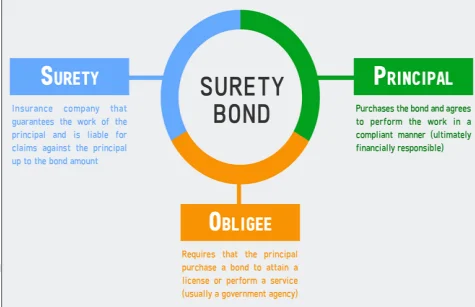
Legally binding three-party agreement among principal (contractor), obligee (project owner/govt), and surety (insurance company).
Common in construction projects: guarantees project completion and quality.
If contractor defaults, surety compensates obligee for losses up to bond value.
Types: Performance Bonds are most common in India.
Example: Contractor building office must provide performance bond (say 10% of project cost). If project fails, client claims compensation from surety company.
Earlier only Bank Guarantees were allowed; from Budget 2022-23, Surety Bonds allowed for government procurement and gold imports.
Regulated by IRDAI under Surety Insurance Contracts Guidelines, 2022.
Benefits of Surety Bonds
Protect beneficiaries against defaults.
Guarantee completion of contracts and compliance with obligations.
Alternative to costly bank guarantees.
Challenges with Surety Bonds in India
New concept – limited expertise in risk assessment, pricing, reinsurance.
Limited market and few providers – harder for contractors to access.
High costs due to limited market and construction risks.
Lengthy process of issuing bonds delays projects.
Lack of awareness among contractors about benefits and requirements.
| Aspect | Masala Bond | Surety Bond |
|---|---|---|
| Nature | Debt instrument (Rupee-denominated overseas bond) | Financial guarantee (3-party contract) |
| Purpose | Raise foreign funds for Indian projects | Guarantee contractor’s performance |
| Risk | Currency risk borne by investors | Performance risk covered by surety company |
| Issuer | Corporates, Indian banks, Govt agencies | Insurance companies (regulated by IRDAI) |
| Examples | Kerala KIIFB Masala Bond, NHAI Masala Bond | Performance Bonds in construction projects |
Prelims tips
- Masala Bonds are rupee-denominated bonds issued abroad; IFC introduced them in 2014.
- Currency risk is borne by investors, not issuers.
- Surety Bonds are alternatives to bank guarantees in contracts.
- IRDAI regulates Surety Bonds (Guidelines effective April 2022).
Mains points
- Masala Bonds deepen India’s global financial integration by raising rupee-denominated foreign funds.
- They shift exchange risk to investors, protecting Indian issuers.
- Surety Bonds modernize project financing by replacing bank guarantees with insurance-backed guarantees.
- They enhance confidence in infrastructure contracts but face challenges of awareness, cost, and market depth in India.
- Both instruments reflect innovation in financial markets to meet diverse funding and risk management needs.
Electoral Bonds and Concept of Bond Yield
Electoral Bonds are banking instruments issued by SBI, introduced in 2018, to make political donations through a formal channel instead of cash. They are aimed at transparency but also criticized for donor anonymity. Bond Yield is the effective return on bonds, fluctuating with market price, and serves as an important indicator for economy, stock markets, currency, and borrowing costs.
Electoral Bonds – Overview
Launched in 2018 by Government of India to reform political funding.
Issued by State Bank of India (SBI) – only authorized bank.
Anyone (Indian citizen, company, firm, association, cooperative) can buy and donate.
Available in denominations: ₹1,000, ₹10,000, ₹1 lakh, ₹10 lakh, ₹1 crore.
Validity: 15 days; must be deposited in political party’s SBI account within this period.
No interest payable to donors.
Donation can be made only to parties registered under Representation of People Act, 1951 and that secured at least 1% of votes in last Lok Sabha/State elections.
Objectives of Electoral Bonds
Replace cash donations with banking channel to reduce black money.
Increase transparency and accountability in political funding.
Encourage corporate and large donations through a formal route.
Advantages
Secure and clean channel of political funding.
Donors can donate without handling physical cash.
Prevents use of unaccounted money in elections.
SBI acts as intermediary ensuring banking records.
Criticism
Donor identity kept anonymous from public and Election Commission (only SBI and Govt can trace).
Favors ruling party as Govt can track donors.
Lack of transparency in real sense as voters cannot know funding sources.
Critics argue it violates 'Right to Know' of citizens (a part of Article 19 freedom of expression).
Examples
Political parties like BJP, INC, TMC, etc. have received large donations through electoral bonds.
As per SBI data (till 2023), thousands of crores donated via bonds, majority going to ruling party.
Bond Yield – Concept
Bond yield is effective return on a bond investment (does not include principal).
Formula: Yield (%) = (Annual Interest / Current Market Price) × 100.
Price-Yield Inverse Relation: Bond Price ↑ → Yield ↓; Bond Price ↓ → Yield ↑.
Types of Yield: Current Yield, Yield to Maturity (YTM), Nominal Yield.
Example
Bond face value ₹30, coupon 10% = ₹3 yearly interest.
If sold at ₹20, buyer still gets ₹3. Yield = 15%.
Shows how falling price raises effective returns.
Impact of Bond Yield
1. Economy
Low yields often mean slowdown – investors prefer safe govt. securities.
High yields may indicate inflationary pressure or higher risk premium.
2. Stock Market
High yields = investors shift to bonds → stock market weakens.
Low yields = money shifts to equities → stock market gains.
3. Exchange Rate
Higher yields attract Foreign Portfolio Investors (FPIs).
Rising Indian yields = more demand for INR → rupee appreciates.
4. Borrowing Cost
Govt & corporates face higher borrowing cost when yields rise.
Impacts fiscal deficit management, infrastructure projects, and private investment.
Global Context
US 10-year Treasury Bond Yield is considered global benchmark for interest rates.
India's G-Sec yield (10-year) is closely tracked for monetary policy signals.
Rising yields globally (like in US) can trigger capital outflows from India.
| Aspect | Electoral Bond | Normal Bond |
|---|---|---|
| Issuer | State Bank of India | Government or Corporates |
| Purpose | Political donations | Borrowing & project financing |
| Denomination | ₹1,000 to ₹1 crore | Varies widely |
| Validity | 15 days only | Till maturity (1–30 years) |
| Interest | No interest | Fixed or variable coupon |
| Transparency | Opaque to public, known to Govt | Transparent to investors |
Prelims tips
- Electoral Bonds introduced in 2018; issued only by SBI.
- Valid for 15 days; can only be donated to registered political parties with ≥1% votes.
- Bond Yield and price have inverse relationship.
- Falling bond yield may indicate slowdown; rising yield increases borrowing cost.
Mains points
- Electoral Bonds formalize political donations but raise questions on transparency and accountability.
- Bond Yield reflects investor sentiment, inflation expectations, and monetary policy stance.
- Both concepts link finance with governance and macroeconomics.
- Electoral Bonds reform political funding but critics demand more disclosure.
- Bond Yields influence fiscal policy, exchange rates, stock markets, and capital inflows.
Bond Yield and Debentures
Bond Yield represents the effective return an investor earns from a bond, influenced by interest rates, inflation, and government borrowing. Debentures are long-term debt instruments issued by companies to borrow funds from the public at a fixed rate of interest, without collateral security.
Major Factors Impacting Bond Yield
Interest Rate: When interest rates fall, bond prices rise and yields decline. When interest rates rise, bond prices fall and yields increase.
Inflation: During periods of rising inflation, investors demand higher returns, leading to an increase in bond yields and a fall in bond prices.
Government Borrowing: Higher government borrowing results in increased issuance of bonds. An increase in bond supply reduces prices and raises yields.
Demand-Supply: During uncertain or recessionary periods, higher demand for government securities increases prices and lowers yields.
Debentures – Overview
Debt instruments issued by companies to raise medium/long-term funds.
Debenture holders are creditors of company (not owners).
Backed only by creditworthiness and reputation of issuer – not by physical collateral.
Offer fixed interest to investors; repayable at maturity.
Example: XYZ Ltd. issues ₹10 crore debentures at 8% interest for 5 years. Investors lend funds; company pays annual 8% interest; at maturity, principal ₹10 crore is repaid.
Real Example: Reliance Industries Ltd. issued non-convertible debentures worth ₹10,000 crore in 2020 with 6.95% interest (AAA rated).
Types of Debentures
1. Convertible Debentures: Can be converted into equity shares after certain time. Attractive for investors expecting share price rise.
Example: 5-year debenture convertible into equity after 3 years.
2. Non-Convertible Debentures (NCDs): Cannot be converted into shares; only offer fixed interest. Example: 10-year NCDs with 8% coupon.
3. Redeemable Debentures: Redeemed on maturity date. Example: 5-year redeemable debentures repaid at end of term.
4. Irredeemable Debentures (Perpetual): No maturity date; only interest is paid; principal not repaid unless company winds up.
Difference Between Shares and Debentures
Shares = Ownership + Voting rights; Debentures = Loan + No ownership.
Shares = Higher risk, variable returns (dividends); Debentures = Lower risk, fixed returns (interest).
Shares = No maturity, can be held indefinitely; Debentures = Fixed maturity period.
| Parameter | Shares | Debentures |
|---|---|---|
| Ownership | Represents ownership in company; voting rights included | Represents loan to company; no ownership |
| Risk | High risk, returns depend on company performance | Low risk, fixed interest irrespective of profits |
| Returns | Dividends (variable, not guaranteed) | Fixed interest (guaranteed unless company defaults) |
| Maturity | No maturity; can be held indefinitely | Fixed maturity; repaid after term |
| Priority in liquidation | Last priority after creditors | Higher priority, paid before shareholders |
Prelims tips
- Bond price and yield move inversely.
- Inflation and government borrowing are key drivers of bond yields.
- Debentures = long-term debt instrument; holders are creditors, not owners.
- Convertible debentures give option to convert into equity.
Mains points
- Bond yields act as an indicator of inflation, interest rates, and investor sentiment.
- Falling yields can signal slowdown; rising yields increase borrowing costs.
- Debentures provide companies with fixed-interest long-term financing.
- Unlike shares, debentures don’t dilute ownership but increase debt obligations.
- Regulation of bond and debenture market ensures financial stability.
Depositary Receipts (DR)
Depositary Receipts (DRs) are financial instruments issued by banks/financial institutions that represent ownership in shares of a foreign company. They allow investors to invest in overseas companies through their local stock exchanges without directly trading in foreign markets.
Overview
Depositary Receipts (DRs) bridge the gap between foreign companies and local investors.
Issued by a bank or financial institution in one country to represent shares of a foreign company.
Traded in the local stock exchange of investor’s country (e.g., NSE, BSE in India).
Help companies raise funds internationally without complicated registration in every country.
In India, DRs are regulated under the Depository Receipts Scheme, 2014 by the Ministry of Finance.
Any Indian company (private, public, listed, unlisted) can issue DRs abroad.
How it Works
1. A foreign company deposits its shares with a bank (custodian bank).
2. Based on these shares, the bank issues Depositary Receipts in another country.
3. These DRs are traded in the local stock exchange of that country.
4. Investors who buy DRs indirectly own shares of the foreign company.
5. Investors receive dividends and other corporate benefits through DRs.
Types of DRs
American Depositary Receipts (ADRs)
Issued in the US, traded on American stock exchanges like NYSE, NASDAQ.
Denominated in US dollars.
Example: Alibaba (China) issues ADRs to trade in US markets.
Global Depositary Receipts (GDRs)
Issued outside the US, traded in multiple global markets (e.g., London, Luxembourg).
Denominated in foreign currencies like Euro, GBP.
Example: Vodafone Group Plc trades on London Stock Exchange as GDR.
Indian Depositary Receipts (IDRs)
Issued in India by Indian depositories like NSDL and CDSL.
Represent ownership in shares of a foreign company.
Traded in Indian rupees on Indian stock exchanges (BSE, NSE).
Example: In 2010, Standard Chartered Plc issued IDRs worth 530 million in BSE.
Importance
Easy access for investors to buy shares of global companies without currency risk.
Helps foreign companies raise capital in new markets.
Diversifies investment opportunities for domestic investors.
| Type | Issued In | Currency | Example |
|---|---|---|---|
| ADRs | United States | US Dollar | Alibaba (China) ADR in NYSE |
| GDRs | Outside US (London, Luxembourg) | Euro, GBP etc. | Vodafone Plc in LSE |
| IDRs | India | Indian Rupees | Standard Chartered Plc IDR in BSE |
Prelims tips
- DRs allow local investors to invest in foreign companies easily.
- ADRs are issued in US; GDRs outside US; IDRs in India.
- IDRs are denominated in Indian Rupees.
- Standard Chartered was first to issue IDRs in India (2010).
Mains points
- DRs facilitate cross-border investment and capital raising.
- They increase liquidity for foreign companies in new markets.
- They diversify investor portfolios and reduce risk concentration.
- India’s IDR market is underdeveloped, with very few issuances.
- Reforms in DR framework can strengthen India’s global financial integration.
Participatory Notes (P-Notes)
Participatory Notes (P-Notes), also known as Offshore Derivative Instruments (ODIs), are financial instruments issued by SEBI-registered Foreign Institutional Investors (FIIs) to overseas investors who want to invest in Indian stock markets without registering directly with SEBI. They provide an indirect route for foreign investments in India.
Overview
P-Notes are derivative instruments linked to Indian securities (shares, bonds, etc.).
Issued by FIIs (Foreign Institutional Investors) or their sub-accounts to overseas investors.
Investors do not need to register with SEBI to buy P-Notes.
Help foreign investors bypass lengthy registration and compliance procedures.
How P-Notes Work
1. A foreign investor (not eligible to directly invest) approaches a SEBI-registered FII.
2. The investor buys P-Notes from the FII.
3. FII invests in Indian stocks/securities on behalf of the investor.
4. Investor earns returns based on the performance of underlying Indian securities.
5. Investor remains anonymous in Indian market records; only the FII is visible to SEBI.
Example
Suppose a foreign investor in the USA wants to invest in Indian stocks but does not want to go through SEBI registration.
The investor buys P-Notes from a registered FII like Morgan Stanley or Goldman Sachs.
The FII invests in Infosys shares in India on behalf of the investor.
The investor receives returns as per Infosys share performance, without directly owning shares in India.
Features
Issued only to eligible foreign investors through FIIs.
Do not require direct SEBI registration.
Provide exposure to Indian securities indirectly.
Known for flexibility, anonymity, and fast execution.
Also criticized for lack of transparency and possible misuse for money laundering.
Regulatory Aspect
Regulated by SEBI in India.
Since 2007, SEBI has tightened norms on P-Notes due to misuse concerns.
Investors must comply with anti-money laundering (AML) and KYC norms.
| Aspect | Details |
|---|---|
| Issuer | SEBI-registered Foreign Institutional Investors (FIIs) |
| Holder | Overseas investors not directly registered with SEBI |
| Nature | Offshore Derivative Instrument (ODI) |
| Purpose | Indirect investment in Indian markets |
| Regulation | SEBI (tightened norms since 2007) |
Prelims tips
- P-Notes are also called Offshore Derivative Instruments (ODIs).
- Issued by FIIs to overseas investors not registered with SEBI.
- Popular due to anonymity, but criticized for lack of transparency.
- Regulated by SEBI with strict AML and KYC norms.
Mains points
- P-Notes provide easy access for foreign investors to Indian markets without lengthy registration.
- They increase liquidity in Indian stock markets but reduce transparency.
- Associated risks include money laundering, tax evasion, and round-tripping.
- SEBI has tightened rules to improve monitoring and investor disclosure.
- Balancing foreign capital inflows and regulatory control is a key challenge.
Investment Funds
Investment Funds are financial arrangements that pool money from multiple investors and invest it in securities like shares, bonds, or other assets. Each investor owns units in the fund, which represent their share of ownership. These funds are managed professionally and help small investors participate in big markets.
Overview
Investment Funds pool money from several investors to invest in different financial assets.
Allow investors to diversify risk instead of investing in a single stock or bond.
Managed by professionals who make investment decisions on behalf of investors.
Examples: Mutual Funds, Exchange Traded Funds (ETFs), Bharat Bond ETF.
Mutual Funds
Mutual Fund collects money from investors to create a pool and invests in stocks, bonds, or money market instruments.
Managed by an Asset Management Company (AMC) under the supervision of Trustees.
High liquidity: investors can buy or sell mutual fund units easily.
Returns depend on performance of the stock market and fund manager’s strategy.
Example: A, B, C invest Rs 1000, Rs 2000, Rs 3000 in a mutual fund. If Rs 600 profit is earned, it will be shared in ratio 1:2:3.
Example in India: HDFC Top 100 Fund invests in top 100 companies listed on NSE to achieve long-term capital appreciation.
Exchange Traded Funds (ETFs)
ETFs are like mutual funds but they are listed and traded on stock exchanges, just like shares.
Hold a basket of securities such as stocks, bonds, or commodities.
Example: Government disinvestment – instead of selling shares of each company separately, Govt. transfers shares of 10 CPSEs (ONGC, GAIL, etc.) to a fund manager who creates ETF units (like Bharat 22 ETF).
Investors buy ETF units and receive returns based on dividends and performance of underlying companies.
ETFs are more liquid since they can be bought/sold instantly on exchanges.
Bharat Bond ETF
India’s first corporate bond ETF launched in 2019.
Offers 3-year and 10-year options, where bonds mature after fixed periods.
Minimum investment: ₹1000 (suitable even for small investors).
Managed by Edelweiss AMC, tracking Nifty Bharat Bond Index.
Invests in AAA-rated bonds (very safe with low default risk).
Benefits: predictable income stream from fixed interest, safe investment, promotes broader participation from retail and HNI investors, reduces borrowing cost for government organizations.
| Type | Key Features | Example |
|---|---|---|
| Mutual Fund | Pooled money, managed by AMC, high liquidity | HDFC Top 100 Fund |
| ETF | Traded on stock exchange, basket of securities | Bharat 22 ETF |
| Bharat Bond ETF | Corporate bond ETF, safe AAA bonds, fixed maturity | Launched 2019 by Edelweiss AMC |
Prelims tips
- Mutual funds = pooled money managed by AMC.
- ETFs = like mutual funds but traded on stock exchanges.
- Bharat Bond ETF = India’s first corporate bond ETF, invests in AAA-rated bonds.
- Minimum investment in Bharat Bond ETF = ₹1000.
Mains points
- Investment funds help small investors participate in large financial markets with professional management.
- Mutual funds are suitable for long-term diversified investment; ETFs are better for liquidity and quick trading.
- Bharat Bond ETF promotes safer investment in AAA-rated corporate bonds.
- They channel household savings into productive sectors, supporting economic growth.
- Key challenge: balancing investor returns with market volatility and fund manager efficiency.
Hedge Funds and Real Estate Investment Trusts (REITs)
Hedge Funds are alternative investment funds that pool money from High Net Worth Individuals (HNIs) to invest in risky and complex products like equities, bonds, currencies, and derivatives. Real Estate Investment Trusts (REITs) are investment vehicles that allow small and large investors to invest in income-generating real estate properties, much like mutual funds but focused on real estate.
Hedge Funds – Overview
Hedge Funds are alternative investment funds regulated by SEBI in India.
Mainly targeted at High Net Worth Individuals (HNIs), family offices, and institutions with large amounts of capital.
Use complex strategies like arbitrage, short selling, derivatives trading, commodities trading, and currency speculation.
Aim: To generate very high returns but with high risk exposure.
Require very high minimum investment (not for common small investors).
Features of Hedge Funds
Pool of money from selected investors.
Invest in both listed and unlisted securities, bonds, derivatives, and currencies.
Deal in risky, high-return assets.
Often have lock-in periods (investors cannot withdraw money easily).
Not directly accessible to retail investors; mainly for HNIs and institutions.
Example Hedge Funds in India: Munoth Hedge Fund, Forefront Alternative Investment Trust, Quant First Alternative Investment Trust, IIFL Opportunities Fund.
Real Estate Investment Trust (REIT) – Overview
Similar to a mutual fund but focused only on real estate properties.
Pools money from multiple investors to buy, own, and manage income-generating real estate assets.
Examples of properties: office buildings, shopping malls, apartments, warehouses, hospitals, hotels.
Provides income to investors through rental earnings and property appreciation.
Features of REITs
Regulated by SEBI, introduced in India in 2007; revised in 2014.
Investors buy units of REITs which are listed on stock exchanges (like NSE, BSE).
Units can be bought and sold like company shares – providing liquidity.
REIT sponsor (developer/private equity firm) must hold at least 25% of units.
REIT acquires properties, leases them, collects rent, and distributes income as dividends to unit holders.
Hedge against inflation – as rental income usually rises faster than inflation.
Example: Mindspace Business Parks REIT (2020) owns properties in Mumbai, Hyderabad, Pune, and Chennai, leased to multinational firms and Indian corporates.
Provides quarterly dividend payouts to investors.
Alternative Investment Funds (AIFs)
Regulation: privately pooled funds regulated by SEBI (AIF) Regulations, 2012.
Category I: funds with positive spillovers – venture capital, SME, social venture and infrastructure funds.
Category II: private equity and debt funds; no leverage except for day-to-day operations.
Category III: funds using complex trading strategies and leverage – e.g. hedge funds.
| Aspect | Hedge Funds | REITs |
|---|---|---|
| Target Investors | HNIs, Institutions | Retail + Institutional investors |
| Investment Focus | Equities, bonds, currencies, derivatives, commodities | Real estate assets (offices, malls, apartments) |
| Risk | High (risky and speculative) | Moderate (real estate income is stable) |
| Liquidity | Low (lock-in, less tradable) | High (units listed on stock exchange) |
| Returns | High but risky, not guaranteed | Stable income + capital appreciation |
| Regulation | Regulated by SEBI as Alternative Investment Funds (AIFs) | Regulated by SEBI, listed on NSE/BSE |
Prelims tips
- Hedge Funds = High-risk, high-return funds mainly for HNIs.
- REITs = Real estate-focused investment vehicle, provides stable rental income.
- REIT sponsor must hold minimum 25% of units.
- Mindspace Business Parks REIT (2020) = major REIT example in India.
Mains points
- Hedge Funds provide aggressive investment opportunities but are highly risky and limited to HNIs.
- REITs democratize real estate investment by allowing even small investors to own income-generating properties.
- Hedge Funds use complex trading strategies (derivatives, arbitrage, short-selling).
- REITs provide inflation-hedged stable income and liquidity through stock market listing.
- Both are important alternative investment tools regulated by SEBI in India.
Investment Trusts (InvITs), Venture Capital (VC) and Seed Money
InvITs are collective investment vehicles like REITs but focus on infrastructure projects. Venture Capital is funding given to high-risk startups with high growth potential in exchange for equity ownership. Seed Money is the earliest stage of funding provided to a new business idea before it becomes self-sustainable.
InvIT – Infrastructure Investment Trust
Similar to REITs and mutual funds but focus on infrastructure projects like highways, power plants, telecom towers, pipelines etc.
Money is pooled from investors and used to finance or operate infrastructure projects.
Investors earn returns in the form of profits or revenue generated from these projects (e.g., toll collections, electricity tariffs).
Listed on stock exchanges, so units can be traded like shares, providing liquidity.
Benefits: promotes infrastructure financing, gives regular income to investors, and allows small investors to participate in large infra projects.
Venture Capital (VC)
Type of private equity funding provided to early-stage, innovative, and high-risk startups.
VCs invest money in exchange for equity (ownership stake) in the company.
Suitable for startups with new ideas, scalable business models, and high growth potential.
VC firms not only provide money but also guidance, strategic advice, and operational support.
Investment rounds: after seed funding, the first big institutional round is called Series A. Later rounds are Series B, Series C, etc.
Example: Sequoia Capital India has invested in OYO, BYJU'S, Zomato, and Paytm, supporting them with capital and mentorship.
Seed Money
Also called seed funding or seed capital – the very first investment in a startup or idea.
Provided by angel investors, friends, family, or specialized seed funds.
Used for product development, market research, or proof of concept.
Investor takes equity in the startup in exchange for early funding.
Called 'seed' because it helps the business grow in the very beginning, until bigger rounds of funding come in.
| Aspect | InvIT | Venture Capital (VC) | Seed Money |
|---|---|---|---|
| Focus | Infrastructure projects | Early-stage startups with high growth potential | Earliest funding for a new idea/startup |
| Return | Revenue/profits from infra projects (toll, tariff) | Equity stake (share of profit when startup grows) | Equity stake in very early stage |
| Investor Type | Retail + Institutional | VC firms, HNIs, private equity | Angel investors, family, friends, seed funds |
| Risk | Moderate (depends on infra project success) | High (startups may fail) | Very High (idea may not even take off) |
| Liquidity | Units tradable on stock exchanges | Equity, not liquid until exit/IPO | Not liquid until bigger investment round |
Prelims tips
- InvIT = Infrastructure-focused trust, like REIT but for infra projects.
- VC = funding in early-stage startups for equity.
- Seed Money = very first investment in a business idea.
- Series A = first institutional VC round after seed funding.
Mains points
- InvITs help mobilize funds for infrastructure projects and provide retail investors access to infra revenues.
- Venture Capital is crucial for promoting innovation and entrepreneurship, supporting startups with both money and mentorship.
- Seed Money plays the most critical role in converting a business idea into reality.
- Together, InvITs, VC, and Seed Money deepen the capital market and support economic growth in different sectors.
Types of Investors in Financial Markets
Investors in financial markets can be classified into different types based on their size, knowledge, strategy, and purpose. Some are very large institutions like mutual funds and insurance companies, while some are individual investors like angel investors, bulls, and bears. Each type of investor plays a unique role in creating liquidity, providing capital, and influencing the movement of prices in the stock market.
Qualified Institutional Investors (QII)
These are big professional investors who have both – financial strength and expert knowledge to invest in huge amounts.
They include organizations like Mutual Funds, Insurance Companies, Pension Funds, and Foreign Venture Capital Funds.
Because they invest such large amounts, SEBI (Securities and Exchange Board of India) gives them a special registration process and keeps them under strict rules so that they do not misuse their power to disturb the market.
Example: LIC of India (insurance company) or SBI Mutual Fund making large investments in stock market.
Foreign Institutional Investors (FII)
These are big institutions located outside India, but they invest in Indian companies and markets.
They include Pension Funds, Hedge Funds, Sovereign Wealth Funds, Mutual Funds, etc. from foreign countries.
Before investing in India, they must register with SEBI. They are allowed to buy shares, bonds, debentures, and mutual funds but only up to a certain limit so that foreigners do not control Indian companies completely.
Example: A Singapore-based Mutual Fund investing in Infosys shares in India.
Angel Investors
These are rich individuals (High Net Worth Individuals – HNIs) who use their personal money to invest in small startups and new businesses.
They are often retired business leaders or executives who want to encourage new entrepreneurs.
Angel investors not only give money but also help with advice, mentorship, and business contacts.
Example: Early investors in Ola, Flipkart, or Paytm were angel investors who gave money when banks and big funds were not ready to take risk.
Jobbers (Market Makers/Dealers)
Jobbers are middlemen in stock exchanges who buy and sell shares all the time to make sure there are always buyers and sellers in the market.
They create liquidity, meaning they make it easy for others to buy and sell shares.
They earn money from the difference in buying price (bid) and selling price (ask).
Example: A jobber at NSE ensures that if you want to sell Reliance shares, there is always someone to buy them.
Stag Investors
Stags are investors who focus only on Initial Public Offerings (IPOs).
They buy shares of a new company when it first comes to the stock market, and then quickly sell them in the secondary market as soon as prices go up.
Their goal is not long-term ownership but short-term quick profit.
Example: If Zomato issues shares in IPO at Rs 100 and the price goes up to Rs 150 after listing, a stag investor will sell immediately to book Rs 50 profit.
Bull Investors
Bulls are optimistic investors who believe that share prices will increase in future.
Just like a bull pushes things upward with its horns, bull investors buy shares now to push prices upward and make profit later.
Example: If HDFC Bank share is Rs 1500 today and a bull investor expects it will rise to Rs 2000, he will buy more shares today.
Bear Investors
Bears are pessimistic investors who believe that share prices will fall in future.
Just like a bear pushes things downward with its paws, bear investors sell shares today expecting to buy them back later at a lower price and make profit.
Example: If Café Coffee Day share is Rs 60 today and a bear investor expects it will fall to Rs 50, he will sell shares now and buy them later at Rs 50.
| Investor Type | Main Feature | Example |
|---|---|---|
| QII | Large domestic institutions with expertise and big funds | LIC, SBI Mutual Fund |
| FII | Foreign-based institutions investing in Indian markets | Singapore Mutual Fund buying Infosys |
| Angel Investor | HNIs investing in startups + providing mentorship | Investors in Ola, Flipkart |
| Jobber | Market makers providing liquidity | Dealers at NSE/BSE |
| Stag | Short-term IPO profit seekers | Selling Zomato shares after listing |
| Bull | Optimistic investors expecting price rise | Buying HDFC shares expecting 2000 price |
| Bear | Pessimistic investors expecting price fall | Selling CCD shares at 60 expecting 50 |
Prelims tips
- QII = Indian institutional investors like LIC, Mutual Funds, Insurance companies.
- FII = Foreign institutional investors registered with SEBI.
- Angel investors = HNIs investing in startups + mentorship.
- Stag = IPO flippers for short-term profit.
- Bull = Optimistic (rise), Bear = Pessimistic (fall).
Mains points
- Different types of investors bring diversity and balance to markets.
- QIIs and FIIs provide large capital inflows but are regulated to maintain stability.
- Angel investors and VCs encourage entrepreneurship and innovation.
- Speculative investors like bulls, bears, and stags create short-term volatility.
- Jobbers ensure liquidity and smooth day-to-day functioning of exchanges.
Stock Exchange and Indices
A stock exchange is a marketplace where buyers and sellers trade securities such as shares, bonds, and derivatives. The prices of these securities are driven by demand and supply. To be traded, securities must be listed on the exchange. Stock indices like Sensex and Nifty reflect the performance of a selected group of companies and indicate the overall health of the economy.
What is a Stock Exchange?
A stock exchange is a regulated platform where financial instruments such as shares, bonds, and derivatives are traded electronically.
Buyers and sellers meet here virtually, and prices are determined by demand (buyers) and supply (sellers).
Only listed securities (approved by the exchange) can be traded.
Major Stock Exchanges in India
Bombay Stock Exchange (BSE)
Established in 1875, it is the oldest stock exchange in Asia.
Its benchmark index is SENSEX, which tracks 30 large and financially sound companies.
BSE also established India INX, India’s first international stock exchange at GIFT City, Ahmedabad.
National Stock Exchange (NSE)
Established in 1992 as India’s first fully automated electronic trading exchange.
Its benchmark index is NIFTY 50, which tracks the performance of 50 large and stable companies.
What is a Stock Market Index?
A stock market index is a statistical measure that shows changes in the market value of a selected group of stocks.
It is calculated using the Market Capitalization formula: Market Cap = Share Price × Number of Outstanding Shares.
Example: If a company issues 10 crore shares at Rs. 10 per share, its market capitalization = Rs. 100 crore.
As share prices move daily in the secondary market, the index also fluctuates and reflects growth or decline in the market.
Role of Market Sentiment
Indices may not always represent actual economic growth; sometimes they rise or fall due to rumors, political events, or market speculation.
Example: If people buy shares of a company based on rumor, demand goes up, prices rise artificially, which increases market capitalization, and as a result, Sensex/Nifty rises.
| Feature | BSE (Bombay Stock Exchange) | NSE (National Stock Exchange) |
|---|---|---|
| Year Established | 1875 (Oldest in Asia) | 1992 (First fully electronic exchange) |
| Main Index | SENSEX (30 companies) | NIFTY 50 (50 companies) |
| Global Link | India INX in GIFT City | International link through NSE IFSC |
| Technology | Traditional but now fully electronic | Born as a fully automated exchange |
Prelims tips
- BSE = Oldest stock exchange in Asia (1875).
- NSE = First fully electronic exchange in India (1992).
- Sensex = 30 companies, Nifty = 50 companies.
- Index reflects market capitalization = Price × Shares.
Mains points
- Stock exchanges ensure transparency and provide a regulated platform for trading.
- Indices like Sensex and Nifty are indicators of overall market and economic performance.
- BSE and NSE together form the backbone of India’s financial market.
- Market sentiment plays a major role in short-term movements of indices.
- Stock market growth reflects both business expansion and investor confidence.
Social Stock Exchange (SSE)
A Social Stock Exchange is a special platform approved by SEBI in 2022 to help social enterprises (for-profit and not-for-profit) raise funds. It works like a stock exchange but focuses on social and development projects, ensuring better transparency and organized utilization of funds.
What is Social Stock Exchange?
Introduced in 2022 with SEBI approval; BSE got in-principle approval to set up SSE as a separate segment.
Purpose: To serve private and non-profit sectors by providing them a platform to raise funds for social and development activities.
How does it work?
Listing: Both for-profit and not-for-profit social enterprises can be listed on SSE; regulated by SEBI.
Fundraising:
Not-for-profit entities: Can issue Zero-Coupon Zero-Principal (ZCZP) bonds, social impact funds, or mutual funds.
For-profit entities: Can raise funds through equity, debt, development impact bonds, or social venture funds.
Eligibility
Social enterprises engaged in defined social activities like health, education, environment, gender equality, rural development, affordable housing, etc. are eligible.
Non-Eligibility
Corporate foundations, political or religious groups, trade/professional associations, infrastructure companies (except affordable housing) are excluded.
Additional Requirements
For-profit enterprises must meet extra reporting and disclosure norms to ensure transparency.
Benefits of SSE
Easier Access to Funds: Social enterprises can attract donations, CSR funds, and philanthropic contributions.
Better Utilisation: Proper tracking of how funds are used improves accountability.
Visibility: Smaller NGOs or enterprises can raise funds more effectively compared to traditional methods.
| Aspect | Normal Stock Exchange | Social Stock Exchange (SSE) |
|---|---|---|
| Purpose | Raise capital for business profits | Raise funds for social and development impact |
| Eligible Entities | For-profit companies | For-profit + Not-for-profit enterprises |
| Instruments | Shares, Bonds, Derivatives | Equity, Debt, ZCZP Bonds, Social Impact Funds |
| Regulator | SEBI | SEBI (with special norms for SSE) |
Prelims tips
- SSE introduced in India in 2022 under SEBI.
- Not-for-profit entities can issue Zero-Coupon Zero-Principal (ZCZP) instruments.
- Corporate foundations, political or religious bodies are not eligible.
- ZCZP minimum issue size = Rs 50 lakhs, not tradable in secondary market.
Mains points
- SSE bridges the gap between donors, CSR spenders, and social enterprises.
- ZCZP bonds make fundraising for specific social projects easier.
- Ensures transparency and accountability in social funding.
- Helps smaller NGOs and social startups access funds and gain visibility.
- A step towards integrating financial markets with social development.
Securities and Exchange Board of India (SEBI)
SEBI is the regulator of the securities and capital market in India. Formed in 1988 and made a statutory body in 1992, SEBI protects investors’ interests, regulates market participants (like brokers, companies, fund managers), and ensures fair functioning of stock exchanges.
Formation and Structure
Formed by an executive order in 1988; became statutory under SEBI Act, 1992.
Headquarters: Mumbai.
Composition: Chairman + 1 officer from RBI + 2 officers from Union Govt + 5 members nominated by Union Govt.
Tenure of Chairman: 5 years or until 65 years of age (reappointment allowed).
Functions of SEBI
Regulates issue of securities: IPOs, bonds, ETFs, REITs, INVITs etc. under Securities Contracts (Regulation) Act, 1956.
Regulates places: Stock exchanges, depositories, commodity exchanges.
Regulates persons: Investors, brokers, fund managers, companies issuing shares.
Ensures fair trading practices and protects investors against fraud.
Appellate Mechanism
Securities Appellate Tribunal (SAT) hears appeals against SEBI, PFRDA, and IRDAI orders.
Appeals against SAT decisions can be made directly to the Supreme Court.
Key Reforms Initiated by SEBI
1. Securities Market Code (Budget 2021)
Proposed single law 'Securities Market Code' by merging SEBI Act (1992), Depositories Act (1996), Securities Contracts (Regulation) Act (1956), and Government Securities Act (2007).
2. Investor Charter (Budget 2021)
Defines rights & responsibilities of investors.
Lists do’s & don’ts of investing.
Ensures grievance redressal mechanism by SEBI-registered intermediaries.
3. Circuit Breaker System
Triggered when share price fluctuation crosses a certain percentage limit compared to the previous day.
Trading stops for a fixed time to prevent panic selling and stock market crashes.
4. PAN Card for DEMAT Accounts
SEBI made PAN mandatory for opening DEMAT accounts.
Ensures a person can operate only one DEMAT account in their name, creating transparency.
5. Investor Protection Fund (IPF)
Mandatory for stock and commodity exchanges.
Compensates investors in case brokers default or fail to deliver shares.
Covers non-speculative losses (e.g., share delivery issues due to court disputes).
Promotes investor education and awareness.
| Aspect | Details |
|---|---|
| Formation Year | 1988 (Statutory in 1992) |
| Headquarters | Mumbai |
| Chairman Tenure | 5 years / 65 years age limit |
| Composition | Chairman + 1 RBI officer + 2 Union Govt officers + 5 members nominated by Govt |
| Appeal Body | Securities Appellate Tribunal (SAT), further appeal in Supreme Court |
Prelims tips
- SEBI became a statutory body in 1992 under SEBI Act.
- Appellate body = Securities Appellate Tribunal (SAT), further appeal lies in Supreme Court.
- Budget 2021 proposed Securities Market Code (merging 4 Acts).
- Investor Charter (2021) defines rights, duties, dos & don’ts for investors.
- Circuit Breakers prevent sudden crashes in stock markets.
Mains points
- SEBI ensures transparency and accountability in securities market.
- Protects small investors from market frauds and insider trading.
- Promotes financial inclusion by making DEMAT account PAN-based.
- Investor Protection Fund builds investor confidence.
- Ongoing reforms like Securities Market Code aim at simplifying regulations.
Reforms in Bond Market
India’s bond market reforms aim to deepen financial markets, boost retail participation, and connect government bonds with corporate bonds. Recent reforms include unified bond market, setting up a bond-buying institution, and RBI’s Retail Direct Scheme.
Why Reforms in Bond Market?
Compared to stock markets, India’s bond market is underdeveloped.
Most bond trading happens between institutions, leaving retail investors out.
Bond reforms aim to make bonds accessible, transparent, and liquid for all investors.
Unified Bond Market
Earlier: Government bonds (G-Secs) and Corporate Bonds traded separately.
Budget 2019 proposed linking both platforms.
In 2020, SEBI proposed a 'Unified Bond Market' where G-Secs and corporate bonds can be bought and sold together.
Purpose: To increase retail participation and efficiency.
Bond-Buying Institution (Budget 2021)
Budget 2021 proposed setting up a body to purchase investment-grade bonds.
This institution would buy bonds during both stressed and normal times.
Helps boost investor confidence and ensure bond market stability.
Similar to how central banks abroad act as buyers of last resort during crises.
G-Sec Trading for Retail Investors – Retail Direct Scheme (2021)
RBI launched the 'Retail Direct Scheme' in 2021.
Retail investors can open a 'Retail Direct Gilt (RDG)' account on RBI’s e-Kuber portal.
Eligible investors: Both resident Indians and NRIs.
Instruments available: Treasury Bills, Government Securities (Union Govt), State Development Loans (SDLs), and Sovereign Gold Bonds.
Benefit: Removes intermediaries – retail investors can directly buy bonds from RBI.
| Reform | Details |
|---|---|
| Unified Bond Market | Single platform for both G-Secs and corporate bonds (SEBI proposal, 2020). |
| Bond-Buying Institution | Body to buy investment-grade bonds during normal and stressed times (Budget 2021). |
| Retail Direct Scheme | RBI initiative (2021) for retail investors to buy G-Secs, SDLs, and SGBs directly. |
Prelims tips
- Retail Direct Scheme allows individuals to directly invest in G-Secs through RBI.
- Unified Bond Market was proposed by SEBI in 2020.
- Budget 2021 announced a bond-buying institution to deepen bond markets.
- SDLs are State Government’s G-Secs.
- Bond market reforms aim at boosting retail participation and stability.
Mains points
- Bond market reforms aim to bridge the gap between G-Secs and corporate bonds.
- They promote financial inclusion by allowing retail investors to invest directly.
- Bond-buying institution will act as a stabilizer during crises and ensure liquidity.
- Unified market enhances transparency and efficiency in debt markets.
- Overall reforms contribute to capital market deepening and economic growth.
Commodities Market
The commodities market is a platform where raw materials and goods like grains, metals, oil, and cotton are traded in bulk. It helps producers and consumers manage price risks through spot and futures trading.
Overview
Commodities market allows bulk trading of goods such as food grains, cotton, gold, silver, oil, and gas.
Buyers and sellers agree on prices to reduce risks of price fluctuations in the future.
Two major exchanges in India: Multi Commodity Exchange (MCX) and National Commodity and Derivatives Exchange (NCDEX).
FMC (Forward Market Commission) earlier regulated commodity exchanges. In 2015, it merged with SEBI, bringing commodities under the same regulator as capital markets.
Example: A farmer growing wheat can sell produce at an agreed price through commodities exchange, while a food processing company buys it to secure raw material.
Spot Market
Spot market = Physical market where commodities are bought and sold for immediate delivery.
Prices are decided by current supply and demand.
Example: A farmer takes wheat to a mandi and sells it directly to a buyer at today’s price, with immediate delivery.
Futures Market
Futures market = Derivatives market where buyers and sellers agree on price today for future delivery.
Helps both sides lock in prices and reduce risk of sudden price changes.
Example: A gold jewellery manufacturer enters into a futures contract to buy gold at a fixed price for delivery in 6 months. Even if gold prices rise later, the manufacturer will get gold at agreed lower price.
Regulator: the Forward Markets Commission (FMC) was merged with SEBI in September 2015; since then SEBI regulates the commodity derivatives market.
| Market Type | Explanation | Example |
|---|---|---|
| Spot Market | Immediate buying and selling of commodities with instant delivery. | Farmer selling wheat at mandi to a buyer. |
| Futures Market | Contracts to buy/sell commodities at a fixed price for future delivery. | Gold jewellery maker fixes price today for delivery after 6 months. |
Prelims tips
- MCX and NCDEX are the two main commodity exchanges in India.
- FMC merged with SEBI in 2015, bringing commodities under SEBI regulation.
- Spot market = Immediate delivery, Futures market = Future delivery at fixed price.
Mains points
- Commodity markets provide price discovery and reduce risks of volatility.
- Spot market benefits immediate needs, while futures market helps in hedging against future risks.
- They support farmers, manufacturers, and traders in planning ahead with stable pricing.
- Regulation under SEBI ensures transparency and investor protection.
- Integration of spot and futures markets contributes to efficient economic functioning.
Gold Exchanges and Water Trading
Gold exchanges are specialized commodity markets for gold trading regulated by SEBI, while Electronic Gold Receipts (EGRs) provide a digital way of owning gold. Water trading is a new concept where water rights can be bought and sold, similar to commodities like gold and oil.
Gold Exchanges
A gold exchange is a special commodity market focused only on gold trading.
In Union Budget 2021, reforms were announced to bring gold exchanges under SEBI regulation.
The Warehousing Development and Regulatory Authority (WDRA), a statutory body under the Department of Food and Public Distribution, is responsible for warehousing, vaulting, assaying (purity check), and logistics of gold exchanges.
These reforms aim to increase transparency, ensure gold quality, and reduce black-market trading in gold.
Electronic Gold Receipts (EGRs)
Gold companies deposit physical gold in WDRA-authorized warehouses.
The warehouse manager issues Electronic Gold Receipts (EGRs) against the deposited gold.
EGRs are listed on SEBI-regulated electronic gold exchanges.
Buyers can purchase EGRs electronically, ensuring purity and transparency of gold ownership.
Buyers can either resell EGRs to other investors or redeem them for physical gold from the warehouse.
Example: An investor buys 10 grams of gold in digital form as EGR. Later, he can either sell it online like a stock or go to the warehouse and collect 10 grams of physical gold.
Water Trading
Water trading means buying and selling water access entitlements (water rights).
It works like other commodities (gold, silver, oil) – price is decided by demand and supply.
In 2022, NITI Aayog started drafting a policy for water trading in India on commodity exchanges.
Already practiced in countries like Australia, Chile, and the USA.
Example: A farmer with surplus water rights can sell them to another farmer or industry facing water shortage.
In 2020, the first tradable water price futures index was launched on the Chicago Stock Exchange, showing global recognition of water as an economic asset.
| Aspect | Gold Exchange | Water Trading |
|---|---|---|
| Focus | Trading only in Gold | Trading of water rights |
| Regulator | SEBI + WDRA | Policy under NITI Aayog (Draft stage in India) |
| Instrument | Electronic Gold Receipts (EGRs) | Water rights / entitlements |
| Global Practice | Standardized worldwide commodity | Practiced in Australia, Chile, USA |
| Example | Investor buys gold digitally & redeems it later | Farmer sells surplus water rights to industries |
Prelims tips
- Gold exchanges in India are regulated by SEBI, with warehousing/logistics handled by WDRA.
- Electronic Gold Receipts (EGRs) are tradable digital instruments backed by physical gold.
- Water trading is a policy idea in India but already functional in countries like Australia and USA.
- Chicago Stock Exchange launched the world’s first water futures index in 2020.
Mains points
- Gold exchanges and EGRs will formalize India’s gold market and reduce unaccounted gold trading.
- They ensure transparency, investor protection, and better integration of gold into financial markets.
- Water trading represents a shift towards treating water as an economic resource, addressing scarcity issues.
- Can help in efficient allocation of water between surplus and deficit regions/users.
- However, water trading raises ethical, social, and environmental concerns which need careful regulation.
Key Terms Related to Financial Markets
Financial markets have several unique practices and instruments. Some of them, like Dabba Trading and Insider Trading, are illegal. Others, like Algo-Trading and Employee Stock Option Plans (ESOPs), are legitimate but need regulation. Understanding these terms helps investors avoid risks and make informed decisions.
Dabba Trading (Bucketing / Box Trading)
It refers to unofficial trades carried out by unscrupulous brokers outside the recognized stock exchanges.
Investor’s trades are recorded only in the broker’s private ledger, not in the DEMAT account.
Risk: Investor has no legal protection; if broker defaults, money is lost.
Illegal in India under SEBI regulations; punishable by fine and imprisonment.
Advantage for wrongdoers: avoids taxes, fees, and allows very high leverage.
Algo-Trading (Algorithmic Trading)
Use of computer algorithms by brokers/institutions to automatically place large orders within milliseconds.
Allows faster trades than humans; often used for arbitrage or hedging.
Risks: Can be misused to manipulate prices or cause sudden market crashes.
SEBI regulations: one broker cannot place more than 100 orders per second.
Co-location facility: brokers install servers near stock exchange to reduce time lag (latency).
Insider Trading
Use of confidential company information (e.g., mergers, patents, results) by insiders to make unfair gains.
Example: A company official knows a new product will boost profits; buys shares before public announcement.
SEBI has declared it illegal; strict punishments include fines and imprisonment.
Employee Stock Option Plan (ESOP)
A scheme where employees are given shares or the option to buy shares at a discounted price.
Purpose: to increase employee loyalty, retention, and motivation by making them co-owners.
Example: A startup grants employees stock options at ₹50 per share, while the market price is ₹100. Employees benefit when price rises further.
Penny Stocks
Very low-priced shares, often below their face value, issued by small companies with little financial strength.
Attract small investors but are highly volatile and risky.
Susceptible to manipulation (‘pump and dump’ schemes).
Example: A penny stock may trade at ₹2–₹3, making it look affordable, but can suddenly fall to near zero.
| Term | Nature | Risk |
|---|---|---|
| Dabba Trading | Illegal | Investor has no legal protection; prone to scams |
| Algo-Trading | Legal but regulated | Market manipulation, sudden crashes possible |
| Insider Trading | Illegal | Unfair advantage, punishable by SEBI |
| ESOP | Legal | Loyalty booster but may dilute ownership |
| Penny Stocks | Legal but risky | Highly volatile; subject to fraud |
Prelims tips
- Dabba Trading and Insider Trading are illegal in India under SEBI rules.
- Algo-Trading is allowed but strictly regulated (e.g., 100 orders/second cap).
- ESOPs are employee benefit plans to retain and motivate talent.
- Penny stocks are very risky and prone to manipulation.
Mains points
- Illegal practices like Dabba Trading and Insider Trading undermine trust in financial markets.
- Algo-Trading increases efficiency but raises fairness and market stability issues.
- ESOPs align employee interests with company growth but may lead to ownership dilution.
- Penny stocks attract small investors but often end up in speculation traps.
- Regulation by SEBI ensures transparency, protects investors, and maintains market stability.
Case Studies – Insider Trading Scams
Insider trading scandals highlight how misuse of confidential information can shake investor confidence and destabilize markets. Learning from these cases is crucial for regulatory strengthening.
India – Rakesh Agrawal vs SEBI (1994)
Case: Director of ABS Industries Ltd. shared unpublished price-sensitive information with Bayer A.G. (Germany).
Bayer used this information before acquiring shares of ABS Industries.
SEBI ruled that such use of unpublished information gave unfair advantage to Bayer, and penalized them.
Importance: This was the first major insider trading case in India, setting precedent for SEBI enforcement.
India – Hindustan Lever Limited (HLL) Case (1996)
Case: HLL purchased a large number of shares of Brooke Bond Lipton India Ltd. (BBLIL) just before merger announcement.
As HLL was a party to the merger decision, SEBI held that it had access to unpublished price-sensitive information.
Outcome: SEBI ordered reversal of trades; case established how corporate giants could misuse insider information.
USA – Martha Stewart & ImClone (2001)
Case: Martha Stewart, a US businesswoman, sold shares of ImClone Systems based on a tip from her broker that company’s cancer drug approval would be rejected.
Outcome: She avoided losses of around 45,000 but was convicted of insider trading-related charges (obstruction of justice, lying to investigators).
Importance: Highlighted how even small misuse of insider info is punishable in USA.
USA – Rajat Gupta & Raj Rajaratnam (2012)
Case: Rajat Gupta, former Goldman Sachs director, leaked confidential boardroom information to hedge fund manager Raj Rajaratnam of Galleon Group.
Rajaratnam made huge profits by trading based on these tips.
Outcome: Rajat Gupta was sentenced to 2 years in prison; Rajaratnam got 11 years (one of the longest sentences for insider trading in USA).
Importance: Showed strict enforcement of insider trading laws in USA and highlighted risks of corporate greed.
| Case | Year | Country | Outcome |
|---|---|---|---|
| Rakesh Agrawal vs SEBI | 1994 | India | First SEBI action; penalty on Bayer |
| HLL–BBLIL Merger Case | 1996 | India | SEBI reversed trades; set corporate accountability precedent |
| Martha Stewart & ImClone | 2001 | USA | Conviction for obstruction; highlighted strict US enforcement |
| Rajat Gupta & Rajaratnam | 2012 | USA | Prison sentences; one of USA’s biggest insider trading scandals |
Prelims tips
- First insider trading case in India: Rakesh Agrawal vs SEBI (1994).
- HLL–BBLIL merger case is a landmark in Indian insider trading history.
- Martha Stewart’s ImClone case showed that even small misuse can be punished in USA.
- Rajat Gupta–Rajaratnam case highlights corporate-level insider trading penalties.
Mains points
- Insider trading undermines investor trust and market fairness.
- Cases like HLL and Rajat Gupta highlight that even top corporate leaders may misuse information.
- Strict enforcement (like USA) deters insider trading effectively.
- India has strengthened SEBI powers after these cases.
- Learning from global best practices is essential for India’s market reforms.
Foreign Exchange Market (Forex)
The Foreign Exchange (Forex or FX) market is a global, decentralized marketplace where national currencies are bought, sold, and exchanged. It determines the exchange rate (e.g., how many Rupees for one US Dollar) and is essential for international trade, investment, and tourism.
What is the Forex Market?
It is not a single physical building but a network of banks, brokers, institutions, and individuals trading currencies.
It is the largest and most liquid financial market in the world, operating 24 hours a day, 5 days a week.
Key Concept: Exchange Rate
This is the price of one currency in terms of another.
Appreciation (मजबूत होना): When a currency becomes more valuable. (e.g., 1 = ₹80 changes to 1 = ₹75. The Rupee has appreciated).
Depreciation (कमजोर होना): When a currency becomes less valuable. (e.g., 1 = ₹80 changes to 1 = ₹85. The Rupee has depreciated).
Why do People Trade Currencies?
1. International Trade: An Indian importer needs to buy Dollars to pay for US goods. An Indian exporter sells US goods, earns Dollars, and exchanges them for Rupees.
2. Investment: Foreign companies (FDI/FPI) need to buy Rupees to invest in India.
3. Speculation: Traders buy currencies hoping their value will rise, or sell them expecting a fall, to make a profit.
4. Hedging: Companies use the Forex market to protect themselves from the risk of currency fluctuations.
5. Central Bank Intervention: RBI buys or sells dollars to stabilize the Rupee (manage volatility).
Types of Exchange Rate Systems
Fixed Rate: Government/Central Bank sets a fixed price for its currency against another (e.g., Gulf countries peg their currency to the USD).
Floating Rate: The exchange rate is determined purely by market demand and supply (e.g., USD, Euro).
Managed Float (India's System): The rate is mostly market-determined, but the central bank (RBI) intervenes (buys/sells forex) to prevent extreme volatility.
Prelims tips
- Forex Market: Global market for trading currencies.
- Appreciation: Currency gets stronger (e.g., ₹80 -> ₹75 per ).
- Depreciation: Currency gets weaker (e.g., ₹80 -> ₹85 per ).
- India follows a Managed Float exchange rate system.
- RBI intervenes in the Forex market to manage volatility.
Mains points
- The Forex market facilitates international trade and investment by enabling currency conversion.
- Exchange rate fluctuations directly impact a country's imports, exports, and Balance of Payments (BoP).
- RBI's role is not to fix a price but to manage volatility, ensuring stability for businesses and investors.
- Managing the forex market is a key part of monetary policy and maintaining macroeconomic stability.
Types of Companies (Corporate Structure)
A company is a legal entity formed by individuals to conduct business. In India, companies are primarily classified based on liability (Private Limited vs. Public Limited) and control (Holding vs. Subsidiary). This structure dictates how they are regulated, who can invest, and how they can raise money.
What is a Company?
A company, registered under the Companies Act (2013 in India), is an artificial legal person. It is separate from its owners (shareholders).
This separation means the company itself can own assets, enter contracts, and be sued, while the owners (shareholders) have limited liability (they are only liable for the amount they invested).
1. Classification by Liability
Private Limited Company (Pvt. Ltd.)
Definition: A closely-held company, often run by a family or a small group of founders.
Members: Minimum 2, Maximum 200.
Raising Funds: Cannot issue shares to the general public (no IPO). Can only raise funds from private investors, friends, or family.
Share Transfer: Restricted. Shares cannot be sold or transferred easily without agreement from other shareholders.
Compliance: Fewer regulatory rules compared to public companies.
Name: Must end with 'Private Limited' (Pvt. Ltd.).
Public Limited Company
Definition: A company that offers its shares to the general public.
Members: Minimum 7, No maximum limit.
Raising Funds: Can raise capital from the public by issuing shares through an Initial Public Offering (IPO).
Share Transfer: Freely transferable. Shares are listed on a stock exchange (like BSE, NSE) where anyone can buy or sell them.
Compliance: Must follow strict SEBI and Companies Act regulations (e.g., publish quarterly results, protect minority shareholders).
Name: Must end with 'Limited' (Ltd.). (e.g., Reliance Industries Ltd.)
2. Classification by Control
Holding Company
Definition: A company that controls another company, either by owning more than 50% of its shares or by controlling the composition of its Board of Directors.
Example: Tata Sons is the holding company for many Tata group companies like TCS, Tata Motors, etc.
Subsidiary Company
Definition: A company that is controlled by a holding company.
Example: Tata Motors is a subsidiary of Tata Sons.
Other Types
One Person Company (OPC): A type of private company that can be formed with only one member. Encourages individual entrepreneurs.
Government Company: A company in which at least 51% of the paid-up share capital is held by the Central Government, State Government(s), or both (e.g., BHEL, GAIL).
| Feature | Private Limited Company | Public Limited Company |
|---|---|---|
| Members | Min 2, Max 200 | Min 7, No Max Limit |
| Public Issue (IPO) | Not Allowed | Allowed |
| Share Transfer | Restricted | Freely Transferable (on exchange) |
| Name Ends With | 'Pvt. Ltd.' | 'Ltd.' |
| Regulatory Burden | Less | More (SEBI rules apply) |
Prelims tips
- Companies are registered under Companies Act, 2013.
- Key difference: Private Ltd cannot issue shares to the public; Public Ltd can.
- Holding Company controls >50% shares or Board of a Subsidiary Company.
- Government Company = 51% or more government holding.
Mains points
- The corporate structure (Private vs Public) dictates a firm's access to capital, affecting its growth potential.
- Public Ltd companies can access large capital from the public but face high regulatory scrutiny and accountability.
- Private Ltd companies offer more control to founders but have limited fundraising options.
- The holding-subsidiary structure allows large conglomerates to manage diverse businesses efficiently.
- Reforms like OPC promote formalization and entrepreneurship.
Corporate Actions
Corporate actions are events initiated by a company that have a direct impact on its shareholders and the value of its securities. These include actions like paying dividends (sharing profits), bonus issues (free shares), stock splits (increasing share count), and share buybacks (company repurchasing its own shares).
What are Corporate Actions?
These are decisions made by a company's board of directors that affect its finances and, consequently, its shareholders.
They are important signals about the company's health and future plans.
1. Dividend (लाभांश)
What it is: A portion of the company's profits distributed to its shareholders.
Why: To reward investors for their ownership.
Impact: Shareholders receive cash (or sometimes additional shares). On the 'Ex-Dividend Date', the share price typically drops by the dividend amount.
Example: TCS declares a dividend of ₹10 per share. If you own 100 shares, you receive ₹1,000.
2. Bonus Issue (बोनस इश्यू)
What it is: The company gives free additional shares to its existing shareholders, based on their current holdings.
Why: To reward shareholders when the company has large reserves. It increases liquidity (more shares available) without costing shareholders anything.
Impact: The number of shares held increases, but the face value of the shares remains the same. The market price per share drops proportionally.
Example: A 1:1 bonus issue means you get 1 free share for every 1 share you hold. If you had 100 shares at ₹200, you now have 200 shares, and the price will adjust to ~₹100.
3. Stock Split (शेयर विभाजन)
What it is: The company divides its existing shares into multiple new shares.
Why: To reduce a high share price, making it more affordable for retail investors and increasing liquidity.
Impact: The number of shares increases, and the face value of each share is reduced proportionally. The market price also drops.
Example: A 1:5 stock split (on a ₹10 face value share) means 1 share becomes 5 shares. The face value becomes ₹2 per share. If the market price was ₹1000, it will adjust to ~₹200.
4. Share Buyback (शेयरों की पुनर्खरीद)
What it is: The company uses its cash reserves to buy back its own shares from the open market or from existing shareholders.
Why: To return surplus cash to shareholders, increase the promoter's holding, signal confidence, or support a falling share price.
Impact: The number of outstanding shares decreases, which can increase the Earnings Per Share (EPS) and the market price of the remaining shares.
Example: TCS announces a buyback of shares at ₹4,500 when the market price is ₹4,000. Shareholders can sell their shares to the company at the higher price.
| Feature | Bonus Issue | Stock Split |
|---|---|---|
| Face Value (अंकित मूल्य) | No Change | Decreases |
| Number of Shares (शेयरों की संख्या) | Increases | Increases |
| Market Price (बाजार मूल्य) | Decreases Proportionally | Decreases Proportionally |
| Source (स्रोत) | From Company Reserves/Profits | No funds used, just a split |
Prelims tips
- Corporate Action: An event by a company affecting its shares/shareholders.
- Dividend: Share of profits paid to shareholders.
- Bonus Issue: Free shares given to existing shareholders. Face value remains unchanged.
- Stock Split: Existing shares divided into multiple shares. Face value decreases.
- Buyback: Company repurchases its own shares from the market.
Mains points
- Corporate actions are tools for financial management and rewarding shareholders.
- Dividends provide direct income to investors.
- Bonus issues and stock splits increase liquidity and make shares more affordable, though they don't change the company's fundamental value.
- Buybacks can signal that management believes the stock is undervalued and is a way to return cash to shareholders, increasing EPS.
- Understanding these actions is crucial for investors to interpret company strategy and impact on their investment.
IPO vs Direct Listing
When a private company wants its shares traded on a stock exchange, it can 'go public'. The traditional method is an Initial Public Offering (IPO), which involves creating new shares, hiring investment banks (underwriters), and raising fresh capital. A newer, alternative method is Direct Listing, where the company simply lists its existing shares for trading without raising new money.
1. Initial Public Offering (IPO)
What it is: The first time a private company sells new shares to the public to raise money.
Process: The company hires investment banks (underwriters) who manage the process, set the price (or price band), and sell the new shares to investors.
Primary Goal: To raise fresh capital for growth, expansion, or paying off debt.
Pros: Raises significant new money, creates market visibility, underwriters provide price stability.
Cons: Very expensive (high underwriter fees), time-consuming, 'lock-up' periods prevent existing investors from selling immediately.
Example: Zomato's IPO in 2021 raised new capital by selling new shares to the public.
2. Direct Listing (or Direct Public Offering - DPO)
What it is: A company 'goes public' by simply listing its existing shares (held by founders, employees, early investors) on a stock exchange.
Process: No new shares are created. No investment banks are hired as underwriters. The company just pays a listing fee to the exchange.
Primary Goal: To provide liquidity (an exit route) for existing shareholders (employees, VCs) to sell their shares to the public. The company itself does not raise new capital . (Note: Some recent rule changes globally are starting to allow capital raising even in direct listings, but the primary distinction holds).
Pros: Much cheaper (no underwriter fees), faster, more democratic price discovery (based purely on market demand/supply on Day 1), no lock-up periods.
Cons: No new capital raised for the company, higher price volatility on listing day (no underwriter to stabilize it), less marketing hype.
Example: Globally, companies like Spotify and Slack went public via Direct Listing.
Who is it For?
IPO: Best for companies that need to raise a large amount of new money for future growth.
Direct Listing: Best for well-known companies that don't need immediate cash but want to provide liquidity to their existing investors and employees.
| Feature | IPO | Direct Listing |
|---|---|---|
| Capital Raised? | Yes (Company gets new money) | No (Company gets no money) |
| Shares Sold | New shares created by company | Existing shares sold by insiders/employees |
| Underwriters? | Yes (Investment banks manage it) | No |
| Cost | Very High | Low |
| Price Discovery | Set by underwriters before trading | By market on listing day (volatile) |
| Lock-up Period | Yes (Usually 6 months) | No |
Prelims tips
- IPO (Initial Public Offering): Sells new shares, raises capital, uses underwriters, expensive.
- Direct Listing: Sells existing shares, raises no capital, has no underwriters, cheaper.
- Direct Listing is for providing liquidity to existing shareholders.
Mains points
- IPO is the traditional path for companies needing growth capital, offering stability through underwriter support.
- Direct Listing challenges the traditional IPO model, offering a cheaper and faster route to public markets, favouring shareholder liquidity over capital raising.
- The choice depends on the company's maturity: younger, capital-hungry companies prefer IPOs, while established, cash-rich companies might opt for Direct Listing.
- This trend democratizes the listing process but can lead to higher initial volatility for investors.
Insurance Sector in India
Insurance is a contract (policy) where an individual or entity receives financial protection or reimbursement against losses from an insurance company. The sector is broadly divided into Life Insurance and Non-Life (General) Insurance and is regulated by the Insurance Regulatory and Development Authority of India (IRDAI).
What is Insurance?
It is a form of risk management. You pay a regular amount called a premium to an insurance company.
In return, the company promises to pay you (or your nominee) a large sum of money (Sum Assured) if a specific event (like death, accident, fire, theft) occurs.
It transfers the risk of a large, uncertain loss from you to the insurance company.
1. Life Insurance
What it is: Provides a lump-sum payment to the nominee in case of the insured person's death during the policy term.
Purpose: Provides financial security to the family after the breadwinner's death.
Key Players: Life Insurance Corporation of India (LIC - public sector), HDFC Life, ICICI Prudential, SBI Life (private sector).
Types:
Term Insurance: Pure risk cover. Pays only on death. No payment if insured survives the term.
Endowment/ULIPs: Combination of insurance and investment. Pays on death or at the end of the term.
2. Non-Life (General) Insurance
What it is: Covers losses related to assets and health.
Types:
Health Insurance: Covers cost of hospitalization, medicines, and treatment.
Motor Insurance: Covers damage to vehicles (cars, bikes) and 'Third-Party Liability' (damage caused by your vehicle to others).
Home Insurance: Protects against damage to property from fire, flood, earthquake, theft.
Other: Travel insurance, crop insurance (e.g., PM Fasal Bima Yojana), fire insurance.
Key Players: New India Assurance, Oriental Insurance (public sector), ICICI Lombard, HDFC Ergo (private sector).
Regulator: IRDAI
Insurance Regulatory and Development Authority of India (IRDAI).
A statutory, autonomous body set up in 1999 (based on Malhotra Committee recommendations).
Functions: Protects policyholders' interests, regulates insurance companies, ensures orderly growth of the sector, and specifies rules for operations and investments.
Role in the Economy
Risk Management: Provides a safety net for individuals and businesses.
Mobilizes Savings: Collects small, regular premiums from millions, creating a large pool of capital.
Infrastructure Finance: Insurance companies have long-term liabilities (e.g., life insurance claims due in 20-30 years). They invest their large capital pool in long-term assets like government bonds and infrastructure projects, providing stable finance for national development.
Challenges
Low Penetration: A large portion of India's population still lacks adequate insurance coverage.
Lack of Trust: Issues with claim settlement and complex policy terms.
Distribution: Reaching rural and remote areas is difficult.
| Feature | Life Insurance | General (Non-Life) Insurance |
|---|---|---|
| Covers | Risk of life (Death) | Risk of assets (Health, Car, Home, Fire) |
| Policy Term | Long-term (e.g., 20-30 years) | Short-term (Usually 1 year) |
| Payment | Guaranteed (on death or maturity) | Conditional (Only if loss occurs) |
| Savings | Can be combined with investment | Purely for protection (no savings) |
Prelims tips
- Insurance: Transfers risk from individual to company for a premium.
- Regulator: IRDAI (set up based on Malhotra Committee).
- Two types: Life (covers life) and General/Non-Life (covers assets like health, motor, home).
- Insurance companies are major investors in infrastructure finance.
Mains points
- Insurance sector provides essential social and financial security to citizens against unforeseen events.
- It plays a crucial role in the economy by mobilizing long-term savings and channeling them into infrastructure, which has high capital needs and long gestation periods.
- Low insurance penetration in India remains a significant challenge, requiring improved financial literacy and distribution networks.
- Government schemes like PMJJBY, PMSBY, and PM Fasal Bima Yojana are key initiatives to boost insurance penetration, especially in rural areas.
Settlement Cycle (T+1)
The Settlement Cycle is the time period between the date a trade (buy/sell of shares) is executed and the date it is settled (seller gets money, buyer gets shares). In January 2023, India became one of the first major markets to fully move to a 'T+1' (Trade plus one day) settlement cycle, reducing risk and increasing market efficiency.
Understanding Settlement
When you buy a share, the trade happens instantly (execution), but the actual transfer of money and shares takes time. This transfer process is called 'settlement'.
T: Stands for the 'Trade' date (the day you buy or sell).
+1, +2: Stands for the number of business days after the trade date.
The Evolution in India
Before 2002 (Badla System): Settlements were weekly or fortnightly. Very risky.
2002-2021 (T+3 / T+2): India moved to T+3 (Trade + 3 days) and then to T+2 (Trade + 2 days) in 2003. This was the global standard for many years.
2023 (T+1): SEBI introduced the T+1 cycle in phases, with all stocks moving to this system by January 27, 2023.
How T+1 Works (Example)
Trade (T) - Monday: You sell 100 shares of Reliance.
Settlement (T+1) - Tuesday: The shares are debited from your demat account, and the money is credited to your broker's account (which is then transferred to you).
(In the old T+2 system, you would have received the money on Wednesday).
Benefits of T+1 Settlement
1. Faster Funds & Shares: Sellers get their money one day earlier. Buyers get their shares one day earlier. This increases liquidity in the market.
2. Reduced Risk:
Counterparty Risk: Reduces the risk that the other party (or their broker) defaults on the trade before settlement.
Collateral Risk: Less money is locked up as collateral (margin) with clearing corporations, as the risk period is shorter.
3. Increased Efficiency: Makes the entire market infrastructure more efficient and faster.
4. Aligns with Global Trends: Puts India ahead of many global markets (like the US, which moved to T+1 in 2024).
Challenges
Operational Pressure: Brokers and clearing houses must complete all processes (trade confirmation, margin calculation, fund/share transfer) in a much shorter time.
Challenges for Foreign Investors: FPIs operating from different time zones face difficulties in managing currency conversion and fund transfers within the T+1 deadline.
| Cycle | Meaning (Sell on Monday...) | Risk Level |
|---|---|---|
| T+3 (Old) | ...Get money on Thursday | High |
| T+2 (Standard) | ...Get money on Wednesday | Medium |
| T+1 (New) | ...Get money on Tuesday | Low |
Prelims tips
- Settlement Cycle: Time between trade and final transfer of shares/cash.
- T+1 means Trade plus one business day.
- India fully adopted T+1 settlement in January 2023.
- Benefits: Faster funds, lower risk, higher efficiency.
Mains points
- The move to T+1 settlement is a major capital market reform that enhances India's market efficiency and global competitiveness.
- It significantly reduces counterparty and collateral risks for investors and market intermediaries.
- While it posed initial operational challenges, especially for FPIs, the transition demonstrates India's commitment to modernizing its financial infrastructure.
- This reform frees up capital faster, potentially increasing trading volumes and market liquidity.