
Current Affairs — Page 11
Monthly Magazines & PDFsArticles
18 Nov 2025 · Science & Technology
India’s Indigenous 4G Stack: A Leap Towards Digital Self-Reliance
India’s first fully indigenous 4G telecom stack — developed by C-DOT, Tejas Networks, and TCS — marks a crucial step toward digital self-reliance, secure communication, and technological sovereignty. It signals India’s entry into a global league of advanced telecom nations while laying the foundation for indigenous 5G and 6G.
18 Nov 2025 · Science & Technology
Green Hydrogen and the Global Race
Green hydrogen — hydrogen produced by electrolysis using renewable electricity — is emerging as a strategic fuel for decarbonising hard-to-electrify industries (steel, fertilisers, chemicals). Falling renewables costs, technological advances in electrolysers, and national hydrogen missions have triggered a global race in electrolyser manufacturing, supply chains and hydrogen hubs. China leads in alkaline electrolyser manufacturing, while India seeks to build domestic capacity and export-ready hydrogen hubs.
18 Nov 2025 · Economics
India’s Tea Sector - Opportunities & Challenges
India is the second-largest producer and consumer of tea and the third-largest exporter. With ~1.303 billion kg production (2024), a large domestic market and iconic regional brands like Darjeeling and Assam, India can move up the value chain by focusing on quality, branding, climate resilience and support for small tea growers.
18 Nov 2025 · Economics
Minimum Support Price (MSP): From Safety Net to Self-Sufficiency
The Union Cabinet announced the Minimum Support Prices (MSP) for the Rabi marketing season 2026–27, raising MSPs for all mandated crops. MSP—originally a crisis-management tool—has evolved into a core policy instrument for ensuring farmer incomes, food security and strategic self-sufficiency in key crops, while raising debates on fiscal burden, environmental sustainability and market distortion.
18 Nov 2025 · Agriculture
Organic Farming in India: PKVY, Certification and the Road to Sustainable Agriculture
Organic farming in India has grown significantly through schemes like PKVY, MOVCDNER, and National Mission on Natural Farming. With about 15 lakh hectares under certification and growing demand for chemical-free, sustainable food, India is emerging as a major organic producer. Yet challenges such as low yields, weak certification systems, and limited market infrastructure persist.
17 Nov 2025 · Economics
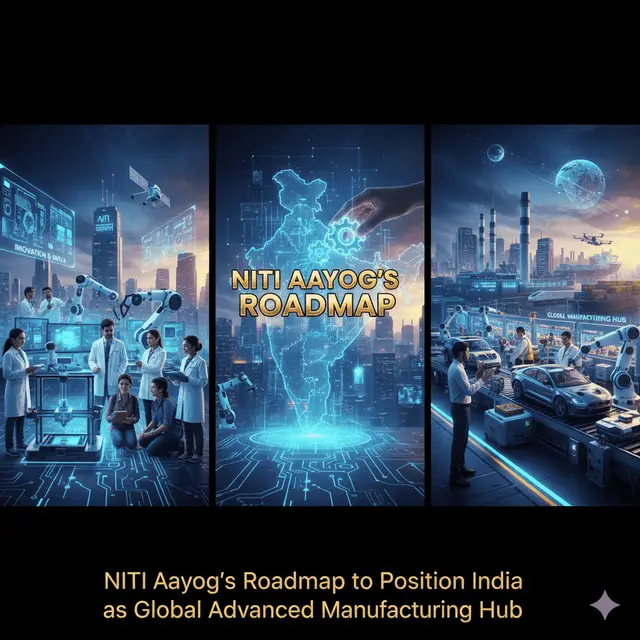
NITI Aayog’s Roadmap to Position India as a Global Advanced Manufacturing Hub
NITI Aayog’s Frontier Tech Hub (2025) report sets out a roadmap to make India a top global advanced manufacturing hub by 2035 through integration of frontier technologies — AI, robotics, digital twins and advanced materials — backed by skilling, cluster-based adoption and infrastructure investments.
17 Nov 2025 · Economics
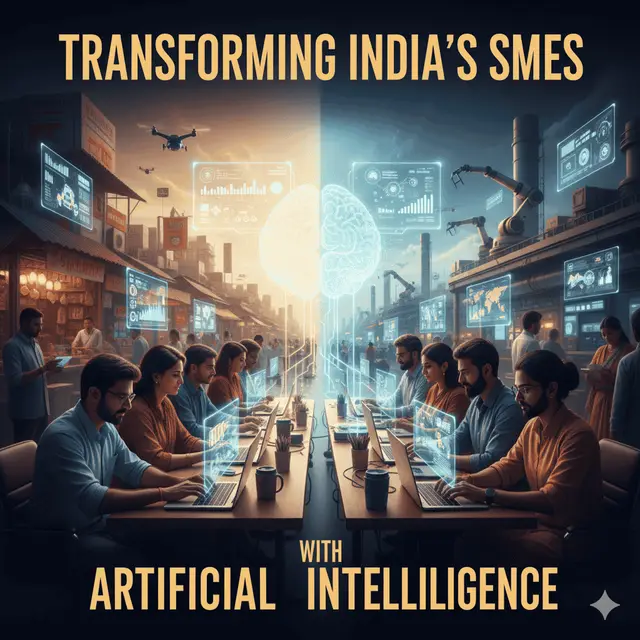
Transforming India’s SMEs with Artificial Intelligence
Artificial Intelligence (AI) can transform India’s MSME ecosystem by boosting productivity, reducing costs, improving credit access, and enabling global competitiveness. According to the WEF (2025), AI adoption can unlock $490–685 billion in economic value by 2030.
17 Nov 2025 · Economics
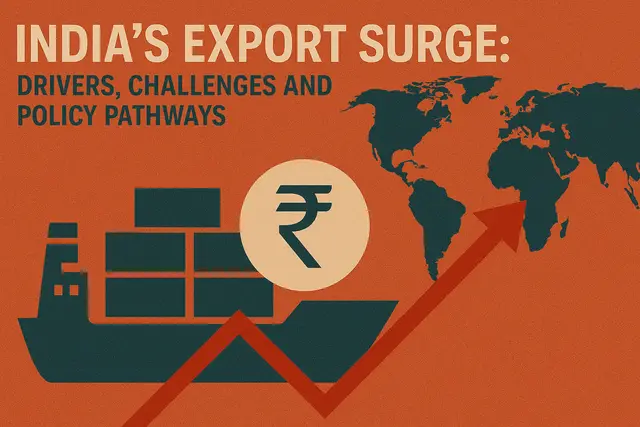
India’s Export Surge: Drivers, Challenges and Policy Pathways
India’s exports grew by 5.19% in April–August 2025, crossing USD 346.10 billion. This growth reflects stronger manufacturing, rising services exports, new reforms, and faster logistics. Even though global demand is slowing, India has managed to improve its export competitiveness through PLI, FTP 2023, GatiShakti, RoDTEP and digital systems.
17 Nov 2025 · Economics
Expected Credit Loss (ECL) Framework: RBI’s Transition to a Forward-Looking Provisioning Model
The RBI is transitioning from the incurred-loss model to a forward-looking Expected Credit Loss (ECL) framework aligned with IFRS 9. The move aims to strengthen early risk recognition and improve banking sector resilience, but raises concerns over data gaps, capital strain, and disproportionate impact on smaller banks.
17 Nov 2025 · Economics
Weaponisation of Global Trade: How Economics Became a Tool of Geopolitics
Trade is increasingly used as a geopolitical tool — tariffs, export controls, sanctions, and green regulations are employed to pursue strategic objectives. This 'weaponisation' forces countries like India to rethink supply chains, industrial policy and strategic autonomy.
17 Nov 2025 · Economics
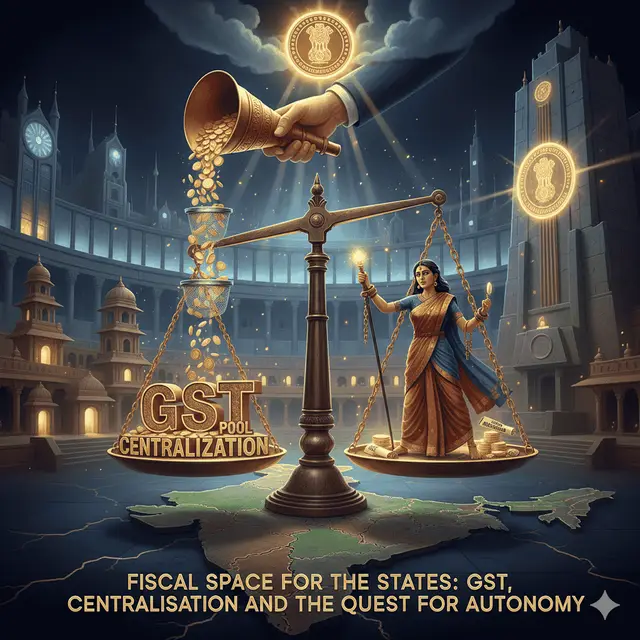
Fiscal Space for the States: GST, Centralisation and the Quest for Autonomy
The introduction of GST (2017) simplified indirect taxation but shifted taxing power to the Centre, reducing States’ fiscal flexibility. The end of the GST compensation cess (2025) and recurring demands for tax autonomy have revived debates on restoring fiscal space for States to ensure cooperative federalism and sustainable public finances.
17 Nov 2025 · Indian Polity & Governance
Urban Growth, Fiscal Gaps: The Paradox in India’s Urban Governance
India’s cities generate the bulk of economic output — over 66% of GDP — and are rapidly urbanising. Yet municipal bodies control less than 1% of tax revenue. This structural mismatch between rising urban responsibilities and weak fiscal power has created a deep urban governance paradox that threatens sustainable city development.

16 Nov 2025 · Indian Polity & Governance
The Invisible Hand of Justice: Judicial Appointments in India
The recent recommendation of Justice Surya Kant as the next Chief Justice of India has once again highlighted the opaque Collegium system, debates over NJAC, and proposals like All India Judicial Service — all of which lie at the heart of India’s struggle to balance judicial independence with transparency and accountability.

16 Nov 2025 · Indian Polity & Governance
A Comparative Lens on India and Japan’s Constitutional Identities
India and Japan are both democracies with written constitutions, but they represent two very different constitutional journeys — India’s highly amendable and socially transformative Constitution versus Japan’s rigid, pacifist, and unamended post-war Constitution.
16 Nov 2025 · Indian Polity & Governance
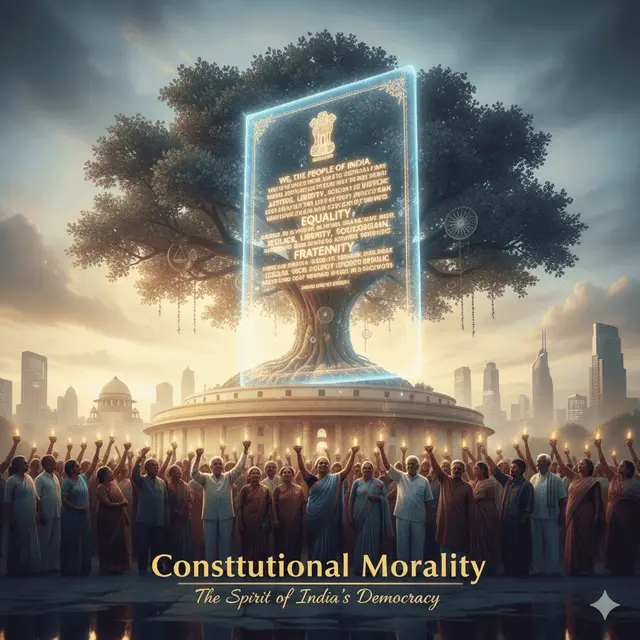
Constitutional Morality: The Spirit of India’s Democracy
As the RTI Act turns 20 and debates around governance intensify, Justice Govind Mathur emphasised that constitutional morality is the supreme guiding principle for India. It ensures that both government authorities and citizens act within the values of the Constitution — justice, equality, liberty, and fraternity.
16 Nov 2025
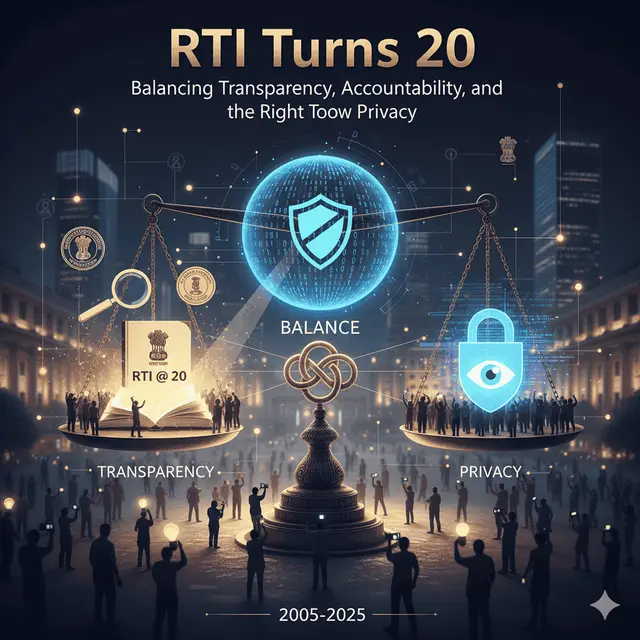
RTI Turns 20: Balancing Transparency, Accountability, and the Right to Privacy
As the Right to Information (RTI) Act completes 20 years, India faces a critical debate: how to protect citizens’ right to know while respecting the right to privacy. Court rulings, bureaucratic resistance, and the DPDP Act, 2023 have created new challenges for transparency.
16 Nov 2025
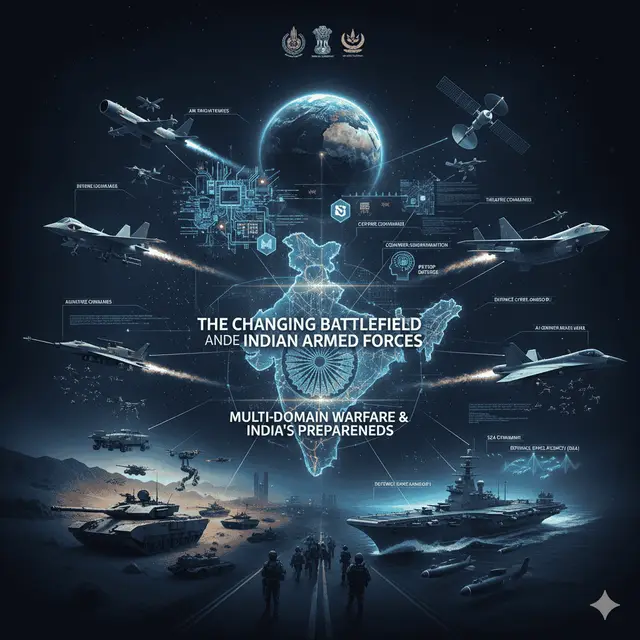
The Changing Battlefield and the Indian Armed Forces: Multi-Domain Warfare and India’s Preparedness
Modern warfare now spans land, sea, air, cyber, space, and information domains. AI, drones, cyberattacks, and multi-domain operations require India to restructure its armed forces, adopt new doctrines, and enhance technological capabilities to handle China–Pakistan threats.
16 Nov 2025 · International Relations
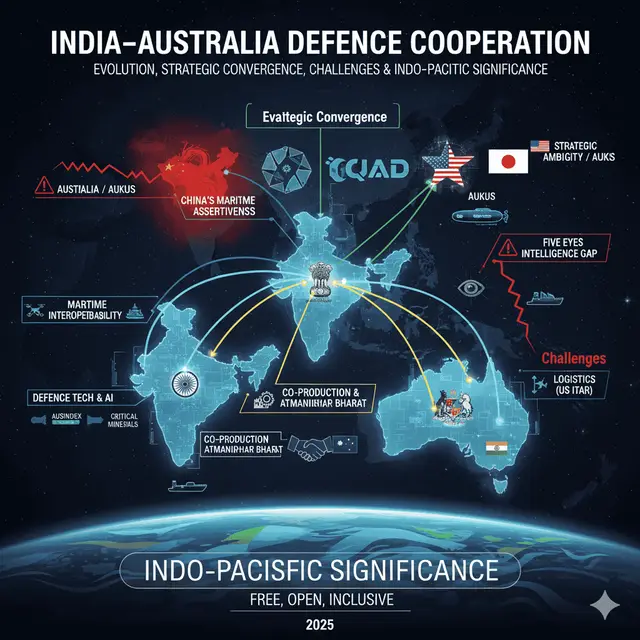
India–Australia Defence Cooperation: Evolution, Strategic Convergence, Emerging Challenges & Indo-Pacific Significance
The inaugural India–Australia Defence Ministers’ Dialogue in Canberra marked a historic shift in defence cooperation, expanding military interoperability, information sharing, logistics access, defence manufacturing, and Indo-Pacific security coordination amid China’s assertiveness.
16 Nov 2025 · International Relations
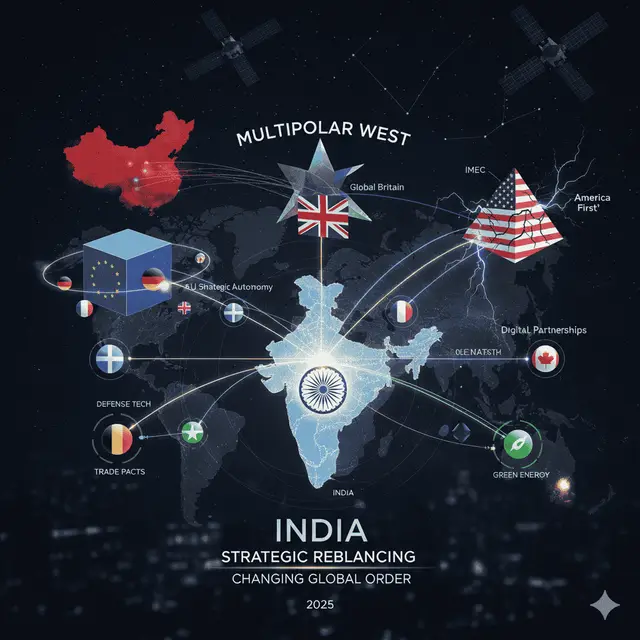
India & the Multipolar West: Strategic Rebalancing in a Changing Global Order
India’s renewed engagement with Europe—driven by trade pacts, technology partnerships, and shifting global geopolitics—comes at a time when the Western world is becoming ‘multipolar’. This means power is no longer concentrated in the United States alone. A more autonomous Europe, a reshaped UK, and a divided Western approach to China and Russia give India multiple strategic opportunities.
16 Nov 2025 · International Relations
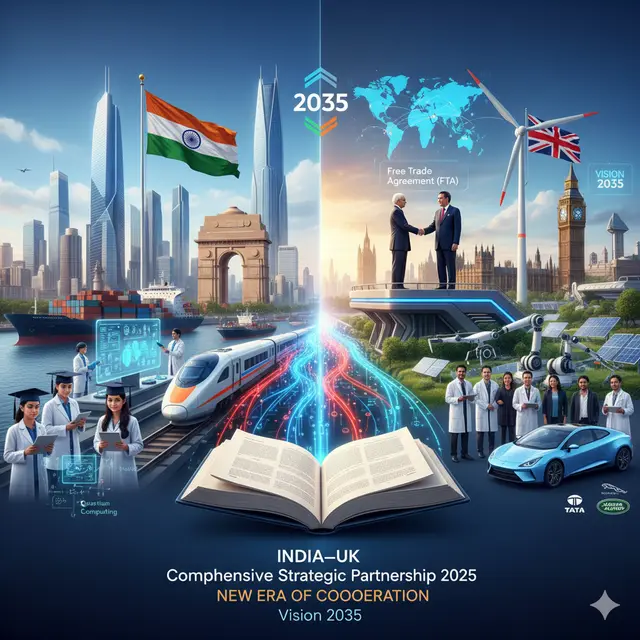
India–UK Comprehensive Strategic Partnership 2025: Vision 2035 and the New Era of Cooperation
British Prime Minister Keir Starmer’s visit to India in October 2025 marked a turning point in India–UK relations, strengthening cooperation across trade, defence, technology, climate, and education. The partnership now operates under the Vision 2035 framework and the newly signed Comprehensive Economic and Trade Agreement (CETA), aimed at doubling bilateral trade by 2030.