
Current Affairs — Page 5
Monthly Magazines & PDFsArticles
17 Oct 2026 · Indian Polity & Governance
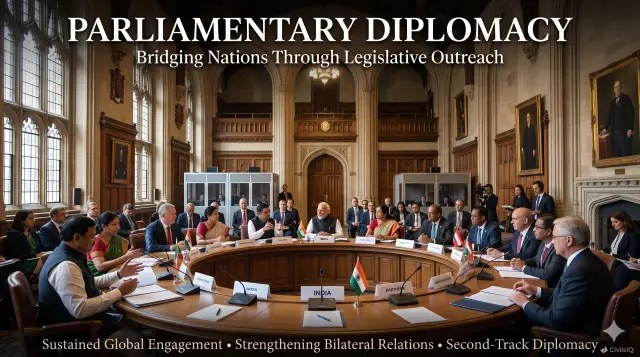
Parliamentary Diplomacy in India: Mechanisms, Roles, and Limitations
In a major initiative to strengthen India's global outreach, Lok Sabha Speaker Om Birla has constituted Parliamentary Friendship Groups with over 60 countries. This underscores the growing importance of parliamentary diplomacy as a 'second-track' diplomatic channel that supplements traditional executive-led foreign policy.
17 Oct 2026 · Indian Polity & Governance
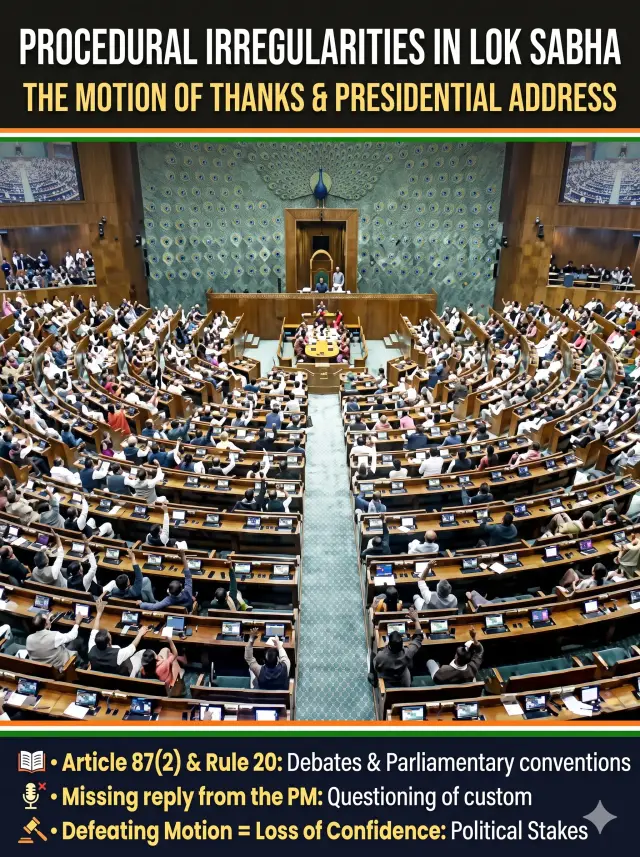
Procedural Irregularities in Lok Sabha: The Motion of Thanks and Presidential Address
Congress MP K.C. Venugopal flagged serious procedural irregularities in the Lok Sabha, questioning the validity of passing the Motion of Thanks without the Prime Minister’s customary reply. This article examines the constitutional provisions under Articles 86 and 87, parliamentary rules, and the significance of the President's Address.
16 Oct 2026 · Indian Polity & Governance
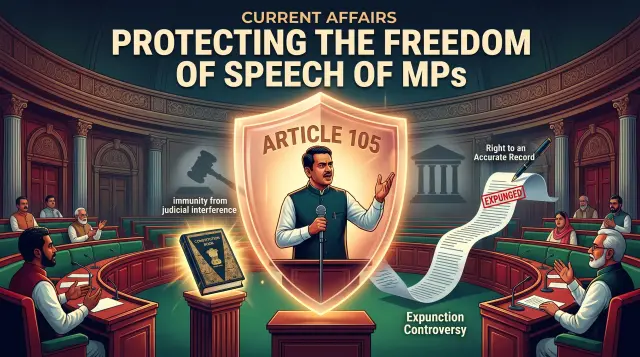
Protecting the Freedom of Speech of MPs
Recent events in Parliament have highlighted the necessity of safeguarding the freedom of speech of Members of Parliament, a privilege secured under Article 105. This article examines the constitutional framework, the controversy surrounding the expunction of speeches, and the vital role of free speech and the Opposition in a parliamentary democracy.
15 Oct 2026 · Indian Polity & Governance
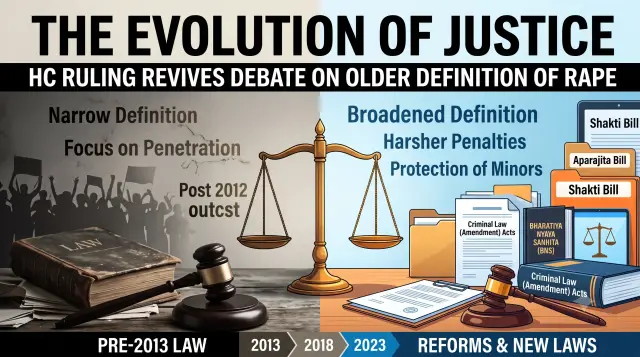
HC Ruling Revives Debate on Older Definition of Rape
A recent High Court judgment has reignited discussions on the pre-2013 legal framework, which defined rape narrowly based on penile-vaginal penetration. The case highlights the evolution of sexual assault laws in India from the IPC to the Bharatiya Nyaya Sanhita (BNS) and various state-level initiatives.
15 Oct 2026 · Indian Polity & Governance
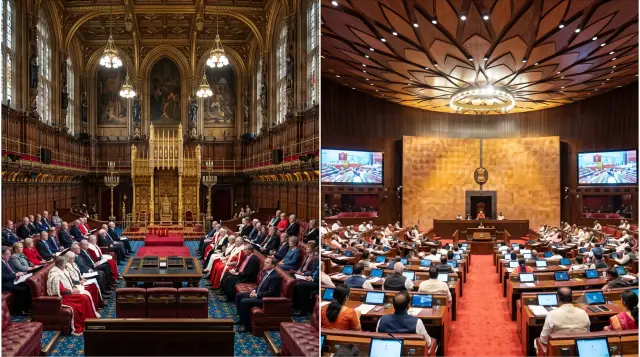
Britain’s House of Lords Vs. Rajya Sabha
The House of Lords functions as the upper chamber of the Parliament of the United Kingdom. Unlike most bicameral systems where upper houses are elected, this chamber is predominantly unelected and operates mainly as a revising and scrutinising body, leading to debates over its democratic legitimacy when compared to federal upper houses like India's Rajya Sabha.
15 Oct 2026 · Indian Polity & Governance
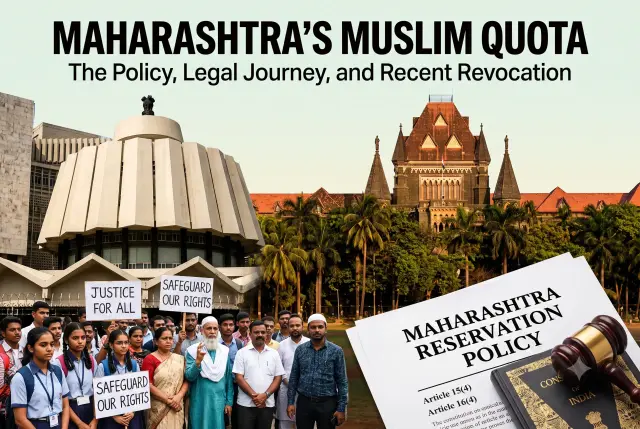
Maharashtra’s Muslim Quota: Policy, Constitutionality, and Recent Revocation
The recent withdrawal of the last administrative traces of Maharashtra’s 2014 Muslim reservation policy in February 2026 has revived discussions on the legal journey of affirmative action for Muslims. This article examines the socio-economic indicators of Muslims in India, the constitutional framework governing minority reservations, key committee findings, and the judicial stance on religion-based quotas.
15 Oct 2026 · Indian Polity & Governance
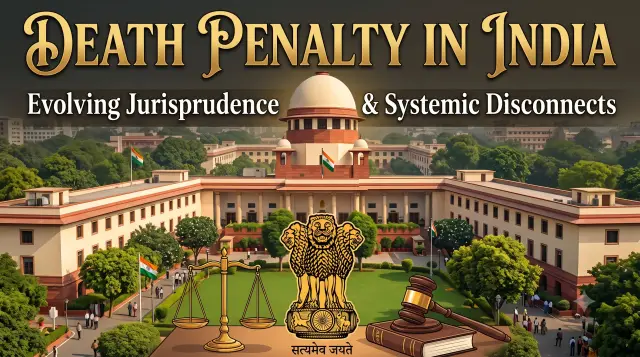
Death Penalty in India: Evolving Jurisprudence and Systemic Disconnects
For the second consecutive year, the Supreme Court of India has not upheld a single death sentence. A decade-long study highlights a stark disconnect between trial courts, which frequently impose capital punishment, and appellate courts, which consistently overturn or commute these sentences, revealing structural deficiencies in the criminal justice system.
15 Oct 2026 · Indian Polity & Governance
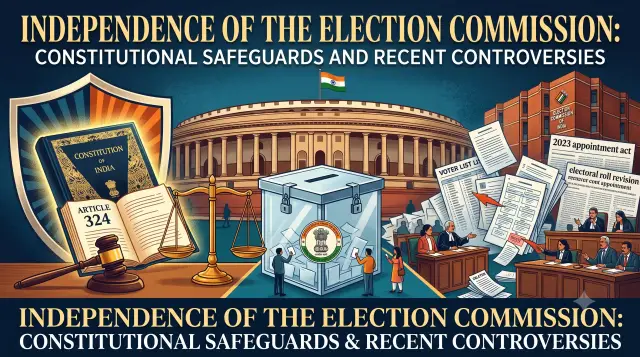
Independence of the Election Commission: Constitutional Safeguards and Recent Controversies
The Constitution of India provides robust institutional safeguards to preserve the autonomy of the Election Commission. However, recent controversies regarding alleged electoral roll manipulations and debates over the 2023 legislative changes for appointing Election Commissioners have brought institutional independence under intense scrutiny.
15 Oct 2026 · Indian Polity & Governance
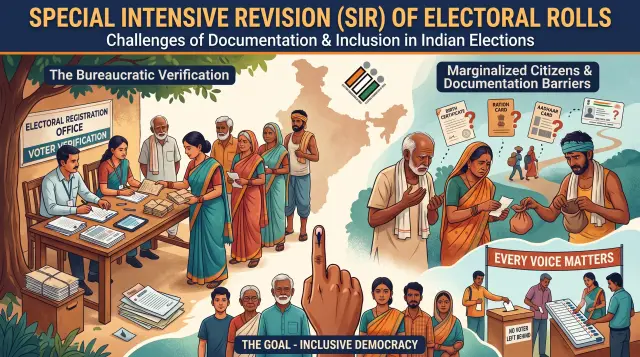
Special Intensive Revision (SIR) of Electoral Rolls
The Election Commission of India (ECI) has clarified that during the Special Intensive Revision (SIR) of electoral rolls, the power to accept or reject the eligibility of electors lies solely with Electoral Registration Officers (EROs), not micro observers. The exercise highlights significant challenges regarding documentation and potential disenfranchisement of marginalized communities.
13 Oct 2026 · Indian Polity & Governance
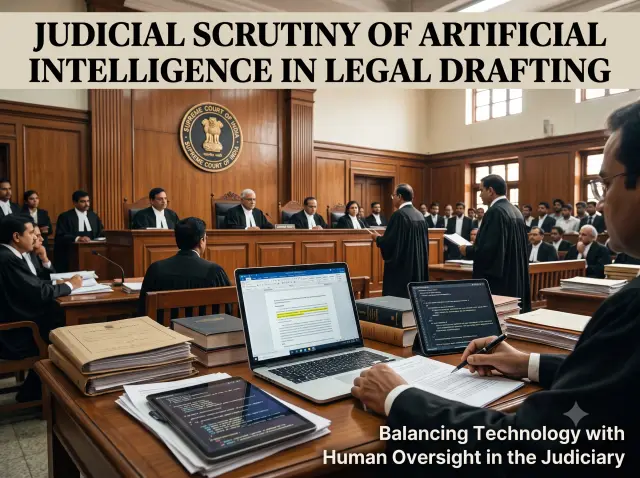
Judicial Scrutiny of Artificial Intelligence in Legal Drafting
The Supreme Court of India has flagged emerging risks associated with the use of Artificial Intelligence (AI) in legal drafting. While AI offers significant advantages in reducing case pendency, translating judgments via tools like SUVAS, and improving efficiency, concerns regarding AI hallucinations, algorithmic bias, and the erosion of human judicial oversight necessitate careful, supportive integration rather than substitution.
13 Oct 2026 · Indian Polity & Governance
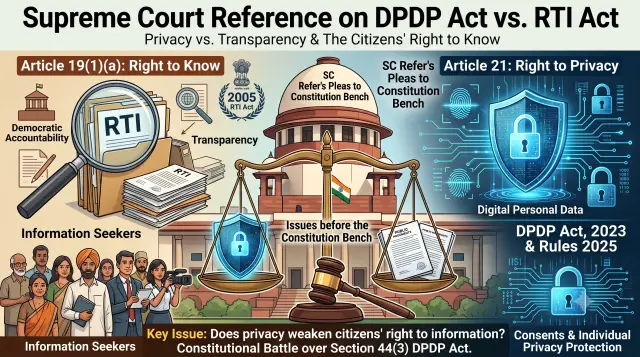
Supreme Court Reference on DPDP Act and the Right to Information
The Supreme Court of India has agreed to refer a batch of petitions to a Constitution Bench to examine whether Section 44(3) of the Digital Personal Data Protection (DPDP) Act, 2023 weakens citizens' right to information. The core issue revolves around balancing the fundamental right to privacy against democratic transparency and governmental accountability.
13 Oct 2026 · Indian Polity & Governance
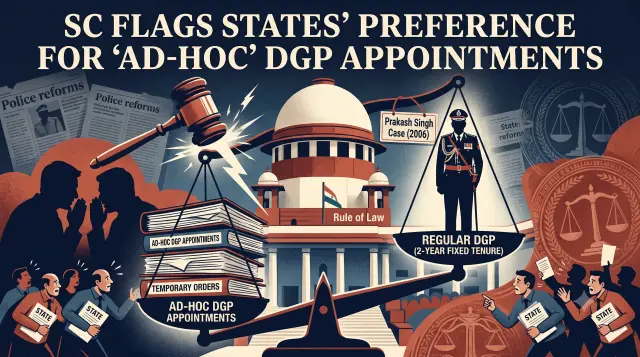
SC Flags States' Preference for 'Ad-hoc' DGP Appointments
The Supreme Court has expressed deep concern over the continued practice by State governments of appointing 'Acting' Directors-General of Police (DGPs) instead of regular DGPs. This practice violates the 2006 Prakash Singh judgment directives, which aim to insulate police leadership from political interference through fixed tenures and UPSC-led merit-based selection.
13 Oct 2026 · Indian Polity & Governance
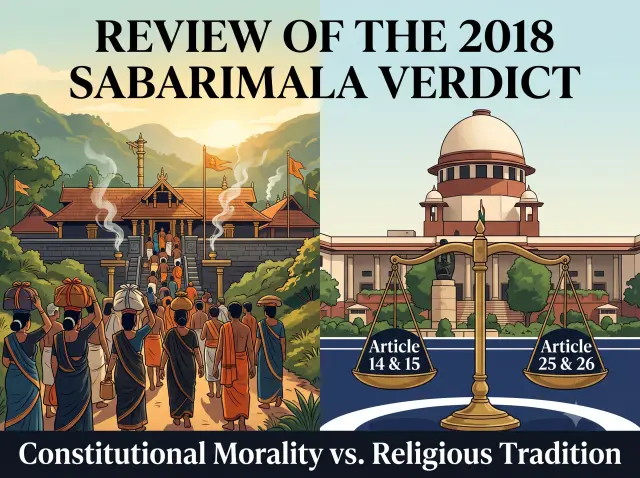
Review of the 2018 Sabarimala Verdict
The Supreme Court of India is set to hear review petitions concerning its landmark 2018 judgment on women’s entry into the Sabarimala Temple. Scheduled for April 2026 before a nine-judge Constitution Bench, this issue highlights the complex intersection of religious freedom, gender equality, and constitutional morality.
13 Oct 2026 · Indian Polity & Governance
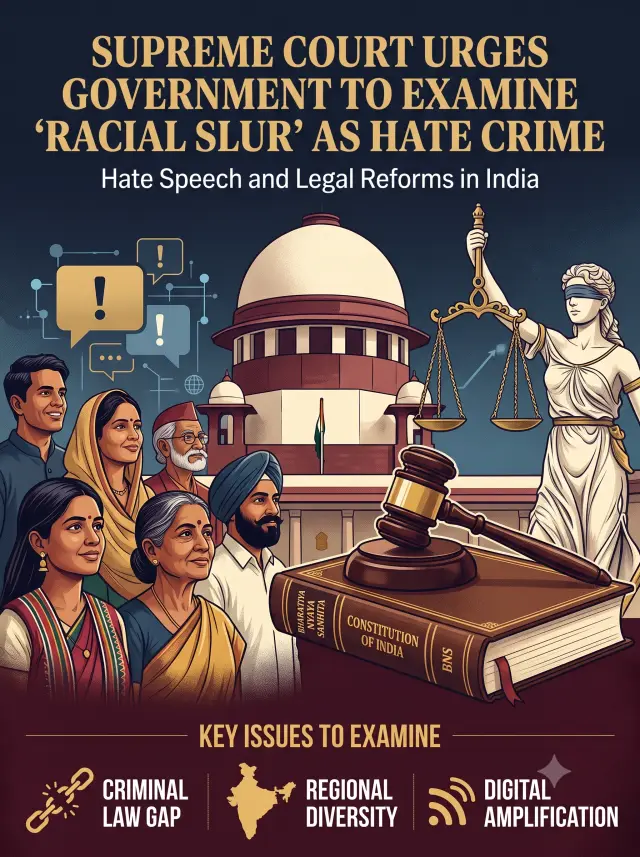
Supreme Court Urges Government to Examine 'Racial Slur' as Hate Crime
The Supreme Court of India recently directed the Union government to examine a petition seeking the recognition of 'racial slurs' as a distinct category of hate crime. This highlights the current gaps in India's criminal justice system, which treats racially motivated attacks as ordinary crimes, lacking specific statutory definitions and penal provisions for hate speech.

13 Oct 2026 · Indian Polity & Governance
The Right to be Forgotten (RTBF): Balancing Privacy and Public Interest
The Supreme Court of India is set to determine the scope of the 'Right to be Forgotten' (RTBF) after staying a Delhi High Court order that directed the removal of factual news reports. This article examines the constitutional friction between the Right to Privacy (Article 21) and the Freedom of Speech and Press (Article 19), analyzing judicial precedents and the need for a statutory framework in India.
13 Oct 2026 · Indian Polity & Governance
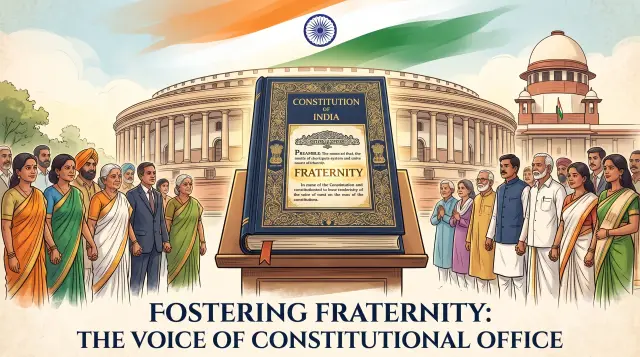
Fostering Fraternity: Constitutional Authorities and Standards of Speech
The Supreme Court of India recently examined concerns regarding public statements made by constitutional authorities that stigmatise communities. This article explores the origins of fraternity, its constitutional significance in India, and the need to institutionalise higher standards of ethical speech for public functionaries to preserve social cohesion.
13 Oct 2026 · Indian Polity & Governance
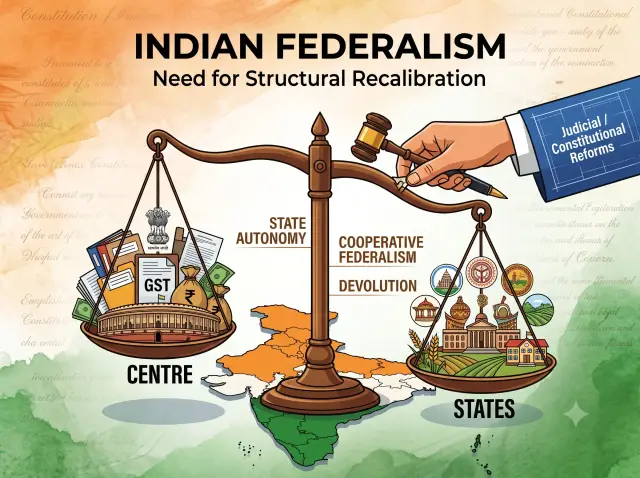
Indian Federalism: Need for Structural Recalibration
The discussion on the nature and future of Indian federalism has gained fresh momentum following the Justice Kurian Joseph Committee’s report. Constituted by the Tamil Nadu government, the report highlights growing centralization and calls for a fundamental rebalancing of Centre–State relations to protect and strengthen federal democracy.
13 Oct 2026 · Security And Defence
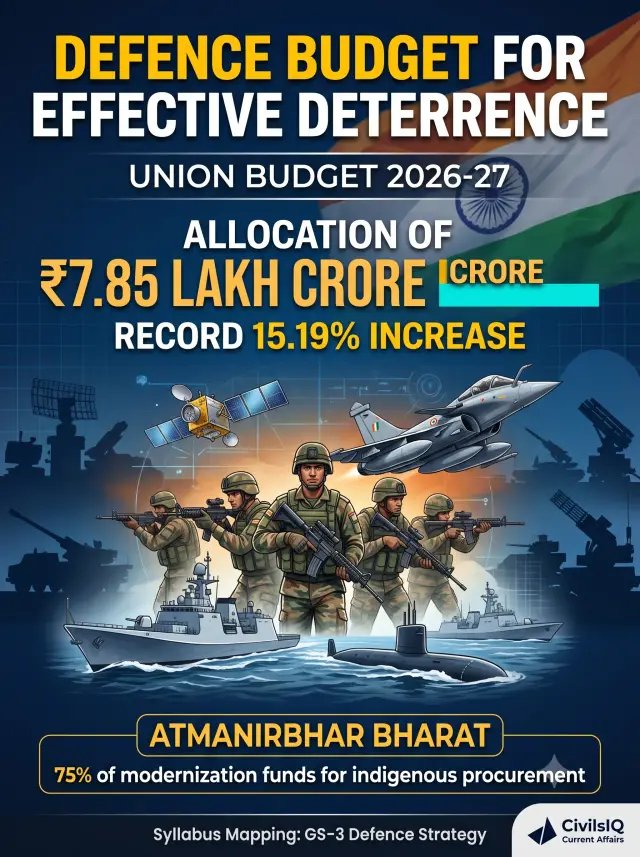
Defence Budget for Effective Deterrence
Union Budget 2026-27 has significantly bolstered India's national security framework with a record allocation of Rs 7.85 lakh crore. This budget represents a 15.19 per cent increase over the previous year and focuses heavily on capital outlay, indigenous procurement (Atmanirbhar Bharat), and closing capability gaps to ensure credible deterrence against regional threats.
13 Oct 2026 · Security And Defence
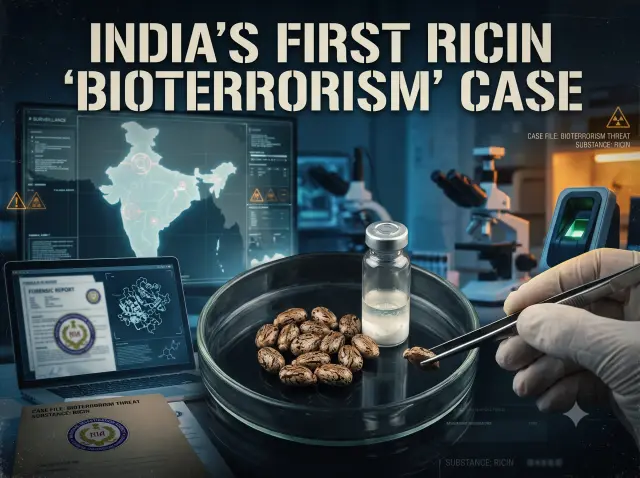
India’s First Ricin “Bioterrorism” Case
The NIA has uncovered India's first bioterrorism plot involving an attempt to isolate the deadly ricin toxin from castor beans. This incident highlights the emerging security threats posed by lone-actor radicalization, easy access to raw materials, and the challenges of detecting colorless, odorless toxins.

13 Oct 2026 · Security And Defence
Weaponisation of AI
Artificial Intelligence (AI) has transformed global digital ecosystems, but criminal networks are increasingly weaponising AI tools to conduct large-scale cyber fraud, identity theft, ransomware attacks, and misinformation campaigns.