
Current Affairs — Page 4
Monthly Magazines & PDFsArticles
24 Oct 2026 · Indian Polity & Governance
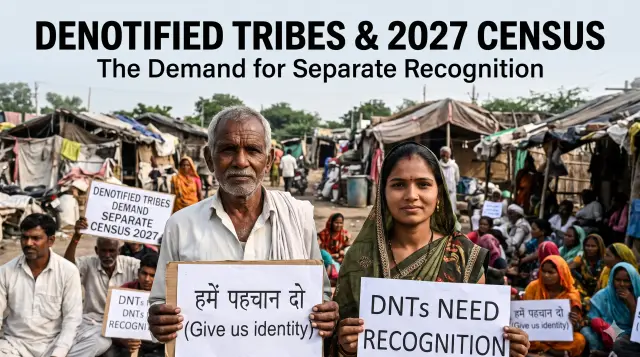
Denotified Tribes and the 2027 Census: Demand for Separate Recognition
Denotified, Nomadic, and Semi-Nomadic Tribes (DNTs, NTs, SNTs) are demanding distinct constitutional recognition and a separate column in the 2027 Census. Historically stigmatized under colonial legislation, these marginalized groups face severe misclassification and administrative hurdles that prevent equitable access to targeted welfare schemes.
21 Oct 2026
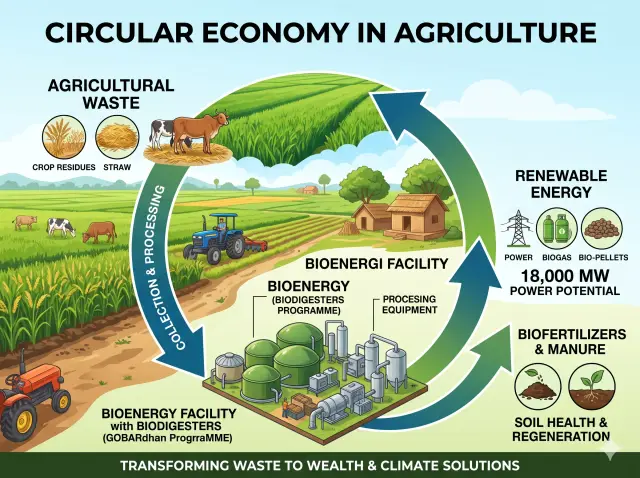
Circular Economy in Agriculture
India’s rising agricultural waste demands sustainable management; transitioning to a circular economy can convert 350 million tonnes of waste into energy, income, and climate solutions, targeting a $2 trillion market by 2050.
21 Oct 2026
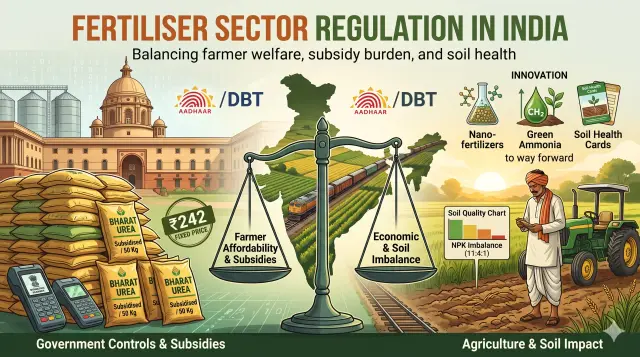
Fertiliser Sector Regulation in India
The Uttar Pradesh Government's recent ban on the sale of non-subsidised speciality nutrients by authorised fertiliser dealers has reignited discussions on India's fertiliser regulatory regime, highlighting the delicate balance between farmer protection, subsidy management, and market innovation.
21 Oct 2026
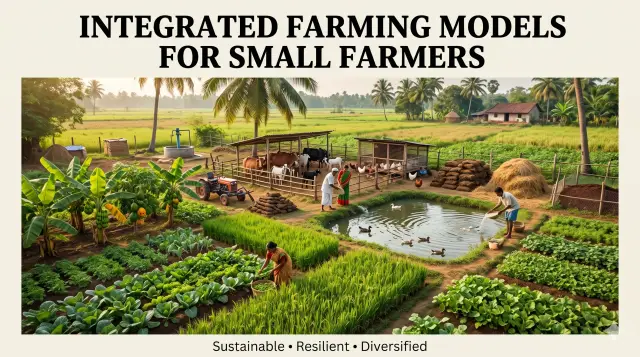
Integrated Farming Models for Small Farmers
The Union Agriculture Minister recently emphasized the need for Agri-scientists to develop Integrated Farming Models (IFMs). IFMs offer a sustainable farm-system approach combining crops, livestock, and allied sectors to boost smallholder income, build climate resilience, and enhance resource efficiency.
21 Oct 2026 · Agriculture
National Self-Reliance in Pulses Mission
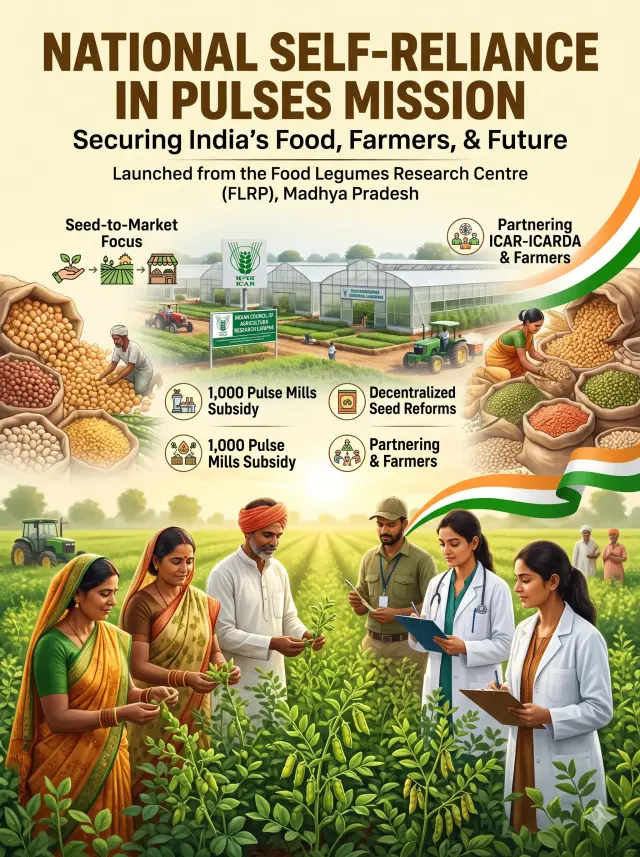
The National Self-Reliance in Pulses Mission was launched to address India's persistent yield gaps and high import dependence in pulses. It adopts an end-to-end value chain approach, cluster-based farming, and decentralised processing to boost domestic production and ensure remunerative prices for farmers.
21 Oct 2026
India’s Rice Production Surge Raises Food Security & Sustainability Concerns
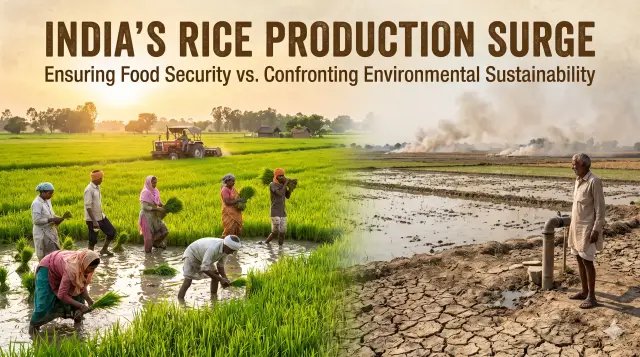
India has recently overtaken China to become the world’s largest rice producer, yielding a record 150.18 MT in 2024-25. While this solidifies its position as a global agricultural powerhouse, it has sparked serious concerns regarding water stress, methane emissions, stagnant yields, and long-term food security, necessitating urgent strategic interventions.
21 Oct 2026
Economic Survey Recommends Aligning Policies for $100 Bn Agri-Export
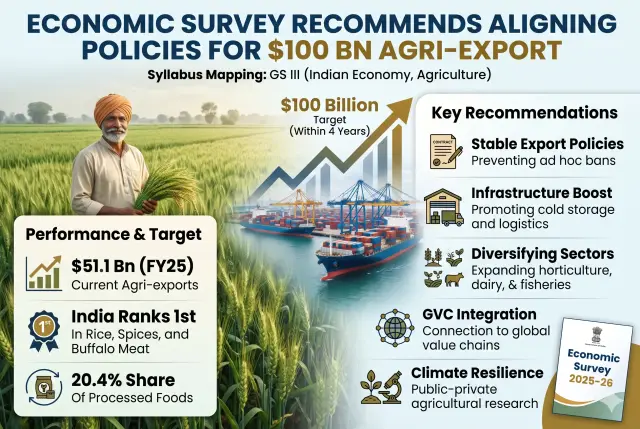
The Economic Survey 2025-26 recommends establishing a stable agricultural export policy to achieve USD 100 billion in exports within four years. While India's agri-exports reached USD 51.1 billion in FY25, challenges like policy uncertainty, infrastructure gaps, and climate risks must be addressed through private investment and global value chain integration.
17 Oct 2026
India’s Rising Dependence on Imported Crude Oil
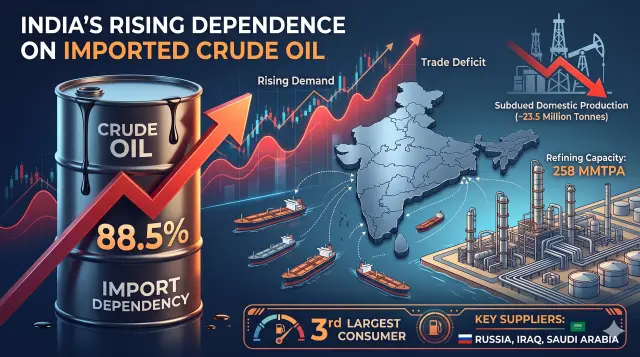
India's crude oil import dependency crossed 88.5% in FY26 (April–January), driven by a widening gap between robust domestic demand and stagnant domestic production. This article examines the drivers behind this trend, the economic implications for India's trade deficit and inflation, and the strategic path forward.
17 Oct 2026
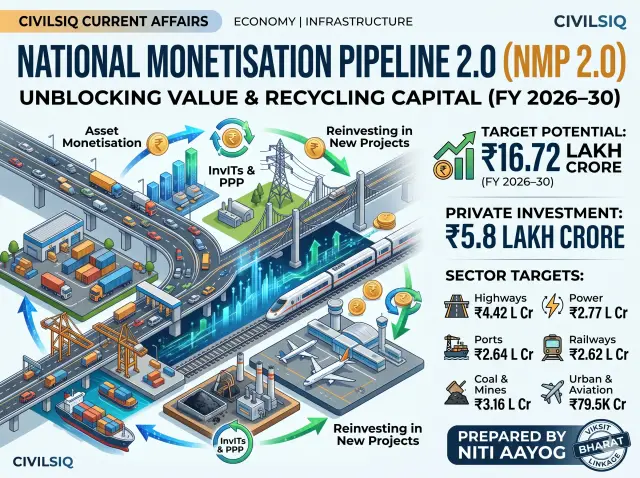
National Monetisation Pipeline 2.0 (NMP 2.0) Rollout
The Union Finance Minister has launched the National Monetisation Pipeline 2.0 (NMP 2.0), prepared by NITI Aayog. Targeting a monetisation potential of ₹16.72 lakh crore over FY 2026–30, the initiative aims to unlock value from operational public infrastructure assets to fund fresh public capital expenditure.
17 Oct 2026
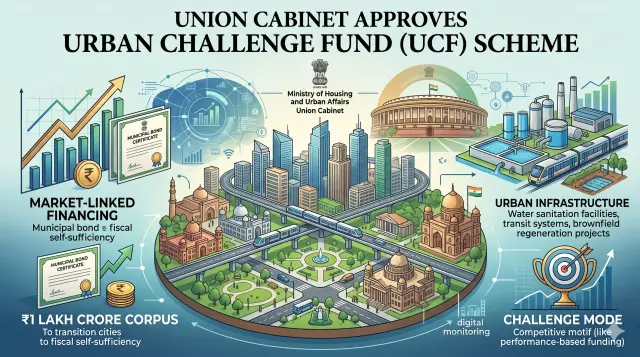
Union Cabinet Approves Urban Challenge Fund (UCF) Scheme
The Union Cabinet has approved the ₹1 lakh crore Urban Challenge Fund (UCF) to transform the financing ecosystem of urban infrastructure in India. Moving away from grant dependence, the scheme institutionalizes market-linked financing to develop 'Cities as Growth Hubs' through competitive project selection and strict reform milestones.
17 Oct 2026
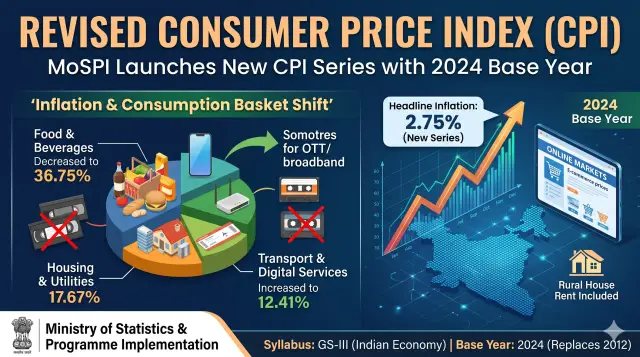
MoSPI Releases New Consumer Price Index (CPI) Series Data
The Ministry of Statistics and Programme Implementation (MoSPI) has released the first inflation data under the new Consumer Price Index (CPI) series with a revised base year of 2024. The updated series reflects modern consumption habits, significantly lowers the weightage of food, includes digital services, and aligns with the UN COICOP 2018 global standards.
17 Oct 2026
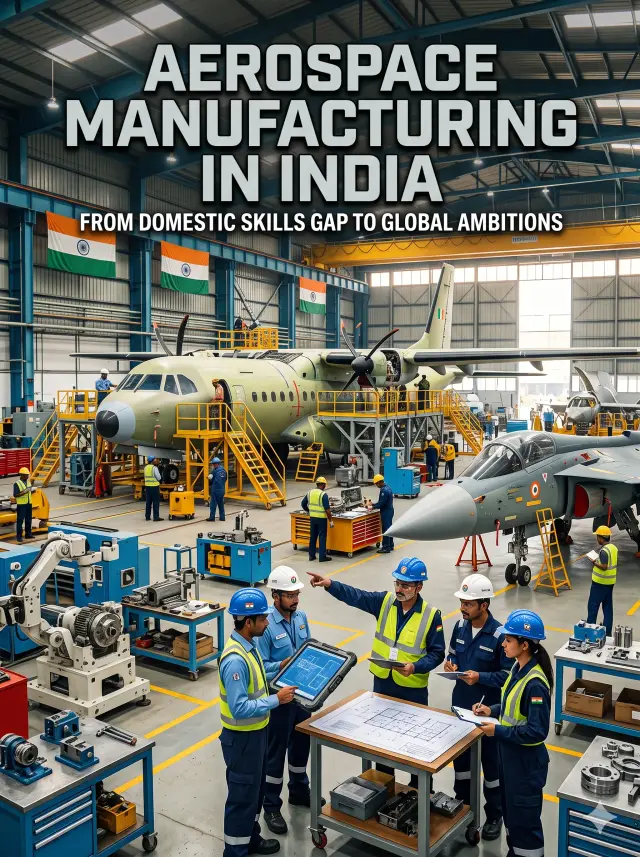
Aerospace Manufacturing in India
Despite record growth and strategic opportunities, a significant engineering skills gap could hinder India’s aerospace manufacturing ambitions. This article explores India's market landscape, government initiatives, and the multifaceted challenges in building a robust aerospace manufacturing ecosystem.
17 Oct 2026 · Indian Polity & Governance
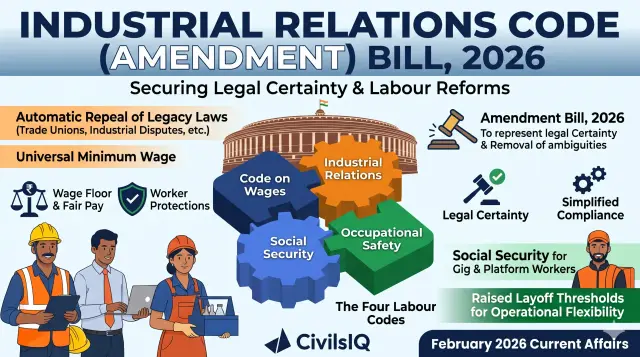
Industrial Relations Code (Amendment) Bill, 2026: Ensuring Legal Certainty in Labour Reforms
The Lok Sabha has passed the Industrial Relations Code (Amendment) Bill, 2026, to resolve legal ambiguities surrounding the repeal of legacy labor laws. By clarifying Section 104, the amendment ensures a seamless transition to the consolidated Four Labour Codes, eliminating risks of future litigation and securing statutory continuity for worker welfare and industrial compliance.
17 Oct 2026
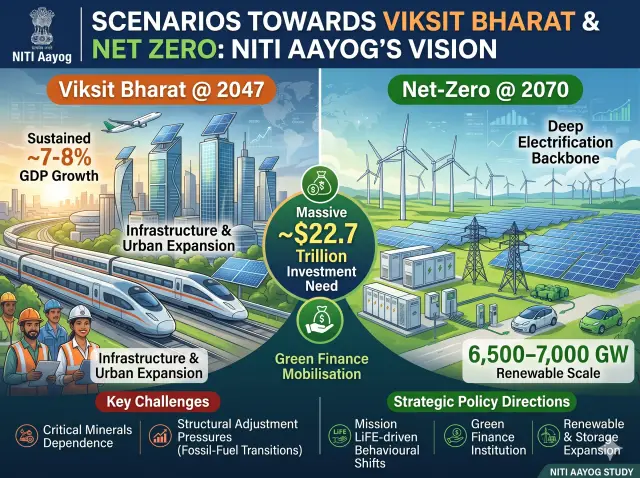
Scenarios Towards Viksit Bharat and Net Zero: NITI Aayog's Vision
NITI Aayog's study, released in February 2026, highlights that India can simultaneously achieve developed-economy status (Viksit Bharat) by 2047 and net-zero emissions by 2070. The report outlines the core strategies, investment needs, and structural transformations required, along with the macroeconomic and social implications of this transition.

17 Oct 2026
RBI Proposes Compensation for Digital Fraud Victims
The Reserve Bank of India (RBI) has proposed a compensation framework for victims of small-value digital frauds up to ₹25,000. Leveraging the Depositor Education and Awareness (DEA) Fund, the scheme targets frauds below ₹50,000 and introduces a shared liability model among customers, banks, and the RBI.
17 Oct 2026
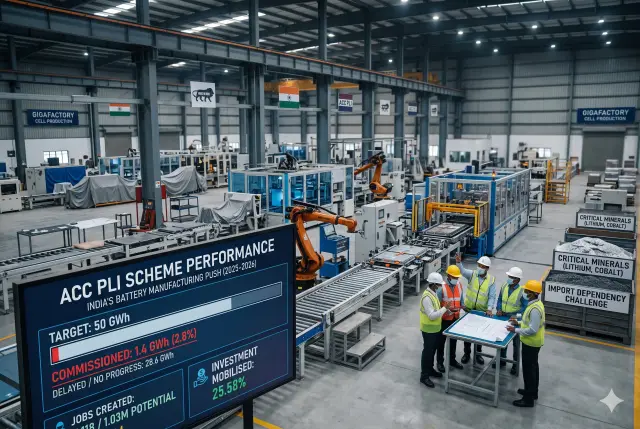
ACC PLI Scheme Performance: Bottlenecks in India's Battery Manufacturing Push
The Advanced Chemistry Cell (ACC) Production Linked Incentive Scheme, launched to localise battery manufacturing in India, has fallen significantly short of its targets. With only 1.4 GWh commissioned against a 50 GWh goal by late 2025, the scheme faces challenges such as unrealistic timelines, raw material bottlenecks, and a massive skills deficit. This article outlines the current status, reasons for underperformance, implications, and the necessary reforms.
17 Oct 2026
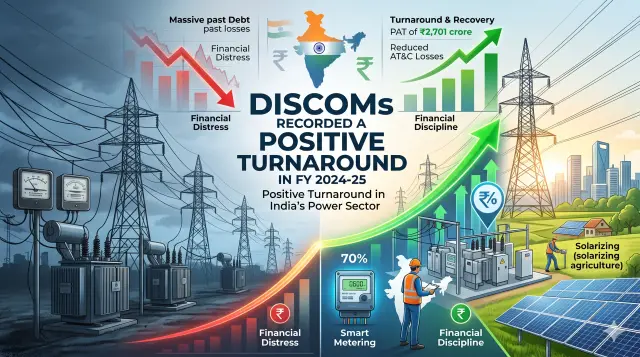
DISCOMs Recorded a Positive Turnaround in FY 2024-25
After years of financial distress, DISCOMs recorded a turnaround in FY 2024-25, marked by reduced AT&C losses, a narrowing of the ACS-ARR gap, and improved financial discipline.
17 Oct 2026
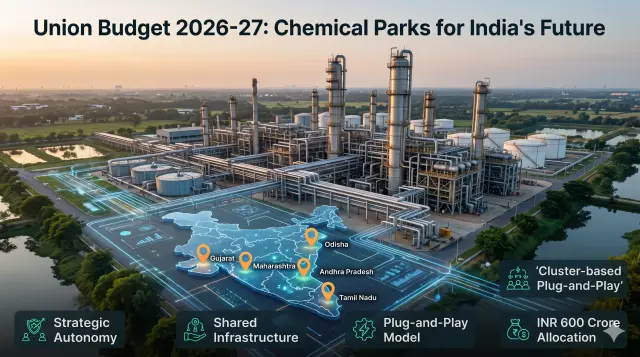
Union Budget 2026-27 Announces Establishment of Chemical Parks
The Union Budget 2026-27 has introduced a new scheme with an allocation of Rs 600 crore to support States in establishing three dedicated Chemical Parks. Utilising a challenge-based, plug-and-play cluster model, these parks aim to boost domestic manufacturing, integrate MSMEs, and create globally competitive chemical ecosystems in India.
17 Oct 2026
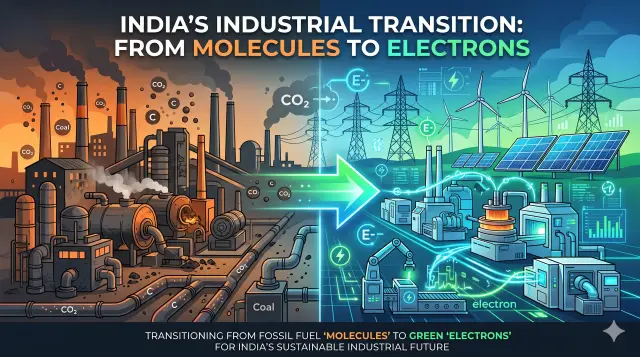
India's Industrial Transition: From Molecules to Electrons
While India's industrial sector remains heavily dependent on fossil fuel 'molecules', global competitors like China have shifted nearly half of their industrial energy use to 'electrons'. This transition towards electrified and digitalised manufacturing is crucial for India's energy security, export competitiveness, and decarbonisation.

17 Oct 2026 · Indian Polity & Governance
Cash Row and Judicial Accountability: The Case of Justice Yashwant Varma
The reconstitution of a parliamentary inquiry committee to investigate allegations against Justice Yashwant Varma has brought judicial accountability into the spotlight. This article explores the constitutional framework for removing High Court judges, the internal mechanisms for addressing misconduct, and the delicate balance between judicial independence and accountability under the Judges Protection Act, 1985.